Chapter 15 · Reasoning · 5 questions in the paper · 15 min read
Series, Calendar, Clock and Figure Reasoning
What the syllabus asks for 4
- Number and letter series, odd one out
- Calendar and clock problems
- Counting figures, dice and cubes
- Mixed reasoning
The second reasoning chapter covers the questions that depend on pattern spotting and counting: number and letter series, calendar days, clock angles, cubes, dice and counting figures.
The Dean's Office model asks "how many squares are in the figure". All of these have a standard method that you can run in under a minute.
- Series: differences, ratios, squares, cubes, primes, alternating patterns.
- Calendar: odd days; leap years; the day after n days.
- Clock: angle =|30H-5.5M|; coincidences and right angles.
- Cubes and dice: opposite faces sum to 7; painted-cube counts.
- Counting figures: squares in an n\times n grid.
15.1 Number and letter series, odd one out
- Test differences (constant → AP), ratios (constant → GP), squares (n^2: 1, 4, 9; n^2+1: 2, 5, 10, 17, 26), cubes, primes (2, 3, 5, 7, 11, 13), triangular numbers (1, 3, 6, 10), factorials, Fibonacci (1, 1, 2, 3, 5, 8, 13).
- 2,6,12,20,30,\ldots is n(n+1), next 42. 3,7,15,31 doubles and adds 1, next 63.
- Letter series: convert to positions and look for a constant step, or opposite-letter pairs (AZ, BY, CX, DW).
- Odd one out: find the property shared by all but one (cubes, primes, capitals, vegetables).

15.2 Calendar problems
- Odd days: ordinary year 1, leap year 2. 100 years have 5, 200 have 3, 300 have 1, 400 have 0.
- Leap year: divisible by 4; century years only if divisible by 400 (2000 yes; 1900, 2100 no).
- Months: 31 days → 3 odd days; 30 days → 2; February 28 → 0 (29 → 1).
- Day after n days: n \mathrm{mod} 7 steps forward. 100 days after Monday is Wednesday (100=14\times7+2).
- 1 January 2026 is a Thursday, so 1 January 2027 is a Friday (2026 is not a leap year), and 5 March 2026 (day 64) is also a Thursday.

15.3 Clock problems
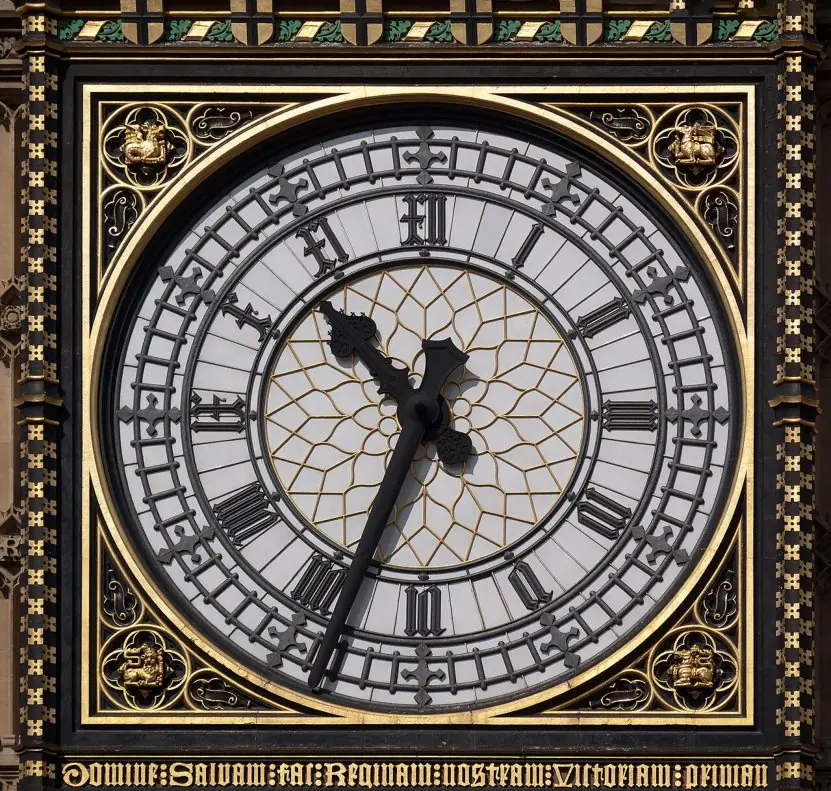
- Minute hand: 6° per minute; hour hand: 0.5° per minute. Angle =|30H-5.5M| (take 360° minus it if it exceeds 180°).
- In 12 hours the hands coincide 11 times, are at right angles 22 times and opposite 11 times; in a day, 22, 44 and 22.
- Examples: 3:00 → 90°; 4:00 → 120°; 3:30 → 75°; 7:20 → 100°; 9:15 → 172.5°.

15.4 Counting figures, dice and cubes
- Squares in an n\times n grid: \frac{n(n+1)(2n+1)}{6} (2×2: 5, 3×3: 14, 4×4: 30, chessboard: 204). Rectangles in an m\times n grid: \binom{m+1}{2}\binom{n+1}{2} (2×2: 9).
- Dice: opposite faces sum to 7 (1–6, 2–5, 3–4). A cube has 6 faces, 8 corners, 12 edges.
- Painted cube of side n cut into unit cubes: 3 faces painted 8; 2 faces 12(n-2); 1 face 6(n-2)^2; none (n-2)^3. For n=3: 8, 12, 6, 1.



15.5 Eight traps in reasoning series and counting
These questions are won by method, not by speed. The eight traps below are the ones that make a student lose a mark on a question he or she could have solved.
- Look at the second differences before you give up. For 2, 6, 12, 20, 30 the first differences 4, 6, 8, 10 are not constant, but the second differences are all 2, so the rule is quadratic and the next term is 42 (Fig 15.1). If the ratios are constant it is a GP instead. Always write the differences under the terms.
- A series can be two series woven together. In 2, 10, 4, 20, 6, 40 the odd places give 2, 4, 6 and the even places give 10, 20, 40. If one rule does not fit all terms, split the odd and even places. Letter series are tested the same way after converting letters to positions.
- Know the neighbours of the squares. The numbers 2, 5, 10, 17, 26 are n^2+1, while 0, 3, 8, 15, 24 are n^2-1. A series that rises faster than an AP but slower than a GP is usually squares or cubes. Compare each term with the nearest perfect square.
- Odd days are remainders, not days. 100 years have 5 odd days, 200 have 3, 300 have 1 and 400 have 0 (Fig 15.2). Ordinary years add 1 odd day and leap years add 2. Always reduce the total modulo 7 at the end.
- A century year is a leap year only if it is divisible by 400. So 2000 is a leap year but 1900 and 2100 are not (Fig 15.2). This one rule is the most common reason for a wrong day in the options. Check the divisibility by 400 first when you see a year ending in 00.
- Count the days from the right date. 100 days after Monday is Wednesday, because 100=14\times7+2. For "the day on 26 January" given 1 January, add 25 days, not 26. Remember that months with 31 days give 3 odd days and 30 days give 2.
- The clock formula needs two corrections. The angle is |30H-5.5M|, and if the answer is more than 180 you subtract it from 360 (9:15 gives 187.5, which becomes 172.5; Fig 15.3). Use H in the 12-hour form, so 15:00 means H=3. In 12 hours the hands coincide 11 times, not 12.
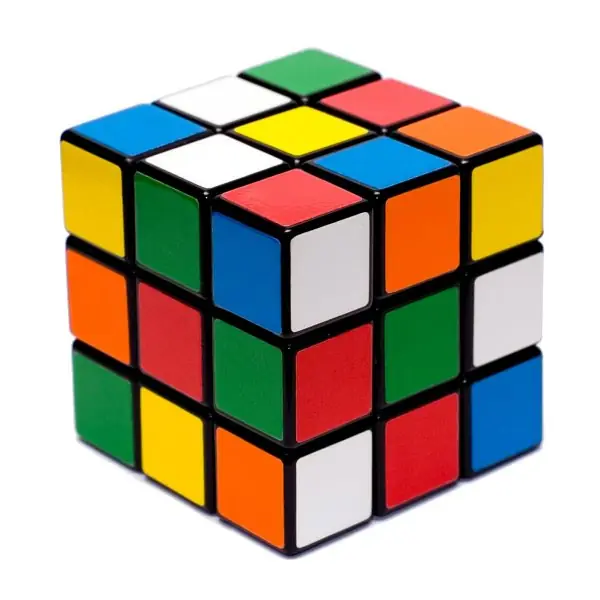
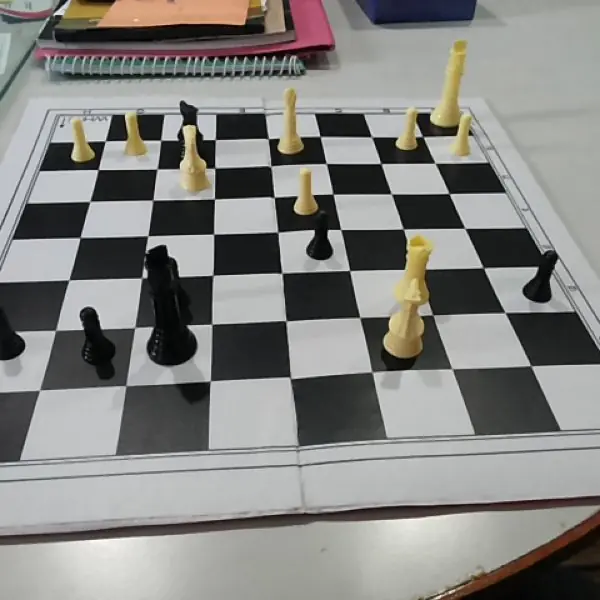
- Count every size, and remember what lies inside. A 4 × 4 grid has 30 squares, not 16, and an 8 × 8 board has 204 (Fig 15.4). In a painted cube of side n the pieces with no paint are (n-2)^3 and the edge pieces are 12(n-2) (Fig 15.5). On a die the opposite faces add to 7, but faces that touch each other can be any other pair.
15.5.1 Worked checks
Q. Find the next term of 2, 6, 12, 20, 30, …
Answer. The differences are 4, 6, 8, 10 and the second differences are all 2, so the term is n(n+1). The next term is 6\times7=42 (Fig 15.1).
Q. 1 January 2026 is a Thursday. What day of the week is 26 January 2026?
Answer. 26 January is 25 days after 1 January, and 25=3\times7+4. Four days after Thursday is Monday.
Q. Find the angle between the hands at 7:20.
Answer. The angle is |30\times7-5.5\times20|=|210-110|=100^\circ. It is less than 180, so it stays as it is (Fig 15.3).
Q. A cube of side 4 cm is painted on all faces and cut into 1 cm cubes. How many have exactly two faces painted? How many have none?
Answer. Edge pieces have two painted faces: 12(4-2)=24. Pieces with no paint lie inside: (4-2)^3=8. Check: 8+24+24+8=64=4^3 (Fig 15.5).
Q. How many squares are there in a 5 × 5 grid?
Answer. Count all sizes: 25+16+9+4+1=55, which equals \frac{5\cdot6\cdot11}{6}=55 (Fig 15.4).
Formula and fact sheet
| Item | Rule |
|---|---|
| Clock angle | \lvert30H-5.5M\rvert |
| Odd days | 100 y = 5, 200 y = 3, 300 y = 1, 400 y = 0 |
| Squares in n\times n | \frac{n(n+1)(2n+1)}{6} |
| Painted cube | corners 8, edges 12(n-2), faces 6(n-2)^2, inside (n-2)^3 |
Chapter summary
- Check first and second differences, then squares, cubes, primes.
- Count odd days, then take the remainder by 7.
- Century years are leap only if divisible by 400.
- Use 5.5M for the clock; reduce reflex angles.
- Count squares of every size, not just the smallest.
Practice questions
Set A — Recall (20 questions)
- The next number in 2, 4, 8, 16 isa24b30c32d64
- The next number in 1, 4, 9, 16, 25 isa36b30c49d35
- The next number in 2, 6, 12, 20, 30 isa40b36c44d42
- The next letter in A, C, E, G isaHbIcJdK
- The next number in 3, 6, 9, 12 isa13b14c15d18
- The number of odd days in 100 years isa1b3c0d5
- The number of odd days in 400 years isa0b1c2d3
- An ordinary year has how many odd days?a0b1c2d7
- The minute hand of a clock moves through how many degrees in one minute?a0.5°b1°c12°d6°
- The angle between the hands of a clock at 3:00 isa60°b180°c90°d30°
- On a standard die the face opposite 1 isa6b5c3d2
- A cube has how many corners?a6b8c12d4
- A cube has how many edges?a8b6c12d10
- Which of these is a leap year?a1900b2100c2026d2000
- The next number in 5, 10, 20, 40 isa80b60c70d100
- The hands of a clock coincide how many times in 12 hours?a12b11c10d22
- The next number in 2, 3, 5, 7, 11 isa12b14c13d15
- In a leap year February hasa28 daysb30 daysc27 daysd29 days
- Which is the odd one out?aPotatobMangocBananadApple
- The next number in 1, 8, 27, 64 isa100b125c81d216
Answers and explanations — Set A
1. (c) — doubling.
2. (a) — perfect squares, 6² = 36.
3. (d) — n(n + 1): 1·2, 2·3, …, 6·7 = 42.
4. (b) — every second letter.
5. (c) — add 3.
6. (d) — 100 years = 76 ordinary + 24 leap years: 76 + 48 = 124 odd days = 17 weeks + 5 days.
7. (a) — the 400-year cycle repeats exactly.
8. (b) — 365 = 52 weeks + 1 day.
9. (d) — 360° in 60 minutes.
10. (c) — hands at 12 and 3.
11. (a) — opposite faces sum to 7.
12. (b) — 8 vertices.
13. (c) — 12 edges.
14. (d) — 2000 is divisible by 400; 1900 and 2100 are not; 2026 is not a multiple of 4.
15. (a) — doubling.
16. (b) — 11 times (not 12: the 12th coincidence is the start of the next cycle).
17. (c) — the next prime.
18. (d) — 29 days.
19. (a) — a vegetable among fruits.
20. (b) — cubes: 5³ = 125.
Set B — Understanding (12 questions)
- The next number in 1, 1, 2, 3, 5, 8 isa11b12c10d13
- If today is Monday, the day after 100 days isaTuesdaybWednesdaycThursdaydMonday
- The angle between the hands at 4:00 isa120°b150°c90°d100°
- The angle between the hands at 3:30 isa90°b60°c75°d105°
- The number of squares of all sizes in a 3 × 3 grid isa9b14c13d10
- A 3 × 3 × 3 painted cube is cut into 27 unit cubes. The number with exactly one face painted isa8b12c1d6
- In the same cube the number with exactly two faces painted isa6b8c12d1
- The next number in 3, 7, 15, 31 isa63b62c47d51
- 1 January 2026 is a Thursday. 1 January 2027 is aaThursdaybSaturdaycSundaydFriday
- The next pair in AZ, BY, CX isaDXbDWcEWdCW
- The number of rectangles of all sizes in a 2 × 2 grid isa9b4c8d10
- In one day the hands of a clock coincidea11 timesb24 timesc22 timesd44 times
Answers and explanations — Set B
1. (d) — Fibonacci: 5 + 8 = 13.
2. (b) — 100 = 14 × 7 + 2, so two days after Monday.
3. (a) — 4 × 30°.
4. (c) — |30·3 − 5.5·30| = |90 − 165| = 75°.
5. (b) — 9 + 4 + 1.
6. (d) — 6 face centres: 6(3 − 2)² = 6.
7. (c) — 12 edge cubes.
8. (a) — each term is double the last plus 1.
9. (d) — 365 days is 1 odd day.
10. (b) — first letter moves forward, second backward.
11. (a) — C(3,2) × C(3,2) = 9.
12. (c) — 11 per half day.
Set C — Application (8 questions)
- The next number in 2, 5, 10, 17, 26 isa35b37c36d40
- 1 January 2026 was a Thursday, so 5 March 2026 (Nepal's election day) fell on aaMondaybTuesdaycWednesdaydThursday
- The angle between the hands at 7:20 isa100°b110°c90°d120°
- The smaller angle between the hands at 9:15 isa180°b165°c172.5°d187.5°
- A 4 × 4 × 4 painted cube is cut into 64 unit cubes. The number with no painted face isa4b16c24d8
- The number of squares of all sizes in a 4 × 4 grid isa16b30c20d25
- Which of these is NOT a leap year?a2100b2000c2024d2028
- The next number in 1, 2, 6, 24, 120 isa240b480c720d600
Answers and explanations — Set C
1. (b) — n² + 1 with n = 6.
2. (d) — 63 days after 1 January: 63 = 9 weeks exactly, so the same weekday.
3. (a) — |210 − 110| = 100°.
4. (c) — |270 − 82.5| = 187.5°, so the smaller angle is 172.5°.
5. (d) — (4 − 2)³ = 8.
6. (b) — 16 + 9 + 4 + 1.
7. (a) — 2100 is a century year not divisible by 400.
8. (c) — factorials: 6! = 720.