Chapter 5 · Mental Agility Test · 23 min read
Mixed MAT Practice Sets
What the syllabus asks for 1
- Timed 20-question sets in the paper's proportions
This chapter is for practice under exam conditions. Each set below is a complete Mental Agility Test of 20 questions in the official proportions: questions 1–5 verbal reasoning, 6–10 numerical reasoning, 11–15 logical sequencing and 16–20 spatial relation / abstract reasoning. Sit each set in one go, against the clock, mark it with the negative-marking rule, and then read every explanation — including those for the questions you got right, since a lucky guess teaches nothing.
- Time: the CEE gives 180 minutes for 200 questions, about 54 seconds a question. Allow yourself 18 minutes per set of 20.
- Order: do the questions you can answer at once first; mark the long ones (seating, nets) and come back to them.
- Score: +1 for a correct answer, −0.25 for a wrong one, 0 for a blank.
- After the set: list your wrong answers by section and go back to that unit (Unit 1 verbal, Unit 2 numerical, Unit 3 sequencing, Unit 4 spatial).
5.1 Timed 20-question sets in the paper's proportions
| Questions | Section | Paper's share | Unit to revise |
|---|---|---|---|
| 1–5 | Verbal reasoning | 5 | Unit 1 |
| 6–10 | Numerical reasoning | 5 | Unit 2 |
| 11–15 | Logical sequencing | 5 | Unit 3 |
| 16–20 | Spatial relation / abstract reasoning | 5 | Unit 4 |
Guessing with negative marking
A wrong answer costs 0.25, a right one gains 1. With four options, the expected score of a guess depends on how many options you can rule out first:
| Options ruled out | Chance of being right | Expected mark of a guess |
|---|---|---|
| none (blind guess) | 1/4 | 0.25 − 0.75 × 0.25 = +0.06 |
| one | 1/3 | 0.33 − 0.67 × 0.25 = +0.17 |
| two | 1/2 | 0.50 − 0.50 × 0.25 = +0.38 |
Even a blind guess has a small positive expected value under this rule, and every option you eliminate makes guessing clearly worth it. What loses marks is not guessing but careless errors on questions you could have solved — so check the units, the direction, and what the question actually asks before you mark.
Most students lose time on the figure questions. Spend about 12 minutes on questions 1–15 (under 50 seconds each), which leaves 6 minutes for the five figure questions. In a net question, find the opposite faces first — it removes two or three options in seconds.
Your record
| Set | Date | Time taken | Right | Wrong | Score (right − 0.25 × wrong) |
|---|---|---|---|---|---|
| 1 | |||||
| 2 | |||||
| 3 |
Problem. In a timed 20-question MAT section (target 16–18 minutes, 50 seconds per item), a candidate solves 15 items with certainty and eliminates two options on each of the remaining 5 items. What is the expected net MAT score if the candidate guesses on those 5 items?
Solution. Each 50/50 guess has E = 0.5(+1) + 0.5(-0.25) = +0.375 mark. Across 5 such items the expected gain is 5 \times 0.375 = +1.875, giving an expected MAT score of 16.88 / 20 vs 15.00 if left blank.
Problem. A starts at O, walks 8\text{ m} North, turns right and walks 6\text{ m} to meet B, who is the only son of A's mother's father. How far is A from O, and how is B related to A?
Solution. By Pythagoras, distance = \sqrt{8^2 + 6^2} = \mathbf{10\text{ m}} North-East. "A's mother's father" is A's maternal grandfather; his only son is A's maternal uncle.
Problem. In a 3 \times 3 grid where each row satisfies (\text{col 1})^2 + (\text{col 2})^2 = \text{col 3}, row 3 has 17 and 144 in columns 1 and 2. Pick the missing entry from (a) 20920 (b) 21025 (c) 21024 (d) 21028 in under 5 seconds.
Solution. Check the unit digit only: 17^2 ends in 9 and 144^2 ends in 6; 9 + 6 = 15, which ends in 5. Only option (b) 21025 ends in 5 (289 + 20736 = 21025).
Practice questions
Set 1 — timed: 20 questions, 18 minutes
- Sita walks 5 km south, turns left and walks 3 km, then turns left again and walks 9 km. How far and in which direction is she from her starting point?a5 km south-eastb7 km north-eastc17 km northd5 km north-east
- Pointing to a man, Rekha said, "His only brother is the father of my daughter." How is the man related to Rekha?abrotherbbrother-in-lawcfather-in-lawduncle
- If MEDICAL is written as NFEJDBM in a code, how is NURSE written in that code?aOVTSFbMTQRDcOWSTFdOVSTF
- Eye : Ophthalmologist :: Skin : ?aDermatologistbNeurologistcPathologistdOrthopaedist
- Statements: All nurses are caregivers. No caregiver is careless. Conclusions: I. No nurse is careless. II. Some caregivers are nurses.aOnly I followsbOnly II followscBoth I and II followdNeither follows
- The price of a book is increased by 25 % and the new price is then reduced by 20 %. The net change in the price isa5 % increaseb5 % decreasecno changed1 % decrease
- Two numbers are in the ratio 3 : 5. If 9 is added to each, the ratio becomes 3 : 4. The smaller number isa9b15c12d6
- By selling a radio for Rs 1,080 a shopkeeper loses 10 %. At what price should he sell it to gain 10 %?aRs 1,188bRs 1,320cRs 1,296dRs 1,200
- A 180 m long train running at 54 km/h crosses a 120 m long bridge ina12 sb8 sc30 sd20 s
- Five years ago, the average age of a family of four was 24 years. A baby has been born since then, and the average age of the five members today is 24 years. How old is the baby?a1 yearb4 yearsc5 yearsd3 years
- Find the next term: 3, 6, 11, 18, 27, ?a36b39c38d40
- Find the next letter: B, E, I, N, ?aSbRcUdT
- Find the next term: 120, 99, 80, 63, 48, ?a35b36c33d24
- If 26 January 2026 is a Monday, what day of the week is 26 January 2027?aTuesdaybWednesdaycMondaydSunday
- The angle between the hands of a clock at 2:20 isa40°b50°c60°d70°
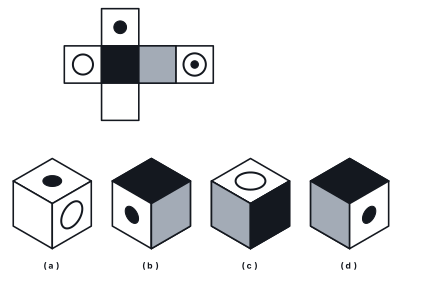
- In the figure above, which cube can be made from the net?acube abcube bccube cdcube d
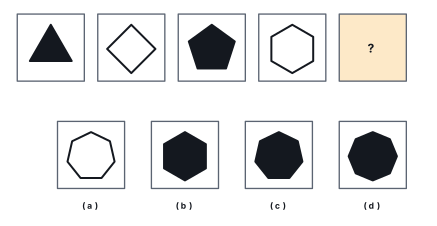
- In the figure above, which option comes next in the series?afigure abfigure bcfigure cdfigure d
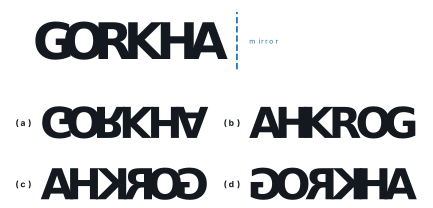
- In the figure above, which option is the mirror image of the word?aimage abimage bcimage cdimage d
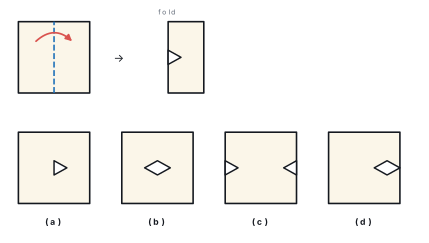
- In the figure above, which option shows the sheet when it is unfolded?asheet absheet bcsheet cdsheet d
- A cube painted on all its faces is cut into 125 equal small cubes. How many small cubes have exactly one painted face?a54b36c27d150
Answers and explanations — Set 1
1. (d) — South 5 (y = −5); left of south is east, 3 (x = 3); left of east is north, 9 (y = 4). She is 3 km east and 4 km north: \sqrt{3^2 + 4^2} = 5 km north-east.
2. (b) — The father of Rekha's daughter is Rekha's husband. The man is her husband's only brother — her brother-in-law.
3. (d) — Every letter moves one place on (M→N, E→F, D→E …). NURSE → OVSTF.
4. (a) — An ophthalmologist is the specialist for the eye; a dermatologist for the skin.
5. (c) — Nurses lie inside caregivers, and caregivers lie outside "careless", so no nurse is careless (I). II is the converse of "All nurses are caregivers", which gives "Some caregivers are nurses".
6. (c) — 1.25 × 0.80 = 1.00: the price returns to where it started. (Formula: 25 − 20 − 25 × 20/100 = 0.)
7. (a) — (3x + 9)/(5x + 9) = 3/4 gives 12x + 36 = 15x + 27, so x = 3: the numbers are 9 and 15. Check: 18 : 24 = 3 : 4.
8. (b) — CP = 1080/0.9 = Rs 1,200; for a 10 % gain, SP = 1200 × 1.1 = Rs 1,320. 1,188 takes 10 % of the selling price instead of the cost.
9. (d) — 54 km/h = 15 m/s; distance = 180 + 120 = 300 m; time = 300/15 = 20 s. 12 s forgets the bridge.
10. (b) — Five years ago the four totalled 4 × 24 = 96 years, so today they total 96 + 4 × 5 = 116. The five total 5 × 24 = 120, so the baby is 4 years old.
11. (c) — Differences 3, 5, 7, 9, so next 11: 27 + 11 = 38. (The terms are n^2 + 2.)
12. (d) — Positions 2, 5, 9, 14: steps +3, +4, +5, so +6 next: 20 = T.
13. (a) — The terms are n^2 - 1 for n = 11, 10, 9, 8, 7; next 6^2 - 1 = 35. (Differences 21, 19, 17, 15, then 13.)
14. (a) — 26 Jan 2026 to 26 Jan 2027 is 365 days (no 29 February in between), 1 odd day: Monday + 1 = Tuesday.
15. (b) — |30 × 2 − 5.5 × 20| = |60 − 110| = 50°.
16. (d) — Opposite pairs: dot–blank and ring–grey (column and row of three), black–bullseye (line black, grey, bullseye). (a) shows dot with blank and (c) ring with grey, so both are out. With black on top and blank in front, grey is on the right; turn the cube so grey comes to the front and the dot (the back face) comes round to the right: (d). (b) is the mirror arrangement.
17. (c) — The number of sides goes up by one (3, 4, 5, 6 → 7) and the shading alternates (filled, open, filled, open → filled). Only (c) is a filled seven-sided figure.
18. (c) — A mirror on the right reverses the order (A first) and flips every letter: look at G, R and K. (b) only reverses the order, (d) only flips the letters, (a) is the water image.
19. (b) — The cut is on the fold line, so it opens into a shape that is symmetric about the fold: the triangle and its reflection make a diamond in the middle of the sheet. (a) forgets to unfold; (c) and (d) reflect in the wrong line.
20. (a) — n = 5: 6(n − 2)² = 6 × 9 = 54. 36 is the two-face count, 27 the unpainted count.
Set 2 — timed: 20 questions, 18 minutes
- Arun faces east. He turns 90° clockwise, then 180°, then 45° anticlockwise. Which direction is he facing now?aNorth-eastbNorth-westcSouth-westdWest
- In a queue, Bimala is 7th from the front and 28th from the back. How many people are in the queue?a35b34c33d36
- If A = 1, B = 2, …, Z = 26 and FACE = 15, then BEAD =a12b11c13d10
- A is the father of B. B is the sister of C. D is the mother of A. How is C related to D?agrandsonbgranddaughtercgrandchilddson
- Statements: No fruit is a vegetable. Some vegetables are green. Conclusions: I. Some green things are not fruits. II. No green thing is a fruit.aOnly II followsbNeither followscOnly I followsdBoth follow
- At what rate per cent per annum, compounded yearly, will Rs 2,000 amount to Rs 2,420 in 2 years?a10.5 %b21 %c11 %d10 %
- 8 workers can build a wall in 15 days. Working at the same rate, how many days will 10 workers take?a18.75b12c13d10
- 60 litres of a mixture contain milk and water in the ratio 4 : 1. How much water must be added so that milk is 75 % of the new mixture?a4 litresb5 litresc3 litresd12 litres
- The largest four-digit number exactly divisible by 88 isa9988b9968c9900d9944
- Pipe A can fill a tank in 4 hours and pipe B in 6 hours. Opened together, they fill the empty tank ina2 hours 24 minutesb5 hoursc2 hours 40 minutesd10 hours
- Find the next term: 2, 5, 11, 23, 47, ?a94b95c96d71
- Find the next term: 6, 12, 9, 18, 15, 30, ?a27b60c33d24
- Find the next term: AZ, CX, EV, GT, ?aHSbIRcISdJR
- The calendar of the year 2027 will be repeated exactly in the yeara2033b2035c2034d2038
- How many times in a day are the hands of a clock at right angles to each other?a22b48c44d24
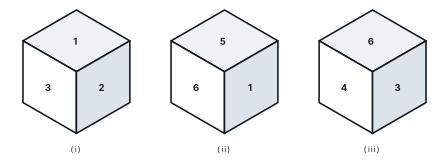
- In the figure above, which number is opposite 6?a1b3c2d5
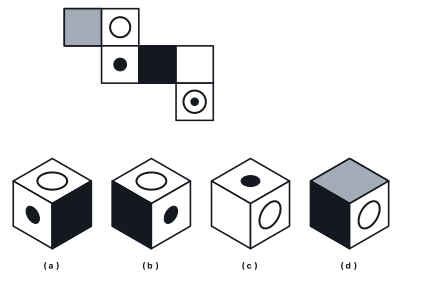
- In the figure above, which cube can be made from the net?acube abcube bccube cdcube d
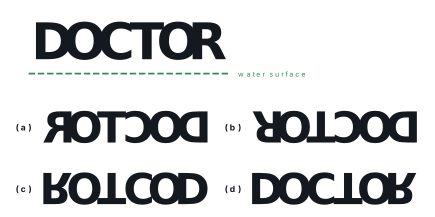
- In the figure above, which option is the water image of the word?aimage abimage bcimage cdimage d
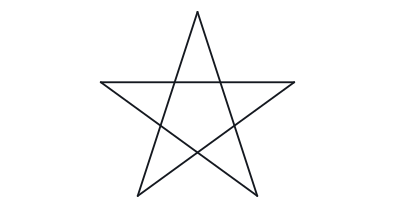
- How many triangles are there in the figure above?a5b8c12d10
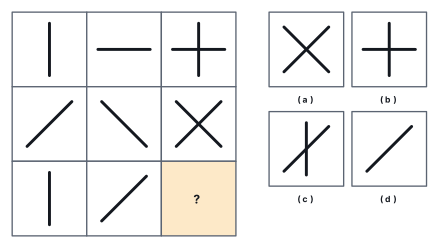
- In the figure above, which option replaces the question mark?afigure abfigure bcfigure cdfigure d
Answers and explanations — Set 2
1. (b) — East is 90°; +90° gives 180° (south); +180° gives 0° (north); −45° gives 315°, north-west.
2. (b) — N = 7 + 28 − 1 = 34. 35 counts Bimala twice.
3. (a) — FACE = 6 + 1 + 3 + 5 = 15 confirms the sum rule. BEAD = 2 + 5 + 1 + 4 = 12.
4. (c) — D is the mother of A, the father of B and C, so C is D's grandchild. C's gender is never given (B is the sister of C, but C may be a boy or a girl), so "grandchild" is the only safe answer.
5. (c) — The green things that are vegetables cannot be fruits (no vegetable is a fruit), so some green things are not fruits: I follows. Other green things may well be fruits, so II does not follow.
6. (d) — (1 + R/100)^2 = 2420/2000 = 1.21 = 1.1^2, so R = 10 %. 10.5 % is the simple-interest rate (420 over 2 years on 2,000).
7. (b) — Workers × days is constant: 8 × 15 = 120 worker-days; 120/10 = 12 days.
8. (a) — Milk = 4/5 × 60 = 48 L. For milk to be 75 %, the total must be 48/0.75 = 64 L, so add 4 L of water.
9. (d) — 9999 = 88 × 113 + 55, so the largest multiple is 9999 − 55 = 9944 (= 88 × 113).
10. (a) — 4 × 6/(4 + 6) = 2.4 hours = 2 hours 24 minutes. 5 hours is the plain average of the two times.
11. (b) — Each term is the one before × 2 + 1: 47 × 2 + 1 = 95.
12. (a) — The steps alternate ×2 and −3: 6, 12, 9, 18, 15, 30, then 30 − 3 = 27.
13. (b) — First letters A, C, E, G, I (+2); second letters Z, X, V, T, R (−2). Each pair adds to 27: IR.
14. (d) — 2027 is an ordinary year starting on a Friday. Odd days: 2027–2031 add 1 + 2 + 1 + 1 + 1 = 6, 2032 adds 2 (total 8 → 1), 2033–2037 add 1 + 1 + 1 + 2 + 1 = 6 (total 7 → 0). So 2038 starts on a Friday again and is an ordinary year.
15. (c) — Twice in every hour except near 3 and 9 o'clock, where one occasion is shared: 22 times in 12 hours, 44 times in a day.
16. (c) — 6 is seen with 5 and 1 in (ii) and with 4 and 3 in (iii): its four neighbours are 1, 3, 4, 5, so 2 is opposite 6. (This die is not standard: 1 is opposite 4.)
17. (a) — Opposite pairs: dot–blank (row of three), ring–bullseye and grey–black (the two Z shapes). (c) shows dot with blank and (d) grey with black. Fold with the dot on top: ring at the back, black on the right, bullseye in front. Tip the cube back so that the ring comes to the top: the dot comes to the front and black stays on the right — (a). (b) is the mirror arrangement.
18. (d) — A water image keeps the letters in order and turns each upside down (only T and R change visibly; D, O and C are symmetric top to bottom). (a) is the mirror image, (b) the half-turn, and (c) also reverses the order.
19. (d) — 5 small triangles at the points of the star, and 5 large ones: each line of the star joins two points, and with the other two lines from those points it makes a triangle whose third corner is a crossing point inside the star. The central pentagon is not a triangle. 5 + 5 = 10.
20. (c) — In every row the third figure is the first two laid on top of each other: | and — make +, / and \ make ×, so | and / make the figure in (c).
Set 3 — timed: 20 questions, 18 minutes
- In a certain code, south-west is called east, and all other directions are changed in the same way. What is north called?aSouth-westbNorth-eastcSouth-eastdWest
- Five friends A, B, C, D and E sit in a row facing north. C sits at the extreme left. B is second to the right of C. A is to the immediate right of B. E does not sit next to A. Who sits at the extreme right?aEbAcDdB
- In a code language, "mo pi ka" means "eat fresh fruit", "ka ta re" means "fruit is sweet" and "re su mo" means "sweet fresh mango". What is the code for "mango"?asubrecmodta
- Choose the odd one out.a121b169c225d289
- Statements: All squares are rectangles. All rectangles are parallelograms. Conclusions: I. All squares are parallelograms. II. Some parallelograms are squares.aOnly I followsbBoth I and II followcOnly II followsdNeither follows
- In an examination, 35 % of the students failed in English, 25 % failed in Mathematics and 10 % failed in both. What percentage passed in both subjects?a40 %b60 %c30 %d50 %
- A trader marks a watch so that, after allowing a 20 % discount, he still makes a 20 % profit on its cost of Rs 400. The marked price isaRs 576bRs 560cRs 600dRs 640
- At what rate of simple interest will Rs 2,500 earn Rs 600 in 3 years?a6 %b8 %c7.2 %d24 %
- Two buses start at the same time from two towns 200 km apart and travel towards each other at 45 km/h and 55 km/h. They meet aftera2 hoursb4 hoursc2.5 hoursd20 hours
- The unit digit of 2^{35} isa2b4c6d8
- Find the next term: 1, 4, 27, 256, ?a625b3125c1024d1296
- Find the next letter: Z, X, U, Q, ?aMbKcNdL
- Find the next term: A2Z, C4X, E6V, ?aG8TbF8UcG7TdH8S
- The first day of a month is a Tuesday. On which date does the third Thursday of that month fall?a15b16c18d17
- At what time between 3 and 4 o'clock are the hands of a clock in a straight line, pointing in opposite directions?a49 1/11 minutes past 3b45 minutes past 3c16 4/11 minutes past 3d50 minutes past 3
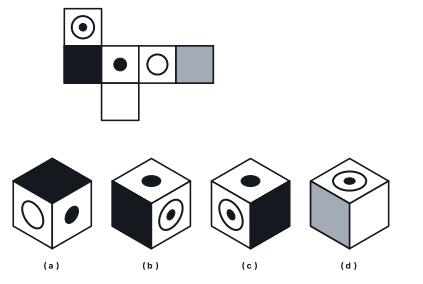
- In the figure above, which cube can be made from the net?acube abcube bccube cdcube d
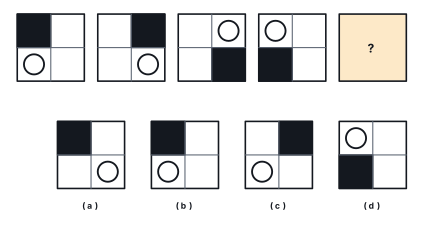
- In the figure above, which option comes next in the series?afigure abfigure bcfigure cdfigure d
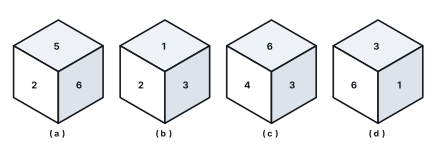
- In the figure above, which could be a standard die, on which the numbers on opposite faces add up to 7?adie abdie bcdie cddie d
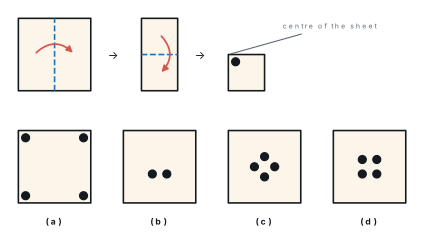
- In the figure above, which option shows the sheet when it is unfolded?asheet absheet bcsheet cdsheet d
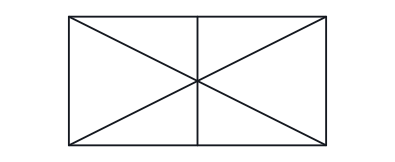
- How many triangles are there in the figure above?a8b10c12d14
Answers and explanations — Set 3
1. (a) — South-west (225°) has become east (90°): every direction turns 135° anticlockwise. North (0°) → 0 − 135 = −135°, i.e. 225°: south-west.
2. (c) — C is in place 1, B in place 3, A in place 4. D and E take places 2 and 5; place 5 is next to A, so E is in place 2 and D in place 5: C E B A D.
3. (a) — "re" is common to sentences 2 and 3 (sweet), "mo" to 1 and 3 (fresh). In sentence 3 the word left, "mango", has the code left: su.
4. (c) — 121, 169 and 289 are squares of the primes 11, 13 and 17; 225 = 15^2, and 15 is not prime.
5. (b) — Squares ⊂ rectangles ⊂ parallelograms gives I. II is the converse of I, and "All A are B" always gives "Some B are A".
6. (d) — Failed in at least one subject = 35 + 25 − 10 = 50 %, so 50 % passed in both. 40 % forgets that the 10 % were counted twice.
7. (c) — SP = 400 × 1.2 = Rs 480, and SP = 0.8 × MP, so MP = 480/0.8 = Rs 600. 576 adds 20 % to the selling price instead.
8. (b) — R = 100 × SI/(P × T) = 100 × 600/(2500 × 3) = 8 %. 24 % is the interest over all three years.
9. (a) — They close the gap at 45 + 55 = 100 km/h: 200/100 = 2 hours.
10. (d) — Powers of 2 end in 2, 4, 8, 6 (cycle of 4). 35 = 4 × 8 + 3, so the 3rd term: 8.
11. (b) — The terms are 1^1, 2^2, 3^3, 4^4, so next 5^5 = 3125.
12. (d) — Positions 26, 24, 21, 17: steps −2, −3, −4, then −5: 12 = L.
13. (a) — First letters A, C, E, G (+2); numbers 2, 4, 6, 8; last letters Z, X, V, T (−2): G8T.
14. (d) — The 1st is a Tuesday, so the 3rd is the first Thursday; then the 10th and the 17th.
15. (a) — Opposite when 5.5M − 30 × 3 = 180: 5.5M = 270, M = 540/11 = 49 1/11 minutes. 16 4/11 minutes is when the hands are together.
16. (c) — Opposite pairs: black–ring (row black, dot, ring), dot–grey (row dot, ring, grey), bullseye–blank. (a) shows black with ring and (d) bullseye with blank. With the dot on top, black folds to the left, ring to the right, blank to the front and bullseye to the back; turn the cube half round so the bullseye is in front and black on the right — (c). (b) is the mirror arrangement.
17. (b) — The black square moves one quarter clockwise each step (top-left, top-right, bottom-right, bottom-left, then top-left). The circle moves one quarter anticlockwise (bottom-left, bottom-right, top-right, top-left, then bottom-left). (d) repeats step 4.
18. (b) — Faces that meet at a corner are never opposite, so no two visible numbers may add to 7. (a) shows 5 and 2, (c) 4 and 3, (d) 6 and 1. Only 1, 2, 3 is possible.
19. (d) — The hole is next to the corner that lies at the centre of the sheet. Opening each fold reflects it in a line through the centre, so the four holes sit close round the centre in a square. (a) is the answer for a hole at the outer corner; (b) forgets one fold.
20. (c) — 6 small triangles round the centre, 2 made of the two small ones on each long side (above and below the centre), and 4 half-rectangle triangles cut off by the diagonals: 6 + 2 + 4 = 12.