Unit 1 · 20 min read
Organisations and Introduction to Management
What the syllabus asks for 6
- The nature of organisations
- What is management?
- The management process and functions
- Managerial hierarchy and types of managers
- Managerial skills and roles
- Emerging challenges for management
Every software team, college, hospital and shop is an organisation, and every organisation needs someone to coordinate effort towards its goals. That coordinating work is management.
This unit defines organisations and their goals, then management itself: its characteristics, principles, functions, levels, skills and roles.
- The concept of an organisation, organisational goals and the problems of setting them.
- Definition, characteristics and principles of management (Fayol's fourteen).
- The management process and functions: planning, organising, leading, controlling.
- Managerial hierarchy and types of managers; Katz's skills; Mintzberg's roles.
- Emerging challenges for managers.
1.1 The nature of organisations
An organisation is a deliberately structured social unit of two or more people who work together on a continuing basis to achieve common goals. Four features: (1) people, (2) common goals, (3) structure (roles and relationships), (4) a boundary that separates members from outsiders.
Examples: a company, a campus, a government office, an NGO, a football club.
| Type | Purpose | Examples |
|---|---|---|
| Business (profit) | earn profit by selling goods and services | Daraz, a software company, a bank |
| Government / public | public service and regulation | Tribhuvan University, Nepal Electricity Authority |
| Non-profit / NGO | social or charitable aims | a community library, a Red Cross unit |
| Mutual benefit | serve members | a cooperative, a trade union |
Organisations take inputs (people, money, materials, information), transform them, and send out outputs (products, services) to an environment from which they receive feedback — an open system.
Organisational goals
A goal is a desired future state the organisation tries to reach. Goals give direction, a standard for judging performance, motivation, legitimacy (justifying existence) and a basis for coordination.
| Type of goal | Meaning | Example |
|---|---|---|
| Official goals | what the organisation says it exists for (mission statement) | "Provide quality computing education" |
| Operative goals | what it actually pursues, in daily decisions | graduating more students; raising fee income |
| Operational goals | specific, measurable targets | "Raise pass rate to 85 % by 2083" |
| Strategic / tactical / operational | by level of management and time | 5-year / 1-year / monthly |
| Short-, medium-, long-term | by time |
Features of effective goals (the SMART test): Specific, Measurable, Achievable, Realistic/relevant, Time-bound; also consistent with each other, understood and accepted by those who carry them out, challenging, and flexible.
Goal formulation — the process: scan the environment, analyse the organisation's strengths, consult stakeholders (owners, managers, employees, customers, government), draft goals, check feasibility, approve and communicate them.
Approaches: top-down (management sets them), bottom-up (units propose), and participative (negotiated — as in management by objectives, Unit 3).
Goal succession and displacement.
Succession when the original goal is achieved or impossible, a new goal replaces it so the organisation survives (the March of Dimes, formed to fight polio, turned to birth defects after the vaccine).
Displacement the means become the ends — following rules, procedures or budgets becomes more important than the purpose (a clerk insists on the stamp even when the service is failed; a sales team inflates numbers to hit the target).
Problems of goal formulation: conflicting goals of stakeholders; vague goals; too many goals; short-term pressure beating long-term aims; goals that cannot be measured; changing environment; goals imposed without commitment.
Changing perspectives on organisation
Early views saw organisations as machines (efficiency, rules); then as communities of people (needs, relationships); then as open systems that adapt to the environment, learning organisations and networks.
Today they are expected to serve multiple stakeholders and society, not shareholders alone.
1.2 What is management?
Several definitions, all with the same core:
- Mary Parker Follett: "the art of getting things done through people."
- Stoner: "the process of planning, organising, leading and controlling the efforts of organisation members and of using all other organisational resources to achieve stated organisational goals."
- Koontz and O'Donnell: "creating and maintaining an environment in which individuals work together in groups to accomplish selected aims."
In plain words: management is working with and through other people to achieve organisational goals efficiently and effectively.
- Efficiency — doing things right: getting the most output from the least input (resources, time, money).
- Effectiveness — doing the right things: achieving the goal. A manager aims at both; efficiently producing a product nobody wants is efficient but ineffective.
Characteristics of management
- Goal-oriented — it exists to achieve objectives.
- Universal — needed in every organisation and every level (a shop, a hospital, a project team).
- A social process — about dealing with people.
- Multidimensional — managing work, people and operations.
- Continuous — an ongoing cycle, not a one-off act.
- Dynamic — adapts to change.
- Group activity — it coordinates the efforts of many.
- Both an art and a science — a science because it has organised, tested knowledge; an art because applying it requires personal skill and judgement; and a profession to the extent that it has a body of knowledge, training and ethics, though no licence is required.
- Intangible — seen in its results, not seen itself.
Principles of management
A principle is a fundamental truth that guides decisions and behaviour — flexible guidelines, not rigid laws. Henri Fayol's fourteen principles:
| # | Principle | Meaning |
|---|---|---|
| 1 | Division of work | specialisation raises efficiency |
| 2 | Authority and responsibility | the right to give orders goes with the duty to answer for results |
| 3 | Discipline | obedience and respect for agreements |
| 4 | Unity of command | one boss for each employee |
| 5 | Unity of direction | one plan and one head for each group of activities with the same objective |
| 6 | Subordination of individual interest to general interest | the organisation's interest comes first |
| 7 | Remuneration | fair pay for both employees and the organisation |
| 8 | Centralisation | the right balance between central and delegated authority |
| 9 | Scalar chain | the line of authority from top to bottom (with a "gang plank" for direct cross-links in emergencies) |
| 10 | Order | the right person and material in the right place at the right time |
| 11 | Equity | kindness and justice to staff |
| 12 | Stability of tenure | avoid unnecessary turnover |
| 13 | Initiative | allow employees to think and act |
| 14 | Esprit de corps | "union is strength": team spirit |
1.3 The management process and functions
Management is a process: a series of continuing, interrelated activities. The four classical functions (Fayol's five reduce to these four by merging command into leading):
| Function | Question it answers | Key activities |
|---|---|---|
| Planning | Where do we want to go and how do we get there? | set goals, forecast, choose strategies, make plans and schedules |
| Organising | Who does what, and who reports to whom? | design structure, divide work, assign authority, staff, coordinate |
| Leading (directing) | How do we get people to perform? | motivate, communicate, lead, resolve conflict |
| Controlling | Are we getting there? | set standards, measure, compare, take corrective action |
   Planning ──► Organising ──► Leading ──► Controlling
       ▲                                       │
       └─────────── feedback and revision ─────┘
The functions overlap and loop: control results feed new planning. Staffing (recruiting, training, appraising) is sometimes listed separately but is treated here as part of organising (Unit 4).
1.4 Managerial hierarchy and types of managers
Levels of management
| Level | Titles | Time horizon | Main concern | Skills most needed |
|---|---|---|---|---|
| Top (strategic) | board, CEO, managing director | long (3–5+ years) | mission, strategy, environment, overall policy | conceptual |
| Middle (tactical) | department heads, branch managers | medium (months to a year) | convert strategy into departmental plans, coordinate | conceptual + human |
| First-line / supervisory (operational) | supervisors, team leaders, foremen | short (day to week) | day-to-day operations, supervising non-managers | technical + human |
Below them are operatives (non-managerial employees). The shape is a pyramid: few at the top, many at the base.
Types of managers
- By scope: functional managers (one area: marketing, finance, production, HR, IT) and general managers (responsible for a whole unit with all functions).
- By role: line managers (directly responsible for the core output) and staff managers (advisers and support: HR, legal, finance).
- By level: top, middle, first-line (above).
- Project managers for temporary projects; team leaders in flat organisations.
1.5 Managerial skills and roles
Katz's three skills
| Skill | Meaning | Where it matters |
|---|---|---|
| Technical | knowing the methods, tools and techniques of a specialised field (coding, accounting) | most at the lowest level |
| Human (interpersonal) | working with, understanding and motivating people; communication, teamwork | equally important at all levels |
| Conceptual | seeing the organisation as a whole, thinking abstractly, diagnosing problems, planning strategy | most at the top |
Some add design (solving problems creatively) and political skills.
Mintzberg's ten managerial roles (1973)
| Category | Roles | Examples |
|---|---|---|
| Interpersonal | figurehead, leader, liaison | attending a graduation; motivating a team; networking with other departments |
| Informational | monitor, disseminator, spokesperson | reading reports; passing information to staff; speaking to the press |
| Decisional | entrepreneur, disturbance handler, resource allocator, negotiator | launching a new project; resolving a strike; allocating budget; negotiating a contract |
Mintzberg found that real managerial work is fragmented and fast: short bursts, many interruptions, verbal contacts — unlike the tidy picture of the four functions.
1.6 Emerging challenges for management
- Globalisation — competition and partners across borders; remote and outsourced teams.
- Technology and digital disruption — automation, AI, e-commerce, data; the need for continuous skill updating.
- Workforce diversity — gender, age, ethnicity, language, ability; inclusion.
- Ethics and social responsibility — honesty, sustainability, corporate governance, anti-corruption.
- Quality and productivity — customer expectations and cost pressure.
- Knowledge workers and talent retention — brain drain; in Nepal, the loss of skilled youth abroad.
- Change and uncertainty — pandemics, political and economic shocks, fast-moving markets.
- Work–life balance, well-being and remote work.


1.2.1 Eight reasons why management is important
- It gives direction to effort. Without clear goals, people in an organisation work hard but in different directions. Management turns the vision of a bank, a hospital or a college into targets that everyone understands. For example, a Kathmandu bank that sets a goal of opening 20 new branches in a year can then plan staff, money and premises to match.
- It uses scarce resources well. People, money, time and machines are always limited, especially in a small economy like Nepal's. Managers decide which use of a resource gives the most output for each rupee spent. A school that shares one computer lab among six classes through a timetable is practising this idea.
- It coordinates many people. Even a small software company has analysts, programmers, testers and sales staff who depend on each other. Management arranges who does what and when, so that work fits together without gaps or double effort. This is the organising function of Figure 1.2.
- It helps the organisation survive change. Prices, laws, technology and customer taste keep changing, as the growth of Fonepay and ConnectIPS has changed banking habits. Managers who scan the environment can adjust plans before the change becomes a crisis. Figure 1.1 shows the feedback loop that makes this possible.
- It improves efficiency and effectiveness. Efficiency means doing things right with little waste, and effectiveness means doing the right things to reach the goal. Good management aims at both, for example by cutting the time to issue a driving licence while still checking each applicant carefully.
- It motivates and develops people. Employees stay longer and work better when they receive fair pay, recognition and training. A manager who coaches a junior programmer is building the organisation's future skills as well as finishing today's task. Strong leadership is a central part of the process.
- It meets social and legal duties. Organisations must pay taxes, protect workers and respect the environment, whether they are a hotel in Pokhara or a factory in Biratnagar. Management makes sure these duties are planned for and checked. This protects the organisation's good name.
- It creates growth and stability. A well-managed organisation earns trust from customers, lenders and employees, which lets it expand safely. Poor management is the commonest reason that small businesses close within a few years. For a developing country, many well-run organisations are the basis of jobs and national income.
Formula and fact sheet
- Management = getting things done through people to reach goals; efficiency = right way; effectiveness = right goal.
- Functions: planning, organising, leading, controlling. Fayol's principles: 14.
- Goals: SMART; official vs operative vs operational; succession (new goal) vs displacement (means become ends).
- Levels: top (conceptual), middle, first-line (technical); human skill needed at all levels.
- Mintzberg: 3 categories — interpersonal (3), informational (3), decisional (4) = 10 roles.
Chapter summary
- An organisation is a structured group pursuing common goals; effective goals are SMART, accepted and consistent; goals can be displaced or succeeded.
- Management is the process of planning, organising, leading and controlling to achieve goals efficiently and effectively; it is universal, goal-directed and both an art and a science.
- Fayol's fourteen principles guide structure and behaviour as flexible rules.
- There are three levels of managers needing different mixes of technical, human and conceptual skills; Mintzberg describes ten roles.
- Globalisation, technology, diversity, ethics and change are the main challenges.
Practice
- Define an organisation and explain its features with two examples.
- Explain the characteristics and importance of organisational goals. What makes a goal effective?
- Differentiate between goal succession and goal displacement with examples.
- Define management. Differentiate between efficiency and effectiveness.
- Is management an art, a science or a profession? Discuss.
- List and explain any eight of Fayol's principles.
- Explain the four functions of management with examples from a college.
- Describe the three levels of management and the skills each needs.
- Explain Mintzberg's managerial roles.
- Discuss four emerging challenges for managers in Nepal.
Answers and worked solutions
1. A deliberately structured group of people working together continuously for common goals; features: people, goals, structure, boundary. Examples: a bank (profit) and the Red Cross (non-profit).
2. Goals give direction, standards, motivation, legitimacy and coordination. Effective goals are SMART, consistent, accepted, challenging and flexible.
3. Succession replaces an achieved or impossible goal with a new one to survive (March of Dimes: polio → birth defects). Displacement replaces the purpose with the means (rule-following more important than service).
4. Management = getting things done through people to achieve goals. Efficiency = doing things right (minimum input per output); effectiveness = doing the right things (achieving the goal).
5. All three: a science (organised, tested knowledge), an art (personal skill in applying it) and a developing profession (body of knowledge, training, ethics) though without compulsory licensing.
6. Choose eight from the table: e.g. division of work, authority and responsibility, discipline, unity of command, unity of direction, scalar chain, equity, initiative — each with its one-line meaning.
7. Planning — set the semester calendar and pass-rate target; organising — assign teachers, rooms and committees; leading — motivate staff, communicate with students; controlling — compare results with targets and act on gaps.
8. Top: strategy, conceptual skills; middle: coordination, conceptual + human; first-line: supervision, technical + human. Human skills are important at all levels.
9. Interpersonal (figurehead, leader, liaison), informational (monitor, disseminator, spokesperson), decisional (entrepreneur, disturbance handler, resource allocator, negotiator).
10. E.g. youth emigration and talent retention, technological change (digital payments, AI), workforce diversity and inclusion, ethics and governance, uncertainty (earthquakes, politics, pandemics).
Model answers (5 and 10 marks)
Q1 (5 marks). Define management and explain its main characteristics.
Introduction. Management is the process of planning, organising, leading and controlling the work of people and the use of resources so that the goals of an organisation are achieved efficiently and effectively.
Figure 1.2 shows the four functions as one cycle around the goals.
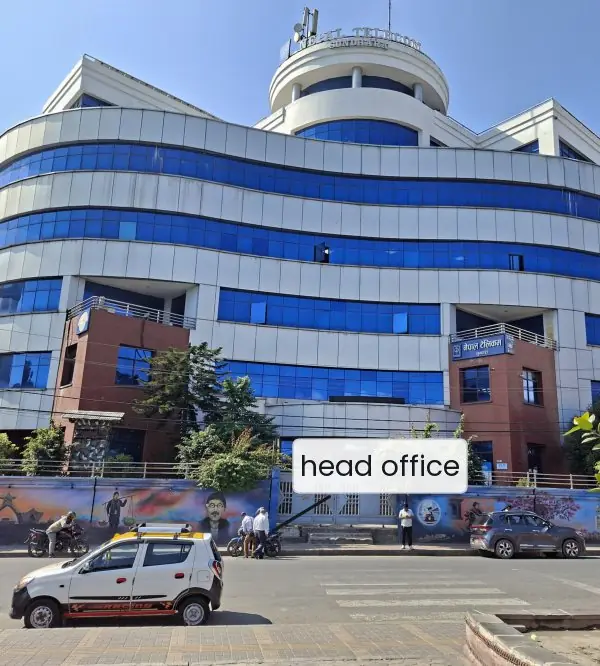
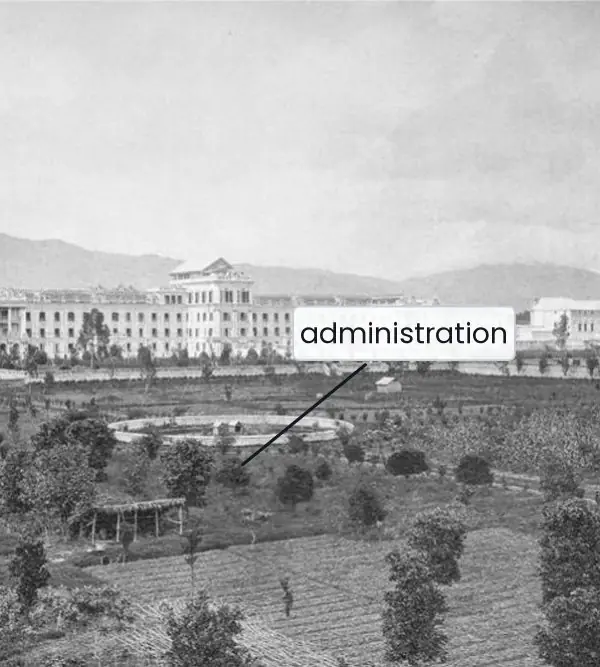
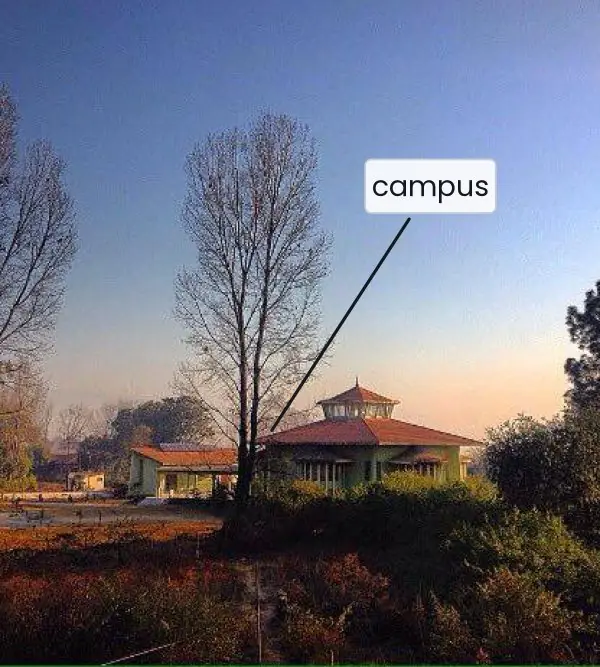
- Goal-oriented. Management exists to achieve goals, such as profit for a company, service for Nepal Telecom customers or graduates for a university (Plate 1.1).
- Universal. Banks, ministries, hospitals and colleges all need it, although the goals differ.
- Process of several functions. Planning, organising, leading and controlling are connected and repeated.
- Multi-level. Top, middle and first-line managers share the work (Figure 1.3), each with a different emphasis.
- Dynamic and continuous. It adjusts to a changing environment through feedback (Figure 1.1).
- Art, science and profession. It uses organised knowledge, personal skill in applying it, and a growing code of professional conduct.
Conclusion. Management is not a single act but a continuing, goal-directed process that every organisation needs, and its quality decides whether resources become results.
Q2 (5 marks). Explain Katz's three managerial skills and how their importance changes with the level of management.
Introduction. Robert Katz (1955) argued that managerial success depends on three skills rather than on personality traits. Figure 1.3 shows how the mix changes along the hierarchy.
- Technical skill is the ability to use the methods, tools and knowledge of a specialised field, for example a supervisor who can repair a machine or a team leader who can review code. It is most important for first-line managers, who guide the daily work.
- Human skill is the ability to understand, motivate, communicate with and lead people, individually and in groups. It is needed equally at every level because management is work done through people.
- Conceptual skill is the ability to see the organisation as a whole, to understand how its parts and its environment connect, and to think strategically. A chief executive deciding whether a bank should enter mobile payments is using it, so it is most important at the top.
| Level | Strongest need | Typical example |
|---|---|---|
| Top | conceptual | managing director sets strategy |
| Middle | human and conceptual | branch manager coordinates supervisors |
| First-line | technical and human | shift supervisor guides staff |
Conclusion. A person promoted from technical work must therefore develop human and conceptual skills; the ability that earned the first promotion is rarely enough for the next.
Q3 (10 marks). Define management and explain the management process (functions) in detail. Discuss the levels of management and the roles a manager plays, with examples from Nepal.
Introduction. Management is the process of working with and through other people to achieve organisational goals efficiently and effectively in a changing environment.
It is practised in every organisation, from Nepal Telecom to Tribhuvan University and the Government of Nepal (Plate 1.1).
Its work is divided into four connected functions, shown in Figure 1.2, and it is shared among three levels, shown in Figure 1.3.
The four functions.
- Planning is deciding in advance what to achieve and how. It includes setting objectives, forecasting, choosing strategies and writing budgets. A college that plans to start a BCA programme must decide intake, staff, labs and fees before the first class.
- Organising turns the plan into a working structure. The manager divides the work into jobs, groups jobs into departments, assigns authority and responsibility, and arranges staff and resources. The result is an organisation chart in which everyone knows their task and their boss.
- Leading means influencing people to work willingly for the goals. It covers motivation, communication, leadership style and handling conflict. A manager who explains why a deadline matters and rewards good effort gets better results than one who only gives orders.
- Controlling measures actual results, compares them with the plan, finds the cause of any deviation and corrects it. Monthly sales reports, budget variance reports and examination result analysis are control tools. The corrections go back into the next plan, so the cycle continues.
Levels of management. Top managers (managing director, general manager, campus chief) set the direction and are responsible for the whole organisation.
Middle managers (branch or department heads) turn strategy into operating plans and coordinate supervisors. First-line managers (supervisors, team leaders) direct the workers who do the actual tasks.
The pyramid shape shows that managers become fewer and the time horizon longer as one moves up.
Managerial roles (Mintzberg, 1973). Henry Mintzberg observed real managers and grouped ten roles into three sets.
Interpersonal figurehead, leader, liaison.
Informational monitor, disseminator, spokesperson.
Decisional entrepreneur, disturbance handler, resource allocator, negotiator. A branch manager who welcomes a guest of honour is a figurehead; one who reads daily reports is a monitor; one who settles a staff dispute is a disturbance handler.
| Basis | Top | Middle | First-line |
|---|---|---|---|
| Main concern | strategy and goals | tactics and coordination | daily operations |
| Time horizon | years | months | days and weeks |
| Strongest skill | conceptual | human and conceptual | technical and human |
| Nepali example | managing director | branch manager | shift supervisor |
Conclusion. Management is a continuous cycle of planning, organising, leading and controlling, carried out at three levels through ten roles.
A student who understands these functions can analyse any organisation in Nepal and see where its problems lie, whether in unclear goals, weak structure, poor leadership or missing control.