Unit 5 · 24 min read
Leading: Leadership, Motivation and Communication
What the syllabus asks for 5
- Leadership
- Groups
- Conflict
- Motivation
- Communication
Plans and structures achieve nothing until people act. Leading is the function of influencing people to work willingly towards the goals.
This unit covers leadership (concept, functions, approaches and styles), groups, conflict, motivation theories and rewards, and communication — the process, types, barriers and ways to improve it.
- Concept and functions of leadership; trait, behavioural and situational approaches; styles.
- Groups: formation, types and characteristics; conflict and its management.
- Motivation: concept; Maslow, Herzberg, McGregor, Vroom's expectancy theory; rewards, participation and quality of work life.
- Communication: concept, process, formal and informal, interpersonal, non-verbal, barriers, improvement.
5.1 Leadership
Leadership is the process of influencing others to willingly work towards the achievement of goals. Management is broader (planning, organising, controlling); leadership is one part of managing — but a vital one.
| Manager | Leader | |
|---|---|---|
| Source of authority | formal position | influence, trust, vision (may be informal) |
| Focus | systems, processes, order | people, direction, change |
| Question | how and when | what and why |
| Orientation | short-term, control | long-term, inspire |
A good manager should also lead; a leader without a formal position can lead an informal group.
Functions of a leader
Setting the vision and direction; motivating and inspiring; communicating; building teams; coordinating and guiding; representing the group; developing followers; resolving conflicts; acting as a role model; taking decisions.
Sources of power (French and Raven)
Legitimate (position), reward, coercive (punishment), expert (knowledge), referent (admiration, charisma); information power was added later.
Approaches to leadership
1. Trait approach — leaders are born with qualities. Studies found common traits: intelligence, self-confidence, integrity, drive, initiative, empathy, communication skill, decisiveness, vision, emotional stability.
Critique no trait guarantees success; traits can be developed; ignores the situation.
2. Behavioural approach — what leaders do.
- Ohio State: two dimensions — consideration (people-oriented: trust, warmth) and initiating structure (task-oriented: defines roles and goals). The best is usually high on both.
- Michigan: employee-centred vs job-centred leaders; employee-centred got better results.
- Blake and Mouton's Managerial (Leadership) Grid: concern for production (horizontal axis, 1–9) and concern for people (vertical, 1–9): 1,1 impoverished (minimum effort); 9,1 authority–compliance (task first); 1,9 country club (people first); 5,5 middle-of-the-road; 9,9 team management — the ideal: high on both.
3. Situational (contingency) approach — the best style depends on the situation.
- Fiedler's contingency model: effectiveness depends on the match between the leader's style (task- or relationship-oriented, measured by the LPC score) and situational favourableness (leader–member relations, task structure, position power). Task-oriented leaders do best in very favourable and very unfavourable situations; relationship-oriented in the middle.
- Hersey and Blanchard's situational leadership: the style should match the followers' readiness (maturity): telling (low readiness: high task, low relationship), selling (high task, high relationship), participating (low task, high relationship), delegating (high readiness: low task, low relationship).
- House's path–goal theory: the leader clears the path to goals: directive, supportive, participative or achievement-oriented, depending on the followers and the task.
- Transformational vs transactional: transformational leaders inspire a vision and change; transactional exchange rewards for performance.
Leadership styles
| Style | Decision making | Communication | Suits | Drawbacks |
|---|---|---|---|---|
| Autocratic (authoritarian) | the leader decides alone and commands | one-way, downward | emergencies, unskilled or new workers, quick decisions | resentment, no initiative, high turnover, dependence on the leader |
| Democratic (participative) | the leader consults the group, decisions made jointly or with their input | two-way | skilled, motivated teams; complex problems; need for commitment | slow, can fail if the group lacks competence or time |
| Laissez-faire (free-rein) | the group decides; the leader gives minimal direction | minimal | highly skilled, self-motivated professionals (researchers) | confusion, lack of direction, poor coordination |
| Participative (a broader family: consultative, consensus) | subordinates have a voice (consultative: the leader listens but decides; joint: both decide) | open | most knowledge-based work | time-consuming |
Also paternalistic (benevolent father figure), charismatic, servant leadership. In Nepali organisations, a hierarchical culture often favours autocratic leadership; many young software firms adopt participative styles.
The effective leader adapts the style to the people, task and time.
5.2 Groups
A group is two or more interacting and interdependent individuals who come together to achieve particular objectives.
| Type | Meaning | Example |
|---|---|---|
| Formal | created by the organisation to do work | a department, project team, committee |
| Informal | forms naturally from social needs | friends who lunch together, a cricket club |
| Command (functional) group | formal group reporting to one manager | the accounts department |
| Task force / project team | temporary for one task | a software release team |
| Interest group | common concern | staff association |
| Friendship group | social ties | colleagues from one district |
| Primary vs secondary | face-to-face and close vs larger and impersonal |
Group formation (Tuckman's stages)
Forming (members meet; uncertainty), storming (conflict over roles and leadership), norming (rules and cohesion), performing (productive teamwork), adjourning (group dissolves).
Why people join groups: security, status, self-esteem, affiliation, power, goal achievement.
Characteristics of groups
Roles, norms (unwritten standards of behaviour — and the Hawthorne bank-wiring group's norm of restricting output), status, size (5–9 is effective; larger groups lose participation, and social loafing appears), cohesiveness (the attraction of members to the group; high cohesion with positive norms gives high performance; with negative norms, low performance), conformity, groupthink (the desire for harmony overrides critical thinking).
A team is a special group with complementary skills, a common purpose and mutual accountability; its output exceeds the sum of individuals' (synergy).
5.3 Conflict
Conflict is a process in which one party perceives that another has frustrated or is about to frustrate its interests.
Views: traditional (conflict is bad), human relations (natural, inevitable), interactionist (some conflict is useful — it stimulates creativity and change).
Types: intrapersonal (within an individual: role ambiguity), interpersonal (between individuals), intragroup, intergroup (between departments, e.g. sales vs production), interorganisational.
Functional (constructive) vs dysfunctional (destructive). Causes: limited resources, goal differences, unclear responsibilities, communication problems, personality and value differences, interdependence, change.
Managing conflict — Thomas–Kilmann modes (assertiveness × cooperativeness):
| Mode | Behaviour | When to use |
|---|---|---|
| Competing | win-lose, uses power | emergencies, unpopular but necessary decisions |
| Collaborating | win-win, solves the problem together | important issues, need for commitment |
| Compromising | each gives something | time pressure, equal power |
| Avoiding | withdraws | trivial issues, to cool down |
| Accommodating | gives in | issue matters more to the other, to build goodwill |
Other methods: superordinate goals, negotiation and mediation/arbitration, structural change, clear rules, job rotation, better communication; stimulating conflict when a group is stale.
5.4 Motivation
Motivation is the inner force that drives people to act to satisfy needs and achieve goals — it determines the direction, intensity and persistence of effort.
Performance = ability × motivation (× resources): talent without motivation yields nothing. Importance: raises productivity and quality, lowers absenteeism and turnover, increases satisfaction and adaptability.
Process model: unsatisfied need → drive (tension) → goal-directed behaviour → satisfaction → reduced tension (and new needs appear).
Content theories (what motivates)
Maslow's hierarchy of needs — needs are arranged in five levels; a lower need must be reasonably satisfied before the next one motivates; a satisfied need no longer motivates.
| Level | Need | Workplace examples |
|---|---|---|
| 5 | Self-actualisation | challenging work, creativity, growth, achievement of potential |
| 4 | Esteem | recognition, status, promotion, respect, awards |
| 3 | Social (belonging) | teamwork, friendship, acceptance, good supervision |
| 2 | Safety/security | job security, safe conditions, pension, insurance |
| 1 | Physiological | pay for food, shelter, rest, comfortable working conditions |
Critique: little research support for a strict order; needs differ among individuals and cultures; useful as a checklist. Alderfer's ERG (existence, relatedness, growth) allows moving up and down and several needs at once.
Herzberg's two-factor (motivation–hygiene) theory — two separate sets of factors:
| Hygiene factors (dissatisfiers) | Motivators (satisfiers) |
|---|---|
| company policy and administration, supervision, salary, working conditions, job security, relationships with peers, status | achievement, recognition, the work itself, responsibility, advancement, growth |
| Their absence causes dissatisfaction; their presence only prevents dissatisfaction — it does not motivate | Their presence motivates and satisfies; their absence merely leaves one not satisfied |
The opposite of satisfaction is "no satisfaction", not dissatisfaction. Managers should first fix hygiene factors, then add motivators through job enrichment (more responsibility and autonomy).
Critique based on a limited sample (accountants and engineers); self-report bias; but widely used.
McClelland's needs theory — need for achievement, affiliation and power; high achievers want moderate risk, feedback and responsibility.
Theory X and Theory Y (McGregor)
Theory X managers assume people dislike work, avoid responsibility and need coercion and control → autocratic style.
Theory Y managers assume people like work, seek responsibility and are self-directed → participative style; self-fulfilling: the assumption influences behaviour.
Process theories (how motivation works)
Vroom's expectancy theory: motivation depends on three beliefs: Motivational force = Expectancy (E) × Instrumentality (I) × Valence (V), where E = effort will lead to performance (0–1), I = performance will lead to the reward (0–1), V = how much the reward is valued (e.g. −10 to +10).
If any factor is zero, motivation is zero.
An employee believes that extra effort will produce a good project result with probability 0.8 (E), that a good result brings a bonus with probability 0.9 (I), and values the bonus at 7 on a 10-point scale (V).
Force = 0.8 × 0.9 × 7 = 5.04. If the firm never actually pays bonuses (I = 0), the force is 0 however attractive the bonus. Lesson: link rewards to performance visibly, train people (raise E) and offer rewards people value (raise V).
Adams' equity theory: people compare their input/outcome ratio with that of others; perceived inequity reduces effort (or changes inputs, outcomes, or the comparison).
Skinner's reinforcement theory: behaviour followed by positive consequences is repeated (positive reinforcement, negative reinforcement, punishment, extinction).
Locke's goal-setting theory: specific, challenging, accepted goals with feedback raise performance (the basis of MBO).
Reward systems to motivate performance
- Financial: wages and salary, incentives (piece rates, commissions), bonuses, profit sharing, stock options, allowances, gain sharing, pay for skills.
- Non-financial: recognition and praise, awards, promotion, job security, training and development, job enrichment (vertical: more responsibility), job enlargement (horizontal: more tasks), job rotation, flexible hours, a good workplace, challenging assignments. Principles: rewards should be linked to performance, fair (equity), timely, valued, and transparent.
Motivation through employee participation
- Quality of work life (QWL): a job and working environment that satisfy employees' needs: fair pay, safe conditions, job security, growth, participation, work–life balance, democracy at work.
- Quality circles: small groups of volunteers meeting regularly to solve work problems.
- Suggestion schemes, employee involvement/consultation, empowerment.
- Self-managed (self-directed) teams: teams that plan, schedule and control their own work with little supervision — higher motivation, flexibility and responsibility, lower supervision cost.
5.5 Communication
Communication is the process of exchanging information, ideas and understanding between people. It is the lifeblood of the organisation: managers spend most of their time communicating (Mintzberg's informational roles).
The communication process
Sender (encodes the idea) ─► Message ─► Channel/medium ─► Receiver (decodes) ─► Feedback ─► Sender
                  (noise can disturb the message at any stage)
Elements: sender (source) → encoding (words, symbols, gestures) → message → channel (speech, written note, phone, e-mail, video, face-to-face) → decoding → receiver → feedback (confirms understanding; makes communication two-way).
Noise is any interference (physical noise, poor wording, bias, a bad connection).
Types of communication
| Basis | Types |
|---|---|
| Direction / network | Downward (instructions, policies), upward (reports, suggestions, grievances), horizontal/lateral (between peers/departments), diagonal |
| Formality | Formal (official channels, follows the chain of command: memos, reports, notices, meetings) vs Informal (the grapevine: gossip, social talk, fast, spreads rumours but also feelings and early information) |
| Medium | Verbal (oral: talks, phone, meetings; written: letters, e-mail, reports) and non-verbal |
| Number | interpersonal, group, mass |
Communication networks: chain, Y, wheel (centralised, fast for simple tasks), circle, all-channel (star) (everyone with everyone — best for complex tasks and satisfaction, but slow).
Interpersonal and non-verbal communication
Interpersonal communication is face-to-face exchange between two or more people; it is rich because feedback is immediate.
Non-verbal cues carry much of the meaning: body language (posture, gestures, facial expression, eye contact), paralanguage (tone, pitch, speed, pauses), proxemics (distance), appearance, time and silence.
When verbal and non-verbal messages conflict, people usually believe the non-verbal. Cultures differ (a nod means yes in many places but not everywhere; eye contact and personal space norms differ).
Active listening: listening for understanding, not just hearing — give full attention, make eye contact, don't interrupt, paraphrase ("So you mean…"), ask clarifying questions, show empathy, withhold judgement, respond appropriately.
Barriers to effective communication
| Barrier | Examples | Remedy |
|---|---|---|
| Semantic / language | jargon, ambiguous words, different languages (Nepali, English, local languages) | plain, precise words; explain terms |
| Physical / environmental | noise, distance, bad phone line | choose a better place and medium |
| Psychological | emotions, prejudice, stereotypes, lack of attention, mistrust, selective perception | build trust; manage emotions |
| Organisational | too many levels, complex hierarchy, status differences, information overload, poor channels | flatten structure; open-door policy |
| Personal | poor listening, fear of superiors, no feedback, poor skills | training, feedback |
| Cultural | different customs and meanings | cultural awareness |
| Technological | failure of equipment, an unsuitable medium | backup channels |
| Filtering | information is selectively edited as it passes upward | direct channels |
Enhancing effective communication
Clarify the idea before sending; know your audience; use simple language; choose the right channel (written for records, oral for sensitive matters); seek feedback and use follow-up; be a good listener; keep the message consistent between words and actions; time it well; use multiple channels for important messages; communicate for today and tomorrow; build a culture of trust and openness.



5.1.1 Eight qualities of an effective leader
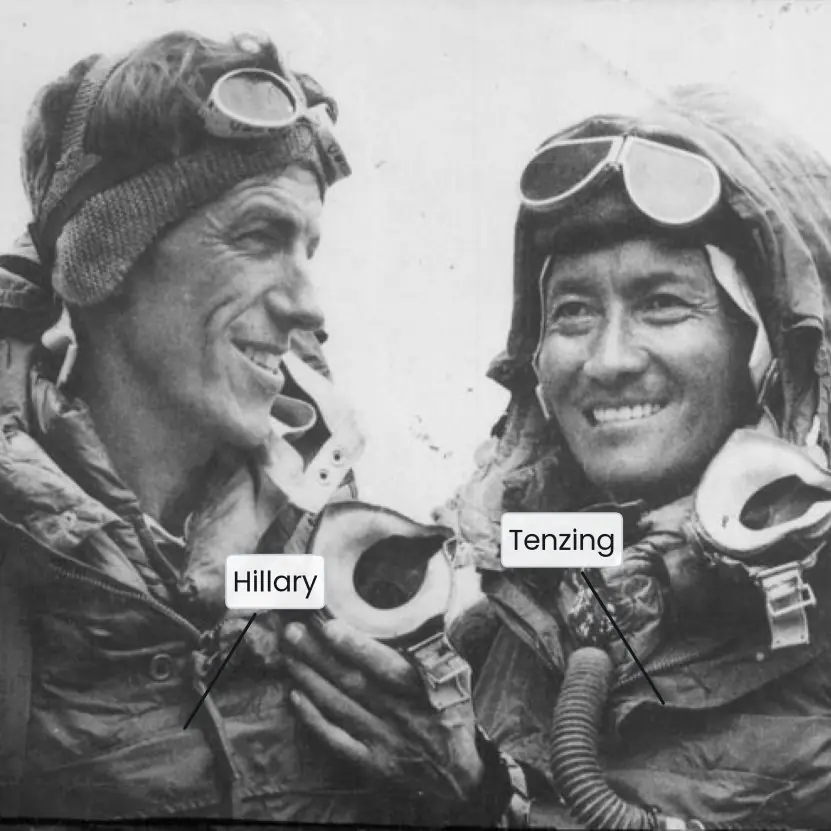
- Vision and clear purpose. A good leader knows where the group is going and explains it in simple words. Tenzing and Hillary's team worked for one clear goal, the summit. A leader who can state the goal makes every member's effort meaningful.
- Integrity and honesty. Followers trust a leader who keeps promises and admits mistakes. In Nepali offices, a leader who is fair in transfers and promotions earns lasting loyalty. Trust is the base of all other leadership power.
- Communication skill. Leaders must explain tasks, listen to problems and give feedback. A leader who listens finds problems early and makes staff feel valued. Poor communication is one of the main reasons teams fail (Figure 5.3).
- Decision-making ability. A leader must choose among alternatives, often with incomplete information, and accept responsibility for the result. Delay can be as damaging as a wrong decision. Using a structured process, as in Unit 3, improves the quality of choices.
- Empathy and concern for people. Understanding the needs of staff, as Maslow and Herzberg describe, helps a leader to motivate each person in the right way. In the managerial grid (Figure 5.1) this is concern for people. Caring leaders reduce absence and turnover.
- Self-confidence and emotional control. Teams look to the leader in a crisis, such as a system failure during examinations. A calm leader prevents panic and keeps people working together. Confidence is not arrogance; it includes willingness to learn.
- Ability to delegate and develop others. A leader who shares authority builds a stronger team and has time for important tasks. Training successors ensures that the work continues when the leader moves. This links leadership with the delegation of Unit 4.
- Adaptability. Different situations need different styles: a new team needs direction, an experienced team needs freedom. Contingency theories say that the best style depends on the task, the followers and the situation. A leader who can change style succeeds in more situations.
Formula and fact sheet
- Leadership: trait → behavioural (Ohio State, Michigan, Managerial Grid 9,9) → situational (Fiedler, Hersey–Blanchard, path–goal).
- Styles: autocratic, democratic, laissez-faire, participative.
- Maslow's 5 levels: physiological, safety, social, esteem, self-actualisation; Herzberg: hygiene vs motivators; McGregor: Theory X vs Y.
- Expectancy: force = E × I × V; example 0.8 × 0.9 × 7 = 5.04.
- Tuckman: forming, storming, norming, performing, adjourning.
- Communication: sender → encode → message → channel → decode → receiver → feedback; barriers: semantic, physical, psychological, organisational.
Chapter summary
- Leadership influences people to pursue goals; trait, behavioural and situational approaches explain it, and the best style adapts to followers and tasks.
- Groups pass through predictable stages and are shaped by norms and cohesion; conflict can be constructive when managed with the right mode.
- Motivation theories — Maslow, Herzberg, McGregor, Vroom, equity — guide rewards, job enrichment, participation and self-managed teams.
- Communication is a two-way process of encoding, transmitting, decoding and feedback; barriers are semantic, physical, psychological and organisational; active listening and feedback improve it.
Practice
- Differentiate between a manager and a leader. Explain the functions of a leader.
- Explain the trait, behavioural and situational approaches to leadership.
- Compare autocratic, democratic and laissez-faire leadership.
- Explain Tuckman's stages of group development and the characteristics of groups.
- What is conflict? Explain the five conflict-handling modes.
- Explain Maslow's hierarchy of needs with workplace examples.
- Compare Maslow's and Herzberg's theories.
- Compute the expectancy motivational force when E = 0.6, I = 0.5 and V = 8; what happens if I = 0?
- Explain the communication process with a diagram and list four barriers with remedies.
- What is active listening? List five guidelines.
Answers and worked solutions
1. Manager: formal authority, systems, control; leader: influence, vision, people. Leader's functions: vision, motivation, communication, team building, coordination, conflict resolution, role modelling.
2. Trait: born qualities; behavioural: what leaders do (consideration/initiating structure, grid); situational: best style depends on the situation (Fiedler, Hersey–Blanchard).
3. Autocratic: leader decides, quick but demotivating; democratic: shared decisions, commitment but slower; laissez-faire: free rein, suits experts but may lack direction.
4. Forming, storming, norming, performing, adjourning; characteristics: roles, norms, status, size, cohesiveness, conformity, groupthink.
5. A perceived frustration of interests. Competing, collaborating, compromising, avoiding, accommodating (table in 5.3).
6. Physiological (pay), safety (job security), social (teamwork), esteem (recognition, promotion), self-actualisation (challenging work).
7. Maslow: five ordered needs; Herzberg: hygiene factors prevent dissatisfaction, motivators create satisfaction. Overlap: Maslow's lower needs ≈ hygiene; esteem and self-actualisation ≈ motivators.
8. Force = 0.6 × 0.5 × 8 = 2.4. If I = 0 the force is 0 — no belief that performance brings the reward means no motivation.
9. Sender → encoding → message → channel → decoding → receiver → feedback, with noise. Barriers: jargon (use plain words), noise (change place), prejudice (build trust), too many levels (flatten structure).
10. Listening to understand: give full attention, maintain eye contact, don't interrupt, paraphrase, ask questions, show empathy.
Model answers (5 and 10 marks)
Q1 (5 marks). Compare Maslow's hierarchy of needs with Herzberg's two-factor theory.
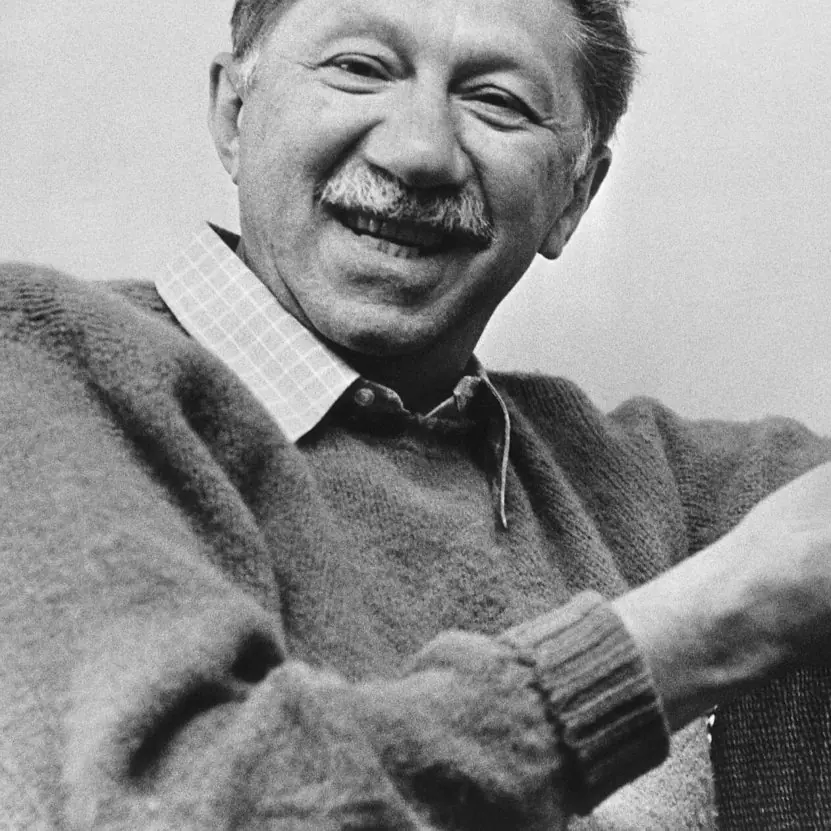
Introduction. Both are content theories of motivation: they explain what motivates people. Maslow (Plate 5.1) arranged needs in five levels; Herzberg (Figure 5.2) separated factors that prevent dissatisfaction from factors that create satisfaction.
- Maslow. The five levels are physiological, safety, social, esteem and self-actualisation. A lower need must be reasonably satisfied before a higher one motivates, and a satisfied need no longer motivates.
- Herzberg. Hygiene factors (policy, supervision, salary, conditions, security, relationships) only prevent dissatisfaction. Motivators (achievement, recognition, the work itself, responsibility, advancement) produce satisfaction.
- Similarity. Maslow's lower levels correspond roughly to Herzberg's hygiene factors, and the upper levels to motivators.
- Difference. Maslow's model is a ladder for all human needs; Herzberg's applies to the work situation and treats satisfaction and dissatisfaction as two separate scales.
- Management lesson. Fix pay, safety and conditions first, then enrich the job with responsibility and recognition, for example by giving a junior programmer ownership of a module.
Conclusion. Neither theory is fully supported by research, but together they remind managers that money alone does not motivate.
Q2 (5 marks). Explain the communication process and the barriers to effective communication.
Introduction. Communication is the exchange of information and understanding between a sender and a receiver. Figure 5.3 shows the loop.
- Sender has an idea to share and encodes it into words, symbols or gestures.
- Message and channel. The message travels by a medium such as a memo, email, SMS or a face-to-face talk.
- Receiver gets the message and decodes it into meaning.
- Feedback returns to the sender and shows whether the meaning was understood.
- Noise is any disturbance in the process.
Barriers.
Physical noise, distance, poor network.
Semantic jargon, ambiguous words, language differences.
Psychological prejudice, fear, inattention, emotions.
Organisational too many levels, unclear authority, information overload.
Personal poor listening, status differences, lack of trust.
Overcoming barriers. Use simple words, seek feedback, listen actively, choose the right channel, reduce levels and follow up important messages in writing.
Conclusion. A message is only as good as the understanding it produces, which is why feedback is the most important element of the process.
Q3 (10 marks). Define leadership. Explain the approaches to leadership (trait, behavioural and contingency), the managerial grid and the sources of power. How does leadership differ from management?
Introduction. Leadership is the process of influencing individuals and groups to work willingly towards the achievement of goals. It is the third function in the management cycle (Figure 1.2).
Edmund Hillary and Tenzing Norgay (Plate 5.2) show leadership by example in a risky shared task, but every office needs it in a quieter form.
1. Trait approach. It asks what personal qualities leaders have: intelligence, self-confidence, integrity, drive, sociability and knowledge. It was criticised because no list of traits predicts leadership in every situation, and traits do not explain behaviour.
2. Behavioural approach. It asks what leaders do. The Ohio State studies found two dimensions, initiating structure (organising the task) and consideration (concern for people).
The Michigan studies contrasted job-centred and employee-centred leaders.
Blake and Mouton's grid (Figure 5.1) rates concern for production and concern for people from 1 to 9, giving five main styles; team management (9,9) is described as best.
3. Contingency approach. It holds that the best style depends on the situation.
Fiedler's model matches a task-oriented or relationship-oriented leader with the favourability of the situation (leader-member relations, task structure and position power).
Hersey and Blanchard's situational model changes the style (telling, selling, participating, delegating) with the readiness of followers. House's path-goal theory says the leader should clear the path to the goal.
Leadership styles. An autocratic leader decides alone; a democratic leader consults the group; a laissez-faire leader leaves decisions to the group. Each suits different conditions.
Sources of power (French and Raven). Legitimate (from position), reward, coercive, expert and referent (from admiration). Leaders who rely only on position power get compliance; those with expert and referent power get commitment.
| Basis | Management | Leadership |
|---|---|---|
| Focus | plans, structures, controls | vision, influence, change |
| Authority | formal, from position | formal or informal |
| Orientation | stability and efficiency | change and effectiveness |
| Followers | subordinates | followers by choice |
| Source | appointment | acceptance by followers |
Conclusion. A manager needs leadership skills to move people, and a leader needs management skills to organise results.
The trait, behavioural and contingency approaches show progress from asking who a leader is to asking what the leader does and finally to asking what fits the situation. For a modern organisation, the most useful lesson is flexibility.
Q4 (5 marks). Explain Tuckman's stages of group development and the causes and resolution of conflict.
Introduction. A group is two or more people who interact and depend on each other to reach a goal. Tuckman (1965) said that groups pass through stages (Plate 5.2b).
- Forming. Members meet, are polite and unsure of roles and goals.
- Storming. Differences appear over leadership, tasks and methods; conflict is normal at this stage.
- Norming. Rules, roles and trust are agreed and cohesion grows.
- Performing. The group works effectively towards its goals.
- Adjourning. A temporary group completes its work and disbands.
Conflict. Its causes include limited resources, unclear roles, differing goals, poor communication and personality clashes.
Styles of handling it are avoiding, accommodating, competing, compromising and collaborating (problem solving), of which collaboration is usually best for important issues.
Conclusion. Conflict is not always harmful; moderate conflict can improve ideas, provided the manager resolves it constructively.