Unit 2 · 21 min read
Evolution of Management Thought and the Environment
What the syllabus asks for 5
- Classical theory
- Human relations and behavioural science theories
- System, decision, management science and contingency theories
- The business environment
- Social responsibility and business ethics
Management ideas did not appear from nowhere: each school of thought answered the problems of its time. Knowing them explains why organisations look and behave as they do.
This unit traces the classical, human-relations, behavioural, systems, quantitative and contingency approaches, then studies the environment in which organisations operate, social responsibility and business ethics.
- Classical theory: scientific management (Taylor), administrative theory (Fayol), bureaucracy (Weber).
- Human relations (Mayo, the Hawthorne studies) and behavioural science theories.
- Systems, decision, management-science and contingency theories.
- Emerging concepts: diversity, outsourcing, knowledge management, learning organisation.
- The business environment (internal/external; economic, socio-cultural, political, technological), social responsibility and business ethics, with the Nepali context.
2.1 Classical theory
Context: the Industrial Revolution — big factories, unskilled workers, a need for efficiency. Classical thinkers looked for the one best way to organise work and the organisation.
Scientific management — F. W. Taylor (1856–1915)
Focus: efficiency of the individual worker on the shop floor. Taylor's four principles:
- Replace rule-of-thumb with a scientific study of each task (time and motion study) to find the best way.
- Scientifically select, train and develop workers rather than letting them train themselves.
- Cooperate with workers so that the work is done by the scientific method.
- Divide work and responsibility almost equally: managers plan, workers execute.
Techniques: time study, standardised tools and methods, differential piece-rate pay (a higher rate for output above the standard), functional foremanship.
Example a worker with a standard of 100 units who produces 120 earns the higher rate of Rs 6 per unit = Rs 720 instead of Rs 5 × 120 = Rs 600.
Others Frank and Lillian Gilbreth (motion study, "therbligs"), Henry Gantt (Gantt chart, task and bonus system).
Limitations treated people as economic machines; ignored social needs; led to monotony, union opposition and exploitation.
Administrative theory — Henri Fayol (1841–1925)
Focus: management of the whole organisation from the top. Fayol identified the five elements of management — planning, organising, commanding, coordinating, controlling — and fourteen principles (Unit 1), and six groups of activities in a business: technical, commercial, financial, security, accounting, managerial.
Limitations principles are too general and sometimes contradict (unity of command versus specialisation); ignored the informal organisation.
Also Mooney and Reiley, Gulick and Urwick (POSDCORB: Planning, Organising, Staffing, Directing, Coordinating, Reporting, Budgeting).
Bureaucracy — Max Weber (1864–1920)
An ideal bureaucracy is a rational, rule-based organisation with: a clear division of labour; a hierarchy of authority; formal rules and procedures; impersonality (no favourites); employment on merit and technical qualification; career orientation; written records.
Strengths: predictability, fairness, efficiency in stable, routine tasks (government offices, armies). Weaknesses ("red tape"): rigid, slow to change, impersonal, can displace goals (Unit 1).
Weber also separated three kinds of legitimate authority: traditional, charismatic and legal-rational.
2.2 Human relations and behavioural science theories
Human relations movement — Elton Mayo
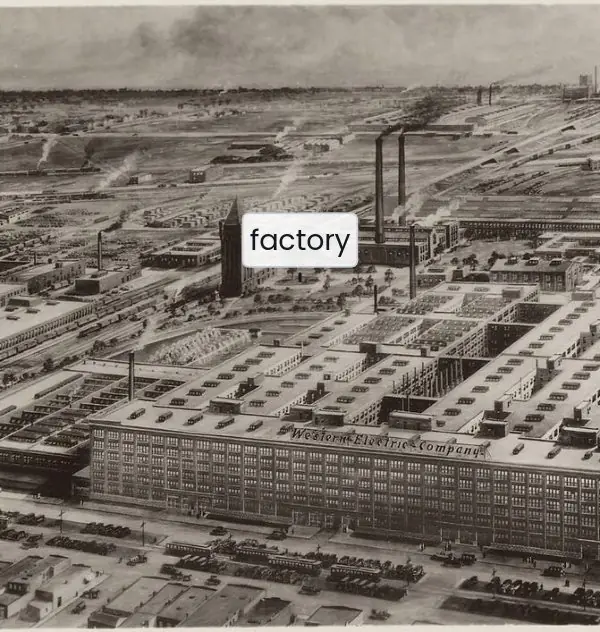
The Hawthorne studies (Western Electric, Chicago, 1924–32): researchers varied lighting for workers and found that output rose whether light increased or decreased. Later phases (relay assembly test room, interviewing programme, bank wiring room) showed that:
- Workers respond to attention and being studied (the "Hawthorne effect").
- Informal groups with their own norms set output limits — more than pay did.
- Social needs and supportive supervision affect productivity. Conclusion: people are social beings, not just economic ones; good human relations raise productivity. Criticism: weak research method, over-simple "a happy worker is a productive worker".
Behavioural science theories
Later researchers applied psychology and sociology rigorously:
- Abraham Maslow — hierarchy of needs (Unit 5).
- Douglas McGregor — Theory X (people dislike work and need control) versus Theory Y (people can be self-directed and seek responsibility); managers' assumptions shape their style.
- Frederick Herzberg — motivation–hygiene theory (Unit 5).
- Chris Argyris — organisations should let immature individuals grow into mature, responsible ones.
- Rensis Likert — participative "System 4" management.
- William Ouchi — Theory Z (Japanese-style lifetime employment, consensus decisions). Contribution: motivation, leadership, groups, communication and organisational behaviour as fields. Limitation: results are hard to generalise; individuals and cultures differ.
2.3 System, decision, management science and contingency theories
System theory
An organisation is an open system: inputs (people, money, materials, information) → transformation process → outputs (goods, services, profit) with feedback from the environment.
Key ideas: interdependence of subsystems (a delay in purchasing stops production), synergy (the whole is greater than the sum of its parts), entropy (decline if the system closes itself off), equifinality (many routes to the same goal).
Contribution: a holistic view. Limitation: abstract, hard to apply directly.
Decision theory
Management is basically decision making (Herbert Simon): managers choose among alternatives, usually with bounded rationality — limited information and time, so they satisfice (choose the first acceptable option) rather than optimise.
Contribution: models of rational choice and its limits (Unit 3).
Management science (quantitative) theory
Born in World War II operations research: mathematical models, statistics, simulation and computers for decisions on inventory, scheduling, transport and project control (linear programming, PERT/CPM, queuing, break-even, decision trees).
Contribution: precision in complex problems; basis of today's analytics. Limitation: ignores human factors; models need good data.
Contingency theory
There is no one best way: the right approach depends on the situation (size, technology, environment, people).
If–then if the environment is stable, then a mechanistic structure works; if it is turbulent, an organic one does.
Contributors: Joan Woodward (technology and structure), Burns and Stalker (mechanistic/organic), Lawrence and Lorsch (differentiation and integration), Fiedler (leadership). Contribution: realistic and flexible.
Limitation: no single guiding theory, hard to specify all the variables.
| School | Period | Focus | Key names | View of people |
|---|---|---|---|---|
| Classical | 1900–30 | efficiency, structure | Taylor, Fayol, Weber | economic machines |
| Human relations | 1930–50 | social needs, groups | Mayo | social beings |
| Behavioural science | 1950–70 | motivation, leadership | Maslow, McGregor, Herzberg | individuals seeking growth |
| Management science | 1940s– | quantitative tools | operations research | rational decision-makers |
| Systems | 1960s– | interdependence | Katz & Kahn, von Bertalanffy | parts of a system |
| Contingency | 1970s– | fit with the situation | Woodward, Fiedler | it depends |
Emerging management concepts
- Workforce diversity: managing differences of gender, age, ethnicity, language, ability, caste and region; benefits are creativity and wider markets, challenges are conflict and bias.
- Outsourcing: contracting out activities (IT support, payroll, call centres) to focus on core competencies and cut cost; risks are loss of control, quality and data security. Nepal's IT-outsourcing sector serves foreign clients.
- Knowledge management: capturing, sharing and using an organisation's knowledge (documentation, communities of practice, wikis) so it does not leave with employees.
- Learning organisation (Peter Senge): continuously learns and adapts, through personal mastery, mental models, shared vision, team learning and systems thinking.
- Also: total quality management, re-engineering, empowerment, agility, digital transformation.
2.4 The business environment
The business environment is the sum of all external and internal forces that affect an organisation's performance. Scanning it lets managers see opportunities and threats.
Internal environment
Owners and board, employees, organisational culture, structure, resources (finance, technology, facilities), management style. Controllable, to a degree.
External environment
| Level | Elements | Example |
|---|---|---|
| Task (specific) environment | customers, suppliers, competitors, regulators, creditors, labour unions, pressure groups | a bank's depositors and the Nepal Rastra Bank |
| General (macro) environment | forces that affect all organisations — the PEST/PESTLE factors: |
| Component | Basic factors | Nepal examples |
|---|---|---|
| Economic | GDP growth, inflation, interest rates, exchange rates, income, employment, remittances, trade policy | dependence on remittances; INR peg; high interest-rate swings |
| Socio-cultural | demographics, values, education, lifestyle, attitudes to work, religion, language | young, migrating population; festivals drive demand; Nepali–English bilingualism |
| Political-legal | stability, government policy, laws (company, labour, tax, consumer, IT), regulation | the Companies Act, Electronic Transactions Act; changes of government |
| Technological | innovation, automation, internet, mobile payments, R&D | eSewa/Khalti, mobile internet, AI tools |
| Also: international, natural (earthquakes, climate), legal | 2015 earthquake; monsoon floods |
Emerging business environment in Nepal
Federal structure with three levels of government; liberalised trade and investment; growth in hydropower, tourism, ICT services, remittance-funded consumption and digital finance; the push for e-governance (digital Nepal framework); concerns over infrastructure, energy, bureaucracy, political instability, brain drain and a large trade deficit.
An environmental scan keeps managers' plans realistic.
2.5 Social responsibility and business ethics
Social responsibility (CSR) is an organisation's obligation to act in ways that benefit society as well as itself.
| View | Argument |
|---|---|
| Classical (Milton Friedman) | the only responsibility of business is to maximise profit within the law; spending on social causes uses shareholders' money |
| Socio-economic | business is a member of society; being responsible improves its long-term interest, image and survival |
Carroll's pyramid — economic (be profitable), legal (obey laws), ethical (do what is right and fair), philanthropic (be a good citizen — donations, community projects).
Approaches (stances): obstructionist (resist and hide), defensive (do the legal minimum), accommodative (do it when asked), proactive (seek ways to contribute).
Areas of social responsibility: customers (safe products, honest advertising); employees (fair pay, safety, no discrimination); owners/investors (honest reporting); suppliers; competitors (fair play); community and the environment (waste, pollution, sustainability); government (taxes, laws).
Arguments for public image, long-term profit, avoiding regulation, attracting talent.
Against cost, dilution of focus, lack of accountability.
Business ethics
Ethics are the moral principles that distinguish right from wrong. Business ethics applies them to business decisions.
Significance: builds trust with customers and employees, avoids legal penalties and scandal, supports a healthy culture, and sustains long-term success.
Ethical issues: bribery and corruption, conflicts of interest, false advertising, adulteration, tax evasion, insider trading, employee exploitation, data privacy, plagiarism.
Ethical decision tests: Utilitarian (the greatest good for the greatest number), rights (does it respect people's rights?), justice (is it fair?), and the practical "newspaper test" (would I be comfortable seeing this on the front page?).
Organisations encourage ethics through a code of ethics, ethics training, whistle-blower protection, ethics committees and leading by example.


2.5.1 Eight reasons why a business should be socially responsible
- It protects the organisation's reputation. Customers in Nepal talk to each other quickly, and social media spreads news of unfair behaviour in hours. A company known for honest pricing and fair treatment of workers is trusted and chosen more often. Reputation is built slowly and lost fast, so responsibility works like insurance.
- It reduces the risk of legal trouble. Laws on labour, consumer protection, tax and the environment are enforced more strictly each year. A business that already meets these duties avoids fines, closures and court cases. This saves money and the manager's time.
- It attracts and keeps good employees. Young graduates choose employers that pay on time, treat staff with respect and contribute to society. A firm known for safe workplaces and training loses fewer staff, which cuts recruitment cost. Employees also work with more pride.
- It builds customer loyalty. Buyers prefer shops and banks that are honest about products, weights and charges. Loyal customers return and recommend the business, which lowers advertising cost. Simple acts such as clear receipts and fair refunds create this loyalty.
- It improves the community in which the business operates. A hotel in Pokhara or a factory in Butwal depends on local roads, water and workers. Supporting a school, a health post or a clean-up campaign makes the area better for staff and customers alike. A healthy community is a better market.
- It supports long-term profit. Spending on waste control, worker safety and quality may reduce profit this year, but it prevents accidents, spoiled products and public anger later. Long-term owners therefore treat responsibility as an investment, not a gift.
- It reduces the need for government control. When firms regulate themselves through codes of conduct and fair practice, the government has less reason to add strict rules. Voluntary action keeps more freedom for managers. Nepal Rastra Bank directives for banks show what happens when voluntary action is not enough.
- It gives moral satisfaction and national benefit. Business uses the country's people and resources, so it has a duty to give something back. A responsible firm helps reduce poverty and pollution and shows that profit and honesty can go together. This is the ethical case that sits behind the economic ones.
Formula and fact sheet
- Scientific management (Taylor): one best way, time study, piece-rate; classical administration (Fayol): principles; bureaucracy (Weber): rules, hierarchy, merit, impersonality.
- Hawthorne: social factors and informal groups drive output. Theory X vs Theory Y.
- Systems: input → process → output with feedback; contingency: it depends.
- Environment: internal; task (customers, suppliers, competitors); general (economic, socio-cultural, political-legal, technological).
- Carroll's pyramid: economic, legal, ethical, philanthropic. CSR stances: obstructionist, defensive, accommodative, proactive.
- Taylor example: 120 units × Rs 6 = Rs 720 versus 120 × Rs 5 = Rs 600.
Chapter summary
- Classical thinkers (Taylor, Fayol, Weber) sought efficiency through method, principles and rules; the Hawthorne studies and behavioural scientists discovered people's social and psychological needs.
- Systems, decision, management-science and contingency theories add holistic, rational, quantitative and situational views — no single best way.
- Diversity, outsourcing, knowledge management and learning organisations are current concepts.
- Organisations operate in internal, task and general environments; scanning economic, socio-cultural, political and technological factors guides decisions, including in Nepal's changing context.
- Social responsibility and business ethics are now part of managerial duty.
Practice
- Explain Taylor's scientific management with its principles, techniques and limitations.
- Compare Taylor's and Fayol's contributions.
- Describe the main features of Weber's ideal bureaucracy and its strengths and weaknesses.
- Explain the Hawthorne studies and their conclusions.
- Differentiate between McGregor's Theory X and Theory Y.
- Explain system theory and contingency theory.
- Briefly explain workforce diversity, outsourcing, knowledge management and learning organisation.
- What is the business environment? Explain its external components with Nepali examples.
- Explain Carroll's pyramid and the four approaches to social responsibility.
- What is business ethics? Why is it important? Give four ethical issues in business.
Answers and worked solutions
1. Taylor: scientific study of each task, scientific selection and training, cooperation, division of responsibility; techniques: time study, differential piece-rate, standardisation; limits: dehumanising, ignores social needs, union opposition.
2. Taylor worked bottom-up on worker efficiency; Fayol top-down on administration with general principles. Both sought universal principles.
3. Division of labour, hierarchy, rules, impersonality, merit and career. Strength: predictability and fairness; weakness: rigidity and red tape.
4. Lighting experiments showed output rose regardless of lighting; later studies found attention (Hawthorne effect), informal groups and social needs shape output.
5. Theory X: people dislike work, need control and direction; Theory Y: people are self-motivated and seek responsibility. Managers' assumptions shape their style.
6. System theory: organisation as an open system of interdependent subsystems with inputs, process, outputs and feedback. Contingency: the best approach depends on the situation.
7. Diversity — managing differences; outsourcing — contracting out non-core work; knowledge management — capturing and sharing knowledge; learning organisation — continuously learns and adapts.
8. All external forces: task (customers, suppliers, competitors) and general (economic: remittance dependence; socio-cultural: youth migration; political-legal: Companies Act; technological: digital payments).
9. Economic → legal → ethical → philanthropic; approaches: obstructionist, defensive, accommodative, proactive.
10. Moral principles applied to business; builds trust, avoids penalties, supports culture and long-term success. Issues: bribery, false advertising, adulteration, tax evasion, data misuse.
Model answers (5 and 10 marks)
Q1 (5 marks). Explain the principles of Taylor's scientific management and give its contributions and criticisms.
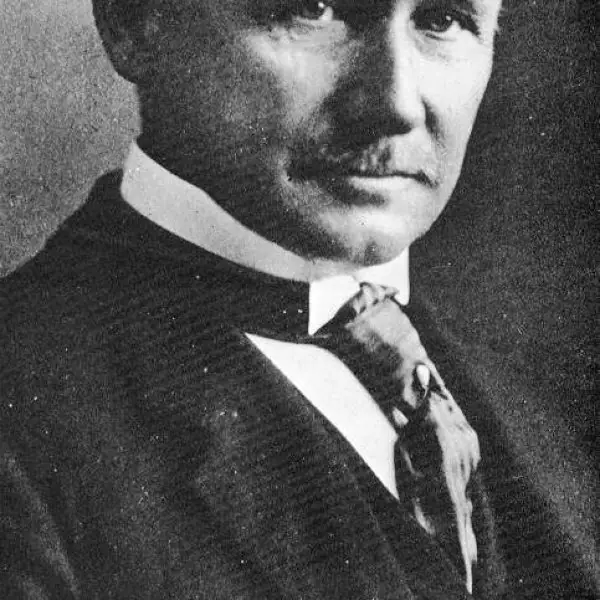
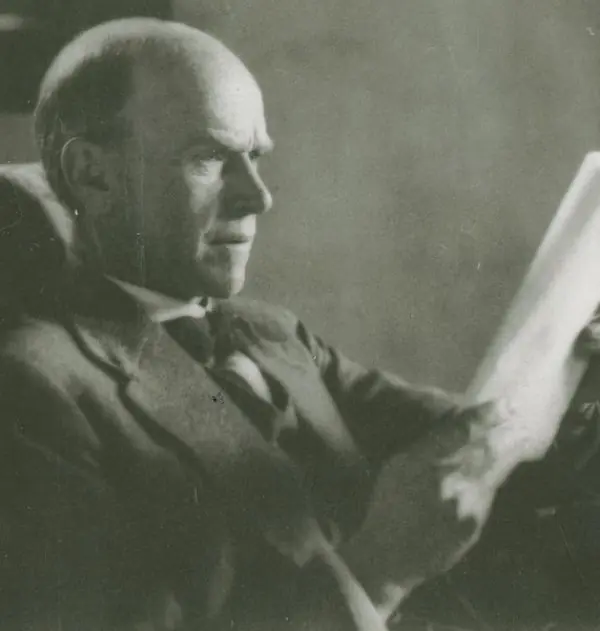
Introduction. Frederick W. Taylor (Plate 2.1a) believed that the best way to do every job could be found by study and measurement rather than by rule of thumb. His book of 1911 set out four principles.
- Develop a science for each element of work. Study the job with a stopwatch, remove useless motions and set a standard method and standard time.
- Scientifically select and train workers. Choose workers whose ability fits the task and train them in the best method instead of letting them learn by chance.
- Cooperate with workers. Managers ensure that the work is done according to the science, and reward those who follow it with a higher piece rate (differential piece-rate system).
- Divide work and responsibility. Managers plan and supervise, workers perform; functional foremen specialise in separate aspects of supervision.
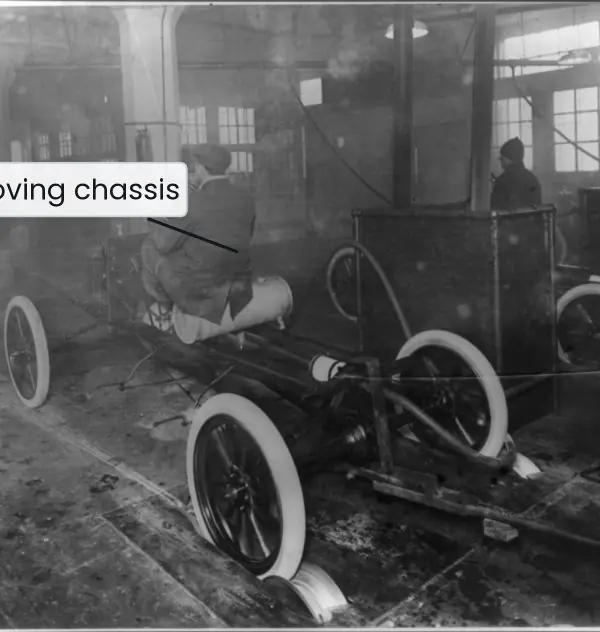
Contributions. Time and motion study, standard methods, selection and training, incentive wages and the idea that management is a discipline that can be studied. Ford's assembly line (Plate 2.2a) applied the same ideas.
Criticisms. Workers were treated as machines, motives other than money were ignored, and unions feared speed-ups and job loss. It suits routine factory work better than knowledge work.
Conclusion. Scientific management raised efficiency greatly, but it saw the worker's hands and not the worker's mind, a gap that the human relations school later filled.
Q2 (5 marks). Describe the Hawthorne experiments and their conclusions for management.
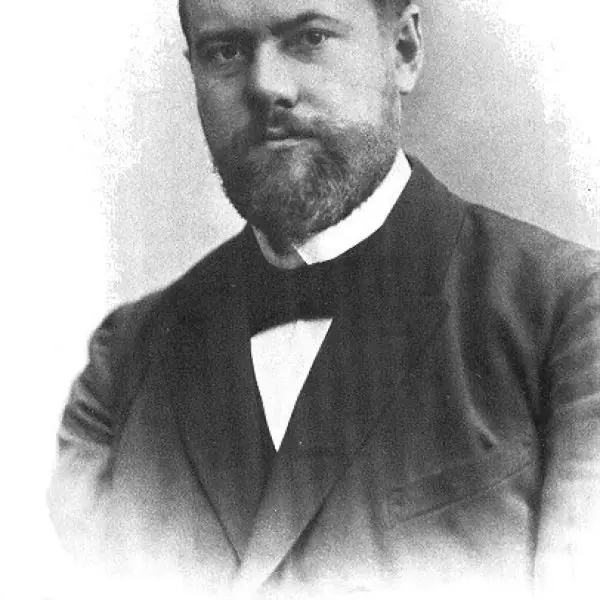
Introduction. The Hawthorne experiments were a series of studies at the Hawthorne Works of the Western Electric Company (Plate 2.2b) between 1924 and 1932, first by engineers and then by a Harvard team led by Elton Mayo (Plate 2.2c).
- Illumination studies (1924-27). Output rose when light was increased, but also when light was reduced and in the control group. Light was therefore not the main cause.
- Relay assembly test room. A small group of women was given rest pauses, shorter hours and a friendly supervisor. Output rose steadily and stayed high even when some benefits were later withdrawn, because the women felt special, were consulted and formed a team.
- Interviewing programme. Thousands of interviews showed that workers' feelings, family worries and relations with supervisors affected morale and output.
- Bank wiring observation room. Men restricted output to a group norm, showing the power of the informal group over individual behaviour.
Conclusions. Workers are social beings, not only economic ones; recognition, participation and belonging motivate; informal groups have their own rules; supervisors' style matters.
Later writers criticised the research methods, but the human relations movement (Figure 2.1) changed management practice.
Conclusion. A manager must manage people's attitudes as carefully as methods and money.
Q3 (10 marks). Explain the classical theories of management: scientific management, Fayol's administrative theory and Weber's bureaucracy. Compare them and give their limitations.
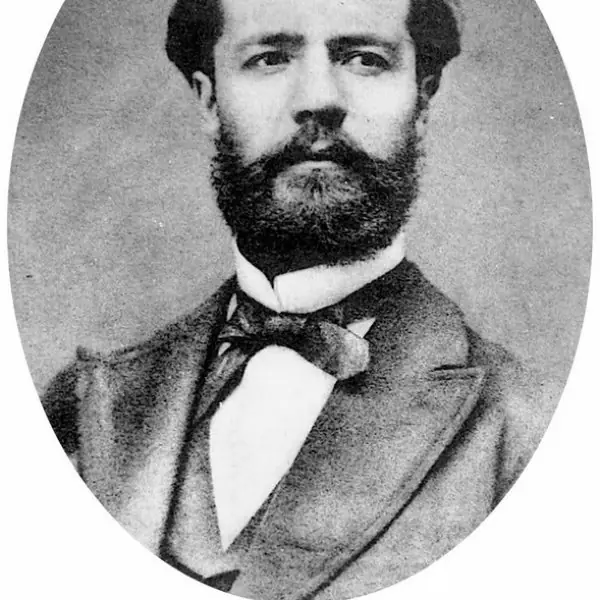
Introduction. The classical school, which dominated management thought from about 1895 to 1935 (Figure 2.1), looked for universal principles that would make organisations efficient. It has three branches, each linked to one founder (Plate 2.1).
1. Scientific management (Taylor). The focus is the individual worker's task. Time and motion study finds the one best way, workers are selected and trained for it, and a differential piece rate rewards output.
Taylor reported that a loader at Bethlehem Steel moved about 47 tons of pig iron a day, against about 12.5 before the method was applied.
Frank and Lillian Gilbreth added motion study and Henry Gantt added the task bonus and the Gantt chart.
2. Administrative theory (Fayol). The focus is the manager's job.
Fayol divided industrial activity into technical, commercial, financial, security, accounting and managerial activities, and described management as planning, organising, commanding, coordinating and controlling.
He gave fourteen principles: division of work, authority and responsibility, discipline, unity of command, unity of direction, subordination of individual interest to the general interest, remuneration, centralisation, scalar chain, order, equity, stability of tenure, initiative and esprit de corps.
He treated them as flexible guides, not laws.
3. Bureaucracy (Weber). The focus is the structure of the whole organisation.
An ideal bureaucracy has a clear division of labour, a hierarchy of offices, written rules and records, impersonal relations, selection and promotion by qualification and a career for officials.
Government offices such as Singha Durbar are close to this model.
| Basis | Scientific management | Administrative theory | Bureaucracy |
|---|---|---|---|
| Founder | Taylor | Fayol | Weber |
| Focus | worker and task | manager and functions | whole organisation |
| Level studied | operating floor | top management | structure and rules |
| Main tool | time and motion study | fourteen principles | rules and hierarchy |
| Main gain | higher output | a general theory of management | fairness, predictability |
| Weakness | treats workers as machines | too rigid, little on people | red tape, slow change |
Limitations of the classical school. It assumed that people are motivated mainly by money; it ignored informal groups, emotions and the external environment; it pictured the organisation as a closed machine; and its rules sometimes conflict (unity of command against specialised supervision).
Today's quick-changing organisations need flexibility that these theories do not give.
Conclusion. The classical theories gave management its vocabulary of planning, organising, authority and efficiency, and they still shape factories, banks and government offices.
Their weakness was a narrow view of people and change, which the human relations, systems and contingency approaches were developed to correct.
Q4 (5 marks). Explain the internal, task and general environments of a business with examples from Nepal.
Introduction. The business environment is the set of forces inside and outside an organisation that affect its performance. Figure 2.2 shows three layers.
- Internal environment. Owners, the board, employees, culture and finance, which management can control. For a bank, these are shareholders, staff skills and capital.
- Task (micro) environment. Customers, suppliers, competitors, lenders and regulators with whom the organisation deals directly. For a commercial bank these include depositors, rival banks, Fonepay and Nepal Rastra Bank.
- Political and legal forces. Government policy, budgets, elections and laws such as the Companies Act or labour law.
- Economic and social forces. Inflation, interest rates, remittance flows, the age profile of the population and changing habits such as digital payments.
- Technological and natural forces. Mobile internet, QR payments, and earthquakes or floods, as the 2015 earthquake showed.
Conclusion. Managers cannot control the outer layers but must scan them continuously and adapt their plans.