Unit 10 · Zoology · 16 teaching hours · 58 min read
Applied Biology
What the syllabus asks for 2
- Application of Zoology
- Microbial diseases and application of microbiology
Everything in the previous nine units was biology for its own sake. This unit is biology that earns a living. Sixteen hours are given to two questions: what do people actually do with animals, and what do microorganisms do to us and for us. The answers are local — the honey in a Gandaki bazaar, the carp in a Terai pond, the buffalo that supplies more than half of Nepal's milk, the sputum smear read in a district hospital. Learn the organism's correct name, the technique, and one Nepali number for each; that combination is what an 8-mark answer needs.
Section II reliably takes two or three short questions from here and often one long question. The long question is almost always either "describe the method of X culture and its economic importance" (apiculture, sericulture, pisciculture, poultry) or a disease question — "name the causative agent, mode of transmission, symptoms and preventive measures of any four communicable diseases". Both are pure recall, so the marks are cheap if your scientific names and vectors are exact. Markers deduct for Salmonella typhi, for "Apis indica", and for naming Culex as the malaria vector.
10.1 Application of Zoology
Applied zoology is the use of animals, and of knowledge about animals, for human benefit. In Nepal it is not a minor sideline: livestock and fisheries together contribute roughly a quarter of agricultural value, and for a hill household a few hives or a buffalo may be the only source of cash income. The seven practices below are the ones the syllabus names.
Every production number quoted here is from one source — the Ministry of Agriculture and Livestock Development, Statistical Information on Nepalese Agriculture 2081/82 (2024/25). Do not mix these fiscal-year figures with FAOSTAT calendar-year figures in the same table; the two series are counted differently. Note also that Nepal re-based its livestock census in 2022/23, so cattle and buffalo numbers before and after that year cannot be compared.
| Product | Nepal, FY 2081/82 (2024/25) |
|---|---|
| Honey | 4,278 metric tonnes from 276,000 hives |
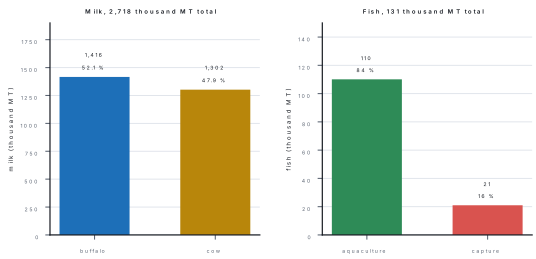
| Milk (total) | 2,718,177 MT — buffalo 1,416,083 (52.1 %), cow 1,302,094 (47.9 %) |
| Fish (total) | 131,112 MT — aquaculture 110,112 (84 %), capture 21,000 (16 %) |
| Pond carp culture | 88,254 MT from 15,707 ha; yield 5.62 t ha⁻¹; Terai gives 96 % |
| Rainbow trout | 1,332 MT |
| Eggs | 1,632,289 thousand (about 1.63 billion) |
| Chicken meat | 182,516 MT |
| Livestock numbers | cattle 5,141,391; buffalo 3,294,723; goat 15,954,080; sheep 652,742; fowl 56,391,680 |
Apiculture — beekeeping
Apiculture is the rearing and management of honey bees in artificial hives for honey, beeswax and, above all, pollination. The bees belong to the genus Apis (order Hymenoptera, family Apidae).
Five species of Apis matter economically in Nepal, and only one of them is not native.
| Species | Common name | Nest | Hiveable? |
|---|---|---|---|
| Apis cerana | Asian hive bee, mauri | several parallel combs inside a dark cavity | yes — the traditional and the movable-frame hive bee |
| Apis mellifera | European hive bee | several combs in a cavity | yes — introduced to Nepal in 1992 |
| Apis dorsata | giant rock bee, bhanmauri | one huge open comb on a tree or cliff, sometimes nearly 3 m across | no — wild, honey hunted |
| Apis laboriosa | Himalayan cliff bee | one open comb under a vertical cliff overhang, 2,500–3,000 m | no — wild, honey hunted |
| Apis florea | little bee | one small open comb on a shrub | no |
A. cerana is the mainstay of Nepali beekeeping — about three-quarters of the country's hives — because it nests in cavities and so can be persuaded into a box, and because it survives at altitude up to about 3,500 m. Its colonies are small, roughly 6,000–7,000 workers, against tens of thousands in A. mellifera. A. laboriosa is the largest honey bee in the world, with adults reaching 3 cm; a single comb may hold 60 kg of honey, and it was confirmed as a full species distinct from A. dorsata only in 2020.
Write Apis cerana. "Apis indica" and "Apis cerana indica" are obsolete names still printed in old textbooks. And A. laboriosa is the largest honey bee, not the largest bee — the leaf-cutter Megachile pluto is bigger.
The colony. A honey bee colony is a rigid caste society of one queen, a few hundred drones and thousands of workers, all of them the queen's offspring.
- Queen — the only fertile female; lays up to a couple of thousand eggs a day; stores sperm from her mating flights in a spermatheca and controls whether each egg is fertilised.
- Drone — male, develops from an unfertilised egg and is therefore haploid (this is arrhenotokous parthenogenesis); its only function is mating.
- Worker — a sterile female; in sequence over her life she cleans cells, nurses larvae, builds comb, guards the entrance and finally forages.
All three castes hatch from the egg in 3 days. The adult emerges after 16 days in the queen, 21 days in the worker and 24 days in the drone (figures for A. mellifera). The difference is diet, not genes: royal jelly, secreted by the hypopharyngeal glands of nurse workers, is fed to every larva for the first three days or so, but only the queen larva continues on it.
A very common error. All larvae are fed royal jelly for about three days; worker and drone larvae are then weaned onto a bread of honey and pollen, while the queen larva is kept on royal jelly throughout. Continuous feeding, not exclusive feeding, makes the queen.
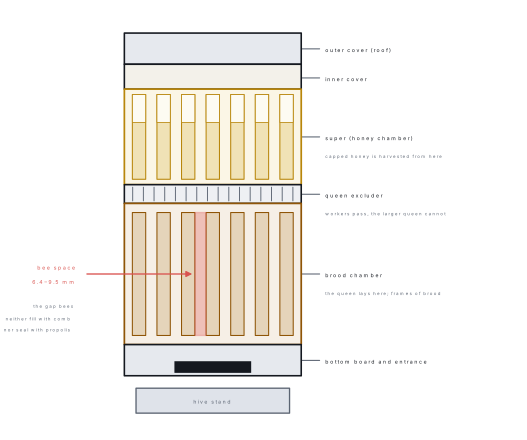
The movable-frame hive. Before 1851 a hive could be robbed only by cutting out the comb and usually destroying the colony. In that year the American clergyman L. L. Langstroth observed that bees leave a gap of about 6.4–9.5 mm — the bee space — free of both comb and propolis. Build a box whose frames are separated from each other and from the walls by exactly that gap and every frame lifts out undamaged. Langstroth patented the design on 5 October 1852, and every commercial hive since is a variation on it. In Nepal, A. cerana is also kept in the Newton hive, a movable-frame hive sized for the smaller Asian bee, and still, widely, in traditional log and wall hives.
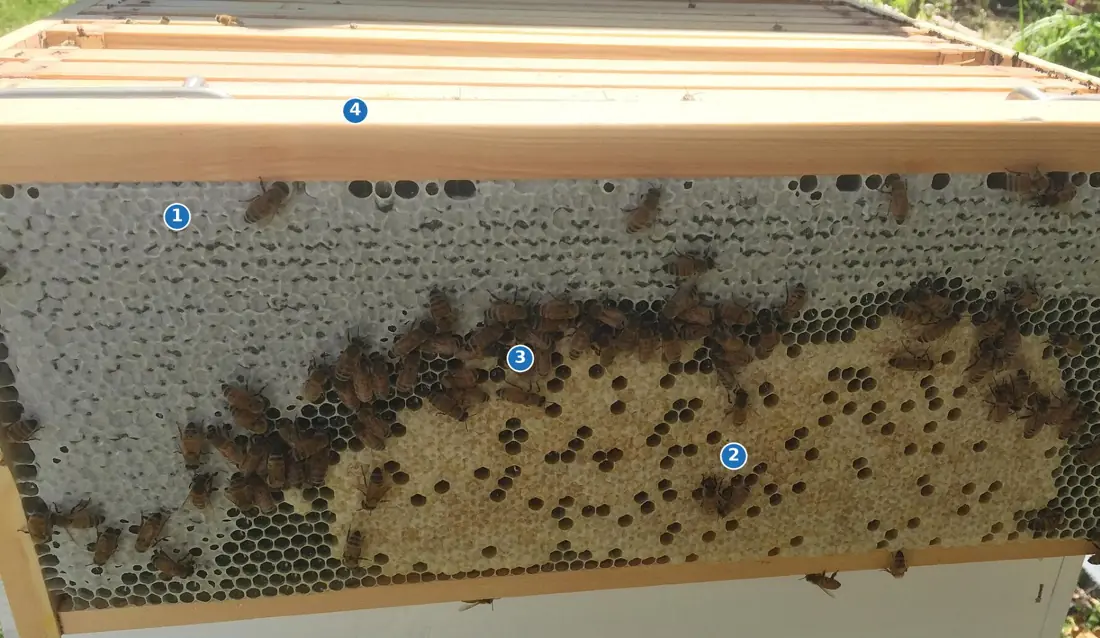
Products and services. Honey is an invert-sugar syrup of nectar ripened by the bees to below about 20 % water; beeswax is secreted from abdominal wax glands of young workers; propolis is plant resin used as a sealant; royal jelly and bee venom have small specialist markets. But the largest value by far is pollination: of the leading crops grown for human food worldwide, 87 depend to some degree on animal pollination, and those crops make up about 35 % of global production volume. In Jumla, A. cerana supplies more than half of all flower visits to apple, cucumber and pumpkin.
Nepal produced 4,278 MT of honey from 276,000 hives in 2081/82. What is the average yield per hive, and how does it compare with the national average of 16.45 kg per hive reported in 2019?
So the average hive now gives about 15.5 kg, slightly below the 16.45 kg of 2019. The decline is real: a 2024 study across Nepali beekeeping districts found yield per hive down by about half and the number of occupied hives down by about 44 % over 2012–22, blamed on forage loss, pesticide use and brood disease.
Enemies of the hive. The mite Varroa destructor — recognised as a species separate from V. jacobsoni only in 2000 — is the great pest of A. mellifera; it feeds on developing brood and spreads viruses. A. cerana in western Nepal has suffered Thai sacbrood virus and European foulbrood since the 1990s. Tropilaelaps mites, wax moths and hornets complete the list; A. cerana famously smears animal faeces round its nest entrance to deter the giant hornet Vespa soror.
Where A. laboriosa forages on Rhododendron arboreum — laliguras, Nepal's national flower — the honey carries grayanotoxins, which lock open voltage-gated Na⁺ channels and over-stimulate the vagus nerve. Nearly every patient shows bradycardia and hypotension, with dizziness, nausea and sweating. About 68 Nepali cases are on record over five decades, clustered in Gandaki Province in spring, mostly middle-aged men self-medicating — and no deaths have been recorded. The honey is harvested by Gurung honey hunters on cliff ladders and sells for around five times the price of ordinary honey. (Turkish "mad honey" comes from different species, R. ponticum and R. luteum — do not transplant those names to Nepal.)
Sericulture — silk production
Sericulture is the rearing of silkworms for raw silk. The mulberry silkworm is Bombyx mori (order Lepidoptera, family Bombycidae), domesticated from the wild Bombyx mandarina about 4,600 years ago and now so thoroughly domesticated that it is flightless and unknown in the wild. It is monophagous: it eats the leaves of mulberry, Morus alba, and nothing else. Growing the mulberry is therefore half of sericulture — the branch of the subject called moriculture.
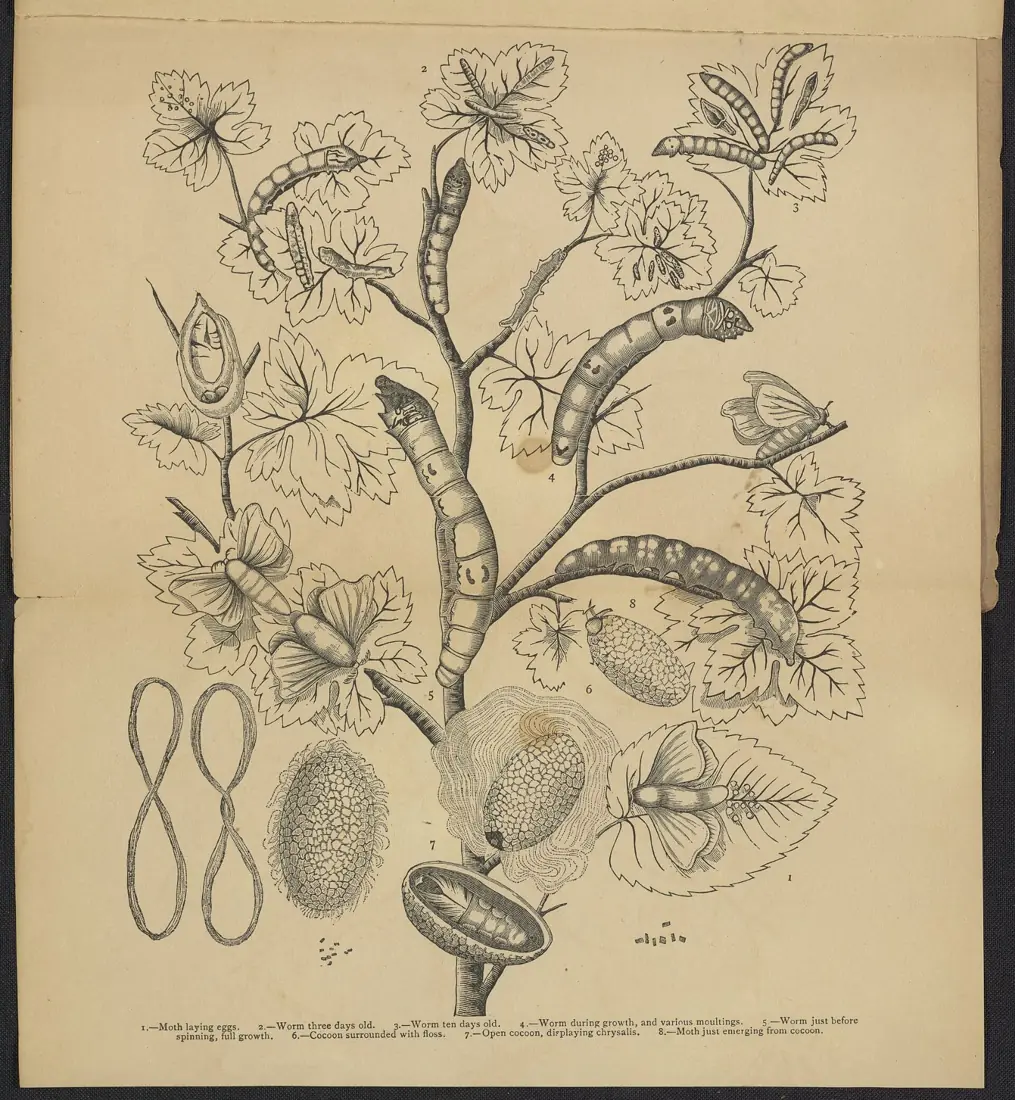
The rearing cycle. Eggs are incubated and hatch in about 10–14 days into tiny larvae called chawki worms. The larva passes through five instars separated by four moults, eating chopped mulberry leaf continuously for about 29–30 days. After the fourth moult the fifth-instar larva stops feeding, becomes translucent, climbs into a mountage and spins for 2–3 days, moving its head in a figure-of-eight and paying out silk from a pair of modified salivary glands through a single spinneret. Inside the finished cocoon it moults once more into a pupa. If left alone, the moth would emerge, mate, lay 300–500 eggs and die without ever feeding — the adult has vestigial mouthparts and cannot fly.
Textbooks routinely print "four instars" or "five moults". The larva has five instars and four larval moults; the fifth moult, larva to pupa, happens inside the cocoon. Also: the larva is monophagous on mulberry, so a sericulture failure is almost always a mulberry failure.
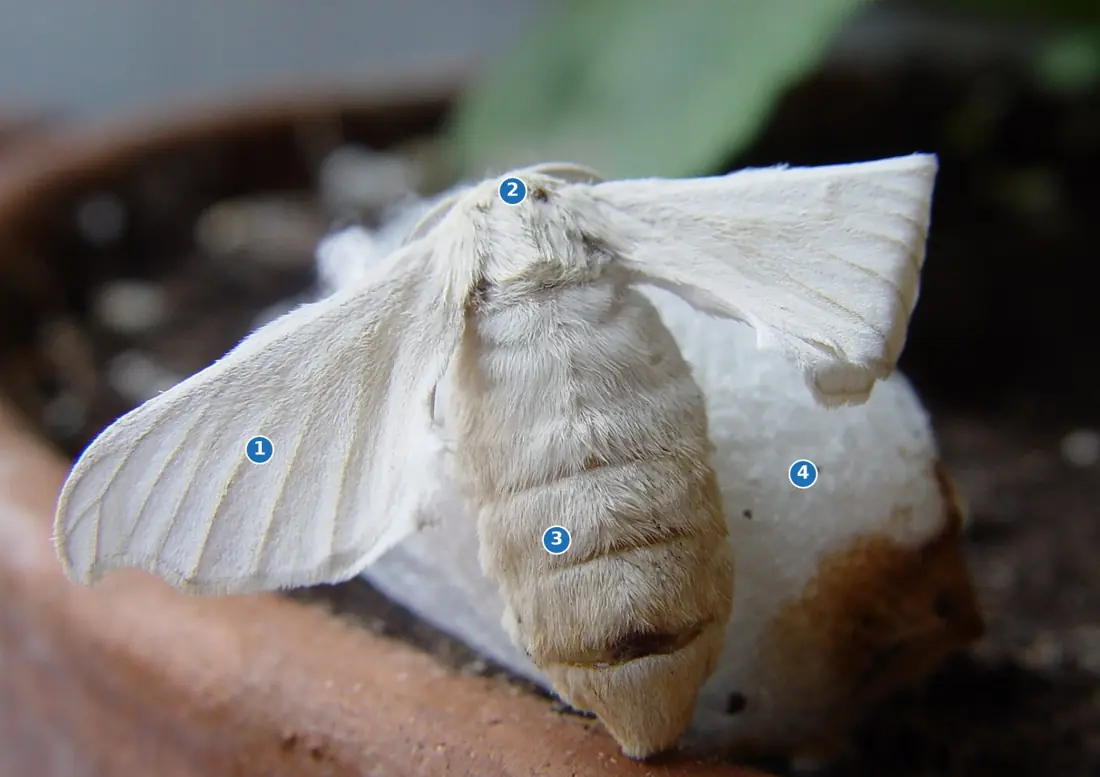
From cocoon to cloth. The steps are fixed and are commonly asked in sequence.
- Harvesting — cocoons are picked from the mountages 5–7 days after spinning.
- Stifling — the pupa is killed by steam, hot air or sun, before it can emerge.
- Deflossing — the loose outer floss is stripped off.
- Cooking — cocoons are soaked in hot water to soften the sericin gum.
- Reeling — filaments from several cocoons are drawn together onto a reel; this is done in a factory called a filature.
- Throwing, degumming, dyeing, weaving.
A cocoon contains about 1,000–1,600 m of spun filament, of which 600–900 m can be reeled off as one continuous thread. Raw silk is about 75–80 % fibroin (the fibre protein, a stack of antiparallel β-sheets with the repeat Gly-Ser-Gly-Ala-Gly-Ala) and 20–25 % sericin (the water-soluble gum); degumming removes up to 30 % of the weight and gives silk its final lustre. Cocoons too damaged to reel are carded and spun like cotton into spun silk.
Between 4,000 and 7,000 cocoons are needed for one kilogram of raw silk. A Kavre farmer delivers 30,000 cocoons to the reeling centre, which works at 5,000 cocoons per kg. If a silk sari needs about 0.5 kg of raw silk, how many saris is that?
Twelve saris, from thirty thousand caterpillars.
Beware the commonest error in this topic: the familiar figure "2,000–3,000 cocoons" is per pound, not per kilogram.
The four silks. Mulberry silk is only one of four commercial silks. The other three — tasar, eri and muga — are the vanya or wild silks, all from the family Saturniidae. Oak tasar is a second form of tasar reared on oak.
| Silk | Insect | Host plant | Note |
|---|---|---|---|
| Mulberry | Bombyx mori | Morus alba | about 90 % of world silk; reeled |
| Tasar | Antheraea paphia | Terminalia, sal (Shorea robusta) | coarse, coppery; "A. mylitta" is a junior synonym |
| Oak tasar | Antheraea × proylei | oak (Quercus spp.) | a man-made hybrid, not a natural species |
| Eri | Samia ricini | castor, Ricinus communis | open-mouthed cocoon → spun, not reeled; "ahimsa silk" |
| Muga | Antheraea assamensis | som (Persea bombycina), soalu (Litsea) | golden; 99 % from Assam |
The eri cocoon is open at one end — the moth walks out without cutting anything. That is exactly why eri can be produced without killing the pupa, which is why it is called ahimsa silk, and also why it cannot be reeled as a continuous filament and must be spun as a staple fibre.
Sericulture in Nepal. Nepal is classed by the International Sericultural Commission among producers of negligible quantities. Silk was first attempted under Prime Minister Chandra Shamsher in 1911; a state Silk Farming Centre followed in 1975; today the Sericulture Development Centre at Khopasi, Kavrepalanchok is the national hub, with nine government farms. Around 1,538 ha of mulberry produce roughly 39 MT annually, all of it bivoltine B. mori — there is no commercial wild-silk sector. Thirty-eight mid-hill districts between 750 and 1,500 m have been declared climatically suitable, so the ceiling is far above the present output. China is the world's largest producer; India is the only country that produces all four silks.
Pisciculture — fish farming
Pisciculture is the controlled rearing of fish in ponds, tanks or cages. Nepal now takes 84 % of its fish from aquaculture and only 16 % from capture fisheries, and 96 % of the pond output comes from the Terai.
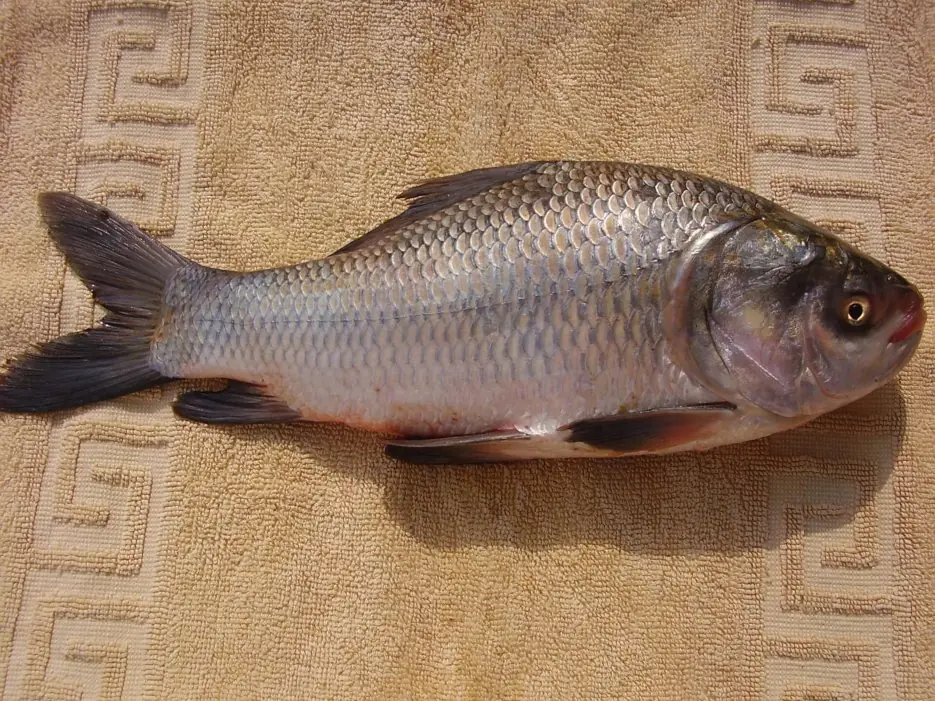
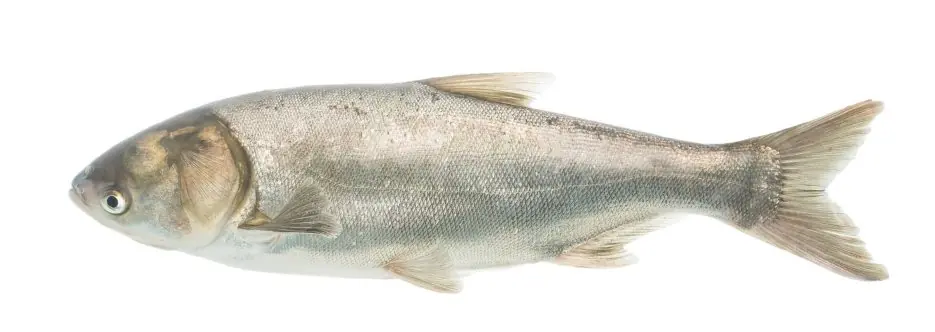
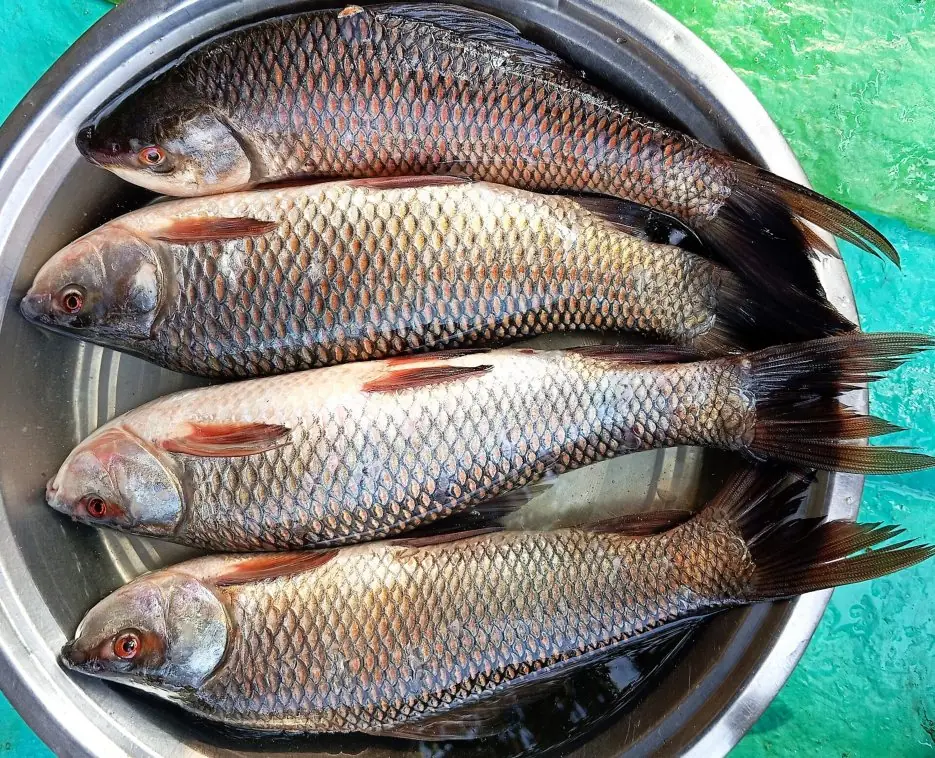
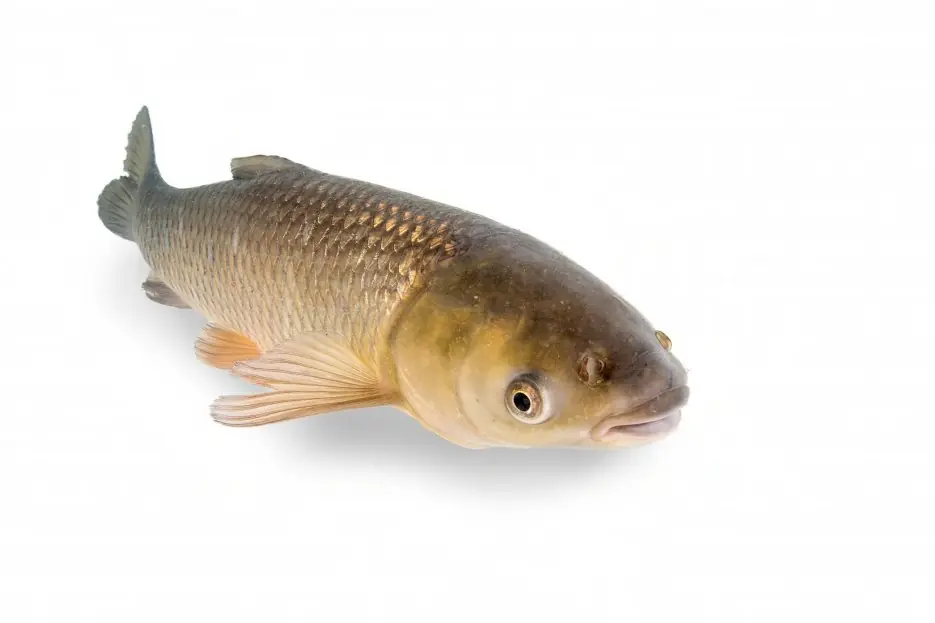
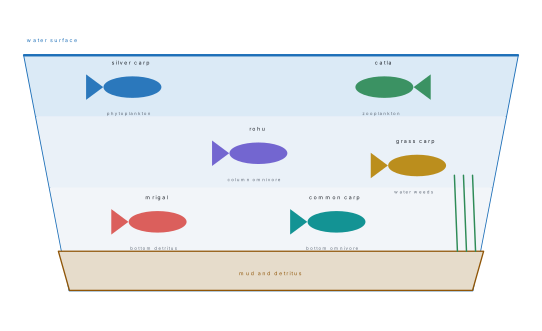
Composite fish culture (polyculture). The central idea is simple and is the most examinable point in this section. A pond is not one habitat but several: a surface layer of phytoplankton and zooplankton, a middle column, a weedy margin and a muddy bottom. Stock one species and most of that food is wasted. Stock six species with different feeding niches and the same pond feeds them all, with no competition, so the yield per hectare rises sharply.
| Species | Scientific name | Zone | Natural food |
|---|---|---|---|
| Silver carp | Hypophthalmichthys molitrix | surface | phytoplankton |
| Catla | Labeo catla | surface and mid-water | zooplankton |
| Rohu | Labeo rohita | column | omnivore — plankton, detritus |
| Grass carp | Ctenopharyngodon idella | weedy margins | macrophytes, aquatic weeds |
| Mrigal | Cirrhinus mrigala | bottom | detritus and decaying vegetation |
| Common carp | Cyprinus carpio | bottom | omnivore — benthic animals, detritus |
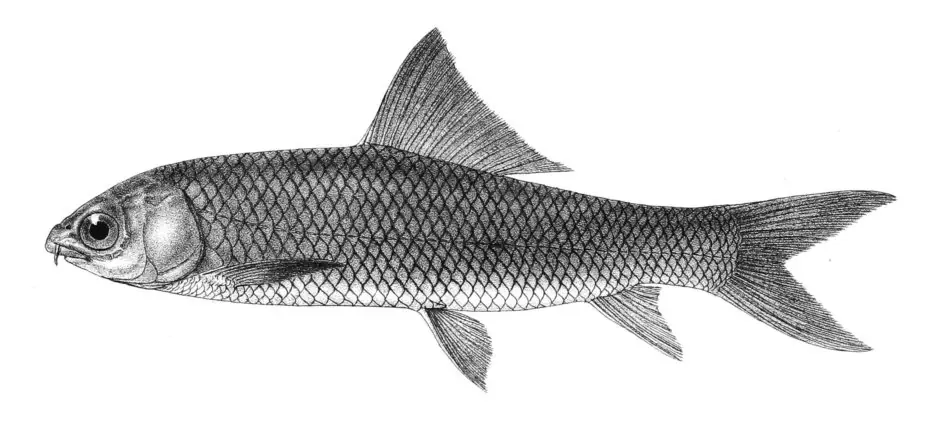
All six belong to the family Cyprinidae. Rohu, catla and mrigal are the three Indian major carps; silver, grass and common carp are exotic. The bighead carp Hypophthalmichthys nobilis — a zooplankton feeder — sometimes substitutes for a species in Nepal's six-species system.
Silver carp eats phytoplankton; bighead carp eats zooplankton. This pair is swapped in a large fraction of South Asian textbooks and is a favourite MCQ. Two more from the same family of errors: rohu is a column feeder, not a bottom feeder, and catla feeds on zooplankton, not phytoplankton.
Induced breeding. Carps kept in ponds mature perfectly well but fail to spawn, because they need the riverine cues — rising water, a current, monsoon turbidity — that a still pond never supplies. The problem was solved by Hiralal Chaudhuri at Cuttack on 10 July 1956, by injecting pituitary extract (hypophysation) into ripe brooders; India keeps that date as National Fish Farmers' Day. Today a synthetic analogue is normally used — Ovaprim, which combines a salmon GnRH analogue with domperidone, a dopamine blocker that removes the brain's inhibition of the gonadotrophin surge. The injected pair is kept in a breeding hapa or circular hatchery, spawns within hours, and the eggs are moved to hatching jars.
They mature. What they cannot do in a pond is spawn. Say it precisely: pond conditions lack the environmental stimuli for the final maturation and release of gametes, so the hormone is supplied artificially.
Nepal's cold-water and indigenous fishes. Rainbow trout, Oncorhynchus mykiss, was introduced from India in 1969 and again from England and Japan in 1988; government farms began production in 1995 and private farms in 1998, with Rasuwa and Nuwakot the commercial centres. It needs water below about 21 °C, and now yields 1,332 MT a year. Among native fishes the sahar or golden mahseer Tor putitora is prized but is assessed Endangered by IUCN; the snow trout or asala Schizothorax richardsonii is Vulnerable; katle Neolissochilus hexagonolepis is Near Threatened. Conservation of these three, and hatchery ranching of sahar, is an active field in Nepal.
Nepal's gazetted national symbols are the cow, the Himalayan monal (danphe) and Rhododendron arboreum. No fish has been gazetted. Tor putitora is also Endangered, not Critically Endangered.
A farmer in Bara has a 0.6 ha pond and stocks at 5,000 fingerlings per hectare in the ratio surface 30 % : column 30 % : bottom 40 %. How many fingerlings of each group, and what harvest can be expected at the national average yield of 5.62 t ha⁻¹?
Total fingerlings = 5000 \times 0.6 = 3000.
So about 900 silver carp and catla together, 900 rohu, and 1200 mrigal and common carp together.
Poultry farming
Poultry farming is the rearing of domestic birds for meat and eggs. The domestic fowl is Gallus gallus domesticus (order Galliformes, family Phasianidae), descended principally from the red junglefowl Gallus gallus about 8,000 years ago, with some genes from three other junglefowl species. Nepal's own junglefowl subspecies is G. g. murghi.
Commercial stock is divided into two lines that have been bred to do quite different things.
| Broiler | Layer | |
|---|---|---|
| Purpose | meat | eggs |
| Typical strains | Cobb, Ross, Hubbard | Hy-Line Brown, Lohmann, White Leghorn |
| Growth | reaches slaughter weight in 4–6 weeks | grows slowly, matures for laying |
| Housing | deep litter, high density | cages or deep litter with nest boxes |
| Feed | high-energy broiler starter, grower, finisher | layer mash high in calcium for shell |
A modern brown layer strain approaches 500 eggs by 100 weeks of age. Nepal's own recognised indigenous breeds number exactly three: Sakini, Ghanti Khuile (the naked-neck bird, carrying the Na gene) and Pwankh Ulte (the frizzle, whose feathers curl outwards). All three are dual-purpose, hardy and slow — valuable for scavenging village systems and for the genes they carry, not for output. NARC has run several generations of selection on Sakini.
Kadaknath, Aseel and Kuroiler are Indian breeds or commercial crosses. They are not Nepali indigenous breeds. The three are Sakini, Ghanti Khuile, Pwankh Ulte.
Poultry diseases are the standard short-answer topic.
| Disease | Causative agent | Type | Key features | Control |
|---|---|---|---|---|
| Newcastle (Ranikhet) | avian paramyxovirus type 1 | virus | respiratory and nervous signs, twisted neck; mortality up to 100 % | live and killed vaccines; strict biosecurity |
| Marek's disease | Gallid alphaherpesvirus 2 | virus | tumours, enlarged peripheral nerves, leg paralysis | HVT or CVI988-Rispens vaccine at hatch or in ovo on day 18 |
| Fowl pox | Avipoxvirus | virus | wart-like nodules on comb and wattles; diphtheritic form in mouth | wing-web vaccination |
| Coccidiosis | Eimeria spp. (protozoa, Apicomplexa) | protozoan | bloody droppings; E. tenella damages the caeca | coccidiostats in feed, dry litter |
| Avian influenza | influenza A H5N1, H9 | virus | sudden death, cyanotic comb | culling, movement control, biosecurity |
Newcastle disease and Ranikhet disease are the same disease under two names. Nepal's first H5N1 outbreaks were in Jhapa in 2009, followed by Pokhara in 2010 where over 11,000 birds were culled; H5 and H9 viruses have recurred periodically since, the first human case was reported in April 2019, and 2023 brought outbreaks in Bagmati caused by clade 2.3.4.4b.
Animal husbandry — dairy and livestock
Animal husbandry is the science of breeding, feeding, housing and managing domestic animals. In Nepal it is dominated by the buffalo.
Buffalo. Bubalus bubalis supplies 52.1 % of Nepal's milk, more than all cattle put together, and Nepal holds one of the largest buffalo populations in the world. Almost every buffalo in the country is of the riverine type (the swamp type survives only as the wild population at Koshi Tappu). About 65 % are indigenous — Lime, Parkote and Gaddi, with the Terai buffalo recently recognised as a fourth — and the remaining 35 % are Murrah and Murrah crosses. Buffalo milk is richer in fat than cow milk, which is why Nepali ghiu and khuwa are traditionally made from it.
Nepali hill buffaloes (Lime, Parkote) are riverine type. Calling them swamp buffalo is a standard textbook error, as is writing "Bubalus bubalus" for Bubalus bubalis.
Cattle. Two indigenous breeds are worth knowing for their extremes. Lulu cattle of Manang and Mustang live between 2,500 and 4,500 m and are humpless and predominantly taurine, with some zebu and even yak ancestry; cows stand 74–90 cm and give 1–2 kg of milk a day. Achhami cattle of Achham, Bajhang, Bajura and Doti are zebu, and stand less than a metre at the withers — the local name Naumuthe, "nine fists", describes the height. The Siri is a draught breed from the eastern hills and Sikkim.
Yak and chauri. The yak is kept above about 3,000 m. Crossing a yak with hill cattle produces the hybrid called chauri in Nepal (dzo in Tibetan areas), which yields more milk than a pure yak and tolerates lower altitudes. The genetics is an exam favourite: female hybrids are fully fertile, but F₁ males are sterile — their semen contains no sperm, so they are used only as teaser bulls. Fertility returns to males only after several generations of backcrossing. Hybrid milk yield exceeds the yak's, but its fat percentage is usually lower. Yak milk in Nepal runs about 17.4 % total solids and 6.5 % fat, and the butter and the rock-hard cheese chhurpi are made from it.
Do not write "chauri = male yak" or "the hybrids are fertile". Correct: chauri is the yak–cattle hybrid; females fertile, F₁ males sterile; and hybrid milk fat is lower than pure yak milk, not higher.
Goats and sheep. Goats are Nepal's largest livestock population by head — nearly 16 million — with four indigenous breeds arranged by altitude: Chyangra (high Himalaya), Sinhal (high hills), Khari (mid-hills) and Terai. Sheep have four major breeds — Bhyanglung, Baruwal, Kage and Lampuchhre — which together make up over 90 % of the national flock.
Vermicomposting
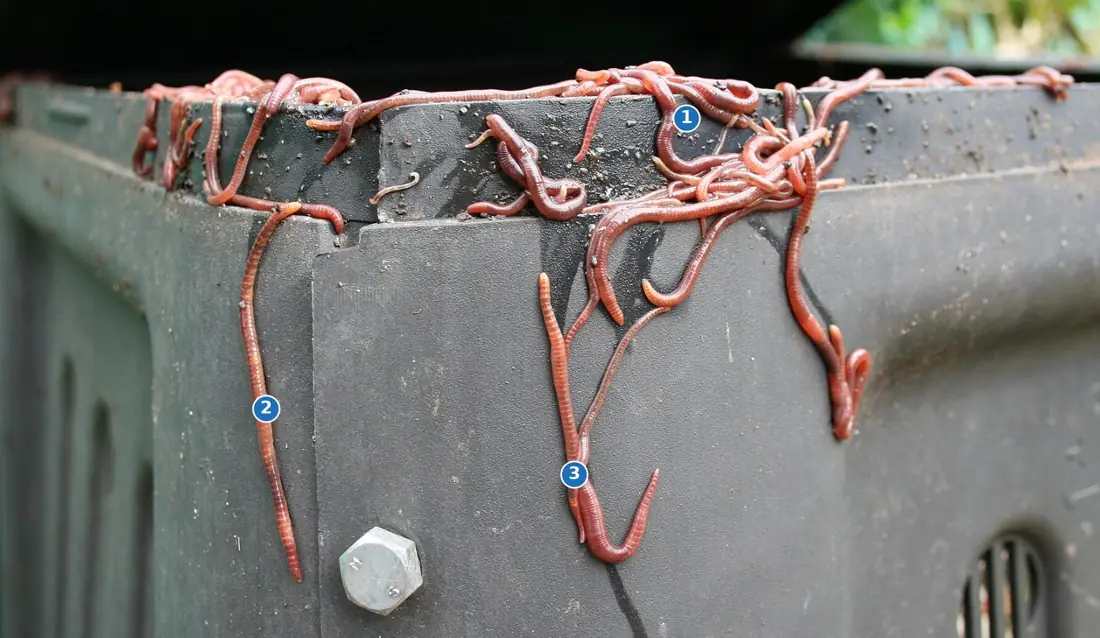
Vermicomposting is the conversion of organic waste into a fine, nutrient-rich manure by earthworms working together with microorganisms. The product is vermicompost (worm castings); the liquid that drains or is percolated through the bed is vermiwash.
Not every earthworm will do the job. Earthworms fall into three ecological groups, and only the first is useful.
| Group | Where it lives | Suitable for a worm bin? |
|---|---|---|
| Epigeic | in the surface litter layer; no permanent burrow; eats fast, breeds fast | yes — these are the vermicomposting worms |
| Anecic | deep permanent vertical burrows, pulls litter down (Lumbricus terrestris) | no — adapts badly to a shallow bed |
| Endogeic | horizontal burrows in mineral soil; eats soil (geophagous) | no |
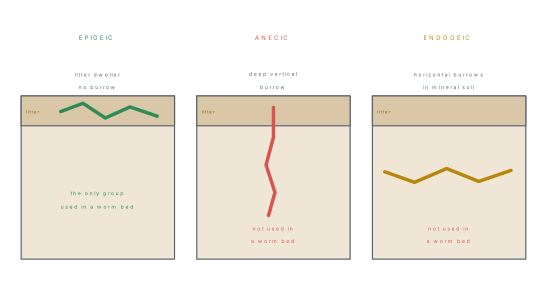
The standard species is Eisenia fetida, the tiger worm or red wiggler (family Lumbricidae). Eudrilus eugeniae (the African night crawler), Perionyx excavatus and the South Asian Lampito mauritii are also used.
Eisenia fetida is the accepted spelling; E. foetida is a synonym. And Lumbricus terrestris, which appears in many textbook lists, is an anecic species and is unsuitable for vermicomposting.
Running a bed. A shallow bed 1 m × 1 m × 0.5 m is stocked with about 1 kg of worms — roughly 1,000 individuals. The waste is first pre-digested for about 20 days with dung slurry (fresh manure overheats and releases ammonia), then mixed with about 30 % cattle dung. Moisture is held near 60 % and the bed is shaded; E. fetida works between about 4.5 °C and 32 °C. The worms are fed roughly half their body weight of waste per day. Harvest takes about 60–140 days — two to four months, not the "30 days" often claimed. The finished compost is dark, odourless, nearly neutral in pH and crumbly, with a C : N ratio around 21.
Why it is worth doing. Vermicompost analyses at 0.5–1.5 % N, 0.1–0.3 % P and 0.15–0.56 % K with 9.5–18 % organic carbon, against about 0.5 % N in well-rotted farmyard manure. Castings contain roughly five times the available nitrogen and seven times the available potash of the surrounding topsoil, plus plant hormones (auxins and cytokinins), enzymes, and nitrogen-fixing and phosphate-solubilising bacteria. Vermiwash diluted to 5–10 % inhibits the mycelium of pathogenic fungi and is used as a foliar spray. A Nepali trial recorded an okra yield increase of about 126 %, with benefit : cost ratios of 1.0–1.6; four commercial brands are now on sale in Nepal, though published work in the country remains thin.
Measured values are 0.5–1.5 % N. Over-quoting the nutrient content and under-quoting the time (it takes 60–140 days, not 30–45) are the two standard errors in this topic.
A farmer can apply either 5 t ha⁻¹ of vermicompost at 1.0 % N or 5 t ha⁻¹ of well-rotted FYM at 0.5 % N. How much nitrogen does each supply, and how much urea (46 % N) would make up the difference?
The difference is 25 kg N ha⁻¹, which as urea is
Note what the arithmetic does not capture: the vermicompost also supplies P, K, micronutrients, organic carbon and microorganisms, none of which urea does.
Pearl culture and lac culture
Both of these appear in the syllabus's general heading, and both need an honest Nepali footnote: neither is practised in Nepal.
Pearl culture. A pearl is formed when the mantle of a bivalve is displaced or irritated, forms a closed pearl sac, and that sac secretes nacre — aragonite tablets about 10–20 µm across and 0.5 µm thick, laid in sheets separated by the protein conchiolin. Because each tablet is about as thick as a wavelength of visible light, the stack produces iridescence. Marine pearls come from Pinctada species (family Margaritidae) — P. fucata, P. margaritifera, P. maxima; freshwater pearls from mussels such as Lamellidens marginalis and Sinohyriopsis cumingii.
In culture, a technician inserts a round bead nucleus cut from mussel shell together with a small graft of mantle tissue, the saibo; it is the graft, not the bead, that grows into the pearl sac. Marine culture places one bead in the gonad; freshwater culture inserts tissue alone, without a bead, and up to 25 grafts per valve. The sac is complete in about five days and regular nacre begins around day 25–30. Kōkichi Mikimoto produced the first semi-spherical cultured pearls in the 1890s and patented the method in 1896; the technique for whole spherical pearls was devised independently by Tatsuhei Mise and Tokichi Nishikawa. More than 95 % of pearls sold today are cultured, and China produces over 95 % of the world's freshwater pearls.
A grain of sand is rarely the cause. Typical natural stimuli are organic material, a parasite, or damage that displaces mantle tissue. And a cultured pearl is not "just a bead" — without the mantle graft there is no pearl sac and no nacre. Pearl oysters are not true oysters (Ostreidae); Pinctada is placed in Margaritidae.
Lac culture. Lac is a resin secreted by the female scale insect Kerria lacca (Hemiptera, family Kerriidae) as it feeds on the twigs of host trees. It is the only commercial resin of animal origin. The main hosts are kusum Schleichera oleosa (best yield and palest lac, 6–10 kg a tree), ber Ziziphus mauritiana (1.5–6 kg) and palas Butea monosperma (1–4 kg). Encrusted twigs are cut as sticklac, washed and sieved to seedlac, then melted and stretched into shellac flakes. The red lac dye consists of laccaic acids extracted from the insect's haemolymph. Shellac goes into varnish, sealing wax, confectioner's glaze and citrus coatings, and once went into gramophone records. India produces at least half the world total, around 20,000 tonnes of raw lac a year, led by Jharkhand.
The insect is Kerria lacca, family Kerriidae — not "Laccifer lacca, Tachardiidae". The resin comes from the female, and the encrustation is not a cocoon. Host is Butea monosperma, not "B. frondosa". And do not write that lac or pearl culture is practised in Nepal — Nepal is landlocked, and appears on no list of lac-producing countries.
10.2 Microbial diseases and application of microbiology
Microbiology is the study of organisms too small to see unaided — bacteria, archaea, viruses, protozoa, microscopic fungi and algae. It has two faces, and the syllabus asks for both. Microorganisms cause most of the infectious disease in Nepal; they also make our curd, fix our nitrogen, digest our sewage, brew our biogas and supply every antibiotic we have.
Unit 9 (§9.2) already gave you the general table of communicable diseases, the life cycle of Plasmodium, HIV/AIDS and the outline of immunity. This section takes the microbiologist's view of the same ground: what kind of organism each agent is, how it is identified in a laboratory, and how it is attacked. Read §9.2 first; do not learn the two sections as if they were unrelated.
The four groups of agents
| Group | What it is | Size | Sensitive to antibiotics? | Examples |
|---|---|---|---|---|
| Bacteria | prokaryotes — no nucleus, 70S ribosomes, peptidoglycan wall | 0.5–5 µm | yes | Mycobacterium tuberculosis, Vibrio cholerae, Salmonella Typhi |
| Viruses | acellular; nucleic acid in a protein coat; obligate intracellular parasites | 20–300 nm | no — antivirals only | SARS-CoV-2, HBV, dengue virus, HIV |
| Protozoa | unicellular eukaryotes | 5–100 µm | no — antiprotozoals | Plasmodium, Leishmania donovani, Entamoeba histolytica |
| Fungi | eukaryotes with chitinous walls; yeasts and moulds | variable | no — antifungals | Trichophyton, Candida albicans |
Bacteria are classified by shape (coccus, bacillus, spirillum, vibrio), by their reaction to the Gram stain (Gram-positive cells retain crystal violet because of a thick peptidoglycan layer; Gram-negative cells do not and take the safranin counterstain), and by their oxygen requirement. A few genera — Mycobacterium, Nocardia — have a waxy mycolic acid wall that resists the Gram stain altogether and must be stained by the acid-fast method.
A pathogen is an organism capable of causing disease. Infection is the entry and multiplication of that organism in a host. Disease appears only when the infection damages the host enough to produce signs and symptoms — which is why a person can be infected but healthy, and in the case of Salmonella Typhi can remain a lifelong carrier who infects others.
Robert Koch's rules for proving that a particular microbe causes a particular disease, used for anthrax (1876) and tuberculosis (1882):
- The organism must be found in every case of the disease and absent from healthy individuals.
- It must be isolated from the host and grown in pure culture.
- The pure culture, inoculated into a healthy susceptible host, must reproduce the disease.
- The organism must be re-isolated from that experimental host and shown to be the same.
Know the limitation too: some pathogens cannot be grown in pure culture (Mycobacterium leprae, most viruses), some infections are symptomless carriers, and some diseases need more than one agent. Modern practice supplements the postulates with molecular evidence.
Modes of transmission
Learn the categories, because a disease question usually wants transmission named precisely.
- Airborne / droplet — tuberculosis, influenza, COVID-19, measles.
- Faecal–oral (water and food) — typhoid, cholera, hepatitis A and E, amoebic dysentery, giardiasis.
- Vector-borne — malaria (Anopheles), dengue (Aedes), kala-azar (Phlebotomus), Japanese encephalitis (Culex), scrub typhus (chigger mite).
- Blood and body fluids — hepatitis B and C, HIV.
- Direct contact and fomites — ringworm, scabies, conjunctivitis.
- From the environment, not person to person — tetanus (soil spores).
The diseases the examiner asks for
| Disease | Causative agent | Type | Transmission | Incubation | Cardinal signs | Prevention |
|---|---|---|---|---|---|---|
| Tuberculosis | Mycobacterium tuberculosis | acid-fast bacterium | airborne droplet nuclei | 2–12 weeks to infection | cough over 2 weeks, blood in sputum, evening fever, night sweats, weight loss | BCG at birth; DOTS treatment; ventilation |
| Typhoid | Salmonella Typhi | Gram-negative bacillus | faecal–oral, water and food, carriers | 7–14 days | step-ladder fever, rose spots, abdominal pain, enlarged liver and spleen | safe water, TCV vaccine, sanitation |
| Cholera | Vibrio cholerae O1 / O139 | comma-shaped Gram-negative | faecal–oral, contaminated water | 12 hours – 5 days | painless rice-water stools, vomiting, rapid dehydration | chlorination, ORS, oral cholera vaccine |
| Hepatitis A | hepatitis A virus | RNA virus | faecal–oral | 15–50 days | jaundice, dark urine, nausea; never becomes chronic | inactivated vaccine, safe water |
| Hepatitis B | hepatitis B virus | DNA virus | blood, sexual contact, mother to child | 30–180 days | jaundice, chronic hepatitis, cirrhosis, liver cancer | recombinant HBsAg vaccine (in Nepal's pentavalent) |
| Hepatitis E | hepatitis E virus | RNA virus | faecal–oral, waterborne | 15–60 days | jaundice; case fatality 20–25 % in late pregnancy | safe water; the only vaccine is licensed in China alone |
| Malaria | Plasmodium vivax, P. falciparum and three others | protozoan | bite of female Anopheles | 9–17 days | cold–hot–sweating paroxysms, anaemia, enlarged spleen | bed nets, indoor spraying, prompt ACT treatment |
| Kala-azar | Leishmania donovani | protozoan | bite of female Phlebotomus argentipes sandfly | 2–6 months | twice-daily fever spikes, huge spleen, darkened skin, wasting | sandfly control, plastered walls, rK39 testing |
| Dengue | dengue virus, serotypes 1–4 | RNA virus | day-biting Aedes aegypti, Ae. albopictus | 4–10 days | retro-orbital pain, severe body ache, rash, low platelets | destroy clean-water breeding sites, screens |
| COVID-19 | SARS-CoV-2 | RNA virus | respiratory droplets and aerosols | 2–14 days (median 5) | fever, dry cough, fatigue, loss of smell and taste, breathlessness | vaccination, ventilation, masks |
| AIDS | HIV-1 and HIV-2 | retrovirus | unsafe sex, infected blood and needles, mother to child | AIDS after 8–10 years untreated | falling CD4⁺ count, opportunistic infections, wasting | safe sex, screened blood, ART, PrEP |
| Ringworm | Trichophyton, Microsporum, Epidermophyton | fungi | contact, shared towels and combs | 4–14 days | itchy ring-shaped scaly patch with central clearing | keep skin dry, do not share clothing |
- Salmonella Typhi — the full name is Salmonella enterica subsp. enterica serovar Typhi. "Salmonella typhi" is obsolete. Typhoid is not typhus.
- El Tor is a biotype, not a serotype, of V. cholerae serogroup O1; Ogawa and Inaba are the serotypes; O139 is a separate serogroup.
- Hepatitis B does not spread through food and water — A and E do.
- Dengue is carried by day-biting Aedes, not by night-biting Culex.
- COVID-19 is the disease; SARS-CoV-2 is the virus.
- Ringworm is a fungus, not a worm.
Tuberculosis and the acid-fast smear
Tuberculosis deserves separate treatment because it is Nepal's most important bacterial disease and because its laboratory diagnosis is examinable. Mycobacterium tuberculosis is a slender rod whose cell wall is loaded with waxy mycolic acids. That wall makes it slow-growing (a generation time of about 18 hours, against 20 minutes for E. coli), resistant to drying, and impossible to stain by ordinary methods — so the Ziehl–Neelsen method is used instead.
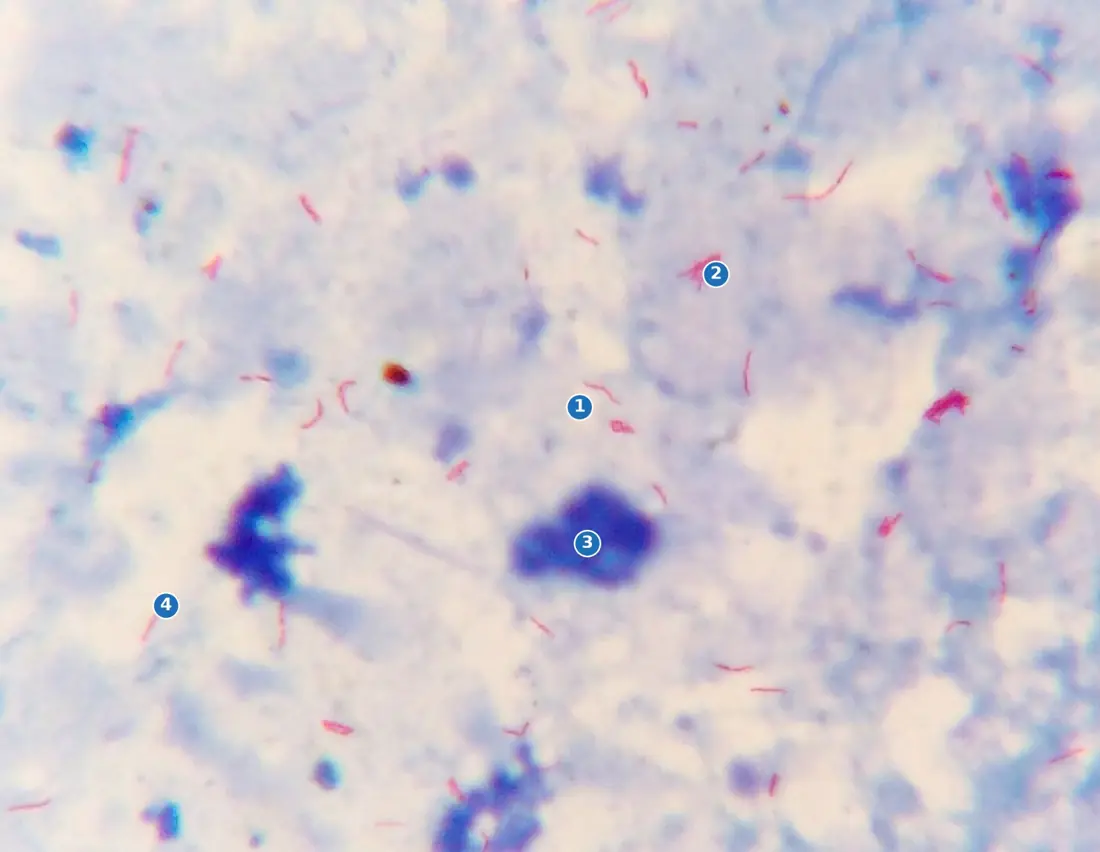
- Flood the fixed sputum smear with carbol fuchsin and heat until it steams — the heat drives the dye through the waxy wall.
- Decolourise with acid–alcohol. Every other cell in the smear loses the red dye; mycobacteria hold it, and are therefore called acid-fast.
- Counterstain with methylene blue.
Result: red bacilli against a blue background. A positive smear means the patient is infectious.
Treatment follows the DOTS strategy — Directly Observed Treatment, Short-course — under which a health worker watches each dose swallowed. The standard regimen is four drugs (isoniazid, rifampicin, pyrazinamide, ethambutol) for two months, then two drugs (isoniazid, rifampicin) for four. MDR-TB is tuberculosis resistant to at least isoniazid and rifampicin together; Nepal's sixth national drug-resistance survey (2022–24) found rifampicin resistance in 2.2 % of new patients and 10.1 % of previously treated patients, and Nepal has entered WHO's regional high-burden list for drug-resistant TB.
BCG is a live attenuated strain of Mycobacterium bovis, not of M. tuberculosis. It chiefly prevents miliary TB and TB meningitis in young children; its protection against adult pulmonary TB is variable and wanes, so it is not a guarantee of lifelong immunity. DOTS is a strategy, not a drug. And MDR-TB is not "resistant to all drugs" — that is a different, rarer category.
Immunity, seen from the microbiology side
The classification of immunity was given in §9.2.4 and is not repeated here. What matters for this section is the shape of the response, because it is the whole basis of vaccination.
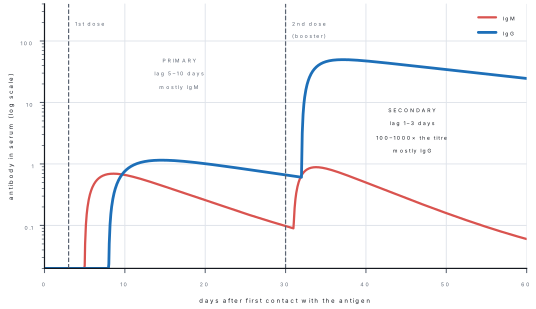
On first contact with an antigen there is a lag of 5–10 days while the few matching B cells find the antigen, divide and mature; antibody titre then rises to a modest peak, and the first antibody made is IgM. On second contact the memory cells are already present: the lag falls to 1–3 days, the titre rises a hundred- to a thousand-fold higher, the antibody is mostly IgG, and it binds far more tightly. That difference is why a vaccine works and why booster doses exist.
Vaccines
A vaccine is a preparation of a pathogen, or part of one, given deliberately to provoke a primary immune response and leave memory cells behind — that is, to produce artificial active immunity.
Edward Jenner, in 1796, inoculated the boy James Phipps with matter from a cowpox sore and showed that it protected him against smallpox. Louis Pasteur generalised the idea to attenuated cultures — fowl cholera in 1879, anthrax in 1881, rabies in 1885 — and it was Pasteur who coined the word vaccine, in Jenner's honour.
| Type | How it is made | Examples |
|---|---|---|
| Live attenuated | the pathogen weakened until it cannot cause disease | BCG, measles–rubella, oral polio, Japanese encephalitis SA 14-14-2 |
| Killed (inactivated) | the whole pathogen killed by heat or chemicals | injectable polio (Salk), hepatitis A, cell-culture rabies, Covaxin |
| Subunit / recombinant / conjugate | only the protective antigen | hepatitis B (HBsAg), HPV, Hib, pneumococcal, typhoid conjugate |
| Toxoid | the toxin, chemically inactivated | tetanus, diphtheria |
| mRNA | mRNA for the antigen, delivered in lipid nanoparticles | Comirnaty (BNT162b2) |
| Viral vector | a harmless virus carrying the antigen's gene | ChAdOx1 / Covishield |
Nepal's national immunisation programme covers tuberculosis (BCG), polio, diphtheria, pertussis, tetanus, hepatitis B and Haemophilus influenzae type b (the pentavalent vaccine), pneumococcal disease, rotavirus, measles–rubella, Japanese encephalitis, and since 2022 typhoid conjugate vaccine, plus Td in pregnancy and HPV vaccine for girls.
Two achievements are worth the dates. Smallpox: the last natural case was in Somalia in October 1977 and the World Health Assembly declared eradication on 8 May 1980 — the only human disease ever eradicated. Polio: Nepal's last indigenous wild poliovirus case was in August 2010, and the WHO South-East Asia Region was certified polio-free on 27 March 2014; globally, wild types 2 and 3 are eradicated but type 1 persists in Pakistan and Afghanistan.
A vaccine makes your immune system do the work, so it is artificial active immunity — slow to appear, long-lasting, with memory. Ready-made antibodies (anti-tetanus serum, anti-rabies immunoglobulin, antivenom) are artificial passive immunity — immediate, short-lived, no memory. Also: Jenner used cowpox, not smallpox pus, and it was Pasteur, not Jenner, who coined the word vaccine.
Antibiotics
An antibiotic is a substance produced by one microorganism that kills or inhibits another. The word was coined by Selman Waksman in the early 1940s.
Penicillin. In 1928, at St Mary's Hospital in London, Alexander Fleming returned to a Staphylococcus plate that had been contaminated by a mould and found the bacterial colonies dissolved around it. He named the mould Penicillium notatum; in 2011 his preserved strain was re-identified as Penicillium rubens. Fleming could not purify the substance. Howard Florey, Ernst Chain and Norman Heatley did, at Oxford in 1940–41, and the 1945 Nobel Prize went to Fleming, Chain and Florey together.
Streptomycin, the first drug effective against tuberculosis, was isolated in 1943 by Albert Schatz in Waksman's laboratory from Streptomyces griseus — which is not a fungus but a filamentous Gram-positive bacterium, an actinomycete.
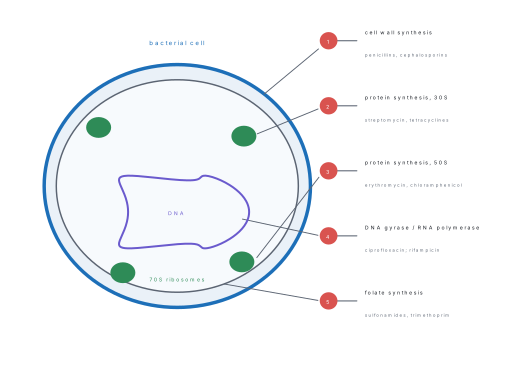
Antibiotics are classified in three ways worth knowing.
- Spectrum — broad-spectrum (tetracycline, chloramphenicol, ampicillin) act on both Gram-positive and Gram-negative bacteria; narrow-spectrum (penicillin G, vancomycin, isoniazid) act on a limited range.
- Effect — bactericidal drugs kill (β-lactams, aminoglycosides, fluoroquinolones, rifampicin); bacteriostatic drugs merely stop growth and leave the killing to the immune system (tetracyclines, macrolides, sulfonamides, chloramphenicol).
- Target, as in the figure above.
Every antibiotic target — the peptidoglycan wall, the 70S ribosome, DNA gyrase, the bacterial folate pathway — is a prokaryotic structure. A virus has no wall, no ribosomes and no metabolism of its own; it replicates using the host cell's machinery. Viral infections need antivirals (acyclovir, oseltamivir, antiretrovirals) or nothing at all.
Antimicrobial resistance (AMR). Bacteria resist antibiotics by producing enzymes that destroy the drug (β-lactamases, including ESBL and NDM-1), by pumping it out (efflux pumps), by altering the target (MRSA makes an altered penicillin-binding protein), and by reducing wall permeability. Resistance genes travel between bacteria on plasmids by conjugation, and on transposons and integrons — which is why resistance can appear in a species that was never treated. The drivers are human: antibiotics sold over the counter without prescription, courses abandoned as soon as the fever drops, and heavy use in poultry and livestock. A 2024 global analysis attributed about 1.14 million deaths directly to resistant bacterial infections in 2021.
Escherichia coli in good conditions has a generation time of about 20 minutes. Starting from a single cell, how many cells are there after 6 hours, and how does that compare with M. tuberculosis, whose generation time is about 18 hours?
Number of generations in 6 hours:
Over a quarter of a million cells from one, in an afternoon. For M. tuberculosis in the same 6 hours, n = 6/18 = 0.33, so the population has not even doubled once.
This single number explains a great deal of clinical practice: cholera and food poisoning strike within hours, whereas tuberculosis takes weeks to declare itself, needs weeks of culture to diagnose by growth, and needs six months of treatment rather than five days.
Microorganisms at work
The second half of applied microbiology is the useful side. Group the examples by field; the examiner usually asks for four or five with the organism named.
| Field | Organism | What it does |
|---|---|---|
| Dairy | Lactobacillus spp. with Streptococcus thermophilus | ferments lactose to lactic acid, which coagulates casein: curd (dahi), yoghurt |
| Baking and brewing | Saccharomyces cerevisiae | ferments sugar to CO₂ (raises dough) and ethanol (beer, wine, raksi, bioethanol) |
| Cheese | Penicillium roqueforti, P. camemberti; Propionibacterium freudenreichii | ripening and flavour; the propionibacterium's CO₂ makes the holes in Swiss cheese |
| Industrial chemicals | Aspergillus niger; Clostridium acetobutylicum | citric acid; acetone–butanol–ethanol fermentation |
| Medicine | Penicillium rubens; Streptomyces griseus; Streptococcus equisimilis; Monascus purpureus | penicillin; streptomycin; streptokinase, used to dissolve clots after a heart attack; monacolin K, the statin lovastatin |
| Nitrogen fixation | Rhizobium (symbiotic, in legume root nodules); Azotobacter (free-living, aerobic); Anabaena azollae in Azolla | convert N₂ to ammonia — the basis of biofertiliser |
| Biopesticide | Bacillus thuringiensis | crystal Cry δ-endotoxin, activated in the alkaline insect midgut; the source of Bt genes |
| Biocontrol of fungi | Trichoderma harzianum, T. viride | suppresses soil-borne fungal pathogens; also a source of cellulase |
| Single-cell protein | Arthrospira platensis (spirulina), Fusarium venenatum | protein-rich biomass for food and feed |
| Biogas | methanogenic archaea, Methanobacterium, Methanobrevibacter | anaerobic digestion of dung and slurry to a gas of 50–70 % methane |
Spirulina is a cyanobacterium (Arthrospira platensis), not an alga. Methanogens are archaea, not bacteria. Anabaena azollae lives in the dorsal leaf cavities of *Azolla, not in its roots. And Lactobacillus ferments lactose, a sugar* — the milk protein casein is then coagulated by the acid produced, which is a consequence, not the fermentation itself.
Biogas deserves a Nepali note. A domestic plant is fed cattle dung and water into an airtight digester where three groups of microorganisms work in sequence: hydrolytic bacteria break polymers into sugars and amino acids, acidogens and acetogens convert these into organic acids, hydrogen and acetate, and finally methanogenic archaea produce methane. The gas burns for cooking and light, and the spent slurry is a good manure — so a biogas plant replaces firewood, removes the smoke from the kitchen, and fertilises the field at the same time.
Chapter summary
- Apiculture is the keeping of Apis species in hives. Nepal's hive bee is Apis cerana; A. mellifera was introduced in 1992; A. dorsata, A. laboriosa and A. florea build single open combs and are hunted, not kept. The movable-frame hive works because bees leave a bee space of 6.4–9.5 mm, discovered by Langstroth in 1851 and patented in 1852. Pollination is worth more than the honey: 87 leading food crops depend on animal pollinators.
- A colony has one queen, sterile female workers and haploid drones from unfertilised eggs. All larvae get royal jelly for about three days; only the queen larva stays on it.
- Sericulture rears Bombyx mori on mulberry (Morus alba). The larva passes five instars and four moults in 29–30 days, then spins a cocoon of one filament 600–900 m long. The pupa is killed by stifling before it can emerge and cut the filament. 4,000–7,000 cocoons make one kilogram of raw silk, which is 75–80 % fibroin and 20–25 % sericin.
- Composite fish culture stocks six carps with different feeding niches in one pond: silver carp (phytoplankton), catla (zooplankton), rohu (column), grass carp (weeds), mrigal and common carp (bottom). Carps mature in ponds but will not spawn there, so breeding is induced by hormone injection — Hiralal Chaudhuri, 1956.
- Poultry: Gallus gallus domesticus from the red junglefowl; broilers reach slaughter weight in 4–6 weeks, layers approach 500 eggs by 100 weeks. Nepal has exactly three indigenous breeds — Sakini, Ghanti Khuile, Pwankh Ulte. Ranikhet is Newcastle disease, caused by avian paramyxovirus type 1.
- Animal husbandry: buffalo (Bubalus bubalis, riverine type) give 52.1 % of Nepal's milk. The yak–cattle hybrid is the chauri: females fertile, F₁ males sterile, milk yield higher but fat percentage lower than pure yak. Vermicomposting uses epigeic worms only, chiefly Eisenia fetida; the bed takes 60–140 days and yields compost of 0.5–1.5 % N.
- Pearl culture inserts a shell bead together with a mantle graft (saibo), which forms the pearl sac that secretes nacre; the grain of sand is a myth, and neither pearl culture nor lac culture (Kerria lacca) is practised in Nepal.
- Microbial disease: know agent, type, vector and prevention exactly — Mycobacterium tuberculosis (airborne, BCG, DOTS, ZN stain giving red bacilli on a blue ground), Salmonella Typhi and Vibrio cholerae O1/O139 (faecal–oral), Plasmodium (female Anopheles), Leishmania donovani (female Phlebotomus argentipes), dengue virus (day-biting Aedes), SARS-CoV-2 (the virus; COVID-19 the disease).
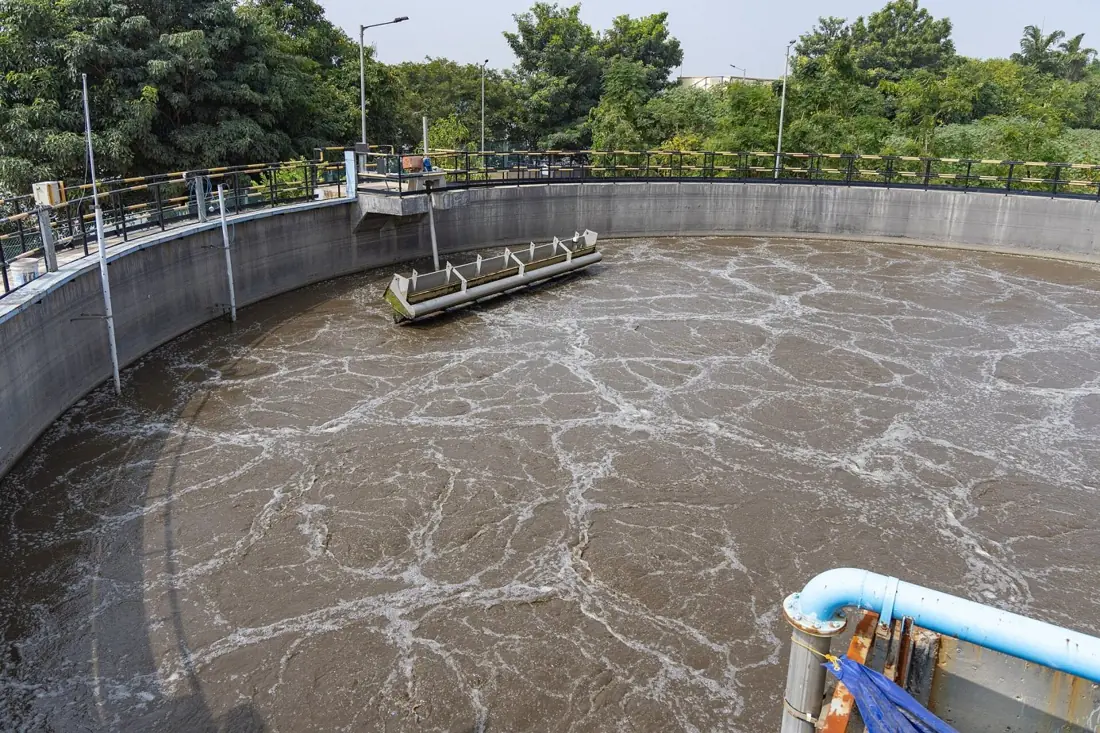
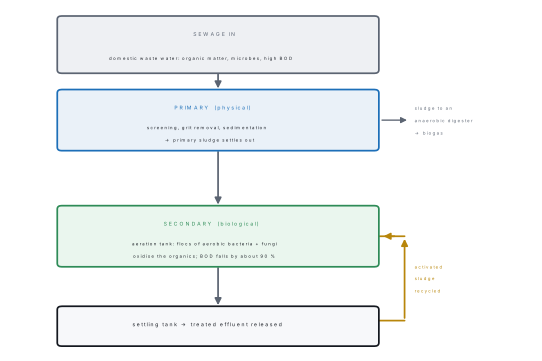
- Applied microbiology: a vaccine gives artificial active immunity, and the secondary response is faster, a hundred- to a thousand-fold larger and mostly IgG. Antibiotics attack prokaryote-only targets — wall, 70S ribosome, gyrase, folate pathway — and are therefore useless against viruses; misuse breeds resistance carried on plasmids. Useful microbes run our curd (Lactobacillus), bread and beer (Saccharomyces), biofertiliser (Rhizobium, Azotobacter, Anabaena), biopesticide (Bacillus thuringiensis), biogas (methanogenic archaea) and the secondary stage of sewage treatment.
Practice questions
Group A — Multiple choice (1 mark each)
- The hive bee of Nepal is [1]aApis dorsatabApis ceranacApis laboriosadApis florea
- The bee space exploited by the movable-frame hive is about [1]a1–2 mmb6.4–9.5 mmc15–20 mmd25–30 mm
- The larva of Bombyx mori passes through [1]athree instars and two moultsbfour instars and four moultscfive instars and four moultsdfive instars and five moults
- In composite fish culture the surface phytoplankton feeder is [1]acatlabmrigalcsilver carpdgrass carp
- Ranikhet disease of poultry is caused by [1]aa bacteriumba protozoancavian paramyxovirus type 1dEimeria tenella
- The earthworm species normally used in vermicomposting is [1]aLumbricus terrestrisbEisenia fetidacPheretima posthumadLampito mauritii
- In the Ziehl–Neelsen stain, acid-fast bacilli appear [1]ablue on a red groundbred on a blue groundcpurple on a pink grounddcolourless
- Kala-azar is transmitted by the bite of [1]afemale AnophelesbAedes aegypticfemale Phlebotomus argentipesda chigger mite
- Which of these is not a target of any antibiotic? [1]apeptidoglycan cell wallb70S ribosomecDNA gyrasedviral capsid
- Methane in a biogas plant is produced by [1]aLactobacillusbmethanogenic archaeacSaccharomyces cerevisiaedRhizobium
Answers to Group A
1. (b) — A. cerana nests in cavities and so can be hived; the other three build single open combs.
2. (b) — 6.4–9.5 mm, the gap bees neither fill with comb nor seal with propolis.
3. (c) — five instars, four larval moults; the fifth moult happens inside the cocoon.
4. (c) — silver carp takes phytoplankton; catla takes zooplankton. Do not swap them.
5. (c) — Ranikhet and Newcastle disease are the same viral disease.
6. (b) — Eisenia fetida is epigeic. Lumbricus terrestris is anecic and unsuitable.
7. (b) — carbol fuchsin is retained through acid-alcohol; methylene blue counterstains everything else.
8. (c) — the female sandfly Phlebotomus argentipes.
9. (d) — a virus has no wall, no ribosome and no gyrase, which is why antibiotics do not work on it.
10. (b) — methanogens are archaea, not bacteria.
Group B — Short answer (4 marks each)
- Define apiculture. Name any two species of Apis found in Nepal and state one difference between them. [4]
- What is bee space, and why did its discovery matter? Describe the castes of a honey bee colony. [4]
- Nepal produced 4,278 MT of honey from 276,000 hives. Calculate the yield per hive and comment on the figure. [4]
- Describe the life cycle of Bombyx mori and explain why the pupa is killed before the moth emerges. [4]
- What is composite fish culture? Give the six species used and the feeding zone of each. [4]
- Why do carps fail to breed in ponds, and how is the problem overcome? [4]
- Write short notes on the three ecological groups of earthworms and state which is used in vermicomposting, with a reason. [4]
- Differentiate between a broiler and a layer. Name Nepal's three indigenous chicken breeds. [4]
- State Koch's postulates and give one limitation of them. [4]
- Why are antibiotics ineffective against viral infections? Name two antibiotics with their target site. [4]
- Distinguish between the primary and the secondary immune response, and explain why a booster dose is given. [4]
- Name the causative agent, mode of transmission, two symptoms and one preventive measure of(a) cholera and(b) dengue. [4]
Answers to Group B
1. Apiculture is the rearing and management of honey bees in hives for honey, wax and pollination. Any two of Apis cerana, A. mellifera, A. dorsata, A. laboriosa, A. florea. A usable difference: A. cerana builds several combs inside a cavity and can therefore be kept in a hive, while A. dorsata builds a single open comb on a tree or cliff and cannot.
3. \dfrac{4\,278\,000\ \text{kg}}{276\,000} = 15.5 kg per hive. Comment: this is slightly below the 16.45 kg per hive reported in 2019, and recent studies report both yield per hive and the number of occupied hives falling, attributed to loss of bee forage, pesticides and brood disease.
4. Egg (10–14 d) → larva, five instars and four moults, feeding only on mulberry (29–30 d) → spins a cocoon over 2–3 days and pupates inside → adult moth, which does not feed and cannot fly. The pupa is killed by stifling because an emerging moth secretes a softening fluid and bites its way out, cutting the single continuous filament into useless short lengths so the cocoon can no longer be reeled.
5. See the table in §10.1: silver carp — surface, phytoplankton; catla — surface and mid-water, zooplankton; rohu — column, omnivore; grass carp — margins, macrophytes; mrigal — bottom, detritus; common carp — bottom, omnivore. The point of the arrangement is that the six occupy different feeding niches, so all layers of the pond's food are harvested and no two species compete.
6. Carps mature in a pond but do not spawn, because still water gives none of the riverine stimuli — rising level, current, monsoon turbidity — needed for final maturation and the release of gametes. The problem is overcome by induced breeding: an injection of pituitary extract or of a synthetic GnRH analogue with domperidone (Ovaprim) into ripe brooders, which then spawn in a hapa or circular hatchery within a few hours.
10. Because every antibiotic target is a prokaryotic structure — peptidoglycan wall, 70S ribosome, DNA gyrase, bacterial folate synthesis — and a virus has none of them; it is acellular and replicates using the host cell's own machinery, so antivirals are required instead. Two examples: penicillin inhibits cell-wall synthesis; streptomycin binds the 30S ribosomal subunit. (Also acceptable: erythromycin — 50S; ciprofloxacin — DNA gyrase; rifampicin — RNA polymerase; sulfonamide — folate synthesis.)
12. (a) Cholera — Vibrio cholerae serogroup O1 or O139; faecal–oral through contaminated water; painless rice-water stools and rapid dehydration with cramps; prevented by chlorinated safe water (and treated with ORS). (b) Dengue — dengue virus, serotypes 1–4; bite of the day-biting Aedes aegypti or Ae. albopictus; high fever with retro-orbital pain, severe body and joint ache, rash and low platelet count; prevented by destroying clean-water breeding sites around the house.
Group C — Long answer (8 marks each)
- What is sericulture? Describe the life cycle of Bombyx mori with a labelled diagram, and outline the steps from harvested cocoon to reeled raw silk. [8]
- Describe composite fish culture. Explain with a diagram why six species are stocked together, and describe how carps are bred artificially. [8]
- Describe apiculture under the headings: bee species of Nepal, castes of a colony, the movable-frame hive, and economic importance. [8]
- "Microorganisms are both our worst enemies and our most useful servants." Justify this statement with four named diseases (agent, transmission, prevention) and four named useful applications. [8]
- Write an account of vaccines and antibiotics: what each is, how each works, the main types of each, and why an antibiotic cannot be used to treat COVID-19. [8]
Answers to Group C — outlines
1. Definition; Bombyx mori, Bombycidae, monophagous on Morus alba. Cycle: egg (10–14 d) → five larval instars with four moults (29–30 d) → spinning 2–3 days → pupa in cocoon → non-feeding flightless adult. Diagram: the four-stage cycle, with the harvest point marked between cocoon and adult. Steps: harvesting → stifling → deflossing → cooking → reeling in a filature → throwing → degumming → weaving. Add numbers for the marks: filament 600–900 m reelable; 4,000–7,000 cocoons per kg raw silk; raw silk = fibroin 75–80 % + sericin 20–25 %. Close with Nepal: Khopasi centre, about 1,538 ha of mulberry.
2. Definition of polyculture; the pond as several habitats; the six species with zone and food (silver carp/phytoplankton, catla/zooplankton, rohu/column, grass carp/weeds, mrigal/detritus, common carp/bottom); the argument that different niches mean no competition and full use of the natural food, so yield per hectare rises. Diagram: pond section with the six placed at their depths. Induced breeding: carps mature but do not spawn without riverine cues; hypophysation (Chaudhuri, 1956) or Ovaprim; brooders in a hapa; eggs to hatching jars. Finish with Nepal's 5.62 t ha⁻¹ pond yield and the 84 % aquaculture share.
4. Enemies — choose four from the table and give all three required facts for each, e.g. TB (M. tuberculosis, airborne, BCG + DOTS), cholera (V. cholerae O1/O139, faecal–oral, chlorination + ORS), malaria (Plasmodium, female Anopheles, bed nets + ACT), COVID-19 (SARS-CoV-2, droplets, vaccination). Servants — four from: Lactobacillus for curd; Saccharomyces cerevisiae for bread and alcohol; Rhizobium or Azotobacter as biofertiliser; Bacillus thuringiensis as biopesticide; Penicillium rubens and Streptomyces griseus for antibiotics; methanogenic archaea for biogas; aerobic flocs in the secondary stage of sewage treatment. A sentence of judgement at the end earns the last mark.
5. Vaccine = preparation of a pathogen or its antigen that provokes a primary response and leaves memory cells, i.e. artificial active immunity; Jenner 1796 (cowpox), Pasteur coined the word 1881. Types with examples: live attenuated, killed, subunit/conjugate, toxoid, mRNA, viral vector. Mechanism: primary response slow and IgM; secondary fast, 100–1000× larger, IgG — hence boosters. Antibiotic = substance from one microorganism that kills or inhibits another; Fleming 1928, Florey and Chain 1940–41, Nobel 1945. Targets: cell wall, 70S ribosome (30S and 50S), DNA gyrase and RNA polymerase, folate synthesis; broad vs narrow spectrum, bactericidal vs bacteriostatic. Why not for COVID-19: SARS-CoV-2 is a virus with no wall, no ribosome, no gyrase and no metabolism of its own, so no antibiotic target exists; it needs antivirals or vaccination, and using antibiotics anyway only selects for resistant bacteria.
Practise more: Biology question bank