Question bank · 61 min read
Biology: Unit-wise Objective Question Bank
Group A of the Grade 12 Biology paper is eleven one-mark multiple-choice questions: five in Section I (Botany) and six in Section II (Zoology). They are handed out thirty minutes after the paper starts, so the eleven marks are the quickest marks in the paper, and they are also the marks that punish half-knowledge most, because every wrong option is written to match a real misconception. This chapter takes the ten syllabus units in curriculum order. Each unit opens with a table of the facts the examiners keep returning to, sets a block of multiple-choice questions, and closes with a key in which every answer has a one-line reason and, where an option is a trap, says what the trap is.
Four things, nearly always: (1) a definition in one word (porogamy, isograft, frame shift); (2) a sequence (heart-beat path, urine path, steps of gametogenesis, ossicles); (3) an application dressed as a story ("if the oxyntic cells stopped working…"); (4) a one-step calculation such as a DPD or a genetic probability. Since 2081 the board has moved towards case-style stems; the facts tables below are there so that the stem is the only thing that is new to you.
A tag such as (NEB 2079) appears only on a question that the authors of this book actually saw in that paper — the wording was read from the printed paper or its scan. Sets differ: the board printed several question-paper sets each year (2079 set N, 2081 sets V and W, 2082 set M), and a tag names the year, not the set. (NEB model 2079) is the official board model question. (NEB 2082, recast) means the concept and the keyed answer were seen but the exact wording was not, so the stem has been rewritten. Everything with no tag is original, written for this book. No question is claimed to be a leak, and nothing here predicts an exam: it shows what the board has asked.
Botany carries 37 marks and Zoology 38 (Botany: MCQ 5 + four 4-mark shorts + two 8-mark longs = 37; Zoology: MCQ 6 + four 4-mark shorts + two 8-mark longs = 38). Questions 1–5 are Botany MCQs and 12–17 are Zoology MCQs; shorts are 6–9 and 18–21; longs are 10–11 and 22–23. In both sections one short and one long carry an OR. The curriculum publishes no unit-wise mark grid for Grade 12 Biology, so the number of MCQs set per unit below follows the teaching hours and the topics the real papers have used (see the pattern analysis in the last chapter of this part).
8.1 Plant Anatomy
| High-yield fact | What to remember |
|---|---|
| Meristems, by position | Apical (length), intercalary (grasses, base of internode), lateral (girth: vascular cambium, cork cambium) |
| Meristematic vs permanent | meristematic cells keep the power of division; permanent cells have lost it |
| Simple permanent tissue | parenchyma (living, thin wall; chlorenchyma, aerenchyma, storage), collenchyma (living, corners thickened with cellulose + pectin), sclerenchyma (dead, lignified: fibres, sclereids) |
| Complex permanent tissue | xylem — tracheids, vessels, fibres, parenchyma; phloem — sieve tubes, companion cells, parenchyma, fibres |
| Living elements | xylem parenchyma (only living part of xylem); all of phloem except phloem fibres |
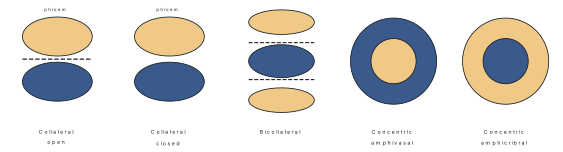
| Bundle types | collateral (open in dicot stem, closed in monocot stem), bicollateral (Cucurbita), concentric (amphivasal / amphicribral), radial (roots) |
| Root | dicot: 2–6 xylem arms, small pith, exarch; monocot: more than 6 (polyarch), large pith; endodermis with Casparian strips of suberin; passage cells opposite protoxylem |
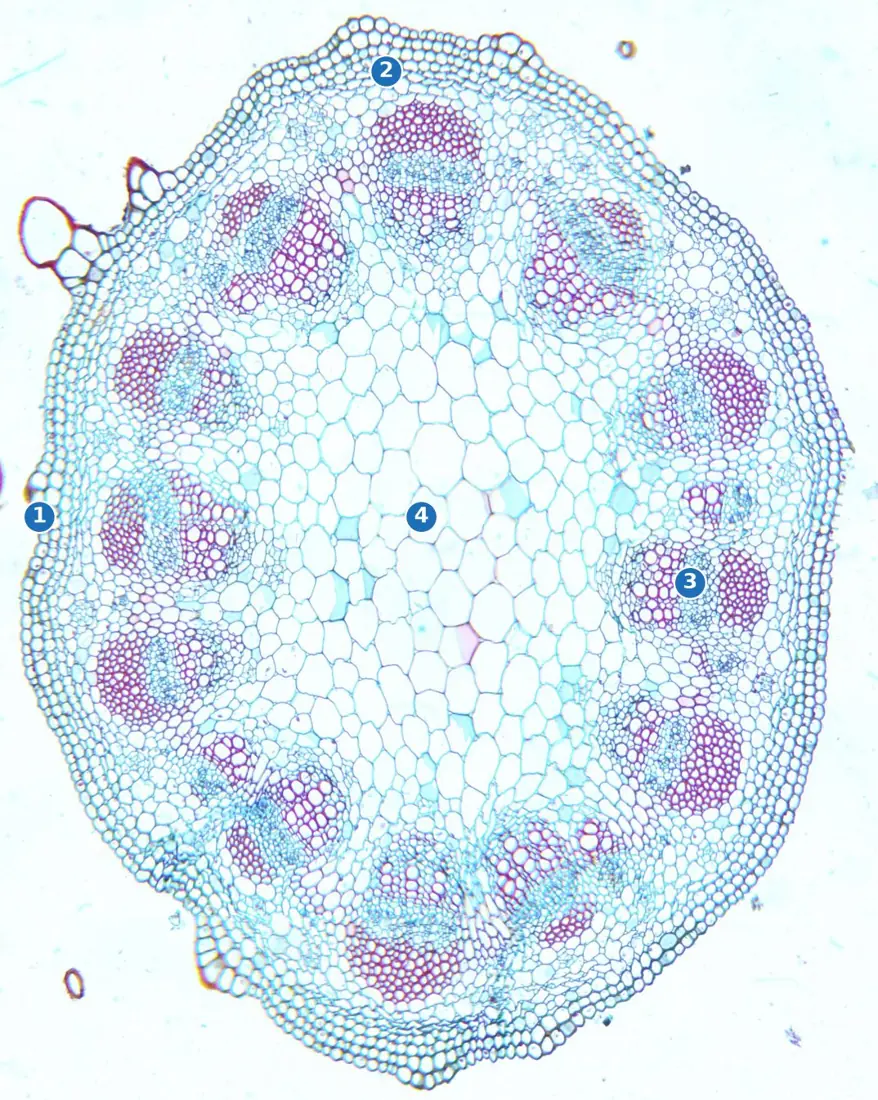
| Stem | dicot: bundles in a ring, open, endarch, medullary rays; monocot: scattered, closed, sclerenchymatous hypodermis, no cambium |
| Leaf | dorsiventral (dicot): palisade above, spongy below; isobilateral (monocot): mesophyll undifferentiated, bulliform cells; C4 leaf: Kranz anatomy |
| Secondary growth | vascular cambium → secondary xylem (inside, more) and secondary phloem (outside); phellogen → phellem (cork) outside, phelloderm inside; periderm = all three |
| Wood | sapwood conducts; heartwood is dead, plugged with tyloses, tannin and resin; one annual ring = spring wood + autumn wood |
- What basis would you apply to distinguish a meristematic tissue from a permanent tissue? [1] (NEB model 2079)asupporting the plantbproviding foodcactivating cell divisiondlosing the ability of cell division
- Which parenchyma makes aquatic plants light and helps them to float? [1] (NEB 2079)aprosenchymabassimilatory parenchymacaerenchymadstellate parenchyma
- What is the role of the endodermis in the roots of a plant? [1] (NEB 2080)ato store excess water and starchbto facilitate gas exchange for respirationcto regulate the movement of water and minerals into the rootdto provide structural support
- What is the name of the lateral meristem responsible for secondary growth in stems? [1] (NEB 2081)aapical meristembvascular cambiumccork cambiumdperiderm
- A botanist observes scattered vascular bundles throughout the ground tissue of a stem. What is the most appropriate conclusion? [1] (NEB 2082)athe plant is a monocotbthe plant undergoes secondary growthcthe plant has an open vascular bundledthe plant is a dicot
- Which tissue is dead at maturity and has a heavily lignified wall? [1]aparenchymabcollenchymacsclerenchymadchlorenchyma
- The extra thickening of collenchyma is deposited mainly at the corners of the cell and consists of [1]aligninbcellulose and pectincsuberindcutin
- The only living component of xylem is [1]atracheidbvesselcxylem parenchymadxylem fibre
- A sieve tube element has no nucleus. It stays alive because of the help of [1]aguard cellbcompanion cellcbulliform celldpassage cell
- The vascular bundles of a dicot stem are [1]aclosed collateralbopen collateralcradialdconcentric
- In a transverse section of a root the pith is large and there are eight xylem bundles. The root belongs to [1]aa dicotba monocotca gymnospermda secondary-thickened dicot
- Casparian strips are bands of [1]alignin on the outer wall of the epidermisbsuberin on the radial and transverse walls of endodermal cellsccutin on the cortexdpectin on the pericycle
- Passage cells of the endodermis are found opposite the [1]aprotophloembprotoxylemcmetaxylemdpith
- Large thin-walled cells that help a grass leaf to roll inwards in dry weather are [1]abulliform cellsbguard cellscsubsidiary cellsdpalisade cells
- The phellogen cuts off phellem towards the __ and phelloderm towards the ____. [1]ainside; outsideboutside; insidecoutside; outsidedinside; inside
- Heartwood differs from sapwood because it [1]acarries water upwardbis lighter in colourcis dead, plugged with tyloses, tannin and resin, and gives only supportdlies just below the bark
- Which leaf has mesophyll that is not differentiated into palisade and spongy tissue? [1]adorsiventral leaf of a dicotbisobilateral leaf of a monocotcthe leaf of Ligustrumdthe leaf of a mango
Answers — 8.1
1. (c) — meristematic cells are the ones that activate cell division; option (d) describes a permanent cell, the very opposite.
2. (c) — aerenchyma has large air spaces. Stellate parenchyma is a kind of aerenchyma with star-shaped cells (banana petiole), but the general tissue that gives buoyancy is aerenchyma. Assimilatory parenchyma (chlorenchyma) is for photosynthesis.
3. (c) — endodermal cells with Casparian strips force water to pass through the living protoplast, so the endodermis controls what enters the stele. Option (a) is the starch sheath of a stem, a different endodermis.
4. (b) — the vascular cambium adds secondary xylem and phloem. Cork cambium is also a lateral meristem, but it makes periderm, not the vascular tissue that the word "stem growth" usually means; apical meristem gives primary growth only.
5. (a) — scattered bundles in undifferentiated ground tissue are the signature of a monocot stem. Option (c) is the opposite: monocot bundles are closed.
6. (c) — sclerenchyma cells are dead and lignified. Collenchyma is living, parenchyma is living.
7. (b) — cellulose with pectin, not lignin; lignin belongs to sclerenchyma and xylem.
8. (c) — xylem parenchyma stores food and is alive; tracheids, vessels and fibres are dead at maturity.
9. (b) — the companion cell, sister cell of the sieve element, supplies ATP and proteins. Bulliform and passage cells are in leaf and endodermis.
10. (b) — a cambium strip lies between xylem and phloem, so the bundle is open. Option (a) is monocot stem; radial bundles are in roots.
11. (b) — more than six xylem bundles (polyarch) and a large pith are monocot-root features. A dicot root has two to six arms and little or no pith.
12. (b) — suberin on radial and transverse walls; option (a) puts it on the epidermis, which is wrong.
13. (b) — passage cells sit opposite the protoxylem so that water can reach the xylem arms. Students often say "phloem" because they think of food, but passage cells serve inward water flow.
14. (a) — bulliform (motor) cells lose turgor and the leaf rolls. Guard cells open and close stomata, palisade cells photosynthesise.
15. (b) — phellem (cork) is cut outwards; phelloderm (secondary cortex) is cut inwards. Reversing them is the usual error.
16. (c) — heartwood is non-conducting. Option (d) describes sapwood, which is the living conducting region beneath the bark.
17. (b) — isobilateral leaves of monocots have similar mesophyll on both sides. Ligustrum (privet) is a dicot with a dorsiventral leaf.
8.2 Plant Physiology
| High-yield fact | What to remember |
|---|---|
| Water potential | DPD (suction pressure) = OP − TP; water moves to the cell with the larger DPD (lower water potential). Turgid cell: TP = OP, DPD = 0, WP = 0. Flaccid: TP = 0, DPD = OP |
| Plasmolysis | protoplast shrinks from the wall in a hypertonic solution (exosmosis); reversible as deplasmolysis |
| Transpiration | ~90 % stomatal, ~10 % cuticular, <1 % lenticular; drives the ascent of sap by cohesion–tension (Dixon and Joly) |
| Guttation | liquid water from hydathodes at night, pushed by root pressure |
| Stomatal opening | light → K⁺ and malate enter guard cells → water enters → guard cells turgid → pore opens; ABA closes stomata |
| Photosynthesis | light reaction in grana; Calvin cycle in stroma; O₂ comes from water (Hill reaction; ¹⁸O experiments of Ruben and Kamen) |
| Photosystems | PS II reaction centre P680, PS I P700; non-cyclic: ATP + NADPH + O₂; cyclic: ATP only |
| Calvin cycle | RuBisCO fixes CO₂ on RuBP → 3-PGA (3C); per CO₂: 3 ATP + 2 NADPH; per glucose: 18 ATP + 12 NADPH |
| C4 and CAM | C4: PEP carboxylase, first product oxaloacetate (4C), Kranz anatomy (maize, sugarcane); CAM: stomata open at night (Opuntia, pineapple) |
| Respiration | glycolysis (EMP) in cytoplasm: net 2 ATP, 2 NADH, 2 pyruvate; Krebs cycle in matrix; ETS on the inner mitochondrial membrane; classical 36–38 ATP, modern 30–32 |
| RQ | carbohydrate 1.0, fat ≈ 0.7, protein ≈ 0.8, organic acids > 1 |
| Hormones | auxin (apical dominance, rooting, parthenocarpy), gibberellin (bolting, internode elongation, bakanae), cytokinin (division, delays senescence), ABA (stress, dormancy, stomatal closure), ethylene (ripening) |
| Growth and movement | sigmoid growth curve: lag, log, stationary; tropisms are directional, nastic movements are not (Mimosa is seismonastic); vernalisation = cold induction of flowering |
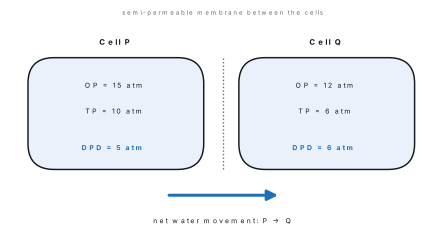
- Two cells P and Q lie in contact, separated by a semi-permeable membrane. The osmotic pressure of P is 15 atm and of Q is 12 atm; the turgor pressure of P is 10 atm and of Q is 6 atm. In which direction will water move? [1] (NEB 2079)afrom P to Qbfrom Q to Pcno movement of waterdeither way
- Which one is the condition of a fully turgid cell? [1] (NEB 2080, options recast)aTP = 0bWP = 0cDPD = OPdOP = 0
- Which one of the following parts is not responsible for transpiration in plants? [1] (NEB model 2079)arootbstemcleavesdall aerial parts
- Which structure of a plant is primarily responsible for regulating transpiration? [1] (NEB 2082)axylembstomatacroot hairsdphloem
- A cell has an osmotic pressure of 12 atm and a turgor pressure of 8 atm. Its DPD is [1]a20 atmb4 atmc12 atmd96 atm
- The cohesion–tension theory of the ascent of sap was proposed by [1]aDixon and JolybMünchcWentdCalvin and Benson
- Loss of liquid water from leaf margins through hydathodes at night is [1]atranspirationbguttationcbleeding of a cut stemdimbibition
- Stomata open in the morning because [1]aK⁺ leave the guard cellsbK⁺ enter the guard cells, water follows and they become turgidcabscisic acid accumulatesdstarch is formed in guard cells
- A plant cell is placed in a 10 % NaCl solution. The cell will [1]aswell and burstbbecome plasmolysedcbecome fully turgiddshow no change
- Some C4 plants show the diagnostic feature of Kranz anatomy. Which of these plants has it? [1] (NEB model 2079)awheatbmaizecbarleydoats
- The oxygen released in photosynthesis comes from [1]acarbon dioxidebglucosecwaterdRuBP
- The reaction-centre chlorophyll a of photosystem I is [1]aP680bP700cP430dP870
- Cyclic photophosphorylation produces [1]aATP, NADPH and O₂bATP onlycNADPH onlydO₂ and NADPH
- The first stable product of carbon fixation in the Calvin cycle of a C3 plant is [1]aoxaloacetic acidb3-phosphoglyceric acidcribulose bisphosphatedpyruvic acid
- For the fixation of one molecule of CO₂ in the Calvin cycle the plant needs [1]a2 ATP and 3 NADPHb3 ATP and 2 NADPHc1 ATP and 1 NADPHd6 ATP and 6 NADPH
- In a C4 plant the enzyme that first fixes CO₂ in the mesophyll cell is [1]aRuBisCObPEP carboxylasecpyruvate kinasedhexokinase
- Stomata open only at night in [1]amaizebsugarcanecOpuntiadwheat
- The net gain of ATP from glycolysis of one glucose molecule is [1]a2b4c8d36
- One glucose molecule, through two turns of the Krebs cycle, gives [1]a2 NADH, 6 FADH₂, 2 ATPb6 NADH, 2 FADH₂, 2 ATPc8 NADH, 0 FADH₂, 4 ATPd4 NADH, 4 FADH₂, 0 ATP
- The electron transport system of a plant cell is located in the [1]amitochondrial matrixbcytoplasmcinner mitochondrial membranedouter mitochondrial membrane
- If a plant is placed in a sealed bell jar with limited oxygen, what happens to its energy production over time? [1] (NEB 2082)aATP increases because glycolysis risesbit relies on anaerobic respiration and makes less ATPcthe citric acid cycle speeds updthe electron transport chain continues normally
- The respiratory quotient when fat is the respiratory substrate is about [1]a1.0b0.7c1.3dzero
- The end products of alcoholic fermentation in yeast are [1]alactic acid and ATPbethanol and CO₂cpyruvate and waterdacetyl CoA and NADH
- Removal of the shoot tip makes the lateral buds sprout because the source of the inhibitor is removed. The inhibiting hormone is [1]aauxinbcytokinincethylenedgibberellin
- What causes cell elongation in the internodal regions of plants? [1] (NEB 2081)aindole acetic acidbgibberellinscabscisic aciddcytokinins
- The hormone that delays senescence of leaves and promotes cell division is [1]aabscisic acidbethyleneccytokinindauxin only
- The gaseous hormone that hastens fruit ripening is [1]aethylenebauxincgibberellindzeatin
- The "foolish seedling" (bakanae) disease of rice led to the discovery of [1]aauxinbgibberellinccytokinindabscisic acid
- The folding of the leaflets of Mimosa pudica on touch is an example of [1]aphototropismbseismonastic movementcgeotropismdhydrotropism
- The promotion of flowering by a period of low temperature is called [1]aphotoperiodismbvernalisationcstratificationdscarification
Answers — 8.2
1. (a) — DPD of P = 15 − 10 = 5 atm, of Q = 12 − 6 = 6 atm. Water moves towards the larger DPD, so P → Q. Option (c) is the trap of comparing only the osmotic pressures or only the turgor pressures: P is larger in both, which gives a false "P is stronger" instinct. It is the difference that matters.
2. (b) — in a turgid cell TP = OP, so DPD = OP − TP = 0 and water potential is 0. Option (c) is a flaccid cell.
3. (a) — transpiration is loss from aerial parts; roots absorb water. Option (d) is true of transpiration, not its opposite.
4. (b) — guard cells change the pore size. Xylem and phloem only conduct.
5. (b) — DPD = OP − TP = 12 − 8 = 4 atm. Option (a) adds instead of subtracting.
6. (a) — Dixon and Joly (1894). Münch proposed the pressure-flow hypothesis for phloem; Went is auxin.
7. (b) — guttation is from hydathodes and needs root pressure. Bleeding is from a cut stem.
8. (b) — in light, K⁺ and malate accumulate, the guard cells take in water and bulge, pulling the stoma open. Option (c) is the closing signal.
9. (b) — the outside solution is hypertonic, water leaves, the protoplast shrinks away from the wall: plasmolysis. Bursting (a) is what animal cells do in hypotonic water.
10. (b) — maize is a C4 plant with a wreath (Kranz) of bundle-sheath cells. Wheat, barley and oats are C3 grasses, a favourite distractor set.
11. (c) — photolysis of water (Hill reaction; ¹⁸O in water appears in O₂). Students pick CO₂ because it is the gas that is "used".
12. (b) — P700 for PS I, P680 for PS II. P870 is bacterial.
13. (b) — electrons return to PS I, so there is no NADPH and, with no photolysis, no O₂.
14. (b) — 3-PGA (a 3-carbon acid). OAA is the first product in C4 plants; RuBP is the acceptor.
15. (b) — 3 ATP + 2 NADPH per CO₂, so 18 ATP and 12 NADPH for one glucose.
16. (b) — PEP carboxylase, which has no affinity for O₂, fixes HCO₃⁻ into oxaloacetate; RuBisCO works later, in the bundle sheath.
17. (c) — CAM plants open stomata at night to save water. Maize, sugarcane and wheat open them by day.
18. (a) — 4 ATP made, 2 spent: net 2. Option (b) is the gross yield.
19. (b) — one turn gives 3 NADH, 1 FADH₂ and 1 ATP/GTP; two turns double it. Option (a) swaps the two carriers.
20. (c) — the matrix holds the Krebs cycle; the ETS sits in the folded inner membrane.
21. (b) — with little O₂ the plant switches to fermentation, which yields only 2 ATP per glucose. Option (c) is wrong because the Krebs cycle also depends on O₂ through NAD⁺ regeneration.
22. (b) — fats are so oxygen-poor that more O₂ is used than CO₂ released (about 0.7). The value 1.0 is for carbohydrate.
23. (b) — pyruvate → acetaldehyde + CO₂ → ethanol. Lactic acid is the end product in muscle.
24. (a) — auxin from the apical bud suppresses lateral buds (apical dominance); cytokinin does the opposite.
25. (b) — gibberellins stretch internodes (bolting). Auxin also elongates cells, but the question keys the internodal response to gibberellin.
26. (c) — cytokinin. "Auxin only" cannot be right because auxin alone does not divide cells in culture.
27. (a) — ethylene is the only gaseous plant hormone. Option (d) zeatin is a cytokinin.
28. (b) — Gibberella fujikuroi secretes gibberellin; the infected rice grows tall and weak.
29. (b) — a touch-induced movement not directed by the stimulus is a nastic movement, here seismonastic. A tropism would bend toward the stimulus.
30. (b) — vernalisation; stratification and scarification are seed-dormancy treatments.
8.3 Genetics
| High-yield fact | What to remember |
|---|---|
| Genetic material | Griffith (transformation), Avery–MacLeod–McCarty (DNA is the transforming principle), Hershey–Chase (³²P labels DNA, ³⁵S labels protein; DNA enters the bacterium) |
| DNA structure | Watson and Crick 1953; antiparallel; A=T (2 H-bonds), G≡C (3 H-bonds); B-DNA: 10 bp per turn, pitch 3.4 nm, diameter 2 nm; Chargaff: A = T and G = C |
| Replication | semi-conservative (Meselson–Stahl, ¹⁵N/¹⁴N); helicase, SSB, primase, DNA polymerase III, polymerase I, ligase; leading strand continuous, lagging strand in Okazaki fragments |
| Code | 64 codons, 61 sense + 3 stop (UAA, UAG, UGA); start AUG; degenerate, universal, non-overlapping, commaless |
| Expression | transcription (RNA polymerase, nucleus) → mRNA → translation (ribosome, tRNA anticodon reads codon) |
| Mendel | monohybrid F₂ 3 : 1 (genotype 1 : 2 : 1); test cross 1 : 1; dihybrid 9 : 3 : 3 : 1 with 9 genotypes and 4 phenotypes |
| Post-Mendelian | incomplete dominance 1 : 2 : 1 (Mirabilis jalapa); codominance (roan cattle, AB group); multiple alleles I^A, I^B, i |
| Sex-linkage | colour blindness and haemophilia are X-linked recessive; criss-cross inheritance (father → daughter → grandson); Drosophila white eye (Morgan) |
| Linkage and crossing over | linked genes inherited together; crossing over between non-sister chromatids at pachytene; 1 % recombination = 1 map unit |
| Gene mutation | point: substitution (transition purine↔purine, transversion purine↔pyrimidine); frame shift by insertion or deletion of a base; sickle-cell anaemia is a point mutation (Glu → Val) |
| Chromosomal | deletion, duplication, inversion, translocation; aneuploidy: monosomy 2n − 1, trisomy 2n + 1; Down = trisomy 21, Turner = 45, X, Klinefelter = 47, XXY |
| Polyploidy | extra whole sets; induced by colchicine; triticale (wheat × rye) is an allopolyploid |
- In a monohybrid cross of two heterozygous parents (Rr × Rr), what genotypes are expected among the offspring? [1] (NEB 2079; optionawas misprinted in the paper and is corrected here) (a) 1 RR : 2 Rr : 1 rrb1 rr : 3 RRc3 Rr : 1 rrdall Rr
- Which type of mutation is caused by the addition or deletion of a single nitrogenous base? [1] (NEB model 2079)atransitionbtransversioncframe shiftdsubstitution
- Two pea plants with red flowers, genotypes unknown, are crossed and give red and white flowers in the ratio 3 : 1. What are the genotypes of the parents? [1] (NEB 2080, ratio recast as 3 : 1)aboth homozygousbone homozygous, one heterozygouscboth heterozygousdboth hemizygous
- Marriage of a man of normal vision with a colour-blind woman will produce [1] (NEB 2080)anormal sons and normal daughtersbcolour-blind sons and carrier daughtersccolour-blind sons and colour-blind daughtersdnormal sons and carrier daughters
- A heterozygous individual AaBb is crossed with another AaBb. What is the probability that an offspring shows the recessive phenotype for both traits? [1] (NEB 2081)a1/4b1/8c1/16d1/32
- Which genotype represents monosomy, a type of aneuploidy? [1] (NEB 2081)a2n − 2b2n − 1c2n + 1d2n + 1 + 1
- Which of the following genetic disorders is caused by a point mutation? [1] (NEB 2082)aDown's syndromebTurner's syndromecsickle-cell anaemiadKlinefelter's syndrome
- In the Hershey–Chase experiment the DNA of the bacteriophage was labelled with [1]a³⁵Sb³²Pc¹⁴Cd¹⁵N
- A DNA sample contains 30 % adenine. The percentage of guanine is [1]a20b30c40d70
- The number of hydrogen bonds between guanine and cytosine is [1]a1b2c3d4
- One complete turn of B-DNA is [1]a0.34 nm with 1 bpb3.4 nm with 10 bpc34 nm with 100 bpd2 nm with 10 bp
- E. coli grown for many generations in ¹⁵N medium is shifted to ¹⁴N medium. After two generations of division the DNA is [1]aall heavyball hybridchalf hybrid and half lightdall light
- Short fragments formed on the lagging strand are joined by [1]ahelicasebprimasecDNA ligasedRNA polymerase
- Which of these is a stop codon? [1]aAUGbUGAcUGGdUUU
- If the codon on the mRNA is GCA, the anticodon of the tRNA is [1]aCGUbCGTcGCAdUGC
- The enzyme that synthesises mRNA from a DNA template is [1]aDNA polymerasebRNA polymerasecreverse transcriptasedligase
- The testcross of a tall plant (T?) with a dwarf plant gives 1 tall : 1 dwarf. The tall parent was [1]aTTbTtcttdcannot be known
- The F₂ phenotypic ratio in a cross between red (RR) and white (rr) four o'clock plants is [1]a3 : 1b1 : 2 : 1c9 : 3 : 3 : 1d1 : 1
- A man of blood group A and a woman of blood group B have a child of group O. The genotypes of the parents must be [1]aI^A I^A and I^B I^BbI^A i and I^B icI^A I^A and I^B idI^A i and I^B I^B
- The grandson of a colour-blind man can receive the gene only through [1]ahis fatherbhis carrier mother, who got it from the colour-blind manchis grandmother's brotherdan autosome
- Drosophila melanogaster was chosen for genetic studies mainly because it [1]ahas a long life cyclebhas a short life cycle, few chromosomes and many progenycis a plantdhas no sex chromosomes
- Crossing over takes place at the ______ stage of meiosis I. [1]aleptotenebzygotenecpachyteneddiakinesis
- If the frequency of crossing over between genes A and B is 8 %, the distance between them is [1]a8 map unitsb0.8 map unitsc92 map unitsd16 map units
- Two genes are closely linked. The frequency of recombination between them will be [1]ahighblowc50 % alwaysd100 %
- The chromosome number of a person with Down's syndrome is [1]a45b46c47d48
- A woman with 45 chromosomes and the sex-chromosome constitution XO has [1]aKlinefelter's syndromebTurner's syndromecDown's syndromedPatau's syndrome
- Polyploidy in plants is induced artificially by [1]acolchicinebethylenecgibberellindethidium bromide
- Triticale, a man-made cereal, is [1]aan autotriploidban allopolyploid of wheat and ryeca transgenic plantda haploid
Answers — 8.3
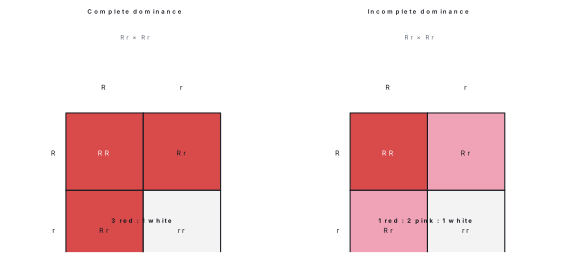
1. (a) — Rr × Rr gives 1 RR : 2 Rr : 1 rr. The printed option was a typo for RR; note the answer is a genotypic 1 : 2 : 1, not the phenotypic 3 : 1, and (c) mixes the two.
2. (c) — inserting or deleting one base shifts every codon after it. Transition and transversion only replace a base.
3. (c) — Rr × Rr gives 3 red : 1 white. Two homozygotes (a) or one of each (b) would give no white offspring at all.
4. (b) — X^cX^c × X^CY: every son gets the mother's X^c and is colour-blind; every daughter gets X^C from the father and X^c from the mother, so she is a carrier. Option (d) swaps the sexes.
5. (c) — probability of aa = 1/4 and of bb = 1/4, so (1/4)(1/4) = 1/16. Option (a) counts only one trait.
6. (b) — monosomy is 2n − 1. 2n − 2 is nullisomy, 2n + 1 trisomy, 2n + 1 + 1 double trisomy.
7. (c) — sickle-cell anaemia is one base change (GAG → GTG), Glu → Val. Down, Turner and Klinefelter are chromosome-number changes.
8. (b) — phosphorus is in DNA; sulphur is in protein, so ³⁵S labels the protein coat. Choosing ³⁵S is the classic slip.
9. (a) — A = T = 30 %, so G + C = 40 %, G = 20 %.
10. (c) — G≡C has three, A=T has two.
11. (b) — 10 bp × 0.34 nm = 3.4 nm; (d) is the diameter.
12. (c) — the first generation is all hybrid (¹⁵N/¹⁴N); the second is half hybrid and half light. Semi-conservative replication never gives all-heavy after a shift.
13. (c) — DNA ligase seals the nicks between Okazaki fragments. Primase makes the primers; helicase unwinds.
14. (b) — the stop codons are UAA, UAG, UGA. AUG is the start codon and also codes Met; UGG is Trp.
15. (a) — the anticodon pairs with the codon: G–C, C–G, A–U gives CGU. Option (b) contains T, which tRNA does not have.
16. (b) — transcription uses RNA polymerase; reverse transcriptase makes DNA from RNA.
17. (b) — a 1 : 1 testcross ratio shows a heterozygous parent; TT would give all tall.
18. (b) — incomplete dominance gives 1 red : 2 pink : 1 white. The figure shows it beside complete dominance.
19. (b) — the O child has two i alleles, one from each parent, so both parents are heterozygous.
20. (b) — the colour-blind man gives his X only to his daughters; she passes it to her son (criss-cross). Option (a) is wrong because a father gives his son a Y.
21. (b) — 2n = 8, a life cycle of about 10–14 days, and hundreds of offspring per mating.
22. (c) — crossing over happens at pachytene; chiasmata become visible at diplotene. Students choose diplotene because they see the chiasma then.
23. (a) — 1 % recombination = 1 map unit.
24. (b) — closer genes are crossed over less often.
25. (c) — trisomy 21 gives 47 chromosomes. 45 is Turner.
26. (b) — 45, X is Turner; Klinefelter is 47, XXY.
27. (a) — colchicine blocks spindle formation, so chromosomes double without division.
28. (b) — triticale is wheat (Triticum) × rye (Secale), doubled with colchicine.
8.4 Embryology
| High-yield fact | What to remember |
|---|---|
| Vegetative propagation | natural: runners, rhizomes, tubers, bulbs, leaf buds (Bryophyllum); artificial: cutting, layering (simple/soil layering keeps the branch attached to the parent), grafting (stock + scion), budding |
| Apomixis and relatives | parthenogenesis = embryo from an unfertilised egg; parthenocarpy = fruit without fertilisation (seedless banana, grape) |
| Pollination | autogamy, geitonogamy (same plant), xenogamy (different plants); wind-pollinated flowers: light dry pollen, feathery stigma |
| Pollen grain | exine of sporopollenin; generative cell → 2 male gametes; vegetative (tube) cell; formed in microsporangia from microspore mother cells; tapetum nourishes |
| Embryo sac (Polygonum type) | 7 cells, 8 nuclei: egg apparatus (egg + 2 synergids) at the micropylar end, 3 antipodals at the chalazal end, central cell with 2 polar nuclei |
| Entry of pollen tube | porogamy (through micropyle, commonest), chalazogamy (Casuarina), mesogamy (through integument) |
| Double fertilisation | Nawaschin (1898): syngamy gives 2n zygote; triple fusion gives 3n primary endosperm nucleus |
| After fertilisation | synergids and antipodals degenerate; ovule → seed, ovary → fruit, integument → seed coat |
| Embryo | dicot: radicle, plumule, hypocotyl, 2 cotyledons, suspensor; monocot: scutellum (one cotyledon), coleoptile, coleorhiza |
| Endosperm | nuclear (coconut water), cellular, helobial; 3n tissue that feeds the embryo |
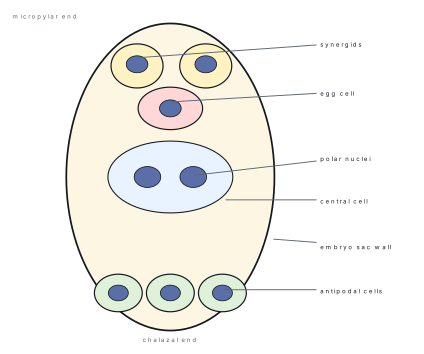
- Which of the following cells of an embryo sac degenerate after fertilisation? [1] (NEB 2079)asynergids and the primary endosperm cellbsynergids and antipodal cellscantipodal cells and the primary endosperm celldthe egg and antipodal cells
- What is the development of an embryo from an unfertilised egg called? [1] (NEB model 2079)aparthenocarpybparthenogenesiscpolyembryonydpolycarpy
- In porogamy, through which structure does the pollen tube enter the ovule? [1] (NEB 2080; turned round in NEB 2082)achalazal endbintegumentcmicropyledovary wall
- What is the development of a fruit without fertilisation called? [1] (NEB 2081)aparthenocarpybapomixiscpolysporydparthenogenesis
- Which type of artificial vegetative propagation induces roots on a branch while it is still attached to the parent plant, and suits plants with soft branches lying near the soil? [1] (NEB 2081)aair layeringbgraftingcsoil layeringdcutting
- The number of cells and nuclei in a mature Polygonum-type embryo sac are [1]a8 cells, 7 nucleib7 cells, 8 nucleic8 cells, 8 nucleid7 cells, 7 nuclei
- Triple fusion in an angiosperm forms [1]athe zygoteba 3n primary endosperm nucleuscthe embryodthe suspensor
- Double fertilisation in angiosperms was discovered by [1]aStrasburgerbNawaschincHofmeisterdMendel
- The hard outer layer of the pollen grain, resistant to acid, alkali and heat, is made of [1]acellulosebpectincsporopollenindcallose
- The nutritive layer of the anther wall that supplies food to developing pollen grains is the [1]aepidermisbendotheciumcmiddle layerdtapetum
- Pollen grains from the anther of a flower reach the stigma of another flower of the same plant. This is [1]aautogamybgeitonogamycxenogamydcleistogamy
- Which feature is typical of a wind-pollinated flower? [1]alarge coloured petals and nectarblight dry pollen and feathery stigmacsticky heavy pollendsweet scent
- The single cotyledon of a monocot embryo is called [1]acoleoptilebscutellumccoleorhizadplumule
- The free-nuclear endosperm is seen in [1]acoconutbpeacwheat grain after maturitydorchid
- In the dicot embryo the portion between the plumule and the radicle is the [1]aepicotyl onlybhypocotylcsuspensordscutellum
- The ovule develops into a __ and the ovary into a ____. [1]afruit; seedbseed; fruitcembryo; endospermdseed coat; pericarp only
Answers — 8.4
1. (b) — synergids and antipodals have done their job and disappear; the primary endosperm cell divides to form endosperm. Option (a) is the trap: the endosperm cell is the busiest cell after fertilisation.
2. (b) — parthenogenesis is about the egg; parthenocarpy (a) is about the fruit. The two words differ by one syllable and exam setters exploit it.
3. (c) — micropylar entry is porogamy. In 2082 the question was reversed: "which term describes entry through the micropyle" with options mesogamy, chalazogamy, syngamy, porogamy.
4. (a) — seedless banana and grape are parthenocarpic. Parthenogenesis (d) is an egg developing without fertilisation.
5. (c) — in simple (soil) layering the branch is bent into the soil while still attached and roots then form. Air layering works on upright branches, and grafting and cutting detach the piece at once.
6. (b) — seven cells but eight nuclei because the central cell carries two polar nuclei.
7. (b) — one sperm nucleus + two polar nuclei = 3n. The zygote (a) comes from syngamy.
8. (b) — Nawaschin (1898, Fritillaria and Lilium), confirmed by Guignard. Strasburger described the embryo sac and fertilisation, not the double event.
9. (c) — sporopollenin, one of the most resistant organic materials. Callose is found around microspore mother cells and in pollen tubes.
10. (d) — the tapetum; the endothecium helps dehiscence.
11. (b) — the flowers are on the same plant, so it is geitonogamy; it is genetically autogamy but ecologically cross-pollination. Xenogamy needs two plants.
12. (b) — wind-pollinated flowers are small, dull and produce huge amounts of light dry pollen. Colour, scent and sticky pollen are insect-pollination features.
13. (b) — scutellum; coleoptile and coleorhiza are protective sheaths of the plumule and radicle.
14. (a) — coconut water is free-nuclear endosperm; the white kernel is the later cellular stage.
15. (b) — the hypocotyl lies below the cotyledons and ends in the radicle; the epicotyl lies above them.
16. (b) — ovule → seed, ovary → fruit. Reversed, it is the commonest slip.
8.5 Biotechnology
| High-yield fact | What to remember |
|---|---|
| Totipotency | every living plant cell can, in principle, regenerate a whole plant (Haberlandt) |
| Culture medium | MS (Murashige–Skoog) medium with sucrose, vitamins and growth regulators; high auxin : cytokinin → roots; high cytokinin : auxin → shoots; balanced → callus |
| Kinds of culture | meristem (virus-free plants), embryo culture (rescues embryos that would die), anther culture (haploids), protoplast fusion (somatic hybrids) |
| Micropropagation | clonal multiplication from small explants in aseptic conditions; used for orchids, banana, potato; useful for rare plants |
| Breeding | selection, introduction, hybridisation (F₁ shows heterosis, hybrid vigour), mutation breeding, polyploidy |
| Disease resistance | breeding for resistance, meristem culture for virus-free stock, transgenics (Bt) |
| Bio-inputs | green manure (Sesbania, Crotalaria), biofertiliser (Rhizobium, Azotobacter, Azolla + Anabaena), biopesticide (Bacillus thuringiensis, Trichoderma, NPV) |
| Genetic engineering | restriction enzymes cut, ligase joins, vectors carry (plasmid, Agrobacterium Ti plasmid); GMOs: Bt cotton, Golden Rice |
| Food | food security = access to enough food at all times; food safety = food free of hazards such as toxins and pathogens |
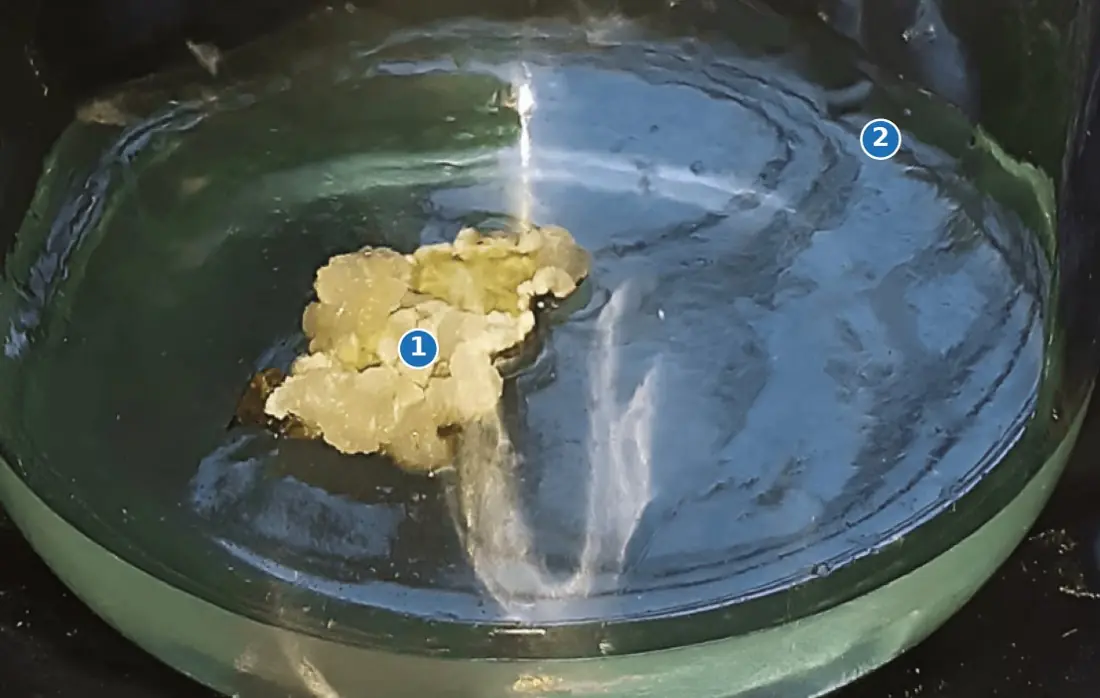
- In an economically important plant species embryo mortality is very high. Which method would you suggest to check the mortality? [1] (NEB 2079)amicropropagationbpolyploid mutationcembryo culturedmeristem culture
- Who proposed the concept of totipotency of plant cells? [1]aHaberlandtbSkoogcStewarddMurashige
- A high concentration of cytokinin relative to auxin in the medium promotes [1]aroot formationbshoot formationconly callusdcell death
- Virus-free plants are obtained by culturing [1]aleaf segmentsbantherscshoot-tip meristemdroots
- Haploid plants are produced in the laboratory by [1]aanther culturebembryo culturecmeristem culturedroot culture
- Somatic hybrids are produced by the fusion of [1]apollen and eggbtwo protoplasts from different speciesctwo pollen grainsdtwo gametes of the same plant
- The first generation of a cross between two pure lines often grows better than both parents. This is called [1]ainbreeding depressionbheterosiscapomixisdpolyploidy
- The cry gene in Bt cotton comes from [1]aAgrobacterium tumefaciensbBacillus thuringiensiscRhizobiumdE. coli
- A common vector used to introduce a foreign gene into a dicot plant is [1]athe Ti plasmid of Agrobacteriumbthe bacteriophage λ onlyca retrovirusda cosmid of yeast
- The enzyme that cuts DNA at specific base sequences is [1]aligasebrestriction endonucleasecDNA polymerasedhelicase
- Which of the following is used as a green manure crop in Nepal? [1]aSesbaniabwheatcmaizedmustard
- Azolla is used as a biofertiliser because it lives with a nitrogen-fixing [1]aRhizobiumbAnabaenacAzotobacterdNostoc only
- Golden Rice was developed to overcome the deficiency of [1]avitamin Abironciodinedvitamin C
- Food that is free from toxins and disease-causing organisms is a matter of [1]afood securitybfood safetycfood sovereigntydfood processing
Answers — 8.5
1. (c) — embryo culture rescues weak or aborting embryos by growing them on medium. Meristem culture (d) gives virus-free plants, a different aim.
2. (a) — Gottlieb Haberlandt (1902). Skoog and Miller found kinetin; Murashige and Skoog gave the medium.
3. (b) — high cytokinin : auxin → shoots; the reverse → roots; a balance → callus. Reversing the ratio is the usual error.
4. (c) — the apical meristem is usually free of virus because it has no vascular connection.
5. (a) — anther (or pollen) culture gives haploids, which doubling then turns into homozygous diploids.
6. (b) — protoplast fusion bypasses sexual barriers (pomato). Fusion of gametes is ordinary fertilisation.
7. (b) — heterosis or hybrid vigour; inbreeding depression is the opposite.
8. (b) — the cry gene codes Cry protein, toxic to bollworm. Agrobacterium supplies the vector, which is why (a) tempts.
9. (a) — the Ti plasmid transfers T-DNA into dicot cells.
10. (b) — restriction endonuclease; ligase joins, it does not cut.
11. (a) — Sesbania (dhaincha) is ploughed in while green; wheat and maize are grain crops.
12. (b) — Azolla fixes nitrogen through Anabaena azollae. Rhizobium lives in legume nodules.
13. (a) — Golden Rice makes β-carotene, the precursor of vitamin A.
14. (b) — safety is about hazards; security (a) is about availability and access.
8.6 Animal Tissues
| High-yield fact | What to remember |
|---|---|
| Simple epithelia | squamous (alveoli, blood vessels, Bowman's capsule; "pavement"), cuboidal (thyroid follicle, PCT with brush border), columnar (stomach, intestine; with goblet cells), ciliated columnar (trachea, oviduct), pseudostratified |
| Compound epithelia | stratified squamous keratinised (epidermis), non-keratinised (vagina, oesophagus, mouth), transitional (bladder, ureter) |
| Areolar tissue | loose; fibroblasts, mast cells (histamine, heparin), macrophages; packing tissue under skin |
| Dense connective | tendon joins muscle to bone; ligament joins bone to bone |
| Adipose tissue | fat globules; storage, insulation, cushion |
| Cartilage | hyaline (nose, trachea, articular ends), elastic (pinna, epiglottis), fibrocartilage (intervertebral disc); matrix chondroitin sulphate; no blood supply (avascular) |
| Bone | osteocytes in lacunae, matrix of calcium phosphate + collagen, Haversian canals with blood vessels |
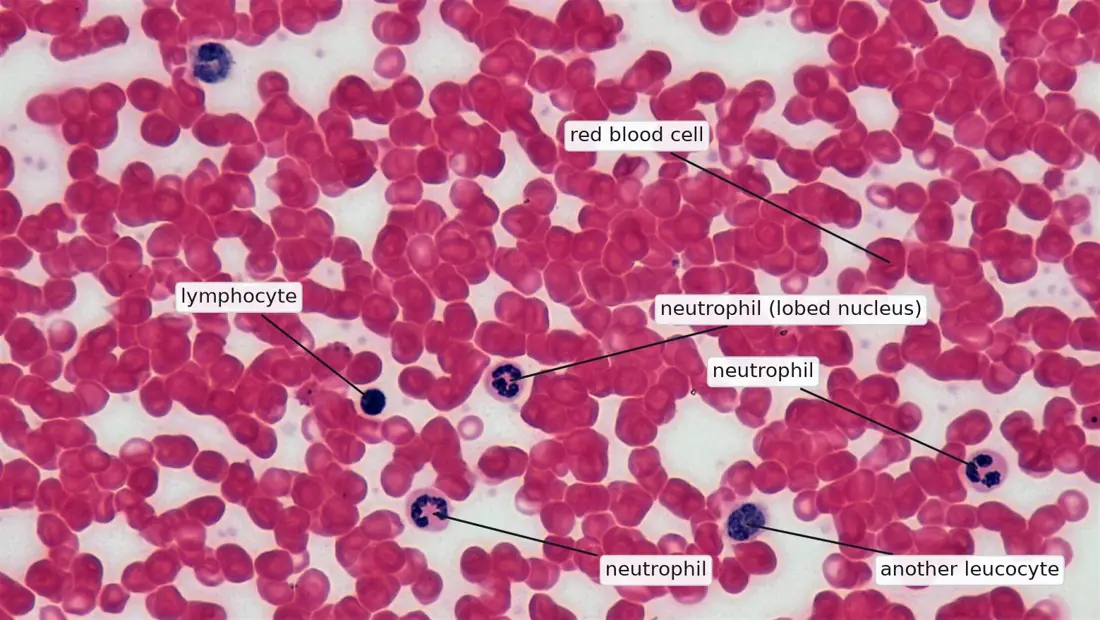
| Blood | plasma 55 %; RBC, WBC (granulocytes: neutrophil, eosinophil, basophil; agranulocytes: lymphocyte, monocyte), platelets; phagocytes: neutrophils and monocytes |
| Muscle | skeletal (striated, voluntary, multinucleate); cardiac (striated, involuntary, branched, intercalated discs); smooth (unstriated, involuntary, spindle) |
| Nervous tissue | neuron = cell body + dendrites + axon; myelin sheath from Schwann cells; neuroglia support |
- Which of the following tissues possesses fat globules? [1] (NEB 2079)aareolar tissuebadipose tissuecblood plasmadstriped muscle
- Which of the following tissues lacks a blood supply? [1] (NEB model 2079)aareolarbmuscularcbonedcartilage
- Which pair of white blood cells contains phagocytic cells? [1] (NEB 2081)amonocytes and eosinophilsbmonocytes and neutrophilsceosinophils and basophilsdmonocytes and lymphocytes
- Which epithelium forms the inner lining of the vagina? [1] (NEB 2081)acolumnarbcuboidalcstratified keratinised squamousdstratified non-keratinised squamous
- Which cells of connective tissue produce histamine and heparin? [1] (NEB 2082, wording recast)aplasma cellsbmacrophagescfibroblastsdmast cells
- Which epithelium lines the air sacs (alveoli) of the lung? [1]asimple cuboidalbsimple squamouscsimple columnardtransitional
- The epithelium that can stretch when the urinary bladder is filled is [1]atransitionalbsimple squamouscsimple cuboidaldciliated columnar
- Tendon and ligament are both [1]adense regular connective tissuebadipose tissuecloose connective tissuedfibrocartilage
- A ligament connects [1]amuscle to bonebbone to bonecmuscle to muscledskin to muscle
- The cartilage in the external ear (pinna) is [1]ahyalinebelasticcfibrocartilagedcalcified
- The cells of bone that lie in lacunae are [1]aosteoblasts onlybosteocytescchondrocytesdfibroblasts
- Muscle fibres that are striated and branched and join end to end through intercalated discs are [1]askeletalbcardiaccsmoothdvisceral
- Which muscle is involuntary and non-striated? [1]abicepsbheart musclecmuscle of the intestinal walldtongue muscle
- The fatty insulating sheath around an axon in peripheral nerves is formed by [1]aoligodendrocytesbSchwann cellscastrocytesdmicroglia
- The type of cell that makes up about 99 % of the formed elements of blood is [1]aRBCbWBCcplateletsdplasma cell
- Squamous epithelium is also called pavement epithelium because [1]ait is found on roadsbits flat cells fit edge to edge like paving stonescits cells are cube shapeddit is ciliated
Answers — 8.6
1. (b) — adipose tissue stores fat globules. Areolar tissue (a) is the commoner distractor because it is also loose and sits beside fat.
2. (d) — cartilage is avascular and is fed by diffusion from the perichondrium. Bone (c) has Haversian canals full of vessels.
3. (b) — neutrophils and monocytes (which become macrophages) are the professional phagocytes; eosinophils are weakly phagocytic, lymphocytes are not.
4. (d) — the vagina is a moist internal passage, so its stratified squamous epithelium is non-keratinised. Keratinised squamous (c) is the epidermis.
5. (d) — mast cell granules hold histamine and heparin. Plasma cells make antibodies.
6. (b) — a single flat layer keeps the diffusion distance small. Cuboidal lines kidney tubules.
7. (a) — transitional epithelium lets the cells slide over one another.
8. (a) — both are dense regular connective tissue rich in collagen; they differ in what they join. Fibrocartilage (d) is found in the disc.
9. (b) — ligament is bone to bone; tendon is muscle to bone (option a).
10. (b) — elastic cartilage springs back; hyaline is at the articular ends and trachea.
11. (b) — osteocytes sit in lacunae. Osteoblasts make matrix and become osteocytes; chondrocytes belong to cartilage.
12. (b) — cardiac muscle. Skeletal fibres are long, unbranched and multinucleate.
13. (c) — smooth muscle of the gut. Heart muscle (b) is involuntary but striated, the classic half-right answer.
14. (b) — Schwann cells in the peripheral nervous system; oligodendrocytes do the same in the central nervous system.
15. (a) — red cells outnumber white cells by about 600 : 1.
16. (b) — flat cells, tightly joined, resemble a paved floor. The word has nothing to do with a pavement outside.
8.7 Developmental Biology
| High-yield fact | What to remember |
|---|---|
| Gametogenesis | three phases: multiplication → growth → maturation |
| Spermatogenesis | seminiferous tubules: spermatogonium → primary spermatocyte (2n) → 2 secondary spermatocytes (n) → 4 spermatids → spermiogenesis → 4 spermatozoa; Sertoli cells nourish |
| Oogenesis | in the ovary: oogonium → primary oocyte (arrested in prophase I) → secondary oocyte (arrested in metaphase II) + first polar body → ovum + second polar body after fertilisation; one ovum, three polar bodies |
| Frog egg | mesolecithal, telolecithal; dark animal pole, yolky vegetal pole; grey crescent |
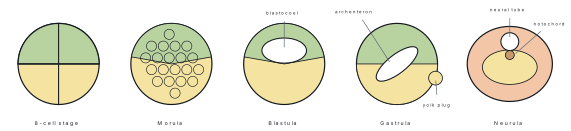
| Frog development | fertilisation → cleavage (holoblastic, unequal) → morula → blastula (blastocoel) → gastrula (blastopore, archenteron) → neurula → tadpole → metamorphosis (thyroxine) |
| Germ layers | ectoderm (skin, nervous system), mesoderm (muscle, notochord, coelom), endoderm (gut lining) |
| Fertilisation in frog | external, in water |
- What are the sequential steps involved in gametogenesis? [1] (NEB 2079)amultiplication, growth, maturationbmultiplication, maturation, growthcgrowth, multiplication, maturationdmaturation, growth, multiplication
- In the frog, the coelom is derived from which embryonic layer? [1] (NEB model 2079)aectodermbmesodermcendodermdmesogloea
- What happens during spermiogenesis in spermatogenesis? [1] (NEB 2081)aprimary spermatocytes form from spermatogoniabsecondary spermatocytes form from primary spermatocytescspermatids form from secondary spermatocytesdspermatozoa form from spermatids
- Which is the correct sequence of embryonic development in a frog? [1] (NEB 2081)amorula, blastula, gastrulabblastula, morula, gastrulacmorula, gastrula, blastuladblastula, gastrula, morula
- Immediately after fertilisation, a frog zygote undergoes [1] (NEB 2082, wording recast)agastrulationbneurulationccleavagedmetamorphosis
- One primary spermatocyte gives rise to [1]aone spermbtwo spermscfour spermsdeight sperms
- One primary oocyte finally gives rise to [1]afour ovabone ovum and three polar bodiesctwo ova and two polar bodiesdone ovum only
- In humans the secondary oocyte is arrested at [1]aprophase Ibmetaphase IIctelophase IIdanaphase I
- The cleavage of a frog egg is holoblastic and unequal because [1]athe egg has no yolkbthe yolk is concentrated in the vegetal half and slows division therecthe egg is microlecithaldthe egg is centrolecithal
- The cavity of the blastula is called [1]aarchenteronbblastocoelccoelomdgastrocoel
- The cavity formed inside the embryo during gastrulation is the [1]ablastocoelbarchenteroncneurocoeldpseudocoel
- The nervous system of the frog develops from [1]aendodermbmesodermcectodermdnotochord
- Metamorphosis of a frog tadpole into an adult is controlled by [1]ainsulinbthyroxinecoestrogendadrenaline
- Fertilisation in the frog is [1]ainternalbexternal, in watercinternal, in the oviductdby budding
Answers — 8.7
1. (a) — multiplication, growth, maturation. Option (c) puts growth first; it is tempting because in ordinary life "growth" precedes "maturity".
2. (b) — the coelom is a mesodermal cavity (it forms by a split in the mesoderm). Mesogloea (d) is a jelly layer of cnidarians, not a germ layer.
3. (d) — spermiogenesis is the conversion of a spermatid into a spermatozoon (no division). Options (a)–(c) are the division steps of the multiplication and maturation phases.
4. (a) — morula → blastula → gastrula. The blastula follows the morula because the cavity forms inside the solid ball.
5. (c) — cleavage is the first series of mitoses, without growth. Gastrulation comes several stages later.
6. (c) — meiosis I and II give four haploid spermatids, each becoming a sperm.
7. (b) — oogenesis is unequal: one large ovum and three small polar bodies.
8. (b) — the secondary oocyte stops at metaphase II and completes meiosis only after the sperm enters.
9. (b) — yolk slows the cleavage furrows, so vegetal cells are larger. Microlecithal (c) means little yolk.
10. (b) — blastocoel is the cavity of the blastula; archenteron belongs to the gastrula.
11. (b) — the archenteron becomes the gut. Students confuse it with the blastocoel, which it gradually replaces.
12. (c) — the neural plate, then the neural tube, arises from ectoderm; the notochord is mesodermal and induces it.
13. (b) — thyroxine from the thyroid; if the gland is removed, tadpoles remain tadpoles.
14. (b) — the male clasps the female (amplexus) and sperm are shed over the eggs in water.
8.8 Human Biology
| High-yield fact | What to remember |
|---|---|
| Digestion | amylase (saliva, pH 6.8; pancreatic), pepsin (stomach; pepsinogen is activated by HCl from oxyntic/parietal cells), rennin (milk protein, infants), trypsin (activated by enterokinase), lipase, peptidases; bile emulsifies fat but is no enzyme; absorption: villus, fats via lacteals (chyle) |
| Breathing | diaphragm contracts → inspiration; vital capacity = TV + IRV + ERV; respiratory centre in the medulla; O₂ carried as oxyhaemoglobin (97 %); CO₂: ~70 % as bicarbonate (carbonic anhydrase in RBC), 20–25 % carbamino-Hb, 7 % dissolved |
| Heart | right: tricuspid; left: bicuspid (mitral); beat path SA node → AV node → bundle of His → Purkinje fibres; cardiac output = stroke volume × heart rate; SA node is the natural pacemaker |
| Blood groups | A, B, AB, O; O⁻ universal donor, AB⁺ universal recipient; Rh incompatibility |
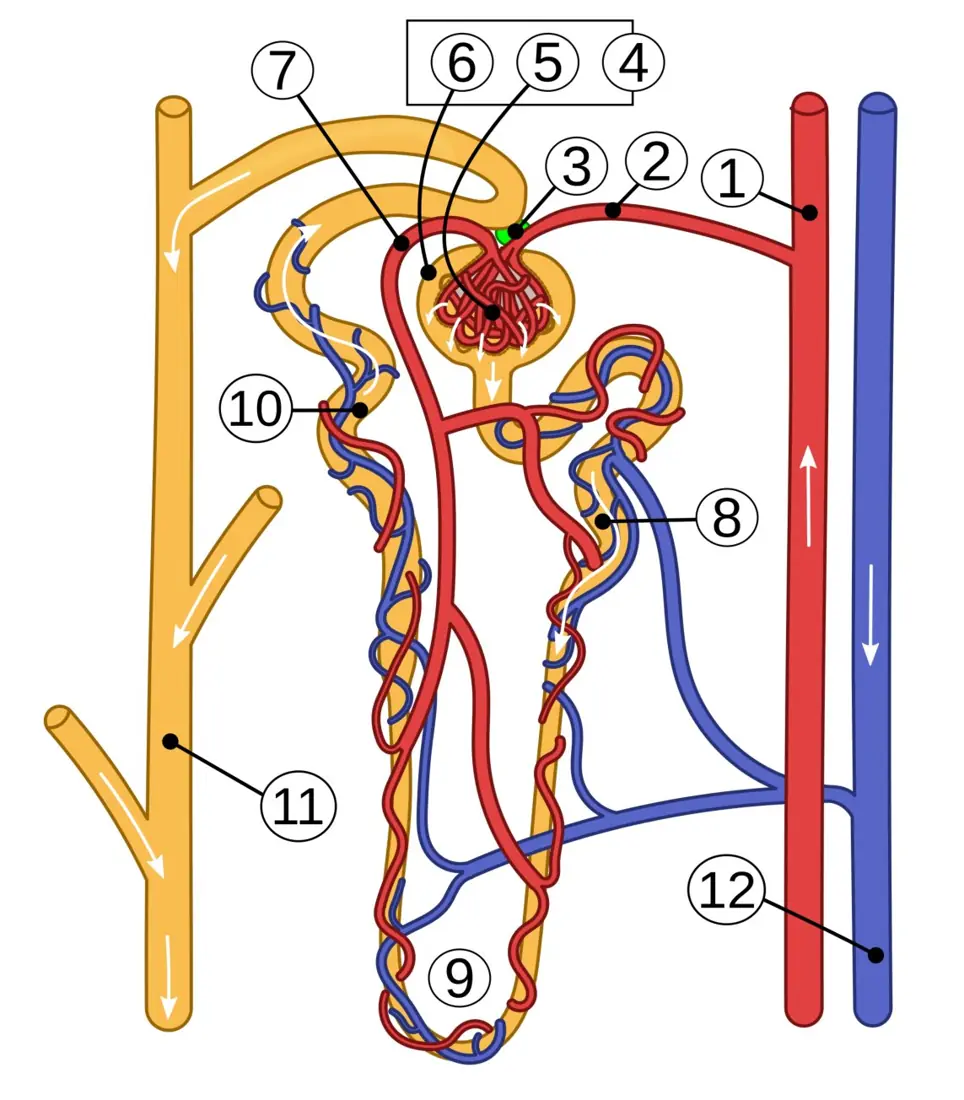
| Excretion | nephron; filtration in glomerulus, reabsorption mostly in PCT, loop of Henle builds the gradient, ADH acts on DCT and collecting duct (lack → diabetes insipidus); urine path: renal pelvis → ureter → bladder → urethra |
| Nervous system | resting potential ≈ −70 mV; cerebellum = balance and coordination; medulla = respiration, heart rate; hypothalamus = temperature, hunger, thirst; reflex centre = spinal cord; frontal lobe = higher functions |
| Eye and ear | rods (dim light, rhodopsin from vitamin A), cones (colour); blind spot = no photoreceptors; ossicles malleus → incus → stapes; cochlea (hearing), semicircular canals (balance), Eustachian tube (pressure) |
| Endocrine | pituitary: GH, ADH, oxytocin (birth hormone); thyroid: thyroxine (goitre, myxoedema, cretinism, Graves'); parathyroid: PTH; adrenal: adrenaline, cortisol; islets of Langerhans: β cells insulin, α cells glucagon |
| Reproduction | testes lie in the scrotum (2–3 °C cooler); LH surge triggers ovulation (≈ day 14); corpus luteum secretes progesterone; fertilisation in the fallopian tube; amniocentesis samples amniotic fluid; IVF uses a surrogate who carries the pregnancy |
- Which enzyme is needed for the digestion of milk protein in human beings? [1] (NEB model 2079)arenninblactasecpepsindsucrase
- If the cerebellum of a person is injured, which physiological function is affected? [1] (NEB model 2079)arespiratory abilitybbody movementcmemory functiondsmelling power
- The vas deferens carries spermatozoa from the cauda epididymis to the ejaculatory duct. What happens if it is surgically disconnected? [1] (NEB model 2079)asperms become non-motilebsperms lack nucleicseminal fluid is without spermsdno spermatogenesis occurs
- In the middle ear of a human being there are three ear ossicles. Which set is arranged in the correct sequence? [1] (NEB 2079)amalleus, incus, stapesbmalleus, stapes, incusccochlea, incus, malleusdmalleus, incus, saccule
- Pancreas is a gland with exocrine and endocrine functions; its exocrine part is the pancreatic acini. What is the endocrine part? [1] (NEB 2079)azona glomerulosabislets of Langerhansczona reticularisdadenohypophysis
- Show the correct path of origin and conduction of the heart beat in the human heart. [1] (NEB 2081)aAV node, SA node, bundle of His, Purkinje fibresbSA node, AV node, bundle of His, Purkinje fibrescSA node, AV node, Purkinje fibres, bundle of HisdAV node, bundle of His, Purkinje fibres, SA node
- Which enzymes are likely to act in order on soyabean sprouts eaten by a man as they move down the alimentary canal? [1] (NEB 2081)apepsin, trypsin, peptidasesbtrypsin, peptidases, pepsincpepsin, peptidases, trypsindpeptidases, pepsin, trypsin
- What would happen if the frontal lobe of the cerebrum were accidentally damaged? [1] (NEB 2081)aloss of vision and hearingbimpaired respiration and circulationcimpaired water balance and hungerdloss of memory and learning
- What is the primary role of a surrogate mother in the context of IVF? [1] (NEB 2081)ato ensure successful fertilisationbto provide emotional support to the biological mothercto carry the pregnancy to full termdto donate ova
- What would happen if the oxyntic cells of the gastric glands became non-functional? [1] (NEB 2081)alipase becomes more activebprotein digestion does not take placecthe pH of the stomach fallsdpepsin is not secreted
- Show the correct path for the flow of urine. [1] (NEB 2081)arenal pelvis, ureter, urinary bladder, urethrabrenal pelvis, ureter, urethra, urinary bladdercrenal pelvis, urinary bladder, urethra, ureterdrenal pelvis, urethra, ureter, urinary bladder
- A person has a puffy appearance, a moon face, low body temperature and intolerance to cold. What is he suffering from? [1] (NEB 2081)aGrave's diseasebConn's diseasecmyxoedemadHashimoto's disease
- What is the substance sampled during amniocentesis? [1] (NEB 2081)aplacental cellsbamniotic fluidcmaternal blooddumbilical cord tissue
- After digestion in the duodenum, the fat-rich milky fluid absorbed into the lacteals is called [1] (NEB 2082, wording recast)abolusbchymeclymphdchyle
- The enzyme that activates trypsinogen to trypsin is [1]aenterokinasebpepsincamylasedcarboxypeptidase
- The digestive juice that has no enzyme but is essential for fat digestion is [1]agastric juicebbilecpancreatic juicedsuccus entericus
- About 70 % of the carbon dioxide is carried in the blood as [1]adissolved CO₂bcarbaminohaemoglobincbicarbonate ionsdcarbonic acid in plasma
- Vital capacity of the lungs is [1]aTV + IRVbTV + IRV + ERVcIRV + ERV + RVdTLC − TV
- The valve between the left atrium and the left ventricle is the [1]atricuspid valvebbicuspid (mitral) valvecsemilunar valvedEustachian valve
- If the stroke volume is 70 mL and the heart beats 72 times per minute, the cardiac output is about [1]a0.5 L min⁻¹b5.0 L min⁻¹c50 L min⁻¹d12 L min⁻¹
- A person with blood group AB⁺ can receive blood from [1]aAB⁺ onlyball ABO groups, either Rh typecO onlydA and B only
- Most of the selective reabsorption from the glomerular filtrate takes place in the [1]aBowman's capsulebproximal convoluted tubulecdistal convoluted tubuledcollecting duct
- If ADH is secreted insufficiently, the person passes [1]aa small volume of concentrated urineba large volume of dilute urinecurine with glucosedno urine
- The part of the brain that controls body temperature, hunger and thirst is the [1]acerebellumbmedulla oblongatachypothalamusdthalamus
- The blind spot of the eye is the region where [1]athe optic nerve leaves and there are no photoreceptorsbonly cones are presentconly rods are presentdthe lens is attached
- Organ of Corti, the receptor of hearing, is located in the [1]asemicircular canalsbutriculusccochleadEustachian tube
- The hormone that is called the birth hormone because it causes uterine contractions is [1]aoxytocinbprolactincrelaxin onlydvasopressin
- Insulin is secreted by the ______ of the islets of Langerhans. [1]aα cellsbβ cellscδ cellsdacinar cells
- The release of a secondary oocyte from the Graafian follicle is triggered by a surge of [1]aFSHbLHcprogesteronedoestrogen only
- The testes lie outside the abdominal cavity in the scrotum because [1](a) they are too large(b) spermatogenesis needs a temperature 2–3 °C lower than the body's core temperature(c) they need more oxygen(d) they secrete less testosterone inside
- The hormone that maintains the endometrium during pregnancy and is secreted by the corpus luteum is [1]aoestrogenbprogesteronecFSHdtestosterone
- Excess growth hormone in childhood causes [1]aacromegalybgigantismcdwarfismdcretinism
Answers — 8.8
1. (a) — rennin curdles casein in infants; lactase (b) digests the milk sugar, which is the trap. Pepsin also acts on protein but the classic milk-protein answer is rennin.
2. (b) — the cerebellum coordinates movement and balance. Respiration belongs to the medulla, memory to the cerebrum, smell to the olfactory bulb.
3. (c) — sperms are still made and still stored, so the semen carries none; the fluid from the seminal vesicles and prostate still comes. Option (d) is wrong because spermatogenesis goes on in the testis.
4. (a) — malleus, incus, stapes from the tympanum inward. The cochlea and saccule are not ossicles.
5. (b) — the islets of Langerhans make insulin and glucagon. Zona glomerulosa and zona reticularis are adrenal cortex layers, adenohypophysis is the anterior pituitary.
6. (b) — SA node (pacemaker) → AV node → bundle of His → Purkinje fibres.
7. (a) — pepsin (stomach) → trypsin (duodenum) → peptidases (intestinal brush border). Reversing the stomach and the intestine gives (b)–(d).
8. (d) — the frontal lobe handles thinking, planning and memory. Option (a) is the occipital and temporal lobes; (b) the medulla; (c) the hypothalamus.
9. (c) — a gestational surrogate carries the embryo to term. Donating ova is the role of an egg donor, and fertilisation happens in the laboratory.
10. (b) — oxyntic (parietal) cells make the HCl; without it pepsinogen is not converted to active pepsin and the acidity needed for protein digestion in the stomach is lost. Option (d) is the nearest distractor: the chief cells still release pepsinogen, so the real failure is activation, not secretion. The pH would rise, not fall (c), and lipase (a) works in the intestine.
11. (a) — pelvis → ureter → bladder → urethra. The bladder lies between the ureter and the urethra.
12. (c) — myxoedema is adult hypothyroidism: puffy face, cold intolerance, low metabolic rate. Graves' is hyperthyroidism. Hashimoto's is an autoimmune cause of hypothyroidism, but the puffy-face description is the textbook picture of myxoedema.
13. (b) — a needle takes amniotic fluid to test for chromosome and gene disorders. Placental cells are sampled in chorionic villus sampling.
14. (d) — chyle. Chyme is the acidic food mass leaving the stomach, bolus is the swallowed mass.
15. (a) — enterokinase of the intestinal mucosa. Pepsin acts in the stomach.
16. (b) — bile salts emulsify fat; bile has no digestive enzyme.
17. (c) — as HCO₃⁻, formed by carbonic anhydrase in the RBC. About 20–25 % is carbamino-haemoglobin.
18. (b) — TV + IRV + ERV. Option (c) contains the residual volume, which cannot be exhaled.
19. (b) — the left valve is bicuspid (mitral). Tricuspid is on the right.
20. (b) — 70 mL × 72 = 5040 mL ≈ 5 L min⁻¹.
21. (b) — AB⁺ is the universal recipient because it has no anti-A, anti-B or anti-D antibodies.
22. (b) — about two thirds of the filtrate is reabsorbed in the PCT.
23. (b) — too little ADH means too little water reabsorbed: diabetes insipidus. The word "diabetes" tempts students into choosing glucose in urine (c), but that is diabetes mellitus.
24. (c) — the hypothalamus is the thermostat and the centre of hunger and thirst.
25. (a) — the optic disc has no rods or cones. Option (b) describes the fovea centralis.
26. (c) — the organ of Corti sits on the basilar membrane of the cochlea. The semicircular canals sense rotation.
27. (a) — oxytocin. Vasopressin (ADH) is the other posterior pituitary hormone.
28. (b) — β cells make insulin; α cells make glucagon.
29. (b) — an LH surge ruptures the follicle. FSH grows the follicle.
30. (b) — sperm production needs about 2–3 °C below core temperature.
31. (b) — progesterone from the corpus luteum (later the placenta). Oestrogen builds the endometrium in the first half of the cycle.
32. (b) — excess GH in childhood gives gigantism; in an adult it gives acromegaly (a). Dwarfism is deficiency.
8.9 Human Population and Health Disorders
| High-yield fact | What to remember |
|---|---|
| Population change | growth = (births − deaths) + (immigration − emigration); immigration = individuals entering, emigration = leaving |
| Demography | sex ratio = males per 100 females; dependency ratio = (under 15 + over 64) per 100 of working age; a pyramid with a broad base is an expanding population (Nepal's shape is moving from this towards a narrower base) |
| Checking growth | family planning, raising the age of marriage, education of girls, contraceptive choice; food supply does not control population |
| Transplants | autograft (same individual), isograft (genetically identical individuals, twins), allograft (same species), xenograft (different species); cornea is avascular and immune-privileged, so it is rarely rejected |
| Immunity | innate and acquired; active (own antibodies) vs passive (readymade, mother's milk, antiserum); vaccines give artificial active immunity |
| AIDS | HIV (an RNA retrovirus) kills CD4 helper T cells; spread by blood, sexual contact, mother to child |
| Malaria | Plasmodium; vector is the female Anopheles; dengue by Aedes |
| Substance abuse | nicotine (tobacco), alcohol (liver cirrhosis), opioids; peer pressure is a major cause in adolescents; prevention by awareness, refusal skills, rehabilitation |
| Deficiency diseases | kwashiorkor (protein), marasmus (protein + energy), goitre (iodine), night blindness (vitamin A) |
- When an organ transplantation occurs between two genetically identical individuals, what is the type of transplantation? [1] (NEB 2079)aautograftballograftcheterograftdisograft
- Overpopulation has adverse consequences in society. Which of the following can control it? [1] (NEB 2079)aearly marriagebpolygamycfamily planningdfood supply
- Which organ transplant has the lowest risk of rejection because the tissue lacks blood vessels? [1] (NEB 2082, wording recast)acorneabkidneycheartdliver
- The movement of individuals into a population from outside, which increases its size, is [1] (NEB 2082, wording recast)aemigrationbimmigrationcdispersiondnatality
- A population has 1000 individuals. In a year there are 40 births, 10 deaths, 5 immigrants and 15 emigrants. The net increase is [1]a20b30c50d60
- A population pyramid with a broad base and a narrow top represents [1]aa declining populationban expanding populationca stable populationda zero-growth population
- The skin graft transferred from one part of the body of a burn patient to another part is an [1]aallograftbxenograftcautograftdisograft
- HIV mainly destroys [1]aB lymphocytesbCD4 helper T cellscred blood cellsdplatelets
- The vector of the malaria parasite is [1]afemale Anophelesbmale AnophelescCulexdAedes aegypti
- The antibodies received by a baby through breast milk give [1]anatural active immunitybnatural passive immunitycartificial active immunitydartificial passive immunity
- Kwashiorkor is caused by the deficiency of [1]aproteinbiodinecvitamin Advitamin C
- Which is the most common reason for adolescents to start smoking? [1]ahungerbpeer pressurecpoverty aloneddoctor's advice
Answers — 8.9
1. (d) — genetically identical individuals (identical twins) give an isograft. Autograft (a) is from the same individual, allograft (b) from the same species, heterograft (c) from another species.
2. (c) — family planning controls birth. Early marriage and polygamy raise births; food supply supports growth.
3. (a) — the cornea has no blood vessels and sits behind the immune system's surveillance; rejection is rare.
4. (b) — immigration increases and emigration decreases the population; natality is births only.
5. (a) — births − deaths = 30; immigration − emigration = −10; net = 30 + (−10) = 20. Option (b) forgets the net migration.
6. (b) — a broad base means many young people: an expanding population. A narrow base would be declining.
7. (c) — same individual, so an autograft; no immune rejection.
8. (b) — HIV binds CD4 on helper T cells; as they fall, infections take over.
9. (a) — the female Anopheles bites at night; the male feeds on plant juices. Aedes carries dengue.
10. (b) — antibodies come ready-made from the mother (natural) and the baby made none (passive).
11. (a) — protein deficiency with adequate energy gives oedema and a swollen belly; marasmus is protein and energy lack.
12. (b) — peer pressure; the question type also appears as a planning task (see the subjective chapter).
8.10 Applied Biology
| High-yield fact | What to remember |
|---|---|
| Apiculture | Apis cerana (indigenous hive bee), A. mellifera (European), A. dorsata (rock bee), A. florea; caste: queen, workers (♀, 2n), drones (♂, haploid, from unfertilised eggs); royal jelly makes a queen |
| Sericulture | Bombyx mori feeds on mulberry; the larva spins a cocoon of fibroin held by sericin; the pupa is killed to reel unbroken silk |
| Pisciculture | indigenous fish of Nepal: Asala (snow trout), Sahar (mahseer), Katle; composite culture: catla (surface), rohu (column), mrigal (bottom) + common/grass/silver carp; integrated fish farming adds livestock or crops |
| Poultry | layers (eggs), broilers (meat), pullet (young hen not yet laying); Ranikhet (Newcastle) disease is viral |
| Dairy and others | Jersey, Holstein-Friesian, Murrah buffalo; vermicompost by Eisenia fetida; pearl made of nacre by oysters; lac from Kerria lacca |
| Bacterial diseases | typhoid (Salmonella typhi, Widal test, enteric fever), cholera (Vibrio cholerae, ORS), tuberculosis (Mycobacterium tuberculosis, BCG, DOTS) |
| Viral, protozoal | hepatitis A (faeco-oral), influenza, AIDS; malaria, amoebiasis; candidiasis is fungal |
| Microbiology at work | penicillin (Penicillium, Fleming 1928); vaccine (Jenner, smallpox); Lactobacillus makes curd; sewage treatment; biogas by methanogens |
- Which one of the following sets contains bacterial diseases only? [1] (NEB model 2079)ahepatitis, influenza, cholerabcholera, typhoid, candidiasisctuberculosis, typhoid, choleradtuberculosis, cholera, candidiasis
- Which pair of diseases is spread through contaminated food and water? [1] (NEB 2082, wording recast)atyphoid and cholerabtuberculosis and typhoidccholera and candidiasisdtyphoid and influenza
- The indigenous honeybee of Nepal, kept in log and box hives, is [1]aApis melliferabApis ceranacApis dorsatadApis florea
- In a honeybee colony, drones develop from [1]afertilised eggsbunfertilised eggsclarvae fed royal jellydworkers' eggs
- A larva becomes a queen bee because it is fed throughout on [1]abee breadbroyal jellychoney onlydpollen only
- The silkworm Bombyx mori is fed on the leaves of [1]acastorbmulberrycoakdpeepal
- The two proteins of the raw silk thread are [1]akeratin and collagenbfibroin and sericinccasein and albumindmyosin and actin
- Silk is spun by the ______ of the silk moth. [1]aadultblarvaceggdpupa
- Which of the following is an indigenous fish of Nepal? [1]asilver carpbgrass carpcAsala (snow trout)dcommon carp
- In composite fish culture catla, rohu and mrigal are stocked together because they [1]aeat each otherbfeed at different depths of the pondcbreed at the same timedneed different temperatures
- A pullet is [1]aa male chickba young female hen that has not started layingcan egg-laying henda hen reared for meat
- Ranikhet disease of poultry is caused by a [1]abacteriumbviruscfungusdprotozoan
- The earthworm commonly used for vermicomposting is [1]aPheretima posthumabEisenia fetidacLumbricus terrestris onlydHirudinaria
- Pearl is made up of [1]acalcium carbonate laid as nacre around an irritant in an oysterbsilicacchitindkeratin
- Lac is obtained from [1]aKerria laccabBombyx moricApis ceranadLaccifer plants
- The causative organism of typhoid is [1]aVibrio choleraebSalmonella typhicMycobacterium tuberculosisdPlasmodium vivax
- The test used for the diagnosis of typhoid is [1]aWidal testbELISAcMantoux testdSchick test
- The first line of treatment of dehydration in cholera is [1]aantibiotics onlyboral rehydration solutioncvaccinationdblood transfusion
- The vaccine given in infancy against tuberculosis is [1]aDPTbBCGcOPVdMMR
- Hepatitis A virus spreads mainly through [1]acontaminated food and waterbblood transfusion onlycmosquito biteddroplets
- The malaria parasite Plasmodium is a [1]abacteriumbviruscprotozoandfungus
- Penicillin was discovered by Alexander Fleming from the mould [1]aAspergillusbPenicillium notatumcRhizopusdStreptomyces
- The first vaccine in history was prepared against [1]apoliobsmallpoxcrabiesdtetanus
- Curd is formed from milk by the action of [1]aLactobacillusbSaccharomycescRhizobiumdPenicillium
Answers — 8.10
1. (c) — tuberculosis, typhoid and cholera are all bacterial. Candidiasis is a fungal disease and hepatitis and influenza are viral, so every other option hides one wrong member.
2. (a) — typhoid and cholera spread by the faeco-oral route. Tuberculosis and influenza are airborne; candidiasis is fungal.
3. (b) — Apis cerana is the hive bee of Nepal's hills. A. mellifera is the introduced European bee.
4. (b) — drones are haploid, from unfertilised eggs (parthenogenesis); queen and workers are diploid.
5. (b) — royal jelly for the whole larval life makes a queen; workers get it only for the first days.
6. (b) — mulberry (Morus). Castor feeds the eri silkworm.
7. (b) — fibroin forms the thread and sericin glues it.
8. (b) — the larva (caterpillar) spins the cocoon before it pupates.
9. (c) — Asala is indigenous; silver, grass and common carp are exotic fishes introduced for culture.
10. (b) — catla is a surface feeder, rohu a column feeder, mrigal a bottom feeder, so they use the whole pond without competing.
11. (b) — a pullet is a young female fowl before egg laying; the word is not "egg-laying hen" (c).
12. (b) — Newcastle disease virus.
13. (b) — Eisenia fetida (red wiggler) is an epigeic composting worm. Pheretima is a burrower.
14. (a) — nacre (aragonite and conchiolin) around an irritant in the mantle.
15. (a) — the lac insect Kerria lacca secretes lac on twigs.
16. (b) — Salmonella typhi. Vibrio cholerae causes cholera.
17. (a) — Widal detects antibodies to S. typhi antigens; Mantoux is for TB.
18. (b) — ORS replaces water and salts; antibiotics are secondary.
19. (b) — BCG; DPT is for diphtheria, pertussis, tetanus.
20. (a) — faeco-oral; hepatitis B spreads through blood.
21. (c) — Plasmodium is a sporozoan protozoan.
22. (b) — Penicillium notatum, discovered in 1928.
23. (b) — Edward Jenner used cowpox against smallpox (1796).
24. (a) — Lactobacillus converts lactose to lactic acid; Saccharomyces is baker's yeast.
Chapter summary
- Group A is 5 Botany + 6 Zoology one-mark MCQs; every distractor is a real misconception, so learn the contrast (parthenogenesis vs parthenocarpy, isograft vs allograft, myxoedema vs Graves', immigration vs emigration).
- Botany: bundles are open collateral in a dicot stem and closed scattered in a monocot; endodermis regulates entry into the stele; DPD = OP − TP and water moves to the larger DPD; O₂ comes from water; net glycolysis is 2 ATP; auxin, GA, cytokinin, ABA, ethylene each have one signature effect.
- Genetics: Rr × Rr gives 1 : 2 : 1 genotypes; AaBb × AaBb gives 1/16 double recessive; frame shift by one-base indel; X-linked recessive traits skip from maternal grandfather to grandson; monosomy is 2n − 1; sickle-cell anaemia is a point mutation.
- Embryology and biotechnology: porogamy = micropyle; synergids and antipodals degenerate; triple fusion gives 3n endosperm; embryo culture saves aborting embryos; meristem culture gives virus-free plants.
- Zoology: cartilage has no blood supply; neutrophils and monocytes are phagocytic; spermiogenesis turns a spermatid into a sperm; morula → blastula → gastrula; heart beat SA → AV → His → Purkinje; urine path pelvis → ureter → bladder → urethra.
- Health and applied biology: typhoid, cholera and TB are bacterial; candidiasis is fungal; Apis cerana, Bombyx mori, Asala, Eisenia fetida are the names that recur.