Unit 11 · Units · 14 min read
Sir Isaac Newton / Khaptad National Park
What the syllabus asks for 5
- Biography: the life and work of a scientist
- Describing a place: location, features and importance
- Grammar: relative clauses; articles
- Writing: preparing a leaflet; writing a set of rules
- Project work: collecting information about a place; tongue twisters
Unit 11 is about describing people and places. Reading I is a short biography of the scientist Sir Isaac Newton — his childhood, his work on light and gravitation, and funny stories of his absent-mindedness. Reading II describes Khaptad National Park in Sudurpaschim Province: its location, features, religious sites, plants and animals, and park rules. The grammar is relative clauses (who, which, whose, where, when, that) and articles (a, an, the). In writing you prepare a biography, a leaflet and a set of rules.
(1) Answer factual and True/False questions on a biography. (2) Find numbers and rules in a descriptive text. (3) Join sentences with the right relative pronoun. (4) Use a/an/the or no article correctly. (5) Write a short biography from notes, a leaflet and a set of rules.
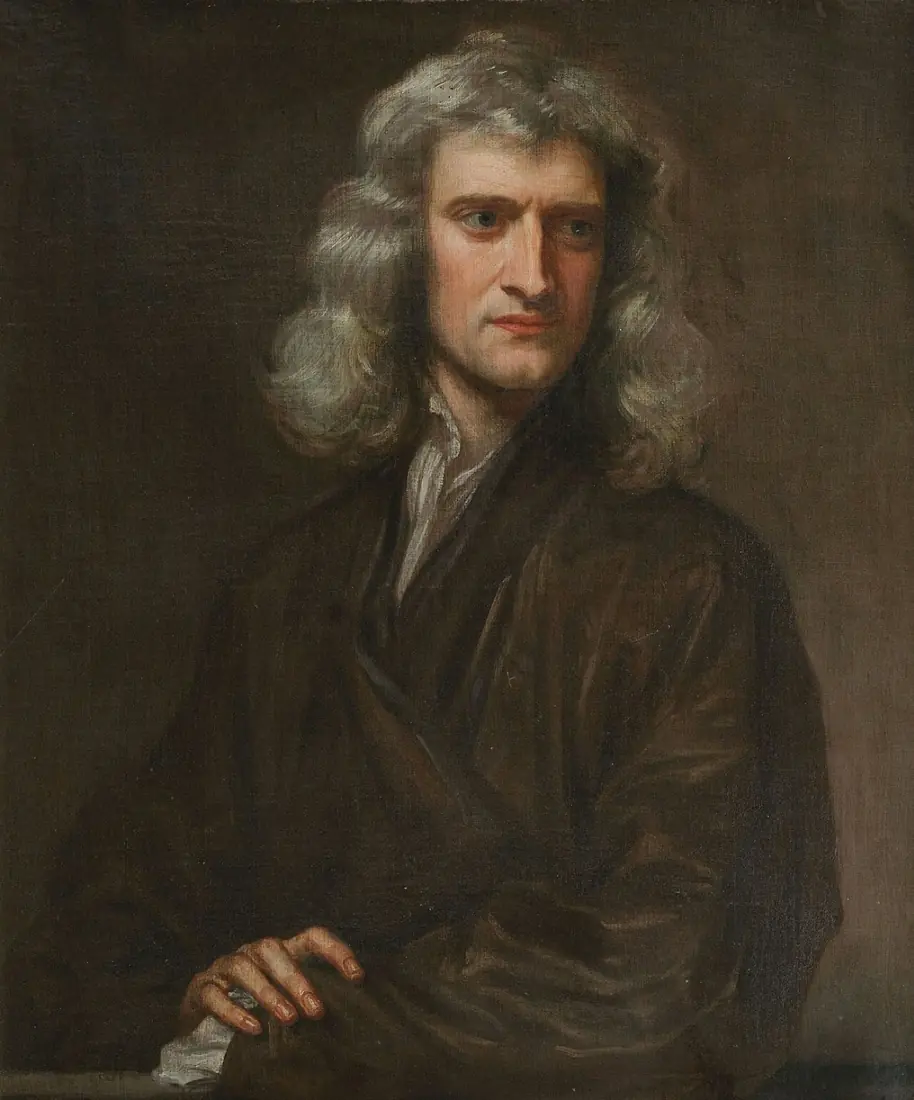
11.1 Reading I: Sir Isaac Newton
Summary
| Part of life | Facts in the text |
|---|---|
| Birth and childhood | born in 1643 at Woolsthorpe, England; son of a peasant (farmer) who died three months before Isaac was born; lived with his maternal grandmother after his mother remarried; his schooling was interrupted by a failed attempt to make him a farmer |
| As a boy | seemed dull and uninterested in studies, but good with his hands: made little machines like windmills, and even made mice drive them |
| Education and career | went to Cambridge University at nineteen to study mathematics and science; made discoveries as a student; became Professor of Mathematics at 26 |
| Light and telescopes | showed that curved mirrors could be used instead of lenses in telescopes; such telescopes are still used |
| Gravitation | the (famous) story of the falling apple: why does it fall down, not up? He produced the theory of gravitation — every body attracts every other; the Earth and Moon attract each other, so the Moon stays near us |
| Absent-mindedness | (1) went to fetch food for his dinner guests and forgot them while studying; (2) forgot he had invited a friend; the hungry friend ate the dinner; Newton, seeing the empty plates, thought he had already eaten himself |
(Facts: Newton later wrote the Principia in 1687, giving his three laws of motion and the law of universal gravitation. He never married. The apple story is told by people who knew him, but it is a story, not a recorded experiment.)
Vocabulary (Exercises A and B)
A: a–x (apology: saying sorry), b–i (absent-minded: forgetful), c–ix (couch: sofa), d–viii (curved), e–vii (dull), f–v (gravity), g–iv (host), h–iii (interrupted), i–ii (puzzled), j–vi (wonder)
B: a. interrupted b. telescopes c. absent-mindedness d. couch e. curved f. gravitation g. dull h. hosted i. tired of
True or False (Exercise C)
a. False — his father was a peasant (farmer). b. False — his father died before he was born. c. True. d. True. e. True — the text says his head was "usually" full of ideas and problems. f. False — the text does not mention a wife; Newton never married.
Comprehension (Exercise D) — model answers
a. How was Newton in his studies in early life? He seemed a dull boy with little interest in studies, though he loved making small machines.
b. Which subjects did he study at Cambridge? Mathematics and science.
c. What changes did Newton make to telescopes? He showed that curved mirrors could be used instead of lenses, which gave better results in some ways.
d. Why did Newton sometimes forget his food and friends? Because his mind was so full of ideas and problems that he was often lost in thought.
11.2 Grammar I: Relative clauses
A relative clause describes a noun. It begins with a relative word.
| Relative word | Used for | Example |
|---|---|---|
| who | people (subject) | We have a friend who plays the madal well. |
| whom | people (object; formal) | I met the woman whom I had helped. |
| which | things, animals | The car which my uncle bought is comfortable. |
| that | people or things (not after a comma) | Is there anything that I can do? |
| whose | possession | The woman whose house was broken into called the police. |
| where | places | This is the place where I was born. |
| when | times | She remembered the day when she met her husband. |
Defining vs non-defining: My uncle, who is in the army, came to see us. The commas show extra information; that cannot be used here.
Joining sentences: remove the repeated noun/pronoun and put the relative word in its place: This is the house. Naresh built it. → This is the house which Naresh built. (not which Naresh built it).
Textbook answers
Grammar I B: a. who/that b. which c. whose d. which/that e. where f. where g. who h. who/that i. that j. when
Grammar I C: a. We know the woman who donated this money. b. We walked past my old school, which is celebrating its 50th anniversary this month. c. I met the woman whom (who) I had helped last month yesterday. (Better: Yesterday I met the woman whom I had helped last month.) d. A new headteacher is going to be appointed next month, which is good. e. Bring me the file which/that is on the table. f. This is the player whom the committee appointed (as) captain. g. We met a girl who had lost her way. h. This is the house which Naresh built. i. Mandy is the girl whose car I am using today.
- The man which came… ✗ → The man who came… ✓
- This is the house which Naresh built it. ✗ — do not repeat the pronoun.
- My uncle, that is in the army… ✗ → My uncle, who is… ✓
- The girl who's car… ✗ → whose car ✓ (who's = who is)
11.3 Writing I: A short biography
Model answer — Pasang Lhamu Sherpa
Problem. Write a short biography of Pasang Lhamu Sherpa from the notes.
Solution. Pasang Lhamu Sherpa was the first Nepali woman to climb Mount Everest. She was born in December 1961 in Solukhumbu (the textbook gives 16 December; most sources give 10 December). She grew up in a mountaineering family and started climbing mountains in her teens.
At the age of seventeen, she went to Kathmandu with Lhakpa Sonam Sherpa, whom she loved and later married, and together they ran a travel agency. In 1989 she climbed Pisang Peak (6,091 m) and Mont Blanc in Europe, and she made her first attempt on Everest, reaching about 8,000 m. In 1991 she tried twice more but had to turn back at 8,750 m and 8,500 m.
Finally, on 22 April 1993, she reached the top of Mount Everest. Sadly, she died the same day while climbing down, because of bad weather. She was declared a National Hero, and a highway and a mountain peak have been named after her. She remains an inspiration for Nepali women.
(The textbook notes print "Mt. Blank (4848 m)"; the mountain is Mont Blanc, about 4,806 m high.)
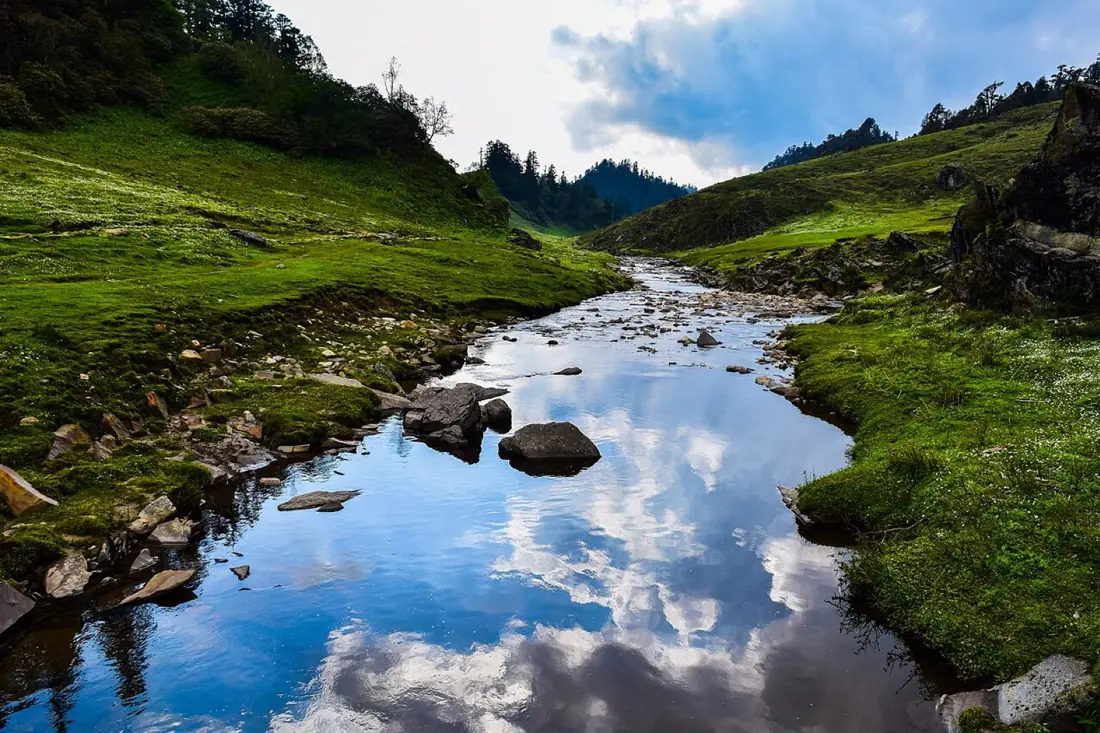
11.4 Reading II: Khaptad National Park
Facts at a glance
| Item | Fact |
|---|---|
| Established | 1984 |
| Location | mid-mountains of Sudurpaschim Province; parts of Bajura, Bajhang, Achham, Doti |
| Area | 225 km² |
| Average altitude | about 3,000 m |
| Highest point | Sahashra Linga, 3,276 m |
| Grasslands | 22 patans (grassland patches) — grazing in summer; flowers June–August; Khaptad Daha lake for aquatic and migratory birds |
| Religious sites | Khaptad Baba Ashram (named after the late saint Khaptad Swami), Triveni (Shiva temple at a confluence of three rivers; Ganga Dashahara and pilgrims on Janai Purnima), Sahashra Linga, Ganesh temple, Nagdhunga, Kedardhunga — tobacco, alcohol and animal sacrifice prohibited |
| Flora | sal, pine, alder; on the plateau fir, oak, birch, rhododendron; primulas, buttercups, wild berries; medicinal herbs |
| Fauna | about 266 bird species (e.g. danphe, flycatcher, bulbul, cuckoo, eagle); about 23 mammal species (barking deer, wild boar, ghoral, black bear, yellow-throated marten, rhesus and langur monkeys, leopard, wolf, wild dog, jackal, musk deer); butterflies, moths, insects |
Park regulations: entry fee Rs. 1,500 (foreigners), Rs. 500 (SAARC nationals), Rs. 100 (Nepali); no entry without a permit; filming needs a special permit from the DNPWC and a fee (USD 1,500 foreigners, Rs. 50,000 SAARC, Rs. 10,000 Nepali; +25% with drones); do not harm plants or animals; dispose of rubbish in designated places; respect religious sites; camp only in designated areas.
Vocabulary (Exercise A)
a–iv (pastures), b–iii (biodiversity), c–vi (aquatic), d–vii (confluence), e–i (tranquility), f–ii (documentary), g–v (harbour)
Gap filling (Exercise B)
a. 22 b. pilgrims c. Rs. 500 (Pakistan is a SAARC country) d. Sahashra Linga e. Triveni during
Comprehension (Exercise C) — model answers
a. What type of forest is found in the park? Coniferous forest mixed with pastures; sal, pine and alder, and sub-alpine forest of fir, oak, birch and rhododendron on the plateau.
b. How have the patans supported local people? They give ample grazing ground for cattle in summer.
c. Where is the Shiva temple? At Triveni, the confluence of three rivers, on the way to the park headquarters.
d. After whom is the park named? The text does not say directly. The park takes its name from the Khaptad area (plateau); the saint who meditated there became known as Khaptad Swami (Khaptad Baba), and the ashram is named after him.
e. How much must someone pay to shoot a film? They need a special permit from the DNPWC and must pay Rs. 10,000 (Nepali), Rs. 50,000 (SAARC nationals) or USD 1,500 (foreigners), plus 25% more if they use drones.
f. List the flora and fauna. Flora: sal, pine, alder, fir, oak, birch, rhododendron, primulas, buttercups, wild berries, medicinal herbs. Fauna: danphe, flycatcher, bulbul, cuckoo, eagle; barking deer, wild boar, ghoral, black bear, marten, monkeys, leopard, wolf, wild dog, jackal, musk deer; butterflies and moths.
11.5 Writing II: A leaflet and a set of rules
A leaflet is a one-page printed advertisement for a place. Follow the textbook headings: introduction and location → major attractions → how to get there → provisions and requirements → best time to visit. Use headings, short lines, and persuasive words (breathtaking, must-see).
LUMBINI — Birthplace of Lord Buddha
Where: Lumbini, Rupandehi district, Lumbini Province — a UNESCO World Heritage Site.
Major attractions: Maya Devi Temple and the marker stone of the Buddha's birth; the Ashoka Pillar (249 BC); the sacred Puskarini pond; monasteries built by many countries; the Lumbini Museum; the eternal peace flame.
How to get there: about 22 km by road from Bhairahawa; flights to Gautam Buddha International Airport, Bhairahawa; buses from Kathmandu (8–9 hours).
Provisions: hotels, guest houses and monastery lodging; rickshaws and bicycles for hire inside the garden; entry ticket for the Maya Devi Temple.
Best time to visit: October to March; Buddha Jayanti (Baishakh Purnima) for the festival.
Come and find peace in the land of the Buddha!
Set of rules (Writing II B) — use the textbook clues: 1. Smoking and drinking alcohol are strictly prohibited in the temple area. 2. Visitors are not allowed to wear shoes inside the Maya Devi Temple. 3. Visitors are supposed to keep silence near the shrines. 4. Don't throw rubbish; use the dustbins. 5. No climbing on the ancient ruins. 6. Loud music is not entertained.
11.6 Grammar II: Articles
| Article | Use | Example |
|---|---|---|
| a | one, not specific, before a consonant sound | a question, a university (/juː/), a one-day trip |
| an | before a vowel sound | an intelligent girl, an old house, an hour, an MP |
| the | something specific or already mentioned; unique things; superlatives; musical instruments; rivers, oceans, mountain ranges | the tallest statue, the guitar, the Bagmati, the sun |
| no article | sports, meals, languages, plural/uncountable in general | They play football. We have lunch at 12:30. |
Textbook answers
Grammar II A: a. a b. a c. the d. × e. an f. the g. a h. an … The i. a j. the k. ×
Grammar II B (a): You've probably learned the rule that an comes before a vowel, and that a comes before a consonant. While this is generally true, it is more accurate to say that an comes before a vowel sound, and a comes before a consonant sound. … The is the most commonly used word in the English language.
Grammar II B (b): Once upon a time, there was an old farmer. … People remembered the old farmer. He helped the villagers … This news reached the king. He invited the old farmer and gave him a golden stick as a gift for his honesty and help to the villagers during hard times.
a or an depends on the sound, not the letter: an honest man, a European, a uniform, an X-ray. Do not write the before meals and sports: I play the football ✗.
11.7 Speaking, pronunciation and project work
Describing: a person (age, face, hair, who they look like), a place (where, what it has, what it is famous for), an object (size, colour, shape, what it looks like): Janakpur is a beautiful city with many ponds. It has a famous temple called the Janaki Temple.
Tongue twisters: She sells seashells by the seashore. Katie caught the kitten in the kitchen. They train /s/–/ʃ/ and /k/ sounds.
Project work: collect information and photos of a famous place in your province and write a short description.
Chapter summary
- Newton: born 1643, Woolsthorpe; dull as a child but clever with his hands; Cambridge at 19; professor at 26; mirror telescope; theory of gravitation; famously absent-minded.
- Khaptad NP: est. 1984, 225 km², four districts of Sudurpaschim, 22 patans, Khaptad Daha, Triveni, Sahashra Linga (3,276 m), 266 birds, 23 mammals; entry Rs. 100 for Nepalis.
- who people, which things, whose possession, where place, when time; that not after a comma.
- a/an by sound; the for specific/unique/superlative/instruments; no article for meals, sports, languages.
- Leaflet: location, attractions, how to get there, provisions, best time.
Practice questions
Reading
- Answer from the texts. [5]aWho looked after Newton in his childhood?bAt what age did he become a professor?cWhat did the friend do while waiting for Newton?dWhat is the entry fee for Nepali visitors to Khaptad?eName two prohibited things at the religious sites.
Answers — Reading
1. (a) His maternal grandmother. (b) At 26. (c) He got tired of waiting and ate the dinner alone. (d) Rs. 100. (e) Tobacco products and alcohol (also animal sacrifice).
Grammar
- Join with relative pronouns. [4]aI know the boy. He won the prize.bThis is the temple. My grandfather built it.cThat is the man. His son is a pilot.dI remember the day. We first met then.
- Fill in a, an, the or ×. [4]aShe is ___ honest girl.b___ Karnali is ___ longest river of Nepal.cHe plays ___ cricket every day.
Answers — Grammar
2. (a) I know the boy who won the prize. (b) This is the temple which my grandfather built. (c) That is the man whose son is a pilot. (d) I remember the day when we first met.
3. (a) an (b) The … the (c) ×
Writing
- Write a short biography of Laxmi Prasad Devkota from these notes: born 1966 BS (1909 AD), Kathmandu; poet, essayist, playwright; Muna Madan, Shakuntala, Sulochana; "Mahakavi" (great poet); died 2016 BS (1959 AD). [5]
Answer — Writing
4. Past simple; birth and family; education and career; works; title of Mahakavi and contribution to Nepali literature; death and legacy — every note used, joined with relative clauses (who, which).
Practise more: English question bank