Unit 16 · Units · 12 min read
An Anecdote: Why I Became a Vegan / A History of Pens
What the syllabus asks for 5
- Anecdote and personal narrative
- Historical writing about an everyday object
- Grammar: past simple, past continuous, past perfect
- Writing: a story; paragraphs about historical events
- Project work: describing major events; words with silent letters
Unit 16 is about narrating events in sequence. Reading I is an anecdote by the American blogger Jessica Sharp, Why I Became a Vegan, about how a change of diet made her feel healthier. Reading II, The History of Pens, traces writing tools from Egyptian reed pens to the modern ballpoint. The grammar is the past simple, past continuous and past perfect used together in narration. In writing you put a story in order, write a picture story, and write paragraphs about a historical event.
(1) Choose the meaning of a word in context. (2) Answer True/False and factual questions. (3) Make a timeline from a historical text. (4) Use the three past tenses correctly in one narrative. (5) Order jumbled sentences into a story and write paragraphs about a historical event.
16.1 Reading I: An Anecdote — Why I Became a Vegan
An anecdote is a short, true, personal story told to make a point.
Summary
- Growing up, the writer did not think about her weight (she was a cheerleader in school). After college she started gaining weight: she ate out more and was more stressed at work.
- She became more in tune with her body after doing the Whole30 (a 30-day eating plan); after it she could tell when her body did not feel good.
- The Almost 30 podcast made her think about a holistic lifestyle; she had already switched to natural deodorant, and becoming vegan was "the last branch of that holistic tree". Her aunt and uncle became vegan first, then her dad, then she did.
- Her reason: to remove from her diet foods her body does not like, and eat things that make her feel good and help her "live her best life".
- Vegans do not eat products that come from animals; she avoids dairy, eggs and meat, but she is not "strict" — she eats butter at restaurants and eats honey. Each person should do what works for them.
- It was easier than she expected. Whole30 showed her that her body does not love dairy: she used to go to bed with stomach aches; now she rarely has stomach aches or headaches, has more energy and less acid reflux.
- She gets protein from beans and chickpeas and many vegetables; you do not have to give up favourite foods to be vegan.
Vocabulary in context (Exercise A)
a. cheered – ii (shout to show support; she was a cheerleader) b. consistently – ii (always the same) c. eliminating – ii (removing) d. dairy – i (milk and milk products) e. incorporate – ii (include)
Exercise B: a. consistently b. eliminating c. cheered d. incorporate e. dairy
True or False (Exercise C)
a. False — she started gaining weight after college. b. False — Almost 30 is the name of the podcast. c. False — she cut out foods her body did not like, to feel better. d. True. e. True — beans and chickpeas.
Comprehension (Exercise D) — model answers
a. Who are vegans? People who do not eat any products that come from animals, such as meat, eggs and dairy.
b. When did the writer start gaining weight? After college, when she ate out more and was stressed with work.
c. Who first became vegan in her family? Her aunt and uncle.
d. Why did the writer become vegan? To remove from her diet the foods her body did not like and to eat food that made her feel good and live her best life.
e. What was the impact of Whole30 on the writer? It made her more in tune with her body; she learnt that dairy did not suit her, and she could tell when her body did not feel good.
f. Can all the nutrients we need be obtained from vegetarian food? Mostly yes, with careful planning: protein from beans, lentils (daal), chickpeas and soybeans; vitamins and minerals from vegetables, fruits and grains. Some nutrients such as vitamin B12 are hard to get without animal products, so vegans may need fortified foods or supplements.
16.2 Grammar: Past simple, past continuous, past perfect in narration
| Tense | Form | Role in a story |
|---|---|---|
| Past simple | V2 | the main events, one after another: He grasped the trunk. |
| Past continuous | was/were + V-ing | the background, or an action interrupted: The car hit the tree while the driver was talking on the phone. |
| Past perfect | had + V3 | an event before another past event: The bus had left before I reached there. |
Time links: when (short action), while (long action), before / after / by the time / already (past perfect for the earlier action), as soon as.
Textbook answers
Grammar I A: a. had – past simple b. felt – past simple; was taking – past continuous c. came – past simple; had already drunk – past perfect (the book prints drank, but the past participle is drunk) d. was serving – past continuous; started – past simple e. was (not prepared) – past simple
Grammar I B (sample answers): a. I ate rice, daal and vegetables. b. I was talking to my friend when the teacher came in. c. My mother had cooked momo when I reached home. d. As soon as I opened the door, I saw thick fog. e. Yes, the class had already started when I reached school. / No, it hadn't started.
Grammar I C: a. hit b. had left c. was digging d. were chirping e. hadn't done (didn't do is also accepted) f. had ordered g. was speaking h. had ordered i. were you doing
- I had went / had drank ✗ → had gone / had drunk** ✓ (past participle)
- When I reached, the class already started. ✗ → had already started ✓
- While I walked home, it was starting to rain. ✗ → While I was walking home, it started to rain. ✓
16.3 Writing I: Ordering a story and writing a picture story
Exercise A — correct order: b → d → i → g → c → h → f → a → e
A rich businessman asked a wise man to wean his son away from his bad habits. The wise man took the boy to a garden and asked him to pull out a tiny plant; the boy pulled it out easily with his thumb and forefinger. Then he asked him to uproot a slightly bigger plant, and the boy had to struggle. Finally he asked him to uproot a guava tree; the boy grasped the trunk, but it was impossible. The wise man said, "Bad habits are like these plants: easy to pull out when young, impossible to uproot later." This lesson changed the son's life completely.
Moral: get rid of bad habits early.
Exercise B (picture story) — begin as the book says (Once upon a time, there was a little boy named Sanam in a city…), describe each picture in order in the past tense, add what characters say and feel, and end with a lesson. Use the past continuous for background (Sanam was playing in the park when…) and the past perfect for earlier events (He had forgotten his mother's advice).
16.4 Reading II: The History of Pens
Timeline
| Type of pen | Time / year (as in the text) | Inventor / place | Features |
|---|---|---|---|
| Reed pen | when papyrus was used (ancient Egypt) | Egyptians | hollow tube of marsh grass (reed); one end sharpened into a nib; squeezed to let ink out |
| Quill pen | after centuries of reed pens; used for nearly 12 centuries | first described in Seville, Spain | bird feathers (swan, turkey, goose) dried to remove oils; tip cut with a knife; shaft held ink; durable but needed frequent sharpening; allowed faster, decorative writing and lowercase letters |
| Steel-point (dip) pen | 19th century | John Mitchell, Birmingham, England (mass production) | machine-made; cheaper and sturdier than quills; still had to be dipped |
| Fountain pen | patented 1827 | Petrache Poenaru (a Romanian inventor — the book misprints "Roman") | ink barrel, no regular dipping |
| Improved fountain pen | 1884 | Lewis Edson Waterman, USA | three-channel ink feed for smooth flow; later cartridges, plastic/metal/wood |
| Ballpoint (first design) | 1888 | John J. Loud, USA | could not control ink flow |
| Commercial ballpoint ("birome") | patented 1943 (in Argentina) | László Bíró (Hungarian journalist) and brother György (chemist) | quick-drying ink and a small rotating metal ball at the tip; no smudging; writes on many surfaces |
| Mass ballpoint | patent later bought by Marcel Bich | Bic company | over 100 billion pens sold |
Today pens are being replaced by phones, tablets and laptops, but the pen remains one of humankind's most important inventions.
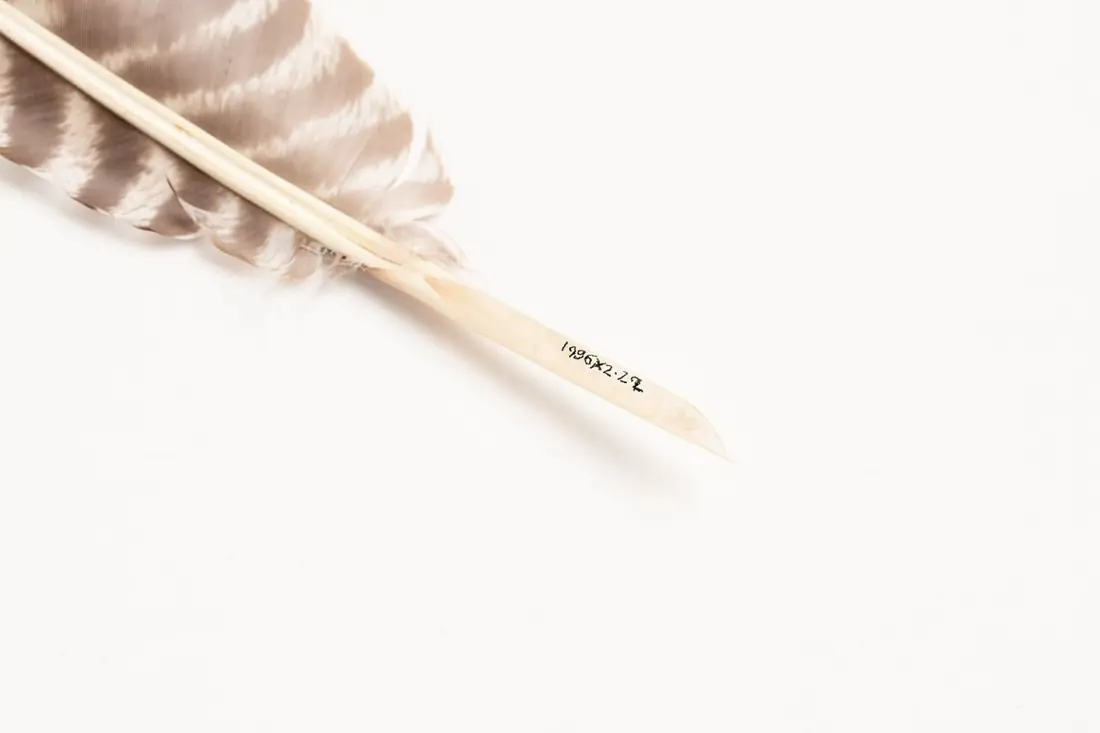
Vocabulary (Exercise B)
a–iii (hollow), b–vii (discard), c–v (shaft), d–i (sturdy), e–ii (patent), f–viii (smudge), g–iv (evolution), h–vi (advent)
Comprehension (Exercise C) — model answers
a. How were reed pens made? From hollow tubes of marsh grass (reed); one end was sharpened into a nib and the tube was filled with ink, which flowed out when the pen was squeezed.
b. What were quill pens made of? Feathers of birds such as swans, turkeys and geese.
c. What changes did quill pens bring to writing? They made writing smoother and faster, so more decorative and faster styles, including lowercase letters, developed.
d. How were steel-point pens different from quills? They were machine-made in large numbers, and much cheaper and sturdier, though they worked in the same way.
e. What were the variations of the fountain pen? Waterman's three-channel ink feed (1884), replaceable and refillable ink cartridges, and bodies of plastic, metal and wood.
f. Who designed the ballpoint pen first? John J. Loud, in 1888.
g. Describe the features of biromes. They used quick-drying ink and a small rotating metal ball at the tip, which spread the ink smoothly without smudging. They were durable and convenient and could write on cardboard and wood, even underwater and at high altitudes.
h. Will the use of pens decline? Yes, to some extent, because people increasingly write on phones, tablets and laptops. But pens will remain in use for exams, signatures and quick notes, especially where devices are not available.
16.5 Writing II: Paragraphs about a historical event
Answer what, when, where, why/how, what happened, results in time order, using past tenses and exact dates.
Model answer — The 2015 Gorkha Earthquake
On Saturday, 12 Baisakh 2072 (25 April 2015), at 11:56 a.m., a powerful earthquake of magnitude 7.8 struck Nepal. Its epicentre was near Barpak in Gorkha district, which is why it is called the Gorkha Earthquake. A strong aftershock of magnitude 7.3 followed on 12 May.
The earthquake killed nearly 9,000 people and injured more than 22,000. Hundreds of thousands of houses were destroyed, and historic monuments such as the Dharahara tower and many temples in Kathmandu's Durbar Squares collapsed. Districts like Sindhupalchowk, Gorkha and Dolakha were the worst affected.
People of all communities helped one another, and many countries sent rescue teams and aid. Since then, much of the damaged heritage has been rebuilt, and people have learnt the importance of earthquake-resistant buildings.
16.6 Speaking, pronunciation and project work
Silent letters: debt, muscle, ledger, comb, design, psychology, knee, heir, calf, autumn, scene, foreign.
Blends (Extra bit): breakfast + lunch = brunch; motor + hotel = motel; information + entertainment = infotainment; web + seminar = webinar; video + blog = vlog.
Project work: list last month's main school events and write a short paragraph in the past tense.
Chapter summary
- Anecdote: the writer gained weight after college; Whole30 and a podcast led her to a holistic lifestyle; she went vegan to feel better; protein from beans and chickpeas; it was easier than expected.
- Pens: reed (Egypt) → quill (feathers, ~12 centuries) → steel dip pen (Mitchell) → fountain (Poenaru 1827; Waterman 1884) → ballpoint (Loud 1888; Bíró 1943; Bic).
- Past simple = events; past continuous = background/interrupted action; past perfect = earlier action.
- Historical paragraphs: time order, exact dates, causes and results.
Practice questions
Reading
- Answer briefly. [5]aWho became vegan after the writer's aunt and uncle?bWhich two non-vegan foods does she still sometimes eat?cWhich birds' feathers were used for quills?dWho mass-produced steel pens?eWhy was Bíró annoyed with ordinary pens?
Answers — Reading
1. (a) Her dad. (b) Butter (at restaurants) and honey. (c) Swans, turkeys and geese. (d) John Mitchell of Birmingham. (e) As a journalist, he was annoyed by ink smudging on paper.
Grammar
- Use the correct past form. [5]aWhen we arrived, the film (already start).bI (cook) when the guests (come).cShe (live) in Pokhara before she (move) to Kathmandu.dWhat (you/do) at 8 last night?
Answers — Grammar
2. (a) had already started (b) was cooking … came (c) had lived … moved (d) were you doing
Writing
- Write two paragraphs on "The Unification of Nepal" or any historical event you have studied. [5]
Answer — Writing
3. Time order, correct dates and names, causes, main events and results; past tenses; a concluding sentence on the event's importance.
Practise more: English question bank