Unit 12 · Units · 12 min read
Nepal's Bird Man / Poem: My Teacher Ate my Homework
What the syllabus asks for 5
- A profile of a conservationist, and the work of bird conservation in Nepal
- Humorous poetry: exaggeration and rhyme
- Grammar: verb + -ing and infinitive; yes/no and wh questions
- Writing: an essay on hobbies and interests
- Project work: collecting a poem; pronunciation of words with -ch
Unit 12 is about hobbies, likes and dislikes. Reading I, Nepal's Bird Man, is a tribute by Rajendra N. Suwal to Hari Sharan Nepali, "Kazi Dai", a self-taught ornithologist who turned birdwatching into a lifelong mission for bird conservation in Nepal. Reading II is a funny poem by Kenn Nesbitt, My Teacher Ate my Homework. The grammar is verb + -ing or infinitive (enjoy reading, want to read) and yes/no and wh-questions. In writing you write an essay on your hobbies and interests.
(1) Answer questions on a profile: who, what he did, which organisations. (2) Explain the joke and the rhymes of the poem. (3) Choose -ing or to + verb after a given verb. (4) Form wh- and yes/no questions from statements. (5) Write an essay on hobbies answering the five textbook questions.
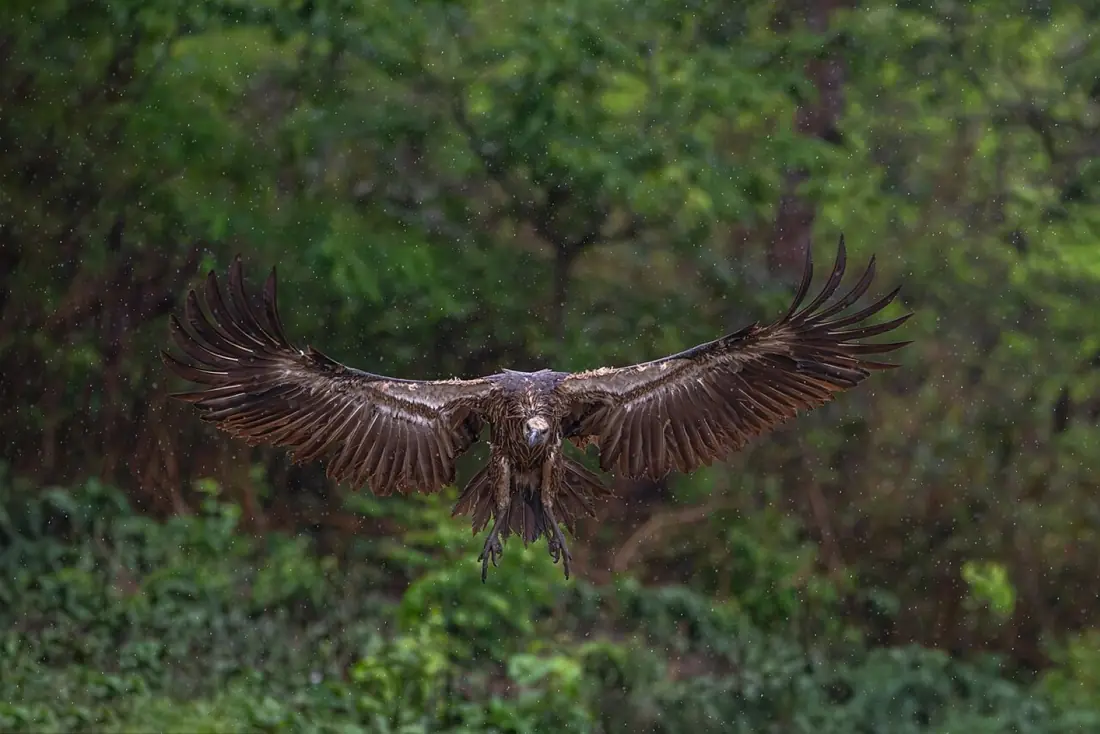
12.1 Reading I: Nepal's Bird Man
Summary
- Hari Sharan Nepali was called Kazi by his friends because of his smart dress and genteel manners. "Kazi Dai" was a famous birder and ornithologist (a scientist who studies birds).
- He was a friend of the writer's father, Parasar Narayan Suwal, who had a Ph.D.; Kazi Dai was a school dropout. They were bonded by their shared love of the wilderness and explored the jungles of the Terai together.
- 1972: the writer joined his father's students of Ananda Kuti Science College on a week-long camp to Pokhara. Kazi Dai taught bird ecology, field identification and taxidermy. They trekked from Bagar to Hyangja and were hit by a hailstorm; at Suinkhet he identified a Lesser Racquet-tailed Drongo, a Green Magpie and an Egyptian Vulture; on the way back he pointed out a Wall Creeper. This mentoring was a turning point in the writer's interest in birds.
- Late 1970s: Kazi Dai and Karna Shakya (then with the IUCN Commission on Education) founded the Nepal Bird Watching Club, later renamed Bird Conservation Nepal (BCN). BCN now trains young Nepalis in bird documentation, photography, research and conservation; ornithology has moved on to satellite tracking, and a digital record of more than 880 bird species of Nepal has been made.
- 1995: the writer and Kazi Dai documented his knowledge in the Biodiversity Profiles Project (Department of National Parks and Wildlife Conservation); both served on the Environment Protection Council chaired by the Prime Minister.
- They went birding with Jimmy Carter (a former US President) and set up the Lumbini Crane Sanctuary, now a nesting home for Sarus cranes, supported by WWF Nepal with the International Crane Foundation and Lumbini Development Trust.
- He led the Ornithological Survey of Nepal; Tribhuvan University's Natural History Museum is an outcome of his passion; he identified thirteen new bird species for Nepal beyond those listed by the Flemings and Lain Singh Bangdel (1976).
- He died on 19 May 2021; his passion lives on in the young naturalists he mentored.
(The textbook misprints IUCN as "International Union for the Conversation of Nature"; it is the International Union for Conservation of Nature.)
Vocabulary (Exercise A)
a. diversity b. genteel c. enhanced d. mentoring e. nurturing
Multiple choice (Exercise B)
a. ii. birder b. iii. Parasar N. Suwal c. iii. while they were on the trip to Pokhara ("his mentoring during this trip was a turning point") d. ii is false — he worked with foreigners such as Jimmy Carter. e. i. IUCN — it was Karna Shakya who was with the IUCN; Kazi Dai co-founded BCN and worked on the WWF-supported crane sanctuary.
Comprehension (Exercise C) — model answers
a. What made Kazi Dai a friend of Parasar Narayan Suwal? (The question misprints the surname as Shrestha.) Their shared love of the wilderness; they often explored the jungles of the Terai together.
b. Was the journey to Pokhara memorable for the writer? How? Yes. They faced a hailstorm and landslide debris, saw rare birds such as the Wall Creeper, and Kazi Dai's mentoring on the trip shaped his lifelong interest in birds.
c. Name a person the writer worked with besides Kazi Dai. Karna Shakya (he also went birding with Jimmy Carter).
d. Mention the areas BCN works in at present. Bird documentation, photography, research and conservation; also satellite tracking of migration and digital recording of Nepal's bird species.
e. Who supports the Lumbini Crane Sanctuary? WWF Nepal, in partnership with the International Crane Foundation and the Lumbini Development Trust.
f. Do you like Kazi Dai? Why? Yes. Though a school dropout, he became an expert through passion and hard work, and he freely shared his knowledge with young people and worked to protect Nepal's birds.
12.2 Speaking: likes, dislikes and preferences
| Like | Dislike | Prefer |
|---|---|---|
| I love / like / enjoy …ing | I don't like / dislike …ing | I prefer X to Y |
| I'm keen on / crazy about / fond of …ing | I hate / can't stand …ing | I'd rather + verb |
Speaking A: a. Like b. Dislike c. Like d. Dislike e. Dislike f. Like g. Like. Speaking B: don't like playing · love playing · do … like · like riding (a bicycle) · like (to dance) · singing.
12.3 Grammar I: Verb + -ing and infinitive
Some verbs are followed by -ing, some by to + verb, and some by both.
| Followed by -ing | Followed by to + verb | Both (little change in meaning) |
|---|---|---|
| enjoy, mind, avoid, finish, keep (on), admit, dislike, can't stand, practise, go + activity (go fishing) | want, would like, learn, agree, decide, hope, plan, promise, refuse, wait | like, love, hate, start, begin, prefer |
- After prepositions use -ing: keen on gardening, good at drawing.
- help + object + base verb (or to): Munal helped me carry this load.
- I like swimming (I enjoy it in general) / I'd like to swim (I want to now).
Textbook answers
Grammar I B: a. going b. to tell c. to come d. asking e. talking f. to speak g. giving h. carry i. waiting j. preparing
Grammar I C: a. listening (or to listen) b. fishing c. swimming d. writing (or to write) e. to talk f. to pay g. calling (or to call) h. talking i. to pay j. stealing — and the correct sentence is He admitted stealing the money or He admitted to stealing (not admitted of).
- I enjoy to read. ✗ → I enjoy reading. ✓
- I want going home. ✗ → I want to go home. ✓
- Would you mind to give me a hand? ✗ → mind giving** ✓
- We go to swim on Saturdays → We go swimming** ✓
12.4 Writing: Essay on hobbies and interests
Model answer — My Hobbies and Interests
My Hobbies and Interests
A hobby is an activity we do for pleasure in our free time. My main hobbies are birdwatching and drawing, and I am also interested in reading story books.
I chose birdwatching because there is a small forest and a pond near my house in Chitwan. Every morning I hear different birds, and after reading about Hari Sharan Nepali, I wanted to learn their names. Drawing helps me record the birds I see, so the two hobbies go together.
To develop my hobbies, I plan to keep a notebook of every bird I identify, with a drawing, the date and the place. I want to join a bird-watching club and learn to use a field guide. Next year I hope to take part in a school drawing competition.
I need some support. A pair of binoculars and a bird guidebook are expensive, and my parents sometimes worry that hobbies take time away from studies. I will show them that I can manage my time — study first, hobby after.
My hobbies have already changed my life. I wake up early, I spend less time on the mobile phone, and I have learnt patience. In future, I would like to become a wildlife researcher and help protect Nepal's birds.
The textbook's five questions give the five paragraphs: what → why → how you will achieve them → support needed / barriers → changes in your life.
12.5 Reading II: Poem — My Teacher Ate my Homework
What happens in the poem
The speaker is surprised ("rather odd") to see his teacher eating his homework. The teacher sniffs it, smiles and nods approvingly, takes a little nibble, then a larger bite, and chews thoughtfully. He clearly likes it: he "really went to town", gobbled it "with gusto" and wolfed it all down. He licks his fingers, burps and says, "You pass." Only in the last two lines do we understand: this is a cooking class, and the homework was food.
Humour: the title makes us think of the old excuse "my dog ate my homework"; the poem turns it around. The joke is kept for the last line (a surprise ending), and the eating words are exaggerated for comic effect.
Form: four stanzas of four lines; lines 2 and 4 rhyme (odd/nod, true/chew, town/down, pass/class).
Exercises
A (rhymes): odd – nod (god, rod); true – chew (blue, new); town – down (brown, crown); pass – class (glass, grass).
B (eating words):
| Word | Meaning | Sentence |
|---|---|---|
| nibble | take very small bites | The rabbit nibbled a carrot. |
| bite | cut with the teeth | He took a big bite of the apple. |
| chew | crush food with the teeth | Chew your food well. |
| gobble | eat fast and greedily | The hungry boys gobbled the momo. |
| wolf (down) | eat very fast in large amounts | She wolfed down her lunch and ran out. |
| lick | move the tongue over | The child licked the ice cream. |
C (summary): strange · approval (box: approved) · tasted · his fingers · cooking class
12.6 Grammar II: Yes/no and wh-questions
Yes/no question: helping verb + subject + verb: Does she sing English songs?
Wh-question: wh-word + helping verb + subject + verb: When will Madan buy a computer? If the wh-word is the subject (who, what), there is no do/does/did: Who is in class eight? Who doesn't want to help you?
| Wh-word | Asks about |
|---|---|
| who | person |
| what | thing / action |
| where | place |
| when | time |
| why | reason |
| how | manner |
Textbook answers
Grammar II A: a–iv, b–v, c–vi, d–i, e–iii, f–vii, g–ii
Grammar II B: a. Who is in class eight? b. What is the dog chasing? c. Were they practising English yesterday? d. Why did he go to the market? e. When did you come to see me? f. Did Anuska buy a new computer? g. Where did William see a snake? h. Will they have to do the work? i. How did you pay? j. Does she have a beautiful painting?
- Why he went to the market? ✗ → Why did he go…? ✓
- Who did break the glass? ✗ (subject question) → Who broke the glass? ✓
- Where William saw a snake? ✗ → Where did William see…? ✓
12.7 Pronunciation and project work
| Sound of ch | Words |
|---|---|
| /tʃ/ | chair, chaired, chimp, chalk, chore, child |
| /ʃ/ (French origin) | charade, chiffon |
| /k/ (Greek origin) | chemist, choir (/kw-/) |
-ology words (Extra bit): ornithology (birds), dendrology (trees), oology (birds' eggs), seismology (earthquakes), virology (viruses), pathology (diseases).
Project work: find a poem or song about hobbies and present it.
Chapter summary
- Hari Sharan Nepali (Kazi Dai): self-taught ornithologist; co-founded the Nepal Bird Watching Club → Bird Conservation Nepal; Lumbini Crane Sanctuary; 13 new bird species for Nepal; died 19 May 2021.
- Nepal has more than 880 bird species.
- Poem: the teacher eats the homework — because it is a cooking class; rhyme in lines 2 and 4; surprise ending.
- enjoy/mind/avoid/finish/keep + -ing; want/would like/agree/learn/decide + to; preposition + -ing.
- Wh-question = wh + auxiliary + subject + verb; subject questions need no do.
Practice questions
Reading
- Answer from Nepal's Bird Man. [5]aWhy was Hari Sharan Nepali called Kazi?bWhere did the 1972 camp go?cWhat was the Nepal Bird Watching Club renamed?dWhich birds nest in the Lumbini sanctuary?eWhen did Kazi Dai die?
- What is funny about My Teacher Ate my Homework? [3]
Answers — Reading
1. (a) Because of his smart dress and genteel manners. (b) To Pokhara. (c) Bird Conservation Nepal (BCN). (d) Sarus cranes. (e) On 19 May 2021.
2. We think the teacher is strangely eating a student's written homework; only at the end do we learn it is a cooking class and the homework was food. The exaggerated eating words (gobbled, wolfed, burp) add to the fun.
Grammar
- Choose the correct form. [5]aShe avoided (to meet / meeting) him.bI hope (to see / seeing) you soon.cThey finished (to paint / painting) the wall.dHe refused (to help / helping).eI'm good at (to draw / drawing).
- Make wh-questions for the underlined words. [3]aRita lives in Dharan.bThe film starts at six.cHari broke the window.
Answers — Grammar
3. (a) meeting (b) to see (c) painting (d) to help (e) drawing
4. (a) Where does Rita live? (b) When/What time does the film start? (c) Who broke the window?
Writing
- Write an essay on "My Favourite Hobby" in about 150 words. [5]
Answer — Writing
5. Introduction (what the hobby is), why you like it, how you do it, what you have gained, future plans; present simple and like/enjoy + -ing.
Practise more: English question bank