Chapter 2 · Evolution and Diversity · 4 questions in the paper · 36 min read
Animal Diversity and Classification
What the syllabus asks for 1
- Diagnostic features and classification of animals from Protozoa to Chordata
Animal Diversity and Classification carries 4 of the 40 Zoology questions, all from one syllabus line: the diagnostic features and classification of animals from Protozoa to Chordata. The questions are of three kinds — "which phylum or class has this feature" (flame cells, choanocytes, water vascular system, placoid scales), "which animal is this" (the scientific name behind a common name), and "which statement is true of this group" (coelom, symmetry, excretory organ, heart). Learn the tables in this chapter column by column.
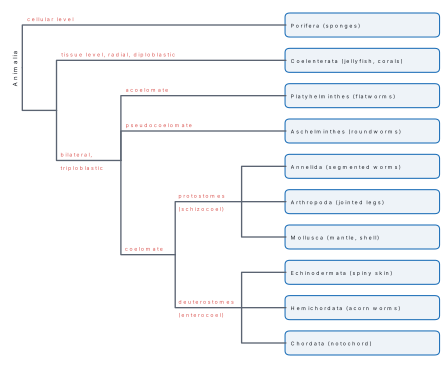
- The five bases of classification: level of organisation, symmetry, germ layers, coelom (acoelomate, pseudocoelomate, schizocoelous, enterocoelous) and segmentation — and which phylum shows which.
- One unique feature per phylum: choanocytes (Porifera), cnidoblasts (Cnidaria), flame cells (Platyhelminthes), pseudocoel (Aschelminthes), metameres with setae (Annelida), jointed legs (Arthropoda), mantle and radula (Mollusca), water vascular system (Echinodermata), notochord (Chordata).
- The classes with their examples: Protozoa by locomotory organelle; Hydrozoa/Scyphozoa/Anthozoa; Turbellaria/Trematoda/Cestoda; Polychaeta/Oligochaeta/Hirudinea; Crustacea, Myriapoda, Insecta, Arachnida; the seven classes of Mollusca; five of Echinodermata.
- Excretory and respiratory organs: flame cells, renette cells, nephridia, Malpighian tubules, green glands, organ of Bojanus, kidneys; gills, book lungs, book gills, tracheae.
- Chordate characters and the three subphyla; the seven vertebrate classes compared on skin, skeleton, heart, temperature, excretion and egg.
- Common-name traps: silverfish, starfish, jellyfish, cuttlefish and crayfish are not fishes; the sea horse is.
- Parasites and vectors with their diseases (Leishmania, Trypanosoma, Taenia, Wuchereria, Ancylostoma).
2.1 Diagnostic features and classification of animals from Protozoa to Chordata
The bases of classification
| Basis | States | Found in |
|---|---|---|
| Level of organisation | protoplasmic (one cell does everything) | Protozoa |
| cellular (cells with division of labour, no true tissues) | Porifera | |
| tissue | Coelenterata, Ctenophora | |
| organ | Platyhelminthes | |
| organ-system | Aschelminthes to Chordata | |
| Symmetry | asymmetrical | most sponges; adult snails (after torsion) |
| radial (any plane through the oral–aboral axis halves the body) | Coelenterata; adult Echinodermata (pentaradial) | |
| biradial | Ctenophora, sea anemones | |
| bilateral (one plane only) | Platyhelminthes to Chordata; echinoderm larvae | |
| Germ layers | diploblastic (ectoderm + endoderm, non-cellular mesogloea between) | Coelenterata, Ctenophora (Porifera are usually grouped here) |
| triploblastic (mesoderm added) | Platyhelminthes onwards | |
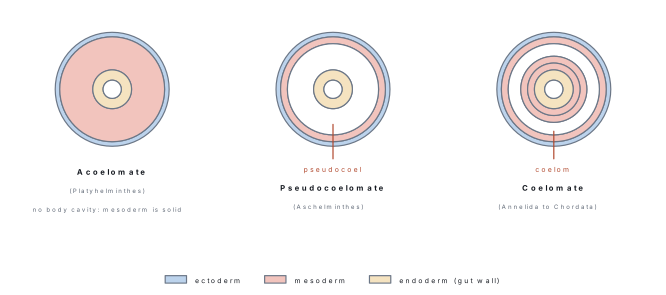
| Coelom | acoelomate (space packed with mesodermal parenchyma) | Platyhelminthes |
| pseudocoelomate (cavity not fully lined by mesoderm — a blastocoel remnant) | Aschelminthes | |
| eucoelomate, schizocoelous (mesoderm splits) | Annelida, Arthropoda, Mollusca | |
| eucoelomate, enterocoelous (pouches from the gut) | Echinodermata, Hemichordata, Chordata | |
| Segmentation | metameric (true, repeated organs) | Annelida, Arthropoda, Chordata |
| pseudometamerism (proglottids budded off) | tapeworms | |
| Embryo | protostome: blastopore → mouth; spiral, determinate cleavage | Annelida, Arthropoda, Mollusca |
| deuterostome: blastopore → anus; radial, indeterminate cleavage | Echinodermata, Hemichordata, Chordata | |
| Notochord | absent (non-chordates) / present (chordates) | — |
The true coelom is a cavity lined on both sides by mesoderm: the outer parietal (somatic) layer on the body wall and the inner visceral (splanchnic) layer on the gut. In Arthropoda and Mollusca the coelom is reduced and the main body cavity is a blood-filled haemocoel.
The phyla at a glance
| Phylum | Level | Symmetry | Coelom | Gut | Circulation | Respiration | Excretion | Nervous system |
|---|---|---|---|---|---|---|---|---|
| Protozoa | protoplasmic | various | — | food vacuoles | — | diffusion | contractile vacuole, diffusion | — |
| Porifera | cellular | asymmetrical / radial | none | none (canal system) | none | diffusion | diffusion | none |
| Coelenterata | tissue | radial | none (coelenteron) | blind sac, one opening | none | diffusion | diffusion | nerve net |
| Platyhelminthes | organ | bilateral | acoelomate | incomplete (no anus) or absent | none | diffusion | flame cells | ladder-like |
| Aschelminthes | organ-system | bilateral | pseudocoel | complete | none | diffusion | renette cells / canals | circum-pharyngeal ring + cords |
| Annelida | organ-system | bilateral | schizocoel | complete | closed | skin, gills | nephridia | ventral, double, ganglionated |
| Arthropoda | organ-system | bilateral | haemocoel | complete | open, dorsal heart | gills, tracheae, book lungs | Malpighian tubules, green glands | ventral, double, ganglionated |
| Mollusca | organ-system | bilateral (snails asymmetrical) | reduced (pericardial) | complete, radula | open (closed in cephalopods) | gills (ctenidia), pulmonary sac | kidneys / organ of Bojanus | ganglia |
| Echinodermata | organ-system | pentaradial adult, bilateral larva | enterocoel | complete | haemal system | tube feet, dermal branchiae | none | nerve ring, no brain |
| Chordata | organ-system | bilateral | enterocoel | complete | closed, ventral heart | gills or lungs | kidneys | dorsal, hollow |
Protozoa (kingdom Protista)
In the five-kingdom system the protozoans are the animal-like protists; the syllabus begins animal classification with them.
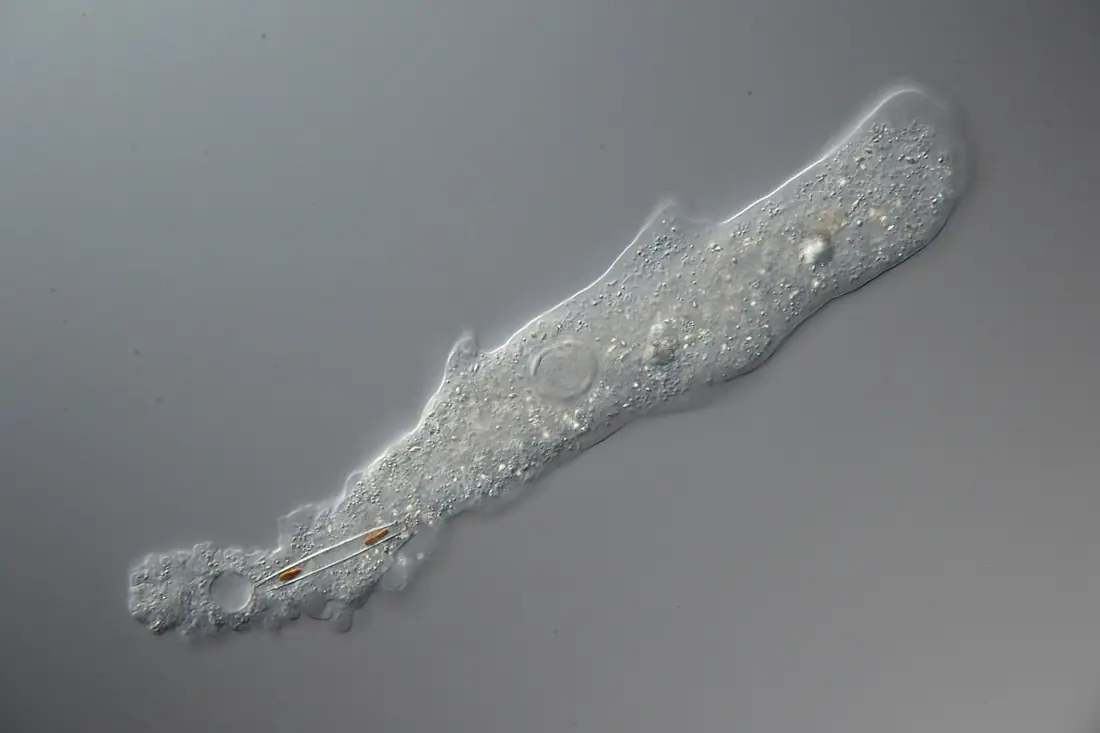
- Unicellular eukaryotes at the protoplasmic level; free-living or parasitic.
- No cell wall; body covered by plasma membrane or a firm pellicle.
- Nutrition holozoic, holophytic (Euglena), saprozoic or parasitic.
- Locomotion by pseudopodia, flagella or cilia; Sporozoa have none.
- Osmoregulation by contractile vacuoles in fresh-water forms; respiration and excretion by diffusion.
- Asexual reproduction by binary or multiple fission; sexual by syngamy or conjugation; cysts survive bad conditions.
| Class | Locomotion | Examples (and diseases) |
|---|---|---|
| Rhizopoda (Sarcodina) | pseudopodia | Amoeba proteus; Entamoeba histolytica (amoebic dysentery); E. gingivalis (in the gums); Elphidium (Polystomella, a foraminiferan) |
| Mastigophora (Flagellata) | flagella | Euglena viridis; Trypanosoma gambiense (African sleeping sickness, by the tsetse fly Glossina); Leishmania donovani (kala-azar, by the sandfly Phlebotomus — endemic in Nepal's Terai); Giardia intestinalis (diarrhoea); Trichomonas vaginalis; Noctiluca (sea luminescence); Trichonympha (digests cellulose in termites) |
| Sporozoa (Apicomplexa) | none in the adult; all parasites; form spores | Plasmodium (malaria, by female Anopheles); Monocystis (seminal vesicles of earthworm); Eimeria (coccidiosis of poultry); Toxoplasma |
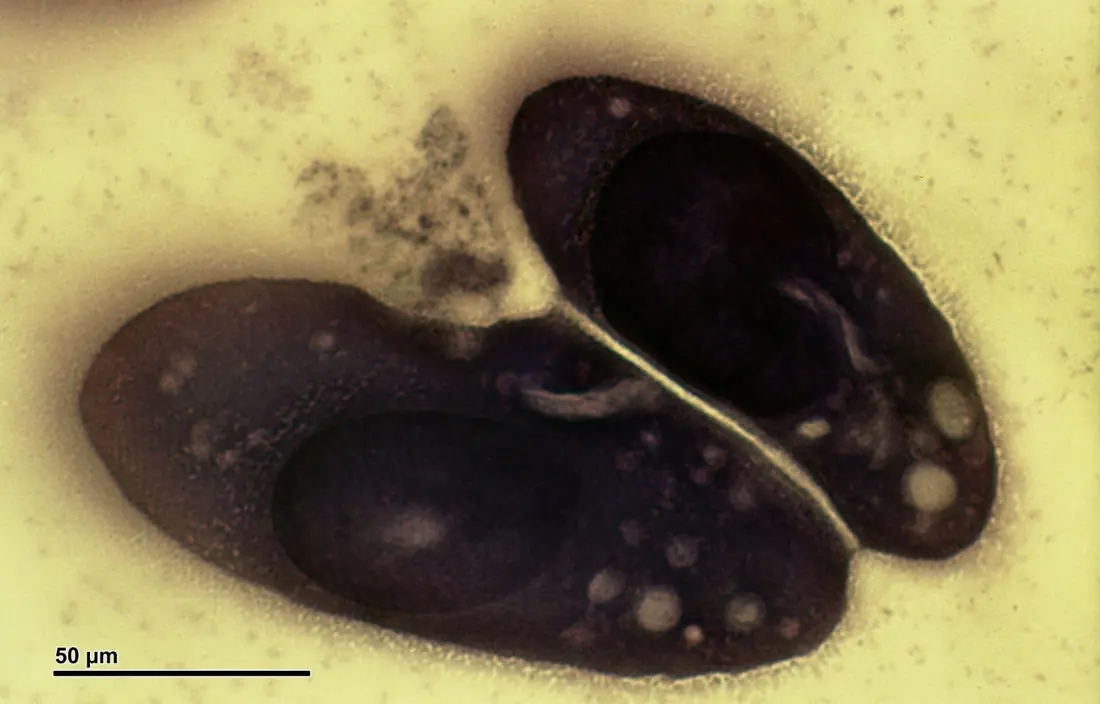
| Ciliata | cilia; two kinds of nuclei (macronucleus, micronucleus) | Paramecium caudatum (slipper animalcule); Vorticella (bell animalcule); Balantidium coli (the only ciliate parasite of man, dysentery); Nyctotherus (rectum of frog) |
Phylum Porifera — sponges
- Aquatic, mostly marine, sessile; asymmetrical or radial; cellular level.
- Body perforated by many small pores, the ostia (incurrent), and one large osculum (excurrent); the body cavity is the spongocoel.
- Canal (water-current) system — ostia → canals → spongocoel → osculum — brings food and O₂ and removes waste. Types: ascon (Leucosolenia), sycon (Sycon), leucon (Spongilla, Euspongia).
- Choanocytes (collar cells) line the spongocoel or chambers and drive the current; digestion is intracellular.
- Skeleton of spicules (calcareous or siliceous) and/or spongin fibres.
- No mouth, gut, muscles, nerves or organs. Hermaphrodite; fertilisation internal; larva amphiblastula or parenchymula. Asexual by budding, fragmentation and gemmules (internal buds of fresh-water sponges). Great power of regeneration.
| Class | Skeleton | Examples |
|---|---|---|
| Calcarea (Calcispongiae) | calcareous (CaCO₃) spicules | Sycon (Scypha), Leucosolenia, Grantia |
| Hexactinellida (Hyalospongiae) — glass sponges | six-rayed siliceous spicules | Euplectella (Venus' flower basket), Hyalonema (glass-rope sponge) |
| Demospongiae | spongin fibres with or without siliceous spicules | Euspongia (bath sponge), Spongilla (fresh-water sponge), Cliona (boring sponge), Chalina (dead man's fingers) |
Phylum Coelenterata (Cnidaria)
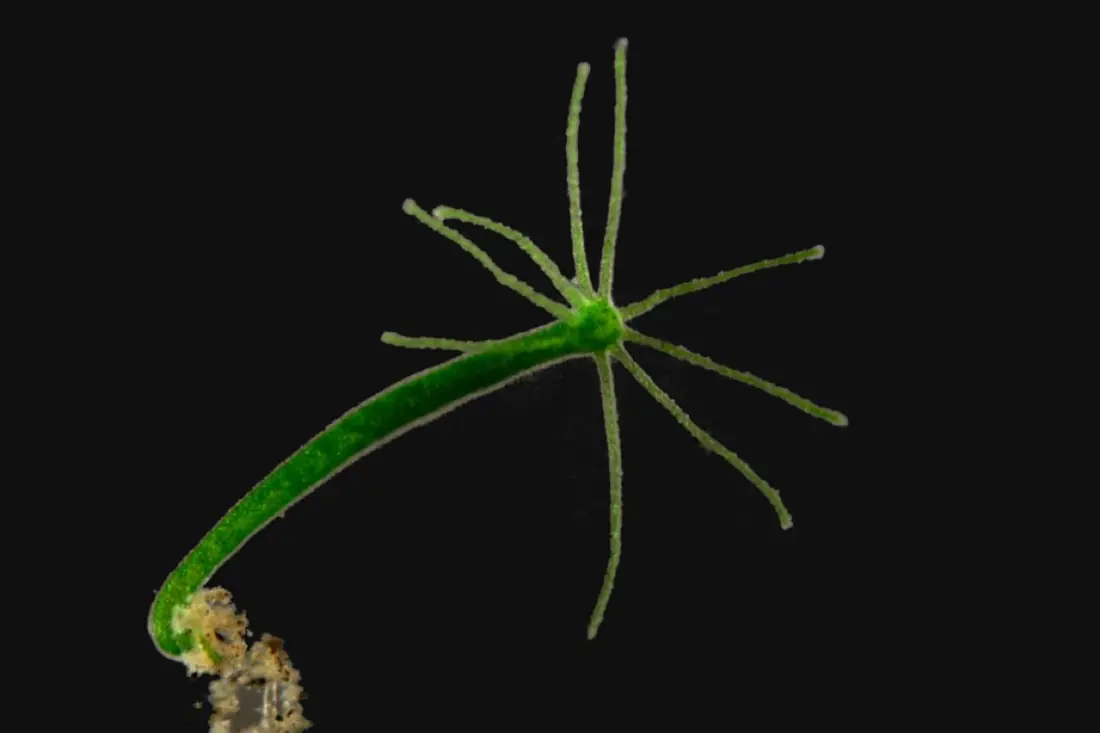
- Aquatic, mostly marine (Hydra is fresh-water); solitary or colonial; radial symmetry; tissue level; diploblastic with a non-cellular mesogloea.
- One cavity, the coelenteron (gastrovascular cavity), opening by the mouth on a raised hypostome; no anus. Digestion extracellular, then intracellular.
- Cnidoblasts (cnidocytes) with nematocysts (stinging capsules) on the tentacles — the diagnostic feature; for prey capture, defence and anchorage.
- Two body forms: the sessile, cylindrical polyp (asexual) and the free-swimming, umbrella-shaped medusa (sexual). Their alternation is metagenesis (Obelia). Polymorphism: different zooids in one colony (Physalia).
- Nerve net, no brain; no respiratory, circulatory or excretory organs. Larva planula. Corals secrete a CaCO₃ skeleton and build reefs.
| Class | Dominant form | Examples |
|---|---|---|
| Hydrozoa | polyp, medusa or both; medusa with a velum | Hydra (polyp only), Obelia (sea fur, metagenesis), Physalia (Portuguese man-of-war), Velella |
| Scyphozoa | medusa dominant (true jellyfish) | Aurelia (moon jelly), Rhizostoma, Cyanea |
| Anthozoa (Actinozoa) | polyp only, no medusa | sea anemones Metridium, Adamsia (on the hermit crab's shell); corals Corallium (red coral), Madrepora, Meandrina (brain coral), Fungia (mushroom coral); Gorgonia (sea fan), Pennatula (sea pen) |
Ctenophora (comb jellies) are a small marine phylum close to the Cnidaria: biradial, diploblastic, with eight rows of comb plates (ctenes) of fused cilia for swimming, colloblasts (lasso cells) instead of nematocysts, and strong bioluminescence: Pleurobrachia (sea gooseberry), Ctenoplana.
Phylum Platyhelminthes — flatworms
- Dorsoventrally flattened; bilateral, triploblastic, acoelomate (parenchyma fills the body); organ level; head present.
- Mostly endoparasites with hooks and suckers; thick tegument resists host enzymes.
- Gut incomplete (mouth, no anus) or absent (tapeworms absorb food through the body surface).
- Excretion and osmoregulation by flame cells (protonephridia).
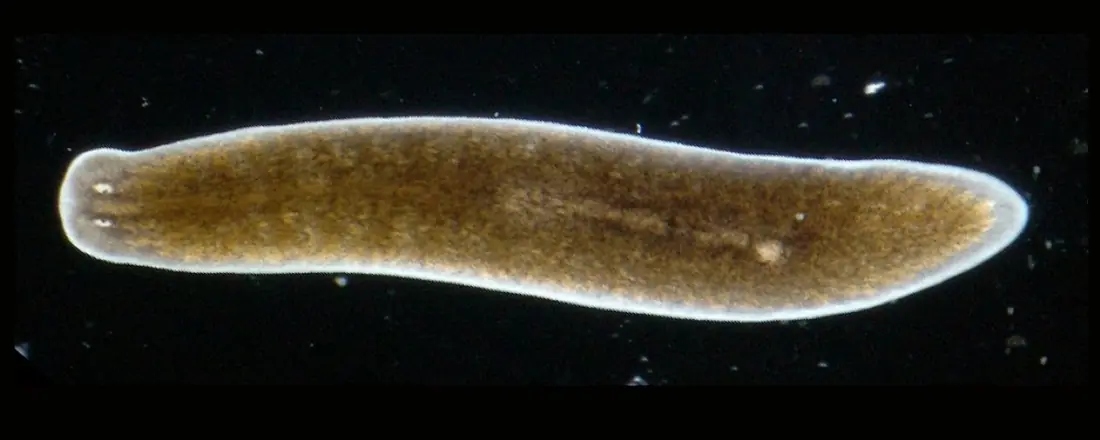
- Mostly hermaphrodite; internal fertilisation; complicated life cycles with one or two hosts. Planaria regenerates whole worms from small pieces.
| Class | Features | Examples (and diseases) |
|---|---|---|
| Turbellaria | free-living, ciliated epidermis | Dugesia (Planaria) |
| Trematoda (flukes) | parasitic, suckers, branched gut | Fasciola hepatica (liver fluke of sheep; snail Lymnaea is the intermediate host; larvae miracidium → sporocyst → redia → cercaria); Schistosoma (blood fluke, schistosomiasis) |
| Cestoda (tapeworms) | ribbon-like; scolex with suckers (± hooks); chain of proglottids; no gut | Taenia solium (pork tapeworm: scolex armed with hooks; pig is the intermediate host; its larva in man's brain causes neurocysticercosis); T. saginata (beef tapeworm, scolex without hooks); Echinococcus granulosus (dog tapeworm; hydatid cyst in man) |
Phylum Aschelminthes (Nemathelminthes, Nematoda) — roundworms
- Cylindrical, unsegmented, tapering at both ends; tough cuticle; bilateral, triploblastic, organ-system level.
- Pseudocoelomate — the first body cavity.
- Complete gut (mouth and anus) with a muscular pharynx — the first "tube within a tube".
- Only longitudinal muscles in the body wall (whip-like movement). No circulatory or respiratory organs; excretion by excretory canals / renette cells.
- Sexes separate (dioecious) with sexual dimorphism: the male is smaller with a curved tail bearing penial spicules. No cilia anywhere.
| Worm | Common name | Disease / note |
|---|---|---|
| Ascaris lumbricoides | common roundworm | ascariasis (small intestine) |
| Enterobius vermicularis | pinworm (seat worm) | children; anal itching |
| Ancylostoma duodenale | hookworm | larvae enter through the skin of bare feet; blood-sucking → anaemia |
| Wuchereria bancrofti | filarial worm | filariasis (elephantiasis); vector Culex mosquito |
| Dracunculus medinensis | guinea worm | intermediate host Cyclops (in drinking water) |
| Trichinella spiralis | trichina worm | trichinosis from undercooked pork |
| Loa loa | eye worm | under the skin and over the eye |
| Caenorhabditis elegans | — | free-living model organism of genetics |
Phylum Annelida — segmented worms
- Elongated, metamerically segmented — the first true segmentation; bilateral, triploblastic, coelomate (schizocoelous).
- Thin moist cuticle; locomotion by setae (chaetae), parapodia or suckers, with circular and longitudinal muscles working on the coelomic fluid (hydrostatic skeleton).
- Closed circulatory system; haemoglobin dissolved in the plasma.
- Excretion by nephridia; respiration through the moist skin (gills in some polychaetes).
- Ventral, double, ganglionated nerve cord with a nerve ring.
- Hermaphrodite (earthworm, leech) or dioecious (Nereis); polychaetes have a trochophore larva.
| Class | Diagnostic | Examples |
|---|---|---|
| Polychaeta | marine; parapodia with many setae; no clitellum; dioecious; trochophore | Nereis (sandworm, clam worm), Aphrodite (sea mouse), Chaetopterus, Arenicola (lugworm) |
| Oligochaeta | few setae, no parapodia; clitellum; hermaphrodite; direct development | Pheretima posthuma (Indian earthworm), Lumbricus terrestris, Tubifex |
| Hirudinea (leeches) | no setae or parapodia; fixed number of segments (about 33); anterior and posterior suckers; hermaphrodite; coelom filled by botryoidal tissue | Hirudinaria granulosa (cattle leech), Hirudo medicinalis (medicinal leech — saliva has the anticoagulant hirudin), Haemadipsa (land leech of the monsoon hills) |
Phylum Arthropoda — jointed-legged animals
The largest phylum: more than two-thirds of all named animal species.
- Jointed appendages; chitinous exoskeleton shed by moulting (ecdysis).
- Body segmented and grouped into head, thorax and abdomen or cephalothorax and abdomen.
- Coelom reduced; body cavity a blood-filled haemocoel; open circulation with a dorsal heart.
- Respiration by gills, book gills (Limulus), book lungs (scorpions, spiders), tracheae (insects, myriapods) or the body surface.
- Excretion by Malpighian tubules (insects, myriapods, arachnids), green (antennal) glands (crustaceans) or coxal glands (arachnids).
- Compound eyes; ventral double nerve cord; sexes usually separate; fertilisation internal; often metamorphosis.
| Class | Body | Antennae | Legs | Respiration / excretion | Examples |
|---|---|---|---|---|---|
| Crustacea | cephalothorax (with carapace) + abdomen | 2 pairs | many, biramous | gills / green glands; nauplius larva | Palaemon (prawn), Astacus (crayfish), Cancer (crab), Daphnia (water flea), Cyclops, Balanus (barnacle), Sacculina (parasite of crabs), Eupagurus (hermit crab) |
| Chilopoda (Myriapoda) — centipedes | head + many trunk segments | 1 pair | 1 pair per segment; first pair are poison claws | tracheae / Malpighian tubules | Scolopendra |
| Diplopoda (Myriapoda) — millipedes | head + many trunk segments | 1 pair | 2 pairs per segment | tracheae / Malpighian tubules | Julus, Spirostreptus |
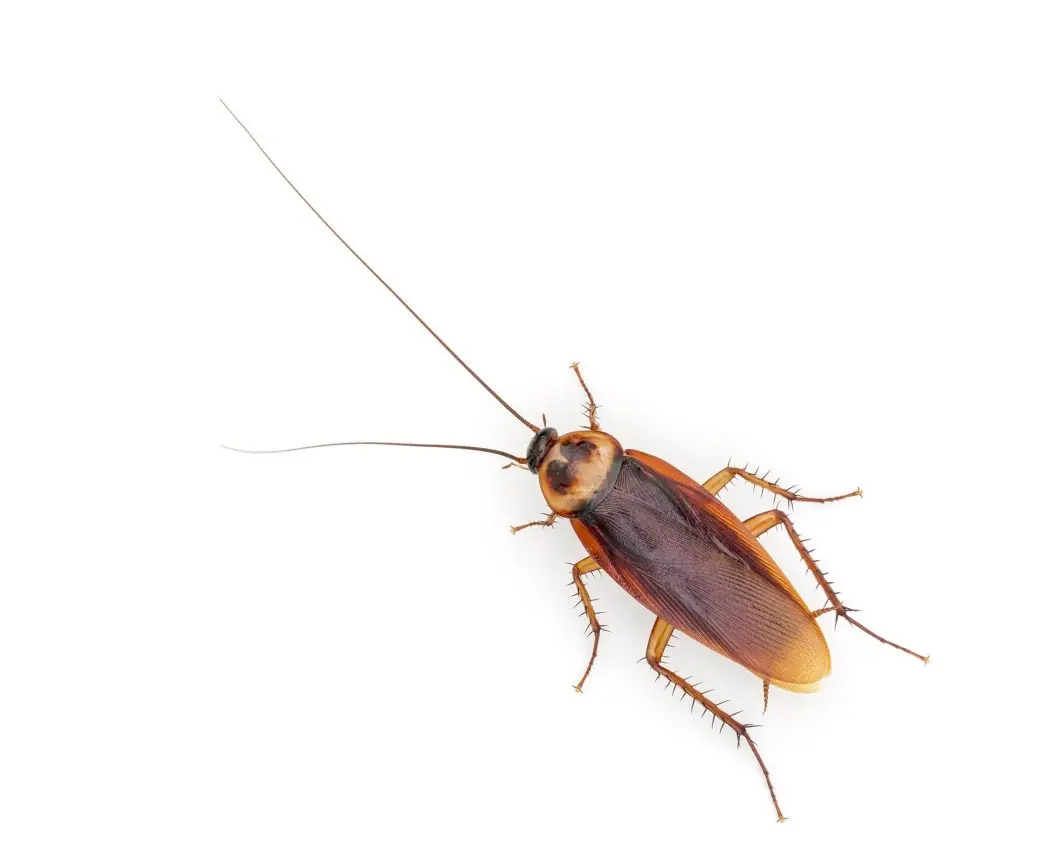
| Insecta (Hexapoda) | head, thorax, abdomen | 1 pair | 3 pairs; usually 2 pairs of wings | tracheae / Malpighian tubules | Periplaneta americana (cockroach), Musca domestica, Anopheles, Aedes, Culex, Apis (honey bee), Bombyx mori (silk moth), Laccifer (Kerria) lacca (lac insect), Locusta, Pediculus (louse), Cimex (bed bug), Xenopsylla (rat flea, plague), Lepisma (silverfish, wingless) |
| Arachnida | cephalothorax + abdomen | none | 4 pairs; chelicerae and pedipalps | book lungs or tracheae / Malpighian tubules, coxal glands | Palamnaeus and Buthus (scorpions), Aranea (spider), Sarcoptes scabiei (itch mite, scabies), ticks |
| Merostomata | cephalothorax with horseshoe carapace + abdomen | none | 5 pairs + book gills | book gills | Limulus (king crab, a living fossil — not a true crab) |
| Onychophora | worm-like, soft cuticle | 1 pair | unjointed stumpy legs | tracheae / nephridia | Peripatus (Annelida–Arthropoda link) |
| Insect vector | Disease it spreads |
|---|---|
| female Anopheles | malaria |
| Aedes aegypti | dengue, chikungunya, yellow fever |
| Culex | filariasis, Japanese encephalitis |
| Phlebotomus (sandfly) | kala-azar |
| Glossina (tsetse fly) | sleeping sickness |
| Xenopsylla cheopis (rat flea) | plague |
| Musca domestica (housefly) | mechanical carrier of typhoid, cholera, dysentery |
Phylum Mollusca — soft-bodied animals
The second largest phylum.
- Soft, unsegmented body (except Neopilina) of head, muscular foot and visceral hump; bilateral, but snails become asymmetrical by torsion (180° twisting of the visceral mass).
- The mantle (pallium) covers the hump and secretes the calcareous shell; the mantle cavity holds the gills (ctenidia).
- Radula — a rasping, file-like tongue with chitinous teeth (absent in bivalves).
- Coelom reduced to the pericardial cavity and gonad cavities; open circulation (closed in cephalopods); respiratory pigment haemocyanin (copper).
- Excretion by kidneys (the organ of Bojanus in bivalves such as Lamellidens); osphradium tests the water entering the mantle cavity.
- Sexes usually separate; larvae trochophore and veliger.
| Class | Diagnostic | Examples |
|---|---|---|
| Monoplacophora | single cap-like shell; serially repeated gills and nephridia | Neopilina (living fossil; Annelida–Mollusca link) |
| Polyplacophora (Amphineura) | 8 dorsal shell plates | Chiton |
| Aplacophora | worm-like, no shell, spicules in the skin | Neomenia, Chaetoderma |
| Scaphopoda | tusk-shaped tubular shell open at both ends | Dentalium (tusk shell) |
| Gastropoda | torsion; coiled shell (or none); distinct head with tentacles | Pila globosa (apple snail), Helix (land snail), Limax (slug, no shell), Aplysia (sea hare), Doris (sea lemon), Patella (limpet), Lymnaea (pond snail) |
| Pelecypoda (Bivalvia, Lamellibranchiata) | two hinged valves; no head, no radula; filter feeders | Lamellidens and Unio (fresh-water mussels), Mytilus (sea mussel), Ostrea (edible oyster), Pinctada (pearl oyster), Teredo (shipworm, bores wood), Pecten (scallop) |
| Cephalopoda | foot modified into arms/tentacles around the head; closed circulation; large eyes; ink gland; shell internal or absent (external only in Nautilus) | Sepia (cuttlefish), Loligo (squid), Octopus (devil fish), Nautilus, Architeuthis (giant squid, among the largest invertebrates) |
Phylum Echinodermata — spiny-skinned animals
- All marine; adults pentaradial, larvae bilateral; triploblastic, enterocoelous deuterostomes.
- Endoskeleton of calcareous ossicles with spines (from mesoderm) — hence "spiny skin".
- Water vascular (ambulacral) system — sea water enters by the madreporite and works the tube feet (podia) for locomotion, food capture and respiration — the diagnostic feature.
- No head, no brain, no excretory organs; open haemal system; pedicellariae clean the surface.
- Sexes separate; external fertilisation; many free-swimming larvae; great regeneration (starfish).
| Class | Diagnostic | Larva | Examples |
|---|---|---|---|
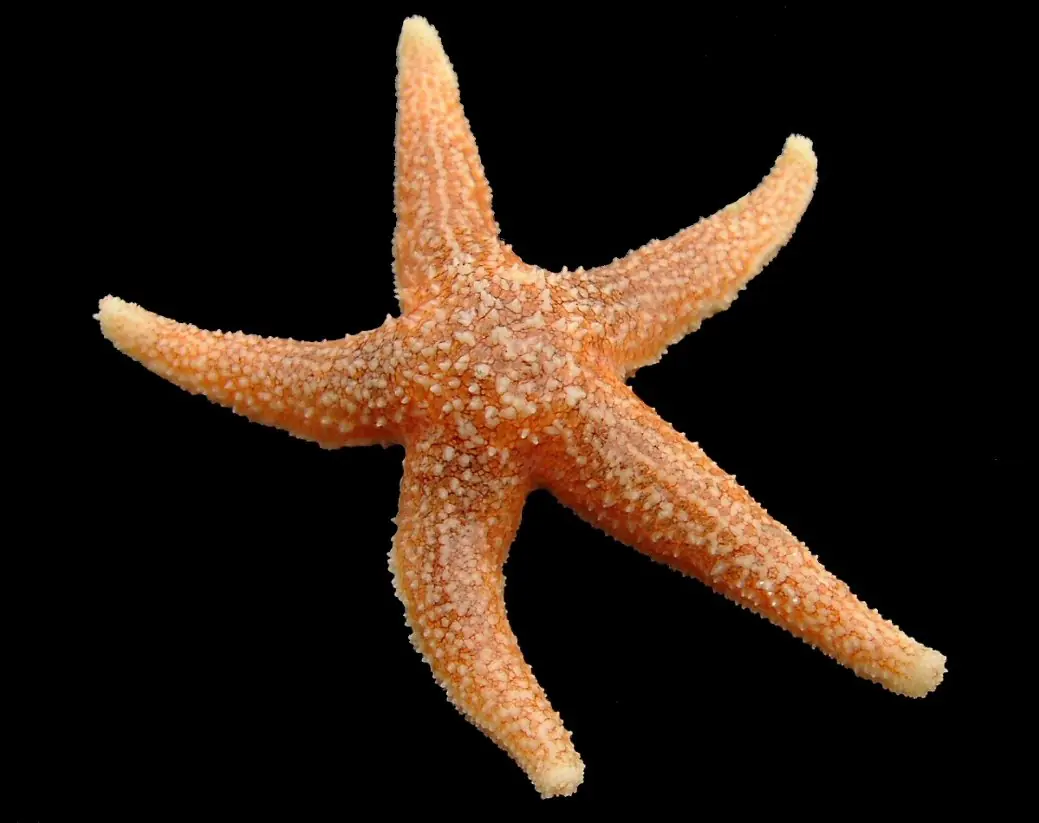
| Asteroidea (starfishes) | star-shaped; arms not sharply marked off from the disc; tube feet with suckers in open ambulacral grooves | bipinnaria, brachiolaria | Asterias, Pentaceros (Oreaster) |
| Ophiuroidea (brittle stars) | long slender arms sharply set off from a round disc | ophiopluteus | Ophiura, Ophiothrix |
| Echinoidea (sea urchins, sand dollars) | globular or flat; no arms; movable spines; chewing Aristotle's lantern | echinopluteus | Echinus, Clypeaster (sand dollar), Echinocardium (heart urchin) |
| Holothuroidea (sea cucumbers) | elongated, leathery; ossicles microscopic; respiratory trees; evisceration | auricularia | Cucumaria, Holothuria |
| Crinoidea (sea lilies, feather stars) | cup-shaped, feathery arms; stalked or free; mouth faces up | doliolaria | Antedon (feather star), Metacrinus (sea lily) |
Hemichordata
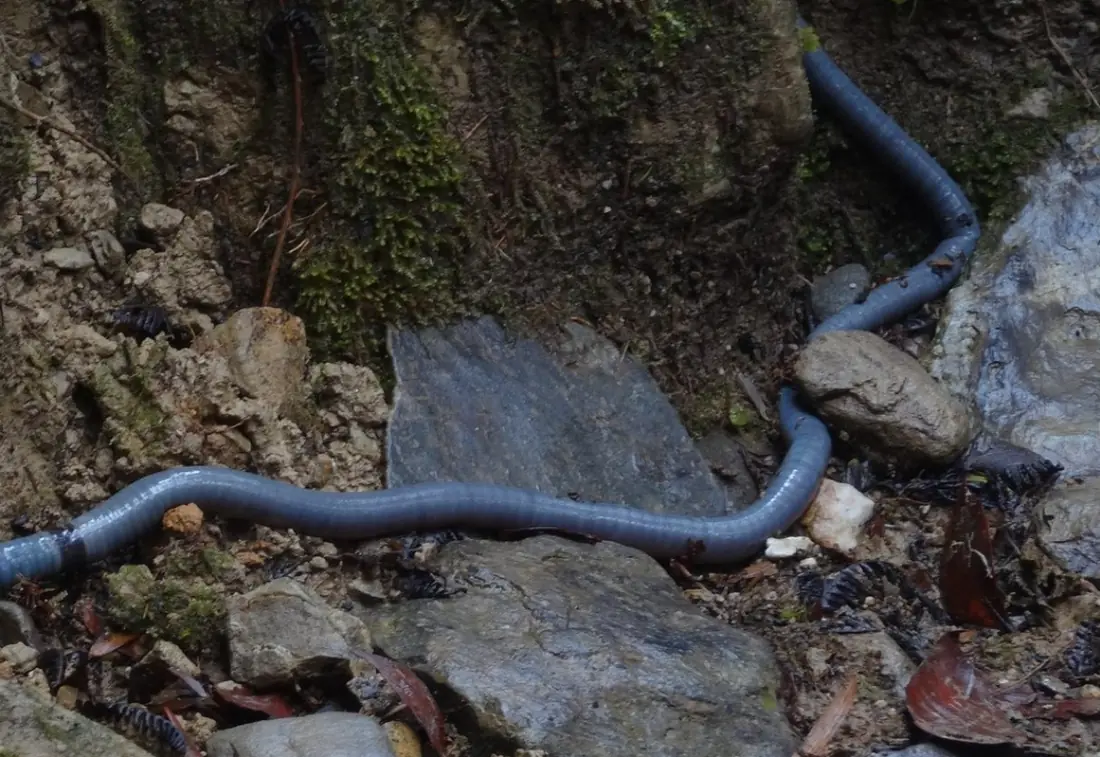
Worm-like marine burrowers with a body of proboscis, collar and trunk, pharyngeal gill slits and a dorsal nerve cord in the collar. Their stomochord (buccal diverticulum) was once taken for a notochord, so older books made them a subphylum of Chordata; today they are a separate non-chordate phylum. The tornaria larva resembles echinoderm larvae. Examples: Balanoglossus (acorn worm), Saccoglossus.
Phylum Chordata
Four fundamental characters, present at least in the embryo:
- a notochord — a flexible rod of vacuolated cells dorsal to the gut;
- a dorsal, hollow, single nerve cord;
- paired pharyngeal gill slits;
- a post-anal tail.
| Character | Non-chordates | Chordates |
|---|---|---|
| Notochord | absent | present (at least in the embryo) |
| Nerve cord | ventral, solid, double, ganglionated | dorsal, hollow, single |
| Pharyngeal gill slits | absent | present |
| Heart | dorsal (if present) | ventral |
| Post-anal tail | absent | present |
| Blastopore | usually becomes mouth (protostomes) | becomes anus (deuterostomes) |
| Subphylum | Notochord | Features | Examples |
|---|---|---|---|
| Urochordata (Tunicata) | only in the larval tail | marine, sessile adult in a tunic of tunicin; free-swimming tadpole larva; retrogressive metamorphosis | Herdmania, Ascidia (sea squirt), Salpa, Doliolum |
| Cephalochordata | from head to tail, throughout life | small, fish-like, burrowing filter feeders; no head, no paired fins | Branchiostoma (Amphioxus, the lancelet) |
| Vertebrata (Craniata) | replaced by the vertebral column in the adult | cranium round the brain; paired appendages; muscular ventral heart with chambers; kidneys | fishes to mammals |
Urochordata and Cephalochordata together are the protochordates. Every vertebrate is a chordate, but not every chordate is a vertebrate.
Vertebrata divides into Agnatha (jawless — class Cyclostomata) and Gnathostomata (jawed — super-class Pisces with the two fish classes, and super-class Tetrapoda with four-limbed Amphibia, Reptilia, Aves and Mammalia).
| Class | Skin / exoskeleton | Skeleton | Heart | Respiration | Body temperature | Excretion | Reproduction | Examples |
|---|---|---|---|---|---|---|---|---|
| Cyclostomata | soft, no scales | cartilaginous; notochord persists | 2-chambered | 6–15 pairs of gill slits | cold-blooded | ammonia | migrate to fresh water to spawn (lamprey); larva ammocoete | Petromyzon (lamprey, ectoparasite of fish), Myxine (hagfish) |
| Chondrichthyes (cartilaginous fish) | placoid scales | cartilaginous | 2-chambered | 5–7 pairs of separate gill slits, no operculum; no air bladder | cold-blooded | urea | claspers in males; internal fertilisation; many viviparous; heterocercal tail; ventral mouth | Scoliodon (dogfish), Pristis (sawfish), Torpedo (electric ray), Trygon (stingray), Carcharodon (great white shark) |
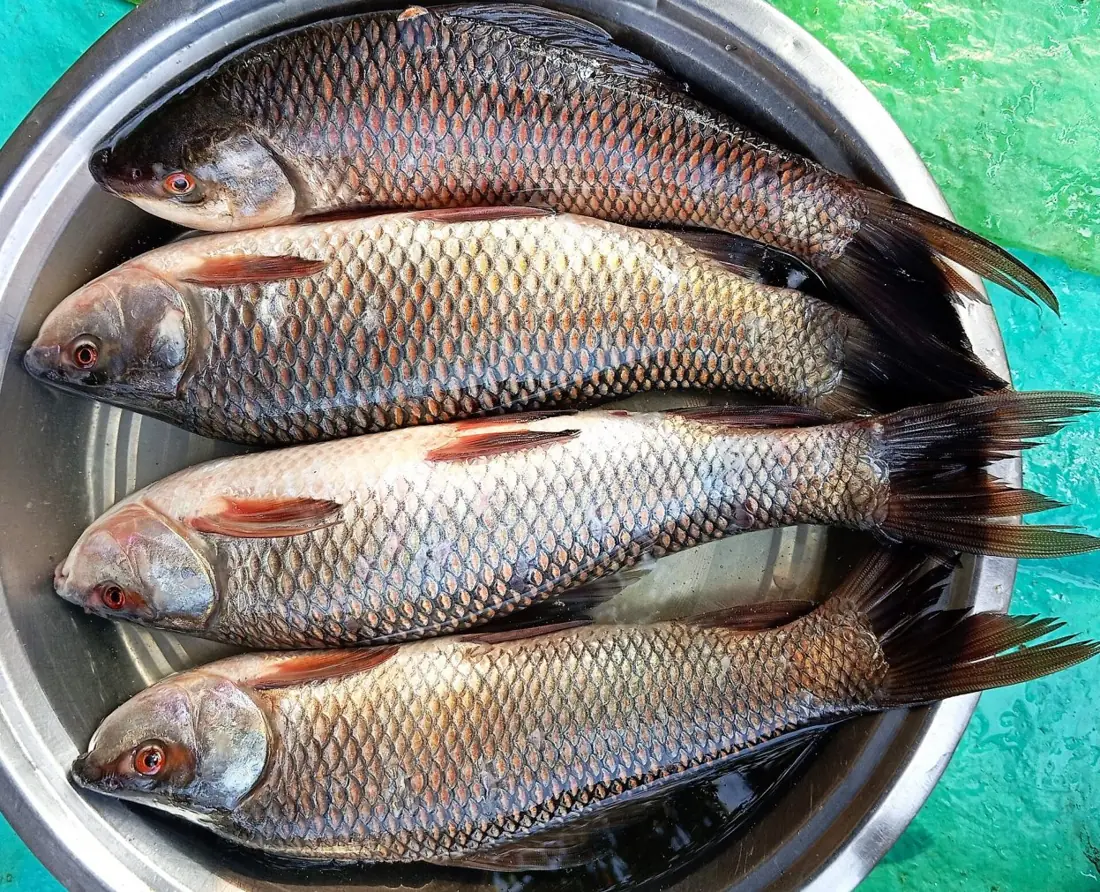
| Osteichthyes (bony fish) | cycloid or ctenoid scales | bony | 2-chambered (venous) | 4 pairs of gills under an operculum; air (swim) bladder | cold-blooded | ammonia | mostly oviparous, external fertilisation; terminal mouth; homocercal tail | Labeo rohita (rohu), Catla catla, Clarias (magur), Hippocampus (sea horse), Exocoetus (flying fish), Anabas (climbing perch), Pterophyllum (angel fish), Betta (fighting fish), Protopterus (lungfish) |
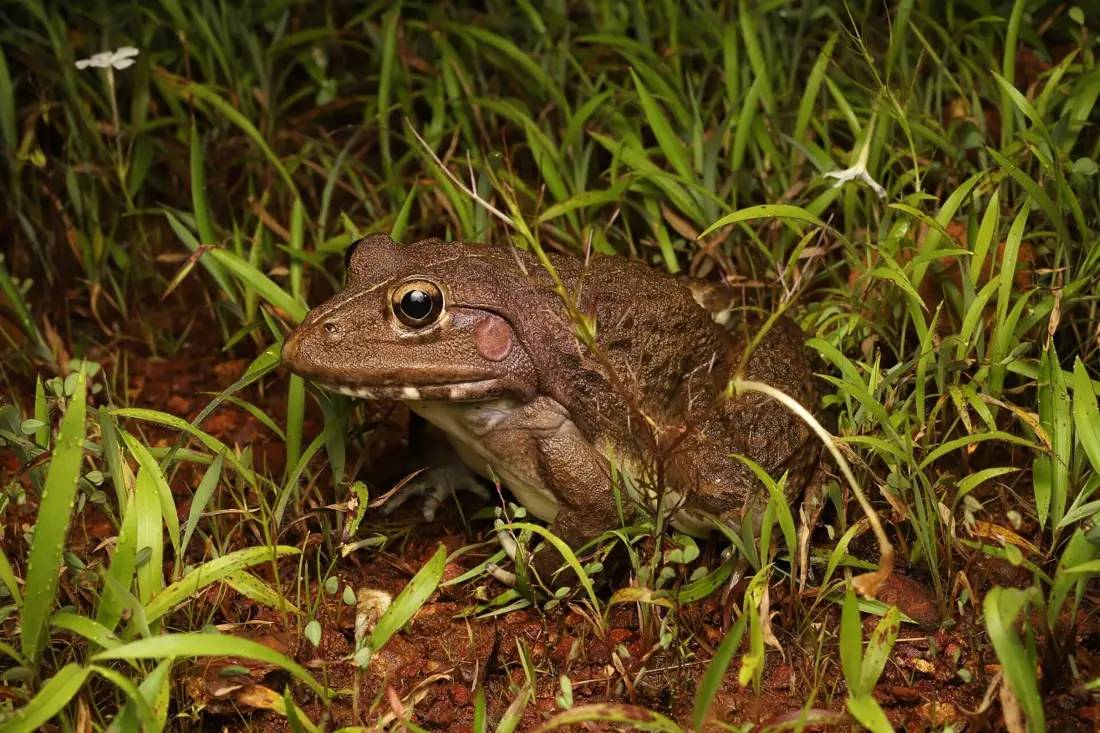
| Amphibia | moist, glandular, no scales | bony | 3-chambered (2 atria + 1 ventricle) | gills (larva), lungs, skin, buccopharynx | cold-blooded | urea (adult) | cloaca; external fertilisation in water; tadpole larva, metamorphosis; tympanum | Rana (frog), Bufo (toad), Hyla (tree frog), Salamandra, Ichthyophis (limbless), Necturus |
| Reptilia | dry, cornified, epidermal scales or scutes | bony | 3-chambered; 4 in crocodiles | lungs | cold-blooded | uric acid | internal fertilisation; cleidoic (shelled, amniotic) eggs; direct development; snakes and lizards moult | Chelone (turtle), Testudo (tortoise), Calotes (garden lizard), Hemidactylus (wall lizard), Chamaeleo, Draco (flying lizard), Crocodylus, Alligator, Gavialis (gharial), Naja (cobra), Bungarus (krait), Vipera (viper), Python |
| Aves | feathers; scales on legs; only the oil (preen) gland | bony, pneumatic (air-filled) | 4-chambered | lungs + air sacs | warm-blooded | uric acid | beak without teeth; crop and gizzard; syrinx; oviparous; right aortic arch | Columba livia (pigeon), Corvus (crow), Psittacula (parrot), Struthio (ostrich), Pavo cristatus (peafowl), Aptenodytes (penguin), Neophron (vulture), Lophophorus impejanus (Danfe, national bird of Nepal) |
| Mammalia | hair; sweat and sebaceous glands; mammary glands | bony; 7 neck vertebrae | 4-chambered | lungs; diaphragm | warm-blooded | urea | external ear (pinna); teeth heterodont and replaced once; viviparous (except monotremes); left aortic arch; RBCs without nuclei | see below |
| Mammal sub-class | Diagnostic | Examples |
|---|---|---|
| Prototheria (monotremes) | lay eggs; cloaca; no nipples | Ornithorhynchus (duck-billed platypus), Tachyglossus (spiny anteater, Echidna) |
| Metatheria (marsupials) | young born very early and reared in a pouch (marsupium) | Macropus (kangaroo), Didelphis (opossum), Phascolarctos (koala) |
| Eutheria (placentals) | true placenta | Homo, Rattus, Canis, Felis, Elephas, Pteropus (flying fox), Balaenoptera (blue whale, largest animal), Delphinus (dolphin), Panthera tigris (tiger), Rhinoceros unicornis (one-horned rhinoceros), Ailurus fulgens (red panda) |
Jellyfish (Coelenterata), starfish (Echinodermata), cuttlefish (Mollusca), crayfish (Crustacea), silverfish (Lepisma, an insect) and devil fish (Octopus, Mollusca) are not fishes. The sea horse (Hippocampus), the flying fish (Exocoetus) and the lungfish are true bony fishes. Likewise the sea anemone is a cnidarian, the sea mouse a polychaete, the sea cucumber and sea lily echinoderms, and the king crab (Limulus) is not a crab.
- Not every coelenterate has a medusa (Hydra, sea anemones, corals) — and Hydra lives in fresh water.
- Not every mollusc has a shell (Limax, Octopus) or a radula (bivalves); Nautilus is the only cephalopod with an external shell.
- The heart of the crocodile is four-chambered although it is a reptile.
- Monotremes are mammals that lay eggs; bats are mammals that fly; whales and dolphins are mammals that swim.
- Ichthyophis is a limbless amphibian, not a snake.
- Tapeworm proglottids are not true segments (pseudometamerism).
"Please Come Play And Act As My Elder Cousin" — Porifera, Coelenterata, Platyhelminthes, Aschelminthes, Annelida, Arthropoda, Mollusca, Echinodermata, Chordata. Each step adds one feature: tissues → mesoderm → body cavity → true coelom → segmentation → deuterostome plan → notochord.
Problem. A bilateral, triploblastic, unsegmented endoparasite possesses a pseudocoelom, a complete digestive tract with a muscular pharynx, a syncytial epidermis, and H-shaped excretory canals lacking flame cells or cilia. Name the phylum and a human parasite belonging to it.
Solution. Pseudocoelom + syncytial epidermis + H-shaped renette excretory system + complete gut uniquely define Aschelminthes (Nematoda), exemplified by Ascaris lumbricoides or Wuchereria bancrofti.
Problem. Write the exact sequence of chambers water traverses in a syconoid sponge (Sycon) from the outside sea water to the exit opening, and name the flagellated cells that drive the current.
Solution. Dermal ostia \rightarrow incurrent canal \rightarrow prosopyle \rightarrow radial (flagellated) canal \rightarrow apopyle \rightarrow spongocoel \rightarrow osculum. The current is driven by choanocytes (collar cells) lining the radial canals.
Problem. A marine fish has a ventral mouth, placoid scales, 5 pairs of uncovered gill slits, a heterocercal caudal fin, lacks an air bladder, and excretes urea (ureotelic). Assign its class and contrast it with Labeo rohita.
Solution. The marine specimen belongs to Chondrichthyes (e.g., Scoliodon). Labeo rohita (Osteichthyes) has a terminal mouth, cycloid scales, 4 pairs of gills covered by an operculum, a homocercal tail, a swim bladder, and is ammonotelic.
Formula and fact sheet
One feature, one group
| Feature | Group |
|---|---|
| Choanocytes, ostia, osculum, spicules, gemmules | Porifera |
| Cnidoblasts / nematocysts, mesogloea, polyp and medusa | Coelenterata |
| Comb plates, colloblasts | Ctenophora |
| Flame cells, hooks and suckers, proglottids | Platyhelminthes |
| Pseudocoel, cuticle, renette cells, sexual dimorphism | Aschelminthes |
| Metameric segmentation, setae, parapodia, nephridia, clitellum | Annelida |
| Jointed legs, chitin, haemocoel, Malpighian tubules, tracheae | Arthropoda |
| Mantle, shell, radula, ctenidia, osphradium, organ of Bojanus | Mollusca |
| Water vascular system, tube feet, madreporite, Aristotle's lantern | Echinodermata |
| Notochord, dorsal hollow nerve cord, gill slits, post-anal tail | Chordata |
| Placoid scales, claspers | Chondrichthyes |
| Operculum, air bladder | Osteichthyes |
| Feathers, pneumatic bones, air sacs, syrinx | Aves |
| Hair, mammary glands, diaphragm, pinna | Mammalia |
Common name → scientific name
| Common name | Animal (group) |
|---|---|
| Venus' flower basket / bath sponge / fresh-water sponge | Euplectella / Euspongia / Spongilla (Porifera) |
| Portuguese man-of-war / sea fur / moon jelly | Physalia / Obelia / Aurelia (Coelenterata) |
| Sea anemone / sea fan / sea pen / red coral | Metridium, Adamsia / Gorgonia / Pennatula / Corallium |
| Liver fluke / pork tapeworm / dog tapeworm | Fasciola / Taenia solium / Echinococcus |
| Roundworm / pinworm / hookworm / filarial worm / guinea worm | Ascaris / Enterobius / Ancylostoma / Wuchereria / Dracunculus |
| Sea mouse / sandworm / earthworm / cattle leech | Aphrodite / Nereis / Pheretima / Hirudinaria |
| Prawn / crayfish / water flea / barnacle | Palaemon / Astacus / Daphnia / Balanus |
| Centipede / millipede / silverfish / king crab | Scolopendra / Julus / Lepisma / Limulus |
| Apple snail / slug / tusk shell / chiton | Pila / Limax / Dentalium / Chiton |
| Pearl oyster / shipworm / cuttlefish / squid / devil fish | Pinctada / Teredo / Sepia / Loligo / Octopus |
| Starfish / brittle star / sea urchin / sea cucumber / feather star | Asterias / Ophiura / Echinus / Cucumaria / Antedon |
| Acorn worm / sea squirt / lancelet | Balanoglossus / Herdmania, Ascidia / Branchiostoma |
| Lamprey / hagfish / dogfish / sawfish / electric ray / stingray | Petromyzon / Myxine / Scoliodon / Pristis / Torpedo / Trygon |
| Rohu / sea horse / flying fish / climbing perch | Labeo rohita / Hippocampus / Exocoetus / Anabas |
| Toad / tree frog / limbless amphibian | Bufo / Hyla / Ichthyophis |
| Garden lizard / wall lizard / turtle / cobra / gharial | Calotes / Hemidactylus / Chelone / Naja / Gavialis |
| Pigeon / ostrich / penguin / Danfe | Columba / Struthio / Aptenodytes / Lophophorus impejanus |
| Platypus / spiny anteater / kangaroo / flying fox / blue whale | Ornithorhynchus / Tachyglossus / Macropus / Pteropus / Balaenoptera |
Larvae
| Larva | Group |
|---|---|
| Amphiblastula | sponges (Sycon) |
| Planula | Coelenterata |
| Miracidium, sporocyst, redia, cercaria | liver fluke |
| Cysticercus (bladder worm) | Taenia |
| Trochophore | Polychaeta, Mollusca |
| Veliger | Mollusca |
| Nauplius | Crustacea |
| Bipinnaria / echinopluteus / auricularia | starfish / sea urchin / sea cucumber |
| Tornaria | Balanoglossus |
| Tadpole | ascidians, frogs |
| Ammocoete | lamprey |
Chapter summary
- Animals are classified by level of organisation, symmetry, germ layers, coelom and segmentation: cellular → Porifera; tissue, radial, diploblastic → Coelenterata; acoelomate → Platyhelminthes; pseudocoelomate → Aschelminthes; schizocoelous protostomes → Annelida, Arthropoda, Mollusca; enterocoelous deuterostomes → Echinodermata, Hemichordata, Chordata.
- Protozoa are grouped by locomotion: pseudopodia (Amoeba, Entamoeba), flagella (Euglena, Trypanosoma, Leishmania), none (Sporozoa: Plasmodium), cilia (Paramecium, Balantidium).
- Porifera: ostia, osculum, canal system, choanocytes, spicules or spongin, gemmules; Calcarea, Hexactinellida (Euplectella), Demospongiae (Euspongia, Spongilla).
- Coelenterata: radial, diploblastic, coelenteron, nematocysts, polyp and medusa, metagenesis in Obelia; Hydrozoa, Scyphozoa, Anthozoa.
- Platyhelminthes (flame cells; Fasciola, Taenia) and Aschelminthes (pseudocoel, complete gut, separate sexes; Ascaris, Wuchereria, Ancylostoma, Enterobius).
- Annelida: metameres, setae/parapodia, closed circulation, nephridia; Polychaeta (Nereis), Oligochaeta (Pheretima), Hirudinea (Hirudinaria).
- Arthropoda, the largest phylum: jointed legs, chitin, haemocoel, open circulation; Crustacea (2 pairs of antennae, gills, green glands), Myriapoda, Insecta (3 pairs of legs, tracheae, Malpighian tubules), Arachnida (4 pairs of legs, book lungs, no antennae).
- Mollusca: mantle, shell, radula, ctenidia; seven classes from Neopilina to Sepia; Echinodermata: pentaradial adults, water vascular system, tube feet; Asteroidea to Crinoidea.
- Chordata: notochord, dorsal hollow nerve cord, gill slits, post-anal tail; Urochordata (larval notochord), Cephalochordata (Branchiostoma), Vertebrata — Cyclostomata, Chondrichthyes, Osteichthyes, Amphibia, Reptilia, Aves, Mammalia, each with its skin, heart, temperature and egg in the table.
Practice questions
Set A — Recall (30 questions)
- Choanocytes (collar cells) are characteristic of the phylumaCoelenteratabPoriferacPlatyhelminthesdCtenophora
- Venus' flower basket is the common name ofaEuspongiabSpongillacEuplectelladHyalonema
- Nematocysts are found inaCoelenteratabPoriferacCtenophoradEchinodermata
- The Portuguese man-of-war isaAureliabAdamsiacPennatuladPhysalia
- Alternation of a polyp generation with a medusa generation (metagenesis) is seen inaHydrabObeliacMetridiumdPleurobrachia
- Flame cells are the excretory structures ofaMolluscabAnnelidacPlatyhelminthesdArthropoda
- The tapeworm whose scolex bears both hooks and suckers, and whose intermediate host is the pig, isaTaenia soliumbTaenia saginatacEchinococcus granulosusdFasciola hepatica
- Elephantiasis is caused byaAncylostoma duodenalebEnterobius vermiculariscAscaris lumbricoidesdWuchereria bancrofti
- A pseudocoelom is the body cavity ofaPlatyhelminthesbAschelminthescAnnelidadMollusca
- Parapodia are the locomotory organs ofaPheretimabHirudinariacNereisdTubifex
- Kala-azar, endemic in the Terai of Nepal, is caused byaLeishmania donovanibTrypanosoma gambiensecGiardia intestinalisdEntamoeba histolytica
- The only ciliate known to parasitise man isaParamecium caudatumbVorticellacNyctotherusdBalantidium coli
- The largest phylum of the animal kingdom isaMolluscabArthropodacChordatadAnnelida
- Green glands are the excretory organs ofacockroachbscorpioncprawndcentipede
- Book lungs are the respiratory organs ofascorpionbcockroachcprawndmillipede
- Two pairs of legs on each trunk segment are found inaScolopendrabPeriplanetacPalaemondJulus
- A radula is found in most members ofaEchinodermatabAnnelidacMolluscadArthropoda
- The pearl oyster isaOstreabPinctadacUniodTeredo
- The cuttlefish isaSepiabLoligocOctopusdNautilus
- A water vascular system with tube feet is the diagnostic feature ofaPoriferabCoelenteratacMolluscadEchinodermata
- Aristotle's lantern is the chewing apparatus ofastarfishbbrittle starcsea urchindsea cucumber
- The feather star isaAsteriasbAntedoncOphiuradCucumaria
- Retrogressive metamorphosis is shown byaHerdmaniabBranchiostomacPetromyzondBalanoglossus
- Placoid scales are found inaLabeobHippocampuscCatladScoliodon
- Among reptiles a four-chambered heart is found inaNajabCalotescCrocodylusdChelone
- Pneumatic bones and air sacs are features ofaReptiliabAvescMammaliadAmphibia
- An egg-laying mammal isaOrnithorhynchusbMacropuscPteropusdDidelphis
- A muscular diaphragm separating the thorax from the abdomen is found only inaAvesbReptiliacAmphibiadMammalia
- The Danfe, the national bird of Nepal, isaPavo cristatusbColumba liviacLophophorus impejanusdPsittacula krameri
- The limbless amphibian among the following isaHylabIchthyophiscSalamandradBufo
Answers and explanations — Set A
1. (b) — collar cells with a flagellum line the spongocoel of sponges and drive the water current. Ctenophores have colloblasts, not choanocytes.
2. (c) — Euplectella, a glass sponge with six-rayed siliceous spicules; Hyalonema is the glass-rope sponge.
3. (a) — nematocysts in cnidoblasts are the diagnostic feature of Cnidaria; Ctenophora have adhesive colloblasts instead.
4. (d) — Physalia is a polymorphic floating hydrozoan colony; Aurelia is the moon jelly, Adamsia a sea anemone.
5. (b) — Obelia alternates an asexual colonial polyp with a sexual medusa. Hydra and Metridium have no medusa; Pleurobrachia is a ctenophore.
6. (c) — flame cells (protonephridia) of flatworms; Annelida have nephridia, Arthropoda Malpighian tubules or green glands, Mollusca kidneys.
7. (a) — T. solium, the pork tapeworm, has an armed scolex; T. saginata (beef) has suckers only.
8. (d) — the filarial worm Wuchereria, carried by Culex, blocks lymph vessels.
9. (b) — the roundworm cavity is not lined by mesoderm on the gut side: a pseudocoel. Flatworms are acoelomate.
10. (c) — Nereis, a polychaete, has paired lateral parapodia with many setae; earthworms have only setae, leeches suckers.
11. (a) — Leishmania donovani, a flagellate spread by the sandfly Phlebotomus. Trypanosoma causes sleeping sickness.
12. (d) — Balantidium coli causes balantidial dysentery; Nyctotherus lives in the frog's rectum.
13. (b) — arthropods make up more than two-thirds of all named animal species.
14. (c) — crustaceans excrete by antennal (green) glands; cockroach, scorpion and centipede have Malpighian tubules.
15. (a) — scorpions and spiders breathe by book lungs; insects and millipedes by tracheae, prawns by gills.
16. (d) — Julus, a millipede (Diplopoda), has two pairs per segment; Scolopendra, a centipede, has one.
17. (c) — the radula is the molluscan rasping tongue; bivalves lack it.
18. (b) — Pinctada; Ostrea is the edible oyster, Teredo the shipworm.
19. (a) — Sepia; Loligo is the squid, Octopus the devil fish.
20. (d) — the ambulacral system works the tube feet of echinoderms.
21. (c) — Aristotle's lantern is the five-jawed feeding apparatus of sea urchins (Echinoidea).
22. (b) — Antedon is a crinoid; Asterias starfish, Ophiura brittle star, Cucumaria sea cucumber.
23. (a) — the tadpole larva of Herdmania loses its tail, notochord and most of its nerve cord when it settles: a step backwards in organisation.
24. (d) — Scoliodon, a cartilaginous fish; the bony fishes have cycloid or ctenoid scales.
25. (c) — the crocodile's ventricle is fully divided; other reptiles have an incompletely divided ventricle.
26. (b) — hollow, air-filled bones and air sacs lighten birds and supply the lungs.
27. (a) — the platypus is a monotreme; Macropus and Didelphis are marsupials, Pteropus a placental bat.
28. (d) — only mammals have a muscular diaphragm.
29. (c) — Lophophorus impejanus, the Himalayan monal; Pavo cristatus is the peafowl.
30. (b) — Ichthyophis is a caecilian, a burrowing limbless amphibian.
Set B — Understanding (18 questions)
- Which of the following is a true fish?ajellyfishbsilverfishcsea horsedcuttlefish
- The silverfish (Lepisma) belongs to the classaInsectabOsteichthyescCrustaceadArachnida
- An enterocoelous coelom is found inaAnnelidabArthropodacMolluscadEchinodermata
- In which pair of phyla does the blastopore become the anus?aAnnelida and ArthropodabEchinodermata and ChordatacMollusca and AnnelidadPlatyhelminthes and Aschelminthes
- True metameric segmentation is NOT found inaPheretimabPeriplanetacTaeniadNereis
- Which of the following is NOT a fundamental character of chordates?anotochordbdorsal hollow nerve cordcpharyngeal gill slitsdventral solid double nerve cord
- In Urochordata the notochord is presentaonly in the tail of the larvabfrom head to tail throughout lifecas a vertebral column in the adultdas a stomochord in the proboscis
- Which of the following is NOT a mollusc?aDentaliumbLimuluscChitondTeredo
- The mesogloea of Hydra isaa cellular mesodermbthe body cavityca non-cellular jelly between ectoderm and endodermda layer of spicules
- The body cavity of a cockroach is called a haemocoel because itais filled with blood from an open circulatory systembis lined by mesoderm on both sidesccontains coelomic fluid but no blooddis absent, the body being solid
- Among molluscs a closed circulatory system is found inaPilabUniocDentaliumdOctopus
- The shelled (cleidoic) egg of reptiles and birds is an adaptation foraexternal fertilisation in waterbdevelopment on land without free waterclarval metamorphosisdfaster hatching in ponds
- Which pair of animals has neither a circulatory nor a respiratory system?aearthworm and leechbcockroach and prawncHydra and Taeniadfrog and toad
- Which group excretes mainly uric acid?abirds and reptilesbbony fishes and tadpolescmammals and adult frogsdsharks and rays
- The duck-billed platypus is placed among mammals because italays eggsbhas a cloacachas a beakdhas hair and mammary glands
- Which pair is correctly matched?aFasciola — tapewormbEnterobius — pinwormcTaenia — liver flukedAscaris — filarial worm
- Sponges are said to be at the cellular level of organisation because their cellsalive singlybform true tissues and organscdivide labour but form no true tissuesdlack nuclei
- Which feature separates Osteichthyes from Chondrichthyes?aan operculum covering the gillsbpaired finsca two-chambered heartdjaws
Answers and explanations — Set B
1. (c) — Hippocampus is a bony fish with gills, fins and an operculum; the others are a cnidarian, an insect and a mollusc.
2. (a) — Lepisma is a primitive wingless insect (three pairs of legs, one pair of antennae).
3. (d) — echinoderms (with hemichordates and chordates) form the coelom from gut pouches; the other three are schizocoelous.
4. (b) — they are deuterostomes; in annelids, arthropods and molluscs (protostomes) the blastopore becomes the mouth.
5. (c) — the proglottids of Taenia are budded off from the neck and do not repeat organs in a true metameric way: pseudometamerism.
6. (d) — a ventral, solid, double nerve cord is the non-chordate (annelid, arthropod) pattern.
7. (a) — "uro" = tail: the notochord lies in the larval tail and is lost at metamorphosis. (b) is Cephalochordata, (d) Hemichordata.
8. (b) — Limulus, the king crab, is an arthropod (Merostomata); the others are a tusk shell, a chiton and the shipworm.
9. (c) — Cnidaria are diploblastic; the mesogloea is jelly, not a germ layer.
10. (a) — arthropod blood leaves the vessels and bathes the organs in the body cavity; the true coelom is reduced.
11. (d) — cephalopods are active predators with a closed system and accessory branchial hearts.
12. (b) — the shell and the amnion keep the embryo in its own pond, so reptiles and birds can breed away from water.
13. (c) — cnidarians and flatworms exchange gases and wastes by diffusion through the body surface.
14. (a) — uric acid saves water (uricotely); fishes and tadpoles are ammonotelic, mammals and adult frogs ureotelic, sharks retain urea.
15. (d) — hair and milk glands define mammals; egg-laying and a cloaca are reptilian features it retains.
16. (b) — Enterobius vermicularis is the pinworm; Fasciola is a liver fluke, Taenia a tapeworm, Ascaris the roundworm.
17. (c) — sponge cells specialise (pinacocytes, choanocytes, amoebocytes) but never form true tissues.
18. (a) — bony fishes have an operculum (and air bladder); paired fins, a two-chambered heart and jaws are common to both.
Set C — Application (12 questions)
- An animal has jointed legs, two pairs of antennae, a cephalothorax covered by a carapace and breathes by gills. It belongs toaInsectabCrustaceacArachnidadMyriapoda
- An animal has four pairs of walking legs, no antennae and breathes by book lungs. It belongs toaInsectabCrustaceacChilopodadArachnida
- A specimen is radially symmetrical with tentacles bearing stinging cells round the only opening of its gut. It belongs toaCoelenteratabPoriferacEchinodermatadCtenophora
- A worm is cylindrical and unsegmented, with a complete gut, a body cavity not lined by mesoderm on the gut side, and separate sexes. It belongs toaPlatyhelminthesbAnnelidacAschelminthesdHirudinea
- A student collects Hydra, Fasciola, Ascaris, Nereis, Pila and Asterias. How many of them are triploblastic and truly coelomate?a3b2c4d5
- Which of these animals would you expect to have a closed circulatory system?acockroachbearthwormcPiladprawn
- A pond organism has a pellicle, a flagellum, an eyespot and chloroplasts, and feeds saprophytically in the dark. It isaParameciumbAmoebacPlasmodiumdEuglena
- A vertebrate has moist glandular skin without scales, a three-chambered heart, external fertilisation and a larva with gills. Its class isaReptiliabOsteichthyescAmphibiadCyclostomata
- An animal has dry skin with epidermal scales, a four-chambered heart, lays shelled eggs and is cold-blooded. It isaCrocodylusbColumbacOrnithorhynchusdNaja
- A marine animal has a sessile adult enclosed in a tunic; its free-swimming larva has a notochord only in its tail. It belongs toaCephalochordatabUrochordatacHemichordatadCyclostomata
- A fish has a ventral mouth, five pairs of uncovered gill slits, placoid scales and claspers, and no air bladder. It isaLabeo rohitabHippocampuscExocoetusdScoliodon
- A spiny-skinned animal with tube feet, no head and a pentaradial body has a bipinnaria larva. It isaEchinusbHolothuriacAsteriasdAntedon
Answers and explanations — Set C
1. (b) — two pairs of antennae, carapace and gills mark a crustacean such as the prawn; insects have one pair of antennae, arachnids none.
2. (d) — four pairs of legs, no antennae and book lungs: a scorpion or spider.
3. (a) — radial symmetry, cnidoblasts and a blind-sac coelenteron: a cnidarian such as Hydra. Ctenophores lack stinging cells.
4. (c) — a pseudocoel, complete gut and separate sexes describe a nematode such as Ascaris.
5. (a) — Nereis (annelid), Pila (mollusc) and Asterias (echinoderm). Hydra is diploblastic, Fasciola acoelomate, Ascaris pseudocoelomate.
6. (b) — the earthworm's blood stays in vessels (closed system); cockroach, Pila and prawn have open systems.
7. (d) — Euglena, a flagellate that photosynthesises in light and absorbs organic food in the dark.
8. (c) — moist naked skin, three chambers and an aquatic gilled tadpole mark an amphibian.
9. (a) — the crocodile is the reptile with a four-chambered heart; Columba is warm-blooded, Naja has three chambers, Ornithorhynchus has hair.
10. (b) — a tunic and a larval tail notochord are the marks of a tunicate such as Herdmania.
11. (d) — all are features of a cartilaginous fish; Scoliodon is the dogfish. The other three are bony fishes with an operculum.
12. (c) — the bipinnaria is the starfish larva; Echinus has an echinopluteus, Holothuria an auricularia, Antedon a doliolaria.