Chapter 2 · Biodiversity · 2 questions in the paper · 30 min read
Classification, Monera and Viruses
What the syllabus asks for 3
- Two-kingdom system, taxonomic hierarchy and binomial nomenclature; five-kingdom and three-domain systems
- Bacteria: cell structure, types, nutrition and growth; general characteristics of cyanobacteria
- Viruses: characteristics, structure, chemical composition and types
Biodiversity is the heaviest unit of the Botany section — 9 of the 40 questions — and this first chapter of it carries about 2. The questions are built from a short list: who proposed which system and on what basis, the order of the taxonomic ranks, the rules of binomial nomenclature, the parts of a bacterial cell, Gram staining, the modes of bacterial nutrition, the phases of the growth curve, the special features of cyanobacteria (heterocysts, phycocyanin), and the structure and chemistry of viruses (TMV and the T4 phage).
- Systems and their authors — two kingdoms (Linnaeus, 1758), five kingdoms (Whittaker, 1969), three domains (Woese, 1990, on rRNA sequences).
- Hierarchy and naming — kingdom → division → class → order → family → genus → species; the rules of binomial nomenclature (italics, capitals, no tautonyms in plants).
- Bacterial cell — peptidoglycan wall, 70S ribosomes, nucleoid, plasmid, mesosome, flagellar arrangements; Gram-positive vs Gram-negative.
- Nutrition and growth — photo- and chemoautotrophs with examples; the lag, log, stationary and decline phases; N = N_0 \times 2^n.
- Cyanobacteria — oxygenic photosynthesis with chlorophyll a and phycobilins, heterocysts for nitrogen fixation, no flagella.
- Viruses — DNA or RNA but never both, capsid of capsomeres, helical (TMV), polyhedral and complex (T4) symmetry; viroids and prions.
2.1 Classification systems, taxonomic hierarchy and binomial nomenclature
Taxonomy is the science of identifying, naming and classifying organisms (the word was coined by A. P. de Candolle, 1813); systematics adds their evolutionary relationships. A taxon is a group of any rank — a species, a family, a kingdom.
From two kingdoms to three domains
| System | Proposed by | Groups | Basis / what it fixed |
|---|---|---|---|
| Two kingdoms | Carolus Linnaeus (1758) | Plantae, Animalia | presence of a cell wall and photosynthesis vs locomotion and ingestion |
| Three kingdoms | Ernst Haeckel (1866) | + Protista | unicellular forms separated |
| Four kingdoms | H. F. Copeland (1956) | Monera, Protista, Plantae, Animalia | prokaryotes separated |
| Five kingdoms | R. H. Whittaker (1969) | Monera, Protista, Fungi, Plantae, Animalia | cell structure, body organisation, mode of nutrition, reproduction, phylogeny |
| Six kingdoms | Carl Woese (1977) | Monera split into Archaebacteria and Eubacteria | rRNA differences |
| Three domains | Carl Woese, O. Kandler and M. Wheelis (1990) | Archaea, Bacteria, Eukarya (above kingdoms) | sequences of 16S/18S ribosomal RNA |
Why two kingdoms failed. It put prokaryotes (bacteria, blue-green algae) and eukaryotes in one kingdom; it lumped heterotrophic fungi, which have chitin walls, with green plants; it lumped unicellular and multicellular forms together; and it had no place for Euglena (green, yet wall-less and able to feed like an animal), slime moulds (an animal-like feeding stage and a plant-like spore stage), lichens and viruses.
| Feature | Monera | Protista | Fungi | Plantae | Animalia |
|---|---|---|---|---|---|
| Cell type | prokaryotic | eukaryotic | eukaryotic | eukaryotic | eukaryotic |
| Cell wall | non-cellulosic (peptidoglycan) | present in some | present, chitin | present, cellulose | absent |
| Nuclear membrane | absent | present | present | present | present |
| Body organisation | cellular | cellular (unicellular) | multicellular or loose tissue | tissue and organ | tissue, organ and organ system |
| Nutrition | autotrophic (photo- or chemosynthetic) and heterotrophic | photosynthetic and heterotrophic | heterotrophic (absorptive — saprophytic, parasitic) | autotrophic (photosynthetic) | heterotrophic (holozoic) |
| Examples | bacteria, cyanobacteria, Mycoplasma | diatoms, dinoflagellates, Euglena, slime moulds, Amoeba | yeast, Mucor, Agaricus, Penicillium | algae, mosses, ferns, pines, flowering plants | Hydra, earthworm, frog, humans |
Whittaker's scheme has no place for viruses, viroids, prions and lichens — they are discussed separately. A question that offers "Monera" as the kingdom of viruses is a trap: viruses are acellular.
| Feature | Archaea | Bacteria | Eukarya |
|---|---|---|---|
| Nuclear envelope | absent | absent | present |
| Peptidoglycan in wall | absent (some have pseudomurein) | present | absent |
| Membrane lipids | ether-linked, branched chains | ester-linked, unbranched | ester-linked, unbranched |
| Histones | present in some | absent | present |
| First amino acid of a protein | methionine | formyl-methionine | methionine |
| Growth inhibited by streptomycin, chloramphenicol | no | yes | no |
| Ribosomes | 70S | 70S | 80S (70S in organelles) |
Archaea live in extreme habitats: methanogens (Methanobacterium, in marshes and the rumen of cattle — they make the methane of biogas/gobar-gas plants), halophiles (Halobacterium, in salt lakes) and thermoacidophiles (Sulfolobus, Thermoplasma, in hot sulphur springs).
Taxonomic hierarchy
Linnaeus arranged the ranks in a fixed order, the taxonomic hierarchy. Moving up from species to kingdom, each rank contains more organisms that share fewer characters. Species is the basic unit: a group of similar individuals that interbreed in nature to give fertile offspring and are reproductively isolated from other such groups (Ernst Mayr's biological species concept, 1942; the word "species" was first used by John Ray).
| Rank | Ending in plants | Mango | Wheat | Human |
|---|---|---|---|---|
| Kingdom | — | Plantae | Plantae | Animalia |
| Division (plants) / Phylum (animals) | -phyta | Angiospermae | Angiospermae | Chordata |
| Class | -opsida, -phyceae (algae), -mycetes (fungi) | Dicotyledonae | Monocotyledonae | Mammalia |
| Order | -ales | Sapindales | Poales | Primata |
| Family | -aceae | Anacardiaceae | Poaceae | Hominidae |
| Genus | — | Mangifera | Triticum | Homo |
| Species | — | indica | aestivum | sapiens |
"King David Came Over For Good Soup" — Kingdom, Division, Class, Order, Family, Genus, Species. (Animals: Phylum for Division.)
Binomial nomenclature
Every species has a two-word scientific name: the generic name followed by the specific epithet. Gaspard Bauhin used two-word names (1623), but Linnaeus made the system universal in Species Plantarum (1753) for plants and Systema Naturae (10th edition, 1758) for animals. Plant names are governed by the ICN (International Code of Nomenclature for algae, fungi and plants, formerly ICBN), animal names by the ICZN, bacteria by the ICNP and viruses by the ICTV.
- Names are in Latin or are Latinised, whatever their origin.
- The generic name starts with a capital letter; the specific epithet is all small letters — Rhododendron arboreum (lali gurans), Azadirachta indica (neem).
- Printed names are in italics; handwritten names are underlined, each word separately.
- The author's name may follow in roman type, often abbreviated: Mangifera indica L. (L. = Linnaeus).
- Priority: the earliest validly published name is the correct one (for plants, counted from 1 May 1753).
- Tautonyms (genus and species the same word) are not allowed in plants, though zoology allows them — Naja naja (cobra), Rattus rattus.
- A subspecies or variety gives a trinomial — Homo sapiens sapiens.
2.2 Bacteria and cyanobacteria
Shapes and the bacterial cell
Bacteria were first seen by Antonie van Leeuwenhoek (1676), who called them "animalcules". Most are 0.5–5 μm long; Mycoplasma (0.1–0.3 μm, no cell wall, unaffected by penicillin) is the smallest free-living cell.
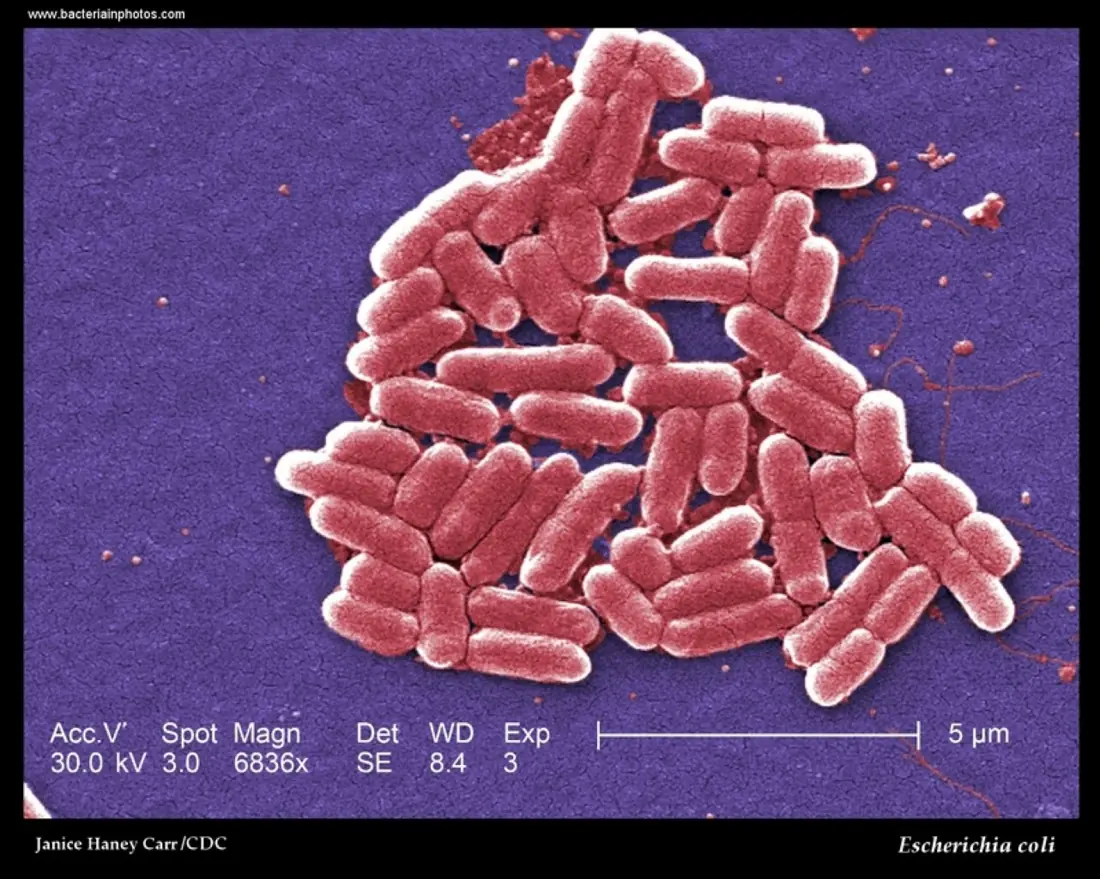
| Shape | Name | Arrangements and examples |
|---|---|---|
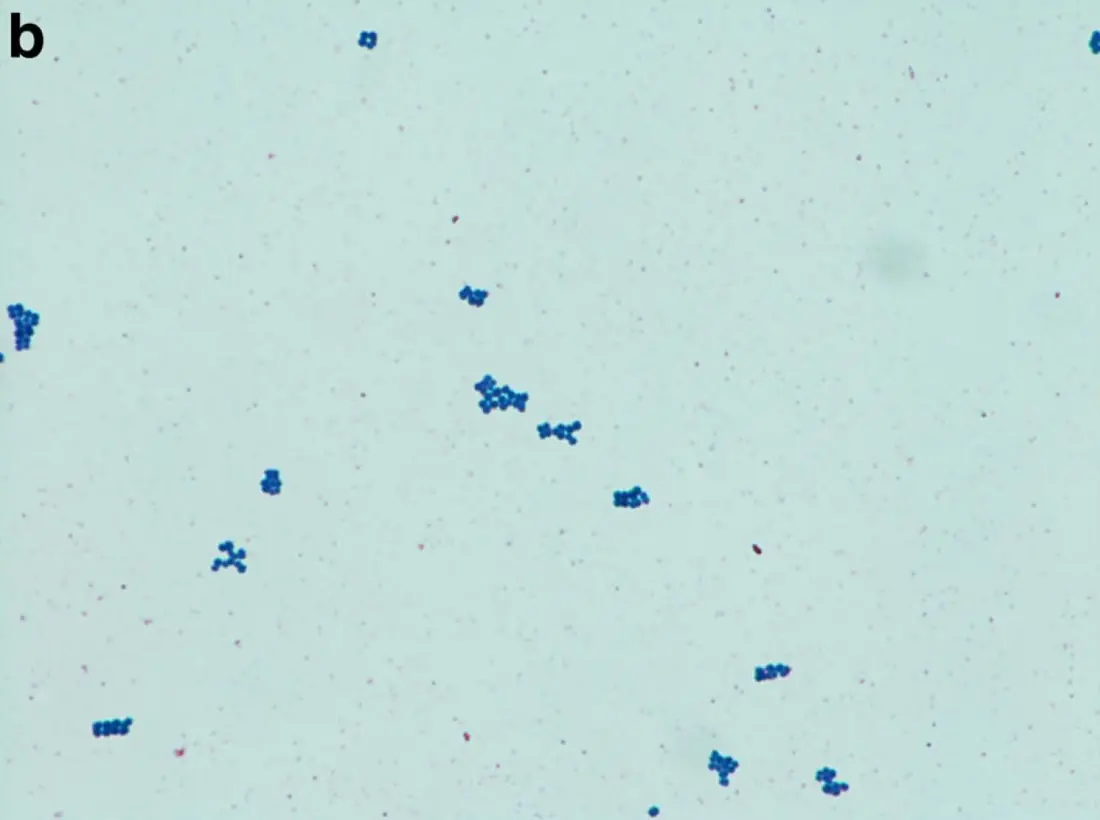
| Spherical | coccus | diplococcus (pairs: Streptococcus pneumoniae), streptococcus (chains), staphylococcus (grape-like bunches: Staphylococcus aureus), tetrad (4), sarcina (cube of 8) |
| Rod | bacillus | single (Bacillus, E. coli), streptobacillus (chain) |
| Comma | vibrio | Vibrio cholerae |
| Rigid spiral | spirillum | Spirillum |
| Flexible spiral | spirochaete | Treponema pallidum (syphilis) |
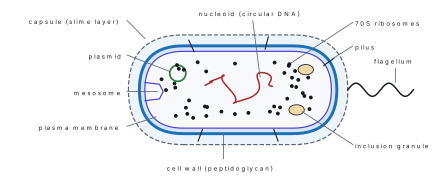
| Structure | Facts the paper asks |
|---|---|
| Glycocalyx | a loose slime layer or a firm capsule; the capsule protects from phagocytes and makes Streptococcus pneumoniae virulent (Griffith's S strain) |
| Cell wall | rigid peptidoglycan (murein) — chains of N-acetylglucosamine (NAG) and N-acetylmuramic acid (NAM) cross-linked by short peptides; penicillin blocks the cross-linking |
| Plasma membrane | phospholipid bilayer without sterols; carries the respiratory enzymes (there are no mitochondria) |
| Mesosome | infolding of the membrane; helps in wall formation, DNA replication and distribution to daughter cells, respiration and secretion |
| Nucleoid | one circular double-stranded DNA molecule, without a nuclear membrane or true histones |
| Plasmid | small circular extra-chromosomal DNA that replicates on its own; carries genes such as antibiotic resistance (R plasmid) or fertility (F plasmid); used as a cloning vector |
| Ribosomes | 70S (50S + 30S) |
| Inclusions | glycogen, poly-β-hydroxybutyrate, volutin (polyphosphate) granules; gas vacuoles in aquatic forms |
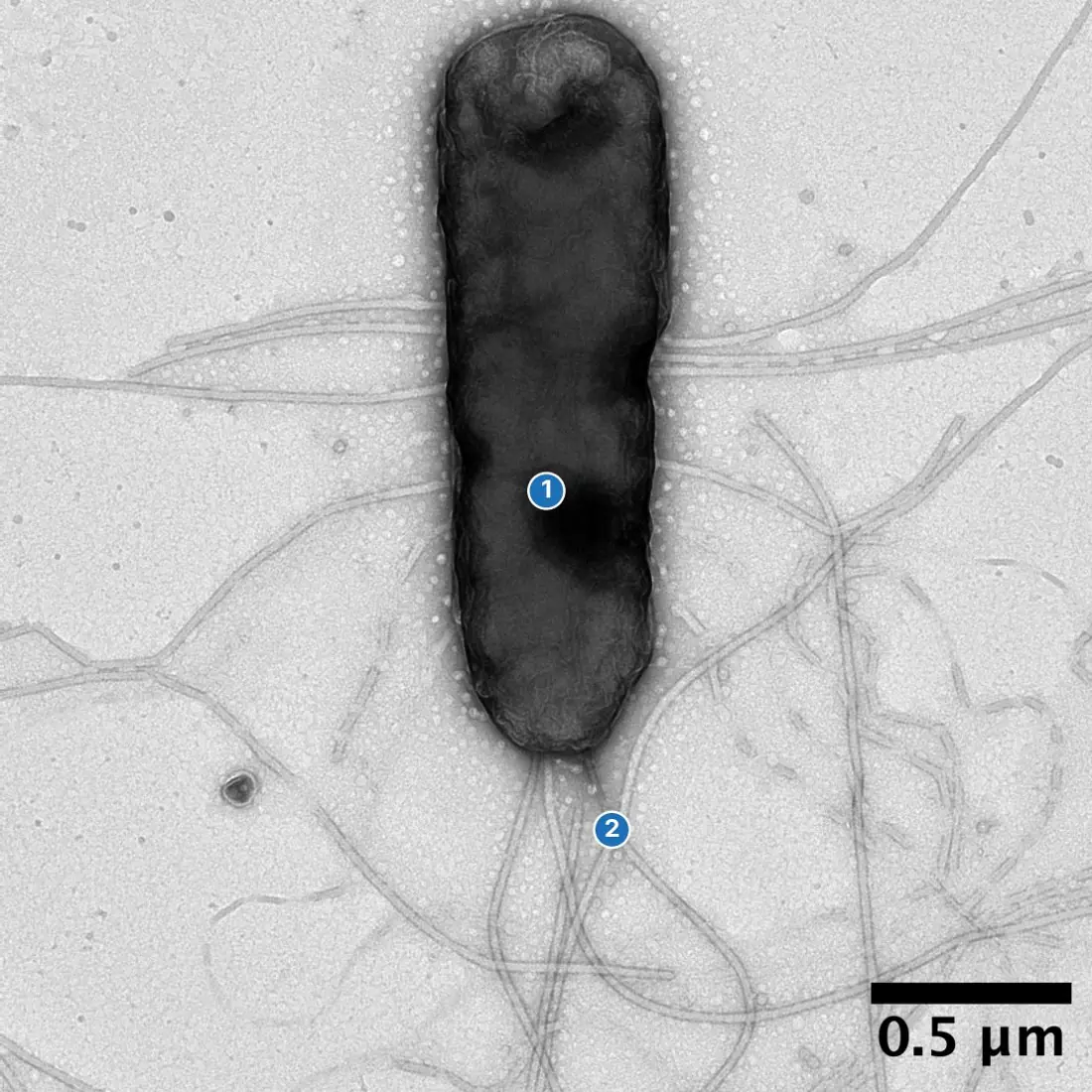
| Flagellum | a single hollow fibril of the protein flagellin, without the 9 + 2 pattern; it rotates |
| Pili and fimbriae | sex pili (pilin) transfer DNA in conjugation; fimbriae attach cells to surfaces |
| Endospore | thick-walled resting body of Bacillus and Clostridium, rich in calcium dipicolinate; survives boiling |
Flagellar arrangements: atrichous (none), monotrichous (one at one end — Vibrio cholerae), lophotrichous (a tuft at one end — Pseudomonas fluorescens), amphitrichous (at both ends — Spirillum), peritrichous (all over the surface — E. coli, Salmonella typhi).
Gram staining
Hans Christian Gram (1884): stain with crystal violet → fix with iodine (mordant) → wash with alcohol (decolouriser) → counterstain with safranin. Gram-positive cells stay violet; Gram-negative cells lose the violet and take up the pink-red safranin.
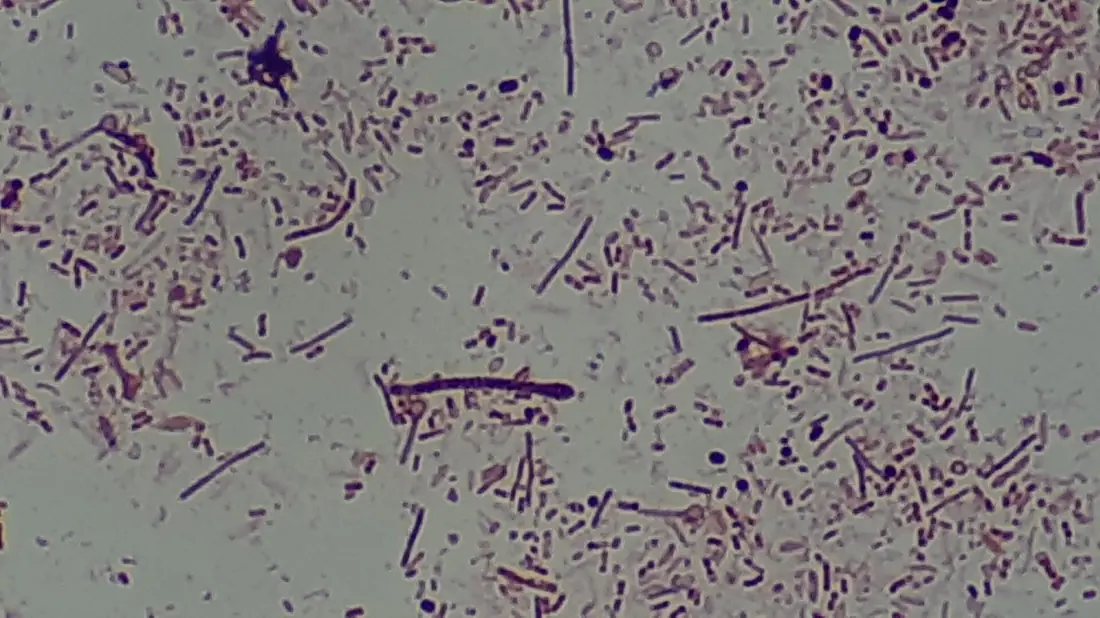
| Feature | Gram-positive | Gram-negative |
|---|---|---|
| Peptidoglycan | thick (20–80 nm), many layers | thin (2–7 nm), one or two layers |
| Teichoic acids | present | absent |
| Outer membrane with lipopolysaccharide (endotoxin) | absent | present |
| Periplasmic space | absent or very small | present |
| Sensitivity to penicillin | high | lower |
| Examples | Bacillus, Clostridium, Staphylococcus, Streptococcus, Lactobacillus | E. coli, Salmonella, Vibrio, Pseudomonas, Rhizobium, Azotobacter, cyanobacteria |
Nutrition
| Mode | Source of energy and carbon | Examples |
|---|---|---|
| Photoautotrophic (anoxygenic) | light; H₂S or organic acids as H donor, so no O₂ is released; bacteriochlorophyll | green sulphur (Chlorobium), purple sulphur (Chromatium), purple non-sulphur (Rhodospirillum) bacteria |
| Photoautotrophic (oxygenic) | light; H₂O is split, O₂ released; chlorophyll a | cyanobacteria |
| Chemoautotrophic | energy from oxidising inorganic substances; CO₂ fixed | Nitrosomonas (NH₃ → NO₂⁻), Nitrobacter (NO₂⁻ → NO₃⁻), Thiobacillus and Beggiatoa (H₂S → S → SO₄²⁻), iron bacteria (Fe²⁺ → Fe³⁺) |
| Saprophytic | dead organic matter | Bacillus, Clostridium, Pseudomonas — decomposers |
| Parasitic | living host, causing disease | Mycobacterium tuberculosis, Vibrio cholerae, Xanthomonas |
| Symbiotic | living host, mutual benefit | Rhizobium in legume root nodules; E. coli in the colon (makes vitamin K) |
Anoxygenic photosynthesis by a green sulphur bacterium: 6CO₂ + 12H₂S → C₆H₁₂O₆ + 6H₂O + 12S. Sulphur, not oxygen, is the by-product.
Reproduction and growth
Bacteria reproduce asexually by binary fission — the DNA replicates, the cell elongates and a septum divides it into two identical cells. It is amitotic: no spindle, no chromosome condensation. Under ideal conditions E. coli divides every 20 minutes. Endospores help survival, not multiplication (one cell → one spore → one cell). There is no true sexual reproduction, but genes are recombined by transformation (uptake of free DNA; Griffith, 1928), conjugation (transfer through a sex pilus; Lederberg and Tatum, 1946) and transduction (transfer by a bacteriophage; Zinder and Lederberg, 1952).
Bacterial growth means an increase in the number of cells. In the log phase the number doubles every generation, so after n generations
where N_0 is the starting number, t the time and g the generation (doubling) time.
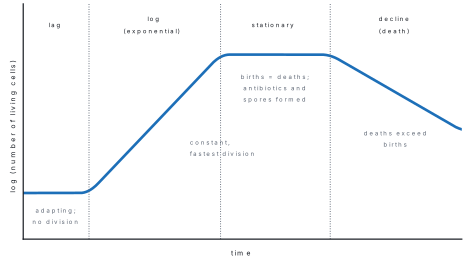
| Phase | What happens |
|---|---|
| Lag | cells adapt to the new medium, grow in size and make enzymes; numbers hardly change |
| Log (exponential) | division at the maximum constant rate; generation time is shortest; cells are most uniform and most sensitive to antibiotics |
| Stationary | nutrients run out and wastes build up; division rate = death rate; secondary metabolites (antibiotics) and endospores are formed |
| Decline (death) | deaths exceed divisions; numbers fall exponentially |
Cyanobacteria (blue-green algae)
Cyanobacteria are photosynthetic prokaryotes of the kingdom Monera, about 3.5 billion years old (stromatolites); their oxygen built up Earth's atmosphere, and a cyanobacterium engulfed by an early eukaryote became the chloroplast.
- Cell: prokaryotic, with a Gram-negative-type peptidoglycan wall, usually inside a mucilage sheath; no nucleus, no chloroplast, no mitochondria.
- Pigments: chlorophyll a (no chlorophyll b), carotenoids, and the phycobilins — c-phycocyanin (blue) and c-phycoerythrin (red) — held in phycobilisomes on free thylakoids. The blend gives the blue-green colour.
- Photosynthesis is oxygenic, with both photosystems, like green plants.
- Reserve food: cyanophycean starch (glycogen-like) and cyanophycin (protein) granules.
- No flagella at any stage; some filaments glide or oscillate (Oscillatoria).
- Gas vacuoles (pseudovacuoles) keep planktonic forms afloat.
- Heterocysts: large, pale, thick-walled cells of Nostoc and Anabaena that fix nitrogen. They lack photosystem II, so they make no O₂ that would destroy nitrogenase.
- Reproduction: only vegetative and asexual — fission, fragmentation into hormogonia, and thick-walled resting akinetes. No sexual reproduction and no motile cells.
- Forms: unicellular (Chroococcus), colonial (Gloeocapsa, Microcystis), filamentous (Oscillatoria, Nostoc, Anabaena, Spirulina).
- Importance: nitrogen fixation in rice fields (Anabaena, Nostoc, Aulosira); Anabaena azollae inside the water fern Azolla (biofertiliser); Nostoc as the partner of many lichens and in the coralloid roots of Cycas; Spirulina as protein-rich single-cell protein; Microcystis forms toxic water blooms.
Algae are eukaryotes with chloroplasts. Cyanobacteria are prokaryotes in Monera. Options that give them "chlorophyll b", "a nucleus", "flagellated zoospores" or "sexual reproduction by gametes" are all wrong.
2.3 Viruses
Discovery and characteristics
| Year | Scientist | Discovery |
|---|---|---|
| 1892 | Dmitri Ivanowsky | sap of mosaic-diseased tobacco stays infectious after passing a bacteria-proof filter |
| 1898 | M. W. Beijerinck | called the agent "contagium vivum fluidum" (contagious living fluid); named it virus |
| 1898 | Loeffler and Frosch | foot-and-mouth disease virus — the first animal virus |
| 1915–17 | F. W. Twort, F. d'Hérelle | bacteriophages — viruses of bacteria |
| 1935 | W. M. Stanley | crystallised TMV (Nobel Prize 1946) |
| 1936 | Bawden and Pirie | TMV is a nucleoprotein (protein + RNA) |
| 1971 | T. O. Diener | viroids — potato spindle tuber disease |
| 1982 | Stanley Prusiner | prions — infectious proteins (Nobel Prize 1997) |
A virus is an acellular, ultramicroscopic (about 20–300 nm), obligate intracellular parasite made of nucleic acid in a protein coat. It has no metabolism of its own and multiplies only inside a living host cell, using the host's ribosomes, enzymes and energy.
| Like non-living things | Like living things |
|---|---|
| no cell, cytoplasm or cell membrane | possess genetic material (DNA or RNA) |
| no metabolism, respiration or growth outside a host | multiply inside a host and pass on their characters |
| can be crystallised and stored like chemicals | mutate and evolve |
| inert outside the host | infect specific hosts and cause disease |
Structure and chemical composition
- The complete infectious particle is the virion.
- Capsid — the protein coat, built of identical subunits called capsomeres; it protects the nucleic acid and decides the host by attaching to it. Capsid + nucleic acid = nucleocapsid.
- Nucleic acid — DNA or RNA, never both; single- or double-stranded, linear or circular. It is the infective part.
- Envelope — present in some viruses (HIV, influenza, herpes, SARS-CoV-2): a lipid bilayer taken from the host membrane, studded with viral glycoprotein spikes (peplomers). Viruses without it are naked (TMV, adenovirus, poliovirus, most phages).
- Enzymes in some: reverse transcriptase in retroviruses (HIV); lysozyme in the tail of T4; neuraminidase in influenza.
Chemically, a virus is mostly protein: TMV is about 95 % protein and 5 % RNA.
| Feature | Tobacco mosaic virus (TMV) | T4 bacteriophage |
|---|---|---|
| Host | tobacco (plant) | Escherichia coli (bacterium) |
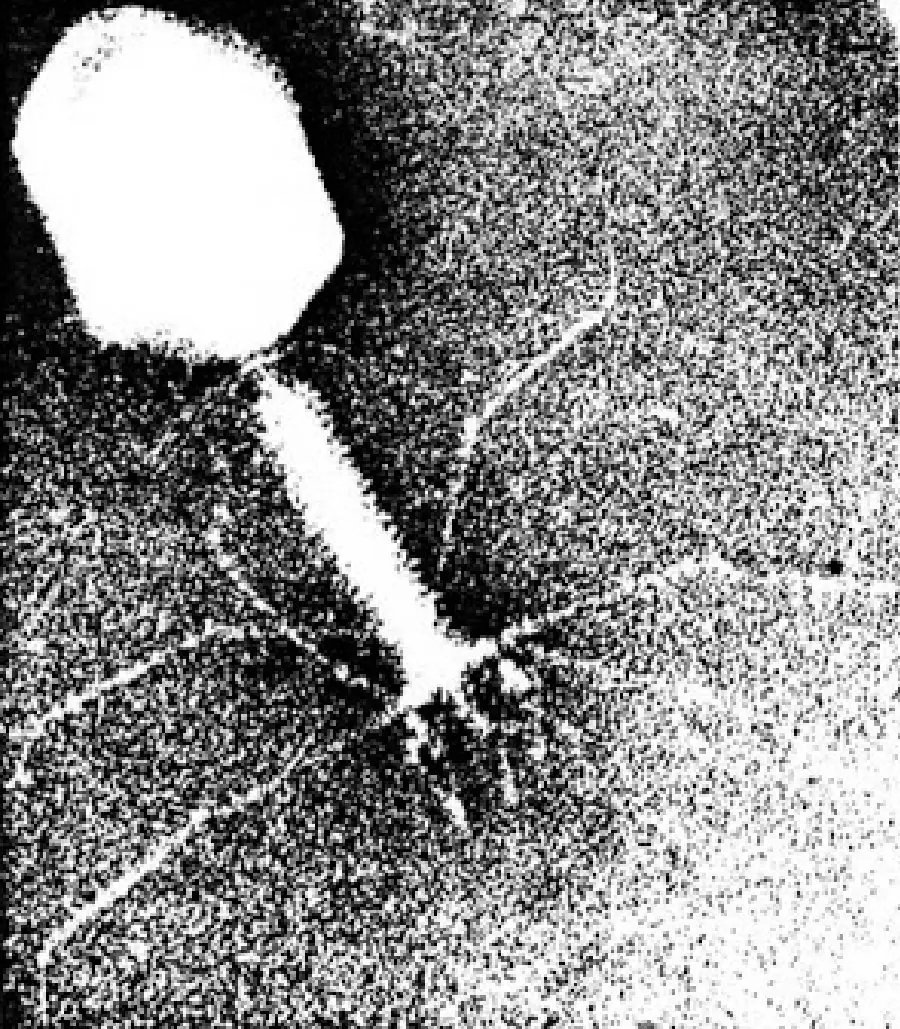
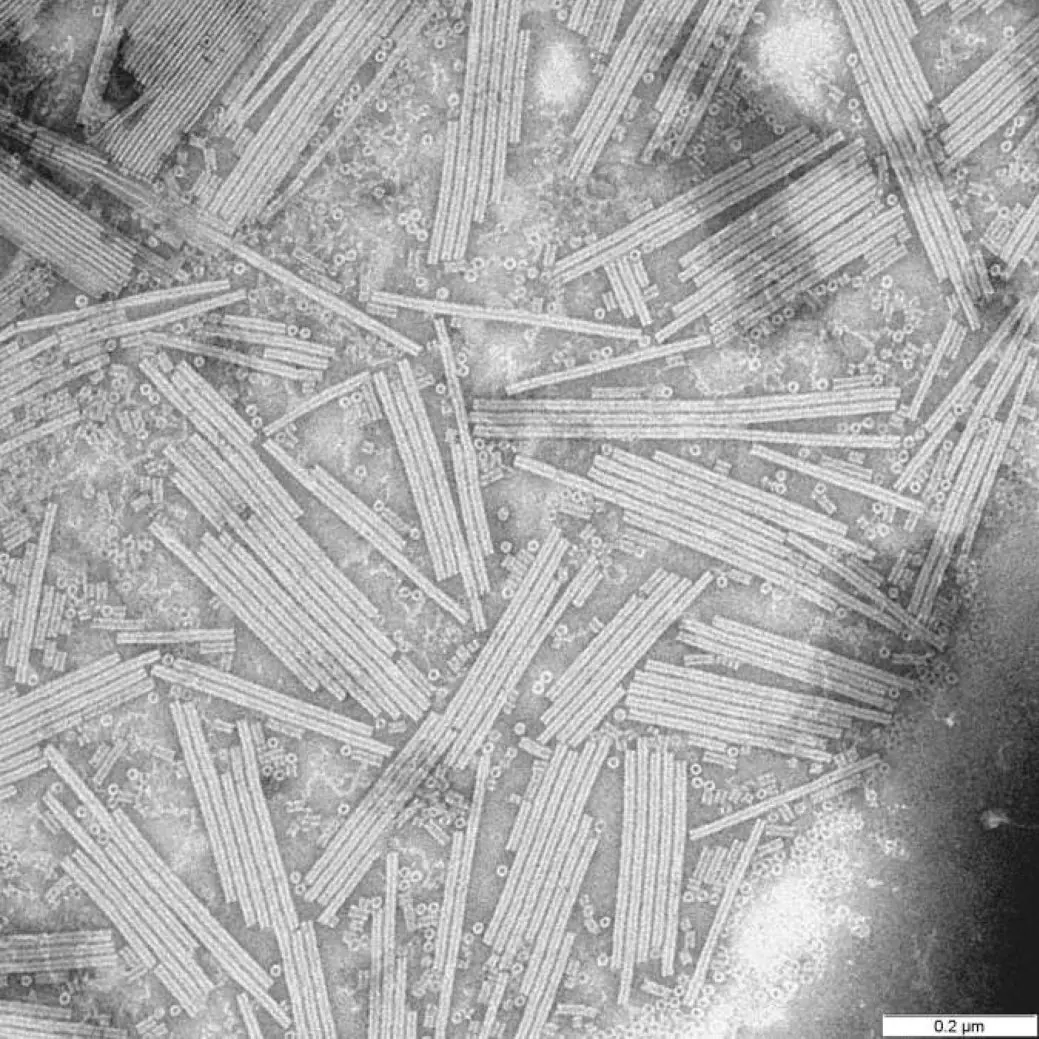
| Shape and symmetry | rigid rod, about 300 × 18 nm; helical | tadpole-like; complex — polyhedral head + helical tail |
| Nucleic acid | single-stranded RNA, about 6400 nucleotides, coiled helically inside the capsid | double-stranded DNA, linear, packed in the head |
| Capsid | 2130 identical capsomeres, each binding 3 nucleotides | head, collar, contractile tail sheath round a hollow core, base plate with six tail fibres |
| Envelope | none | none |
Types of viruses
| Basis | Types and examples |
|---|---|
| Host | plant viruses — mostly ssRNA (TMV, potato virus X; cauliflower mosaic virus is dsDNA); animal viruses — DNA or RNA (polio, influenza, HIV, herpes, pox); bacteriophages — mostly dsDNA (T2, T4, λ; φX174 has ssDNA); mycophages (fungi) and cyanophages |
| Nucleic acid | dsDNA (T4, pox, herpes, adenovirus, hepatitis B); ssDNA (φX174, parvovirus); dsRNA (reovirus, rotavirus, wound tumour virus of plants); ssRNA (TMV, polio, influenza, HIV, SARS-CoV-2) |
| Symmetry | helical (TMV, influenza nucleocapsid); polyhedral / icosahedral — 20 triangular faces (adenovirus, poliovirus, herpes); complex (T4 phage, poxvirus) |
| Envelope | enveloped (HIV, influenza, herpes) or naked (TMV, adenovirus, polio) |
| Life cycle (phages) | virulent — lytic cycle only, the host bursts (T4); temperate — can also integrate into the host DNA as a prophage and be copied silently (lysogenic cycle; λ phage) |
Sub-viral agents. Viroids are tiny, naked, circular single-stranded RNA molecules (about 250–400 nucleotides) with no protein coat that infect plants (potato spindle tuber, citrus exocortis). Prions are infectious proteins with no nucleic acid that cause scrapie in sheep, mad cow disease (BSE) and Creutzfeldt–Jakob disease in humans.
If an option gives a virus both DNA and RNA, ribosomes, a cell wall, independent metabolism, or sensitivity to penicillin — strike it out. If it calls a virus a member of Monera — strike it out. (Some question banks claim that the "leukoviruses" contain both; they are retroviruses whose genome is RNA, copied into DNA only inside the host cell.)
Problem. An Escherichia coli culture with a doubling time of 20 minutes starts with 5 \times 10^3 cells mL^{-1}. How many cells mL^{-1} are present after 2 hours of log-phase growth?
Solution. Two hours = 120 minutes gives n = 120 / 20 = 6 generations. Therefore N = N_0 \times 2^n = 5 \times 10^3 \times 2^6 = 5 \times 10^3 \times 64 = \mathbf{3.2 \times 10^5\text{ cells mL}^{-1}}.
Problem. Chemical analysis of a purified plant virus reveals 28 % adenine, 22 % uracil, 26 % guanine, and 24 % cytosine. What type of genome does this virus possess?
Solution. The presence of uracil (and absence of thymine) proves the genome is RNA. Because A \neq U (28 % vs 22 %) and G \neq C (26 % vs 24 %), Chargaff's base-pairing equality fails, so the genome is single-stranded RNA (ssRNA), typical of TMV.
Problem. During a Gram-staining practical, a student forgets the iodine mordant step and proceeds straight from crystal violet to ethanol decolourisation and safranin counterstain. How will Staphylococcus aureus (a Gram-positive coccus) appear?
Solution. Without Gram's iodine (\text{I}_2\text{/KI}), the large crystal-violet–iodine (CV–I) complex never forms inside the thick peptidoglycan mesh. Ethanol washes the uncomplexed crystal violet out, and safranin stains the cells pink/red (a false Gram-negative result).
Formula and fact sheet
| Item | Fact |
|---|---|
| Two kingdoms | Linnaeus, Systema Naturae (1758): Plantae, Animalia |
| Protista / Monera | Haeckel 1866 / Copeland 1956 |
| Five kingdoms | Whittaker 1969 — Monera, Protista, Fungi, Plantae, Animalia; main criteria cell structure, body organisation, nutrition |
| Three domains | Woese, Kandler and Wheelis 1990 — Archaea, Bacteria, Eukarya; based on rRNA sequences |
| Hierarchy | kingdom → division (phylum) → class → order (-ales) → family (-aceae) → genus → species |
| Binomial nomenclature | Linnaeus, Species Plantarum 1753; genus capital, epithet small, italics or separate underlines; no tautonyms in plants |
| Codes | ICN (plants, algae, fungi), ICZN (animals), ICNP (bacteria), ICTV (viruses) |
| Archaea | ether-linked lipids, no peptidoglycan; methanogens, halophiles, thermoacidophiles |
| Bacterial cell | peptidoglycan wall, 70S ribosomes, nucleoid, plasmid, mesosome, flagellin flagella |
| Smallest cell | Mycoplasma (PPLO), 0.1–0.3 μm, no wall, penicillin-resistant |
| Flagella | monotrichous Vibrio; lophotrichous Pseudomonas; peritrichous E. coli, Salmonella |
| Gram stain | crystal violet → iodine → alcohol → safranin; + violet (thick wall), − pink (thin wall + outer membrane) |
| Chemoautotrophs | Nitrosomonas NH₃ → NO₂⁻; Nitrobacter NO₂⁻ → NO₃⁻; Thiobacillus, Beggiatoa sulphur; iron bacteria |
| Anoxygenic photosynthesis | green and purple sulphur bacteria, H₂S donor, bacteriochlorophyll, no O₂ |
| Growth | N = N_0 \times 2^n, n = t/g; E. coli g ≈ 20 min; lag → log → stationary → decline |
| Recombination | transformation (Griffith 1928), conjugation (Lederberg and Tatum 1946), transduction (Zinder and Lederberg 1952) |
| Cyanobacteria | chlorophyll a + phycocyanin + phycoerythrin; cyanophycean starch; heterocysts (N₂ fixation, no PS II); akinetes; hormogonia; no flagella, no sex |
| N-fixing cyanobacteria | Nostoc, Anabaena, Aulosira; Anabaena azollae in Azolla |
| Virus history | Ivanowsky 1892; Beijerinck 1898 (contagium vivum fluidum); Stanley 1935 (crystallised TMV); Diener 1971 (viroids); Prusiner 1982 (prions) |
| TMV | rod 300 × 18 nm, helical, ssRNA ≈ 6400 nt, 2130 capsomeres, 95 % protein |
| T4 phage | complex symmetry, dsDNA, head + collar + contractile tail + base plate + 6 tail fibres; host E. coli |
| Viroid / prion | naked circular ssRNA / protein without nucleic acid |
Chapter summary
- Linnaeus (1758) gave two kingdoms; Whittaker (1969) gave five — Monera, Protista, Fungi, Plantae, Animalia — chiefly on cell structure, body organisation and mode of nutrition; Woese (1990) placed three domains — Archaea, Bacteria, Eukarya — above them, on rRNA sequences.
- The hierarchy runs kingdom, division, class, order (-ales), family (-aceae), genus, species; species is the basic unit.
- Binomial names (Linnaeus, 1753): Latin, genus capitalised, epithet small, italicised or underlined separately; tautonyms are not allowed in plants.
- Bacteria have a peptidoglycan wall, 70S ribosomes, a nucleoid and often plasmids; they are cocci, bacilli, vibrios or spirilla.
- Gram-positive walls have thick peptidoglycan and stay violet; Gram-negative walls are thin with an outer lipopolysaccharide membrane and stain pink.
- Bacteria are photoautotrophic (anoxygenic, except cyanobacteria), chemoautotrophic (Nitrosomonas, Nitrobacter), saprophytic, parasitic or symbiotic.
- Binary fission doubles the population each generation (N = N_0 \times 2^n); the growth curve has lag, log, stationary and decline phases.
- Cyanobacteria are oxygenic prokaryotes with chlorophyll a and phycobilins, cyanophycean starch, heterocysts for N₂ fixation, and no flagella or sexual reproduction.
- Viruses are acellular obligate parasites with DNA or RNA (never both) in a protein capsid; TMV is a helical ssRNA rod, T4 a complex dsDNA phage.
- Viroids are naked RNA; prions are infectious proteins.
Practice questions
Set A — Recall (20 questions)
- The five-kingdom system of classification was proposed byaCarl WoesebR. H. WhittakercErnst HaeckeldCarolus Linnaeus
- The three-domain system is based chiefly on the comparison ofacell-wall chemistrybmode of nutritioncbody organisationdribosomal RNA sequences
- Which taxonomic category lies between order and genus?afamilybclasscdivisiondspecies
- Which of the following is correctly written in print?aMangifera Indicabmangifera indicacMangifera indicadMangifera Indica
- The botanical code of nomenclature does NOT permitatautonymsbLatinised namescauthor citationsditalicised names
- Peptidoglycan is absent from the cell walls ofaGram-positive bacteriabarchaeacGram-negative bacteriadcyanobacteria
- Methanogens such as Methanobacterium belong toaEubacteriabCyanobacteriacProtistadArchaea
- Comma-shaped bacteria are calledacoccibbacillicvibriosdspirilla
- Bacteria that bear flagella all over the cell surface are described asamonotrichousbperitrichousclophotrichousdamphitrichous
- The ribosomes of bacteria are of the typea70Sb80Sc60Sd90S
- Plasmids areaprotein granules in the cytoplasmbinfoldings of the cell membranecsmall circular DNA molecules outside the nucleoiddstorage granules of polyphosphate
- In Gram staining, the counterstain isacrystal violetbiodinecalcoholdsafranin
- Nitrosomonas obtains its energy by oxidisingaammonia to nitritebnitrite to nitratechydrogen sulphide to sulphurdferrous to ferric ions
- The phase of the bacterial growth curve in which cells divide at a constant, maximum rate is thealag phasebstationary phasecdecline phasedlog phase
- The thick-walled, nitrogen-fixing cells of Nostoc and Anabaena are calledaakinetesbheterocystschormogoniadendospores
- The blue pigment characteristic of cyanobacteria isachlorophyll bbfucoxanthincc-phycocyanindbacteriochlorophyll
- The term "contagium vivum fluidum" for the agent of tobacco mosaic was used byaD. IvanowskybW. M. StanleycF. d'HérelledM. W. Beijerinck
- The genetic material of a virus isaeither DNA or RNAbboth DNA and RNA togethercalways DNAdalways RNA
- The protein coat of a virus is called theaenvelopebnucleoidccapsiddpeplomer
- Tobacco mosaic virus hasadouble-stranded DNA and polyhedral symmetrybsingle-stranded RNA and helical symmetrycdouble-stranded RNA and complex symmetrydsingle-stranded DNA and helical symmetry
Answers and explanations — Set A
1. (b) — Whittaker (1969) added Fungi as a kingdom beside Monera, Protista, Plantae and Animalia. Woese gave the three domains; Linnaeus two kingdoms; Haeckel added Protista.
2. (d) — Woese compared 16S/18S rRNA sequences and found archaea as different from bacteria as from eukaryotes.
3. (a) — The order is kingdom, division, class, order, family, genus, species.
4. (c) — Genus with a capital, specific epithet in small letters, both in italics when printed.
5. (a) — Tautonyms (genus and species the same word) are forbidden by the ICN but allowed in zoology (Naja naja).
6. (b) — Archaeal walls lack peptidoglycan (some have pseudomurein). Cyanobacteria have a Gram-negative-type peptidoglycan wall.
7. (d) — Methanogens are archaea with ether-linked membrane lipids; they produce methane in marshes, the rumen and biogas plants.
8. (c) — Vibrios are comma-shaped, e.g. Vibrio cholerae. Spirilla are rigid spirals.
9. (b) — Peritrichous (E. coli, Salmonella); monotrichous is one flagellum at one end, lophotrichous a tuft at one end.
10. (a) — Prokaryotic ribosomes are 70S (50S + 30S); 80S ribosomes are in the eukaryotic cytoplasm.
11. (c) — Plasmids are extra-chromosomal, self-replicating circular DNA. Option (b) is the mesosome; option (d) volutin.
12. (d) — Safranin stains the decolourised Gram-negative cells pink. Crystal violet is the primary stain, iodine the mordant, alcohol the decolouriser.
13. (a) — Nitrosomonas oxidises NH₃ (NH₄⁺) to NO₂⁻; Nitrobacter then oxidises NO₂⁻ to NO₃⁻.
14. (d) — In the log (exponential) phase the generation time is shortest and constant. In the lag phase cells adapt; in the stationary phase division equals death.
15. (b) — Heterocysts lack photosystem II and have thick walls, so nitrogenase is protected from O₂. Akinetes are resting spores; hormogonia are fragments for propagation.
16. (c) — c-Phycocyanin is the blue phycobilin. Cyanobacteria lack chlorophyll b; fucoxanthin is the pigment of brown algae.
17. (d) — Beijerinck (1898) called it a contagious living fluid. Ivanowsky (1892) first showed it passes bacteria-proof filters; Stanley crystallised TMV in 1935.
18. (a) — A virus has a genome of DNA or of RNA, not both. Many are DNA viruses (T4, pox) and many RNA viruses (TMV, HIV).
19. (c) — The capsid is made of capsomeres. The envelope is the extra lipid layer of some viruses; peplomers are its spikes.
20. (b) — TMV is a rigid rod of 2130 capsomeres wound helically round single-stranded RNA.
Set B — Understanding (12 questions)
- Euglena was a problem for the two-kingdom system mainly because itais prokaryoticbhas a cell wall of chitincreproduces sexuallydhas chlorophyll yet lacks a cell wall and can feed heterotrophically
- Whittaker placed fungi in a kingdom of their own chiefly because theyaare prokaryoticbare absorptive heterotrophs with chitin wallsclack a nucleusdare all unicellular
- Archaea resemble eukaryotes more than they resemble bacteria in that archaeaabegin protein synthesis with methionine, not formyl-methioninebhave peptidoglycan wallschave 80S ribosomesdhave a nuclear membrane
- Gram-negative bacteria lose the crystal violet during decolourisation because their wall hasaa thick peptidoglycan layer with teichoic acidsbno peptidoglycan at allca thin peptidoglycan layer beneath a lipid-rich outer membranedchitin instead of peptidoglycan
- Mycoplasma is not affected by penicillin because itahas a very thick cell wallbhas no cell wallclives only inside host nucleidhas 80S ribosomes
- The endospore of Bacillus is not regarded as a means of reproduction becauseait forms only in Gram-negative bacteriabit can never germinatecit forms by the fusion of two cellsdone cell forms one spore, which gives back one cell
- Cyanobacteria differ from green and purple sulphur bacteria in that cyanobacteriaalack chlorophyllbuse H₂S as the hydrogen donorcsplit water and release oxygendhave a nuclear membrane
- Heterocysts can fix nitrogen inside an oxygen-producing filament because theyahave thick walls and lack photosystem II, so no O₂ is made insidebcontain chlorophyll bcare dead cells filled with airdcontain haemoglobin like root nodules
- Viruses are regarded as living because theyacan be crystallisedblack enzymes of metabolismcare acellulardmultiply and mutate inside a host cell
- Penicillin and other antibacterial antibiotics are useless against viral infections because virusesahave no cell wall, ribosomes or metabolism of their ownbare too small to absorb the drugcalways have a lipid envelopedcontain both DNA and RNA
- A newly found virus contains uracil but no thymine and has a lipid envelope. It is most likelyaT4 bacteriophagebadenoviruscinfluenza virusdcauliflower mosaic virus
- Viroids differ from viruses in that viroidsacontain DNA and proteinbare small circular RNA molecules without a protein coatcare infectious proteins without nucleic aciddinfect only bacteria
Answers and explanations — Set B
1. (d) — Euglena photosynthesises like a plant but has no wall and can absorb food like an animal, so it fits neither kingdom. It is eukaryotic and has no chitin.
2. (b) — Fungi lack chlorophyll, absorb food from outside, and have chitin walls — nutrition was a key criterion for Whittaker. They are eukaryotic, and most are multicellular.
3. (a) — Archaea, like eukaryotes, start proteins with methionine and have histones; bacteria use formyl-methionine. Archaea still have 70S ribosomes and no nucleus.
4. (c) — Alcohol dissolves the outer lipid membrane and the thin peptidoglycan cannot hold the dye–iodine complex. Option (a) describes Gram-positive walls, which keep the stain.
5. (b) — Penicillin blocks the cross-linking of peptidoglycan in a growing wall; Mycoplasma has no wall to attack.
6. (d) — Reproduction must increase the number of individuals; an endospore is only a survival stage. It germinates readily under good conditions.
7. (c) — Cyanobacteria have both photosystems and split H₂O, releasing O₂ (oxygenic). Sulphur bacteria use H₂S and release sulphur instead (anoxygenic).
8. (a) — Nitrogenase is destroyed by O₂. Heterocysts lack PS II (no water splitting) and have thick walls that slow O₂ entry. Leghaemoglobin protects nitrogenase in legume nodules, not in heterocysts.
9. (d) — Reproduction with inheritance and mutation are properties of life. Crystallisation and lack of metabolism are non-living features.
10. (a) — Antibacterial drugs attack walls, 70S ribosomes or bacterial enzymes; a virus uses the host's machinery, so there is no target. Many viruses are naked, so (c) is false.
11. (c) — Uracil without thymine means RNA; influenza is an enveloped ssRNA virus. T4, adenovirus and cauliflower mosaic virus are all naked DNA viruses.
12. (b) — Viroids (Diener, 1971) are naked circular ssRNA. Option (c) describes prions.
Set C — Application (8 questions)
- A bacterium divides every 20 minutes. Starting with 100 cells in the log phase, how many cells are present after 2 hours?a600b1200c6400d12 800
- In the log phase, a culture grows from 1000 cells to 1 024 000 cells in 5 hours. The generation time isa30 minutesb20 minutesc50 minutesd60 minutes
- A student hand-writes the scientific name of lali gurans, Nepal's national flower. The correct form isaRhododendron Arboreum, underlined as one unitbrhododendron arboreum, not underlinedcRHODODENDRON ARBOREUM, underlineddRhododendron arboreum, each word underlined separately
- A rod-shaped bacterium from a typhoid patient's blood stains pink in Gram's method and bears flagella all over its surface. It is aaGram-positive peritrichous bacillusbGram-negative peritrichous bacilluscGram-negative monotrichous coccusdGram-positive lophotrichous vibrio
- An organism is prokaryotic, has chlorophyll a, releases O₂ in light and has a peptidoglycan wall. In Whittaker's system it belongs toaMonerabProtistacPlantaedFungi
- Particles from a diseased potato pass bacteria-proof filters, are destroyed by ribonuclease but not by protease, and show no protein coat under the electron microscope. They are most likelyabacteriophagesbprionscviroidsdmycoplasmas
- A bacterium grows in the dark in a medium containing only mineral salts, NH₄⁺ and CO₂, and the medium becomes rich in nitrite. Its mode of nutrition isaphotoautotrophicbsaprophyticcparasiticdchemoautotrophic
- The RNA of TMV has about 6400 nucleotides and its capsid has 2130 identical capsomeres. About how many nucleotides does each capsomere cover?a1b3c6d30
Answers and explanations — Set C
1. (c) — n = 120 min ÷ 20 min = 6 generations; N = 100 × 2⁶ = 100 × 64 = 6400. Option (a) adds instead of doubling; (d) counts seven generations.
2. (a) — 1 024 000 ÷ 1000 = 1024 = 2¹⁰, so 10 generations in 300 minutes: g = 300 ÷ 10 = 30 minutes.
3. (d) — Handwritten binomials are underlined, each word separately, with the genus capitalised and the epithet in small letters.
4. (b) — Pink after Gram's stain means Gram-negative; rod-shaped is a bacillus; flagella all over is peritrichous — Salmonella typhi.
5. (a) — Prokaryotic with a peptidoglycan wall means Monera; chlorophyll a with O₂ release marks a cyanobacterium. Algae with chloroplasts would be eukaryotes.
6. (c) — Destroyed by RNase (so RNA), unharmed by protease and without a coat: a viroid, as in potato spindle tuber disease. Prions are protein and would be destroyed by protease.
7. (d) — Energy comes from oxidising NH₄⁺ to NO₂⁻ without light, and carbon from CO₂: a chemoautotroph such as Nitrosomonas.
8. (b) — 6400 ÷ 2130 ≈ 3. Each TMV coat-protein subunit binds three nucleotides of the RNA helix.