Unit 1 · Units · 29 min read
Unit 1: Current Affairs and Issues
What the syllabus asks for 3
- How Driverless Cars Will Change Our World
- Open Letter to UN Secretary-General Antonio Guterres
- Grammar and writing tasks of the unit
Current affairs are the things happening in the world now that people are talking and worrying about — new technology, climate change, health, politics. This unit gives you two pieces of real, recent writing about two such issues. The first is a magazine feature about driverless cars. The second is an open letter in which a children's charity asks the Secretary-General of the United Nations to let young people have a say about climate change. Along the way you learn to report what other people say (reported speech: statements), to write a newspaper article and to write a formal letter to a local official.
Expect (1) a reading passage on a current issue with true/false, multiple-choice and short-answer questions, (2) vocabulary-in-context questions, (3) a reported-speech transformation, and (4) a letter or a newspaper article in the writing section. Read the passage once for the idea, again for facts, and always answer from the text, not from your own opinion, unless the question says "Do you think…?".
1.1 How Driverless Cars Will Change Our World
About the text
"How Driverless Cars Will Change Our World" is a feature article by the journalist Jenny Cusack. It was published by the BBC Future website on 30 November 2021 as part of its Change Agents series, which looks at inventions that could make the planet "a better, healthier place to live". The textbook uses an adapted extract. The article is expository writing: it explains a subject, quotes experts, and gives facts and dates rather than telling a story.
What the text says
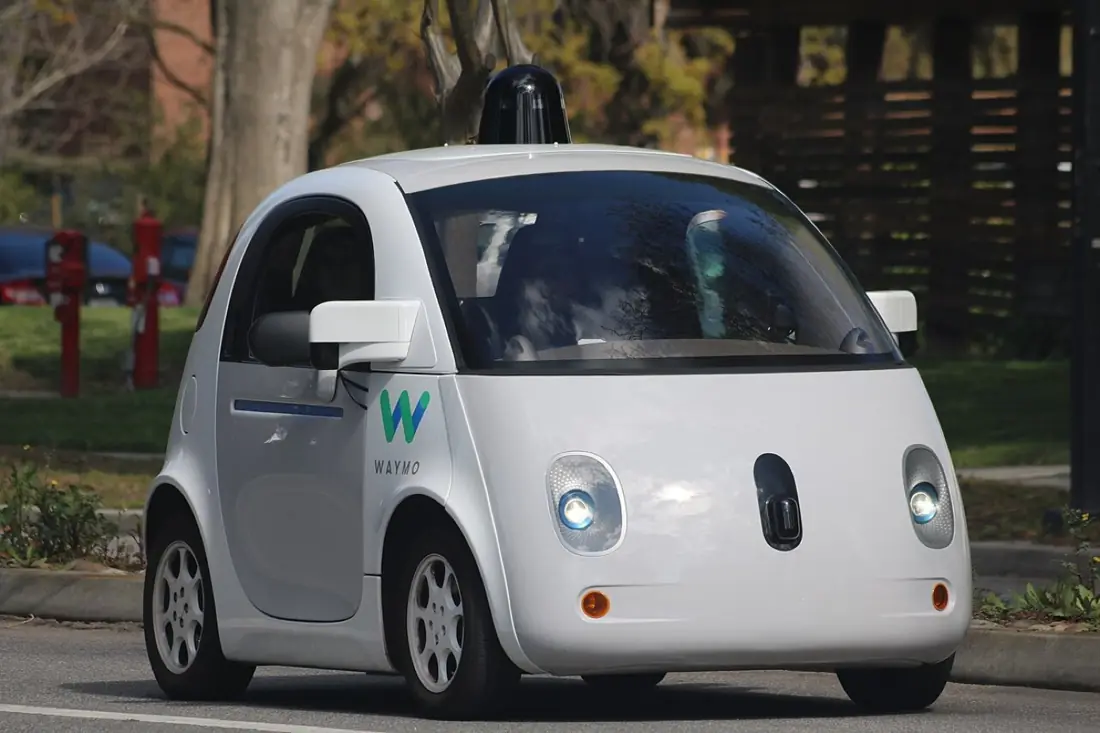
The article opens with a scene on a late night in Phoenix, Arizona. A car glides up to the kerb with nobody in the driver's seat. An arrival message pings on the waiting passenger's phone. The passenger gets in and a recorded voice says that the car is theirs, "with no one upfront". This is a Waymo One robotaxi, called with a phone app ten minutes earlier. The writer uses this scene to show that driverless technology is no longer science fiction.
Next she lists the promises of the technology. It could change commuting and long journeys, take people out of dangerous jobs, make industry more efficient and help build cleaner cities with less carbon dioxide. Above all it could make roads safer: the World Health Organization estimates that more than 1.3 million people die every year in road crashes. Camilla Fowler, head of automated transport at the UK's Transport Research Laboratory (TRL), says that automation could eventually give "safer roads and less fatalities".
But there are big hurdles. David Hynd, TRL's chief scientist for safety, points out that a driverless car should be "calm and serene", while human drivers around it may speed or break the rules, so the car must cope with them. There are also questions of law and regulation, the highway code, public trust, road design and, above all, liability — who pays when a driverless car has an accident? Richard Jinks of the software company Oxbotica says that insurers are working out how to deal with the change "from a person being responsible… to the vehicle doing that".
The article then looks ahead. The biggest task for the next two years is to make cars work safely in complicated, unpredictable human surroundings. At the Mcity Test Facility of the University of Michigan — the first purpose-built testing ground for self-driving vehicles, a small "town" with 16 acres of roads, signals, underpasses and building fronts — engineers test situations that would challenge even skilled drivers, such as children playing in the road or two cars merging at once. Researchers there also ask how cars can talk to each other while keeping data safe from hackers. Companies such as Waymo (USA) and AutoX (China, backed by Alibaba) are already running or planning robotaxi services; most existing driverless machines work in controlled places such as mines, warehouses and ports. Rio Tinto's mine in Western Australia runs the world's largest autonomous truck fleet, controlled from Perth. In the next five years, the writer says, most of this technology will stay "behind the scenes" — for example lorries travelling in close platoons on motorways to save fuel and reduce congestion.
Key facts at a glance
| Question | Answer from the text |
|---|---|
| Where does the opening scene happen? | Phoenix, Arizona, USA |
| What is a Waymo One? | A driverless robotaxi booked through a phone app |
| How many people die yearly in road crashes (WHO)? | More than 1.3 million |
| Who speaks for safety benefits? | Camilla Fowler, TRL |
| Who warns about human drivers? | David Hynd, TRL |
| Who raises the insurance question? | Richard Jinks, Oxbotica |
| What is Mcity? | A test town at the University of Michigan, 16 acres |
| Where are driverless technologies already common? | Mines, warehouses, ports |
Vocabulary
The textbook asks you to pick the meaning each word has in this text, because each has a second meaning elsewhere.
| Word | Meaning in the text | Other meaning | Example |
|---|---|---|---|
| glare | an intense, blinding light | an angry stare | The glare of the street lamps lit the road. |
| curb (kerb) | the stone edge of a pavement | to control or limit (verb) | The car stopped at the curb. |
| hail | to call someone to attract attention (a taxi) | frozen rain | She hailed a taxi at the corner. |
| commute | to travel regularly between home and work | to reduce a punishment | He commutes to Kathmandu by bus. |
| serene | calm and peaceful | — | The lake was serene at dawn. |
| liability | legal responsibility for something | a disadvantage | Who has the liability for the damage? |
| deploy | to use something effectively; to put into action | to move soldiers into position | The company will deploy 500 robotaxis. |
| autonomous | able to drive or act by itself | self-governing (a region) | Autonomous cars use sensors and software. |
| perception | understanding of the true nature of something | public opinion or impression | Public perception of robots is changing. |
Useful extra words from the text: platoon (a group of vehicles driving closely together), fatalities (deaths), infrastructure (roads, bridges and services a place needs), regulation (official rules), iterative (done in repeated steps, improving each time).
Themes and ideas
- Technology is advancing fast but not finished. The article balances promise (safety, clean cities) with problems (rule-breaking humans, law, trust).
- Responsibility. A car cannot be punished; somebody must be liable. This is a moral and legal question as much as an engineering one.
- Safety first, step by step. Companies roll out slowly because "safety takes time" (the Waymo executive's words). Experts prefer starting in controlled places and then scaling up.
- Teamwork across subjects. Mcity brings in psychologists and human–machine-interaction experts as well as engineers.
Questions and model answers
Objective questions (1 mark each)
- Driverless technology is being used most widely at present in [1]athe UKbthe USActhe UAEdNepal
- One effect of driverless cars on the environment is that they [1]areduce carbon emissionsbcreate more noisecuse more fueldneed more roads
- According to David Hynd, a driverless car must be able to cope with [1]aheavy rainbhuman drivers who break rulesclong journeysdlow fuel
- "Liability" in the text means [1]aspeedblegal responsibilitycsafetydcost
- Mcity is a [1]arobotaxi companybtest town for autonomous vehiclescmine in Australiadinsurance firm
- The article says the technology developed so far is [1]afully trustworthybuselesscpartly trustworthydbanned everywhere
Answers
1. (b) — the text says it is "slowly expanding across the US".
2. (a) — the article lists "lowering carbon emissions".
3. (b) — Hynd: it "has got to be able to cope with human drivers speeding… or breaking the rules".
4. (b) — responsibility for accidents.
5. (b) — the University of Michigan's testing ground.
6. (c) — much still has to be done before it becomes mainstream.
Short-answer questions (2 marks each)
- Mention any three features of the driverless car described in the text. [2]
- What, according to Camilla Fowler, is the special advantage of automated vehicles? [2]
- What problem does David Hynd see with driverless vehicles? [2]
- What are scientists doing to make driverless technology safer? [2]
Model answers
1. The driverless car has active sensors that hum quietly and "see" the road; it needs no driver; and it has a voice system that greets the passenger. (It also helps lower carbon emissions.)
2. According to Camilla Fowler, automation could give us safer roads and fewer deaths, because most crashes are caused by human error.
3. David Hynd says a driverless car should be calm and serene, but other drivers may speed or break the rules. The car must learn to cope with such unpredictable human drivers.
4. Scientists test the vehicles in a purpose-built "town" called Mcity at the University of Michigan. There they try difficult situations, such as children playing in the street, and study how cars can share data safely.
Long-answer questions (4 marks each)
- Describe the benefits of driverless technology. [4]
- Do you think driverless technology is safer than human-controlled driving? Give reasons. [4]
Model answers
1. Driverless technology promises several benefits. First, it could make travel safer: more than 1.3 million people die on the world's roads each year, and a machine does not get tired, drunk or distracted. Second, it could change commuting and long journeys, because passengers could rest or work while the car drives. Third, it can take people out of risky work, for example in mines, nuclear plants or military settings. Fourth, it can lower carbon emissions and help build cleaner, more sustainable cities where we depend less on private cars. Finally, it makes industry more efficient: lorries in platoons save fuel and reduce traffic jams.
2. I think driverless cars could become safer than human drivers, but they are not safer yet. Machines react quickly, never sleep and never drive angrily, so they could prevent many human-error crashes. However, the technology is only "partly trustworthy" today. A car must cope with human drivers who speed or break rules, with bad weather and with situations nobody has planned for. There are also open questions about who is liable after an accident and how to protect cars from hackers. So I believe driverless cars will become safe only after long testing, as experts like Camilla Fowler suggest.
Think and discuss. Name three other areas where artificial intelligence (AI) is used and one benefit in each. Sample: healthcare (AI helps doctors spot disease early in scans); banking (AI detects card fraud in seconds); education (AI tutors give each student practice at their own level).
1.2 Open Letter to UN Secretary-General Antonio Guterres
About the text
This is an open letter — a letter addressed to one person but published so that the public can read it. It was written on 7 August 2020 by the children's charity Save the Children (with other child-rights groups) to António Guterres, the Secretary-General of the United Nations. The subject line tells you the issue: "Inclusion of children in the Youth Advisory Group on Climate Change". The letter is a model of formal, persuasive writing, so it is also a template for your own letters in the exam.
What the text says
Paragraph 1 congratulates the Secretary-General. He had just named seven young climate leaders, aged 18 to 28, to a Youth Advisory Group that would advise him regularly on speeding up action against the climate crisis. The writers welcome the idea of bringing young people into decision-making and of getting "frank and fearless advice".
Paragraph 2 states the disappointment: the group does not include children "in all their diversity". The writers remind him that millions of children joined school strikes for climate action in 2019 and early 2020, showing "outrage and constructive solutions in equal measure". Children have acted as agents of change using schools, social media and street protest to spread global activism. Young people from the global North and South have spoken to political and business leaders, most recently at the UN Human Rights Council, claiming their right to a safe, clean, healthy and sustainable environment.
Paragraph 3 gives evidence from children's own voices. The letter quotes the young activist Greta Thunberg (2019): "We proved that it does not matter what you do and that no one is too small to make a difference." In 2020, children say the same. Fabrizio, a 16-year-old from Peru, told the writers in an online conversation, "The future of children is at stake now, tomorrow will be too late." Children like him fear that the rush for economic recovery after the pandemic will push climate promises, such as "net-zero" emissions, aside, and they demand a green recovery.
The final paragraph repeats the request: please make the group inclusive of children and adolescents under 18, respecting their right to be heard and to contribute their expertise directly.
How the letter is built
| Part | Purpose | Example in the letter |
|---|---|---|
| Heading (recipient, address, date, subject) | Tells the reader who, where, when, why | "Subject: Inclusion of children in the Youth Advisory Group" |
| Salutation | Formal greeting | "Your Excellency," |
| Opening | Polite, positive start | Congratulations on the new group |
| Body | The problem, with evidence | School strikes, Greta Thunberg, Fabrizio |
| Request | The action wanted | Include children under 18 |
| Close | Polite end | "Once again, Secretary-General, we congratulate you…" |
Vocabulary
| Word | Meaning | Sentence |
|---|---|---|
| tackle | to deal with a problem | Governments must tackle air pollution. |
| corporate | relating to a large company | The corporate office is in Dubai. |
| outrage | strong anger and shock | The decision caused public outrage. |
| catalyse | to cause or speed up change | Protests can catalyse action. |
| at stake | at risk of being lost | Our future is at stake. |
| net-zero | balancing greenhouse gases emitted with those removed | The country aims for net-zero by 2050. |
| expertise | special skill or knowledge | Her expertise in business helped the company. |
| scupper | to ruin or spoil (informal) | Heavy rain scuppered our picnic. |
Themes
- Children as citizens. Young people are not only future adults; they have rights and ideas now.
- Climate justice. The letter speaks for children "from the global North to the global South".
- Participation. Being heard changes decisions; the writers ask for a seat at the table, not sympathy.
- Formal persuasion. Polite praise first, then a clear complaint, evidence and a precise request.
Questions and model answers
Objective questions (1 mark each)
- The Youth Advisory Group was announced by [1]aGreta ThunbergbSave the ChildrencAntónio GuterresdFabrizio
- The young climate leaders in the group were aged [1]a8 to 18b18 to 28c28 to 38d12 to 16
- Fabrizio is from [1]aItalybPerucNepaldSweden
- "At stake" means [1]aat riskbat schoolcat peacedat rest
- True / False / Not Given: The letter was written in 2020. [1]
- True / False / Not Given: The children demand free school meals. [1]
Answers
1. (c).
2. (b).
3. (b).
4. (a).
5. True — the date is 7 August 2020.
6. Not Given — nothing about school meals appears.
Short-answer questions (2 marks each)
- Where is the office of the UN Secretary-General? [2]
- Why was the Youth Advisory Group announced? [2]
- What role have children played during the climate crisis? [2]
- What is the final demand of the children? [2]
Model answers
1. The office is at the United Nations Secretariat, 42nd Street, New York, USA (NY 10017).
2. The group was announced so that young climate leaders could regularly advise the Secretary-General on speeding up global action and tackling the worsening climate crisis.
3. Children have become agents of change. Through school strikes, social media and street protests they have spread global activism and pressed political and business leaders to act.
4. Their final demand is that the Youth Advisory Group should include children and adolescents under 18, so that they can be heard and give their expertise directly.
Long-answer questions (4 marks each)
- What is the purpose of the letter, and how do the writers try to persuade the Secretary-General? [4]
- As a student, what can you do to control climate change and its effects? [4]
Model answers
1. The purpose is to ask the UN Secretary-General to include children under 18 in his Youth Advisory Group on climate change. The writers persuade him politely and carefully. First they congratulate him, so he reads on in a friendly mood. Then they state their disappointment clearly. They give evidence: millions of children joined school strikes, and children have spoken at the UN Human Rights Council. They quote Greta Thunberg and sixteen-year-old Fabrizio from Peru, whose words show how serious children feel the issue is. Finally they repeat their request in one clear sentence.
2. As a student I can do much even though I cannot sign treaties. At school I can plant trees and join clean-up campaigns. At home I can save electricity and water, avoid plastic bags and walk or cycle for short journeys. I can explain climate change to friends and family, since awareness leads to action. I can also write to local leaders, as the children's letter does, asking them to protect forests and rivers. If every student does a little, the total effect will be large.
1.3 Grammar and writing tasks of the unit
Grammar: Reported speech — statements
Direct speech gives the speaker's exact words in quotation marks. Reported (indirect) speech tells what was said, without the quotation marks, from the reporter's point of view.
Direct: Khushi said, "I go to school every day by bus." Reported: Khushi said that she went to school every day by bus.
Step by step
- Remove the quotation marks and put that (it may be left out) after the reporting verb.
- Change the pronouns to fit the reporter's view (I → she/he, we → they, you → me/him/them).
- If the reporting verb is in the past (said, told), shift the tense one step back.
- Change time and place words if the time or place of reporting is different.
- Use said to + person → told + person.
Backshift of tenses
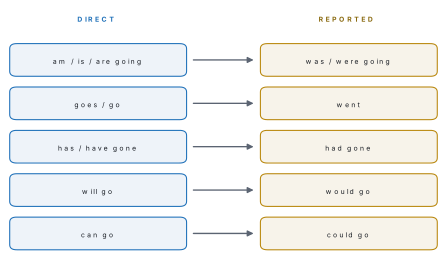
| Direct speech | Reported speech |
|---|---|
| Simple present: "I go." | Simple past: he went |
| Present continuous: "I am going." | Past continuous: he was going |
| Present perfect: "I have gone." | Past perfect: he had gone |
| Simple past: "I went." | Past perfect (or stays simple past): he had gone |
| Will: "I will go." | Would: he would go |
| Can: "I can go." | Could: he could go |
| May: "I may go." | Might: he might go |
| Must / should / would / could / might | Usually do not change |
Changes in time and place words
| Direct | Reported |
|---|---|
| now | then / at that time |
| today | that day |
| tonight | that night |
| yesterday | the day before / the previous day |
| tomorrow | the next day / the following day |
| last week | the week before |
| next week | the following week |
| ago | before |
| this / these | that / those |
| here | there |
When the tense does not change
- The reporting verb is in the present or future (says, will say): Susan says, "I will leave next week." → Susan says that she will leave the following week.
- The statement is a universal truth or habit that is still true: The teacher said, "The earth revolves round the sun." → The teacher said that the earth revolves round the sun.
- The verb is already would, could, should, might, must, ought to.
- The statement is about something that is still true when reported: My father said that the sun is very hot.
Do not write She said me (correct: She told me / She said to me). Do not keep a question mark or quotation marks in reported speech. Do not forget to change my → his/her and this → that.
Reporting verbs
Said is only one choice. A good reporting verb shows the function of the sentence and often removes the need for that.
| Function | Verb | Example |
|---|---|---|
| giving information | informed, told, announced | The agent informed us that the bus left at six. |
| saying sorry | apologised (for) | Karma apologised for coming late. |
| promising | promised (to) | Prakriti promised to return my money by Saturday. |
| admitting | admitted | He admitted that he had broken the mirror. |
| advising | advised (+ person + to) | Pemba advised me to see a doctor. |
| warning | warned (+ person + not to) | The librarian warned me not to make a noise again. |
| offering | offered (to) | Raman offered to help me plant rice. |
| thanking | thanked (+ person + for) | Sonam thanked me for my help. |
| agreeing | agreed (to) | Anupam agreed to work hard. |
Problem. Report: Tshering said, "I will surely meet you this Saturday."
Solution. (1) Pronouns: I → he, you → me/us. (2) will → would. (3) this Saturday → that Saturday. Result: Tshering said that he would surely meet me that Saturday. A shorter version using a function verb: Tshering promised to meet me that Saturday.
Problem. Report: "I work from home these days," said Yanjal.
Solution. Present simple → past simple; these → those. Yanjal said that he worked from home those days.
Problem. Report: Raima said, "We had to cross the river and go ahead."
Solution. The statement is already past simple; it may stay or move back to past perfect, and we → they. Raima said that they had to cross the river and go ahead.
Exercise A — Change into reported speech
- Khushi said, "I go to school every day by bus."
- Karma said to me, "I am sorry for coming late."
- "The bus leaves at six," said the agent.
- "I have already finished my project work," said she.
- Smarika said, "I will meet you tomorrow, friends."
- "I can't come to school tomorrow," Chandani said.
- The teacher said, "Now you can solve the remaining problems yourselves."
- Resham said, "I have never seen such a strange animal anywhere else."
- "I love my children more than wealth," the father said.
- The police said, "The incident probably took place yesterday."
- They said to us, "We would like to join you too."
- I said to him, "I live in Changunarayan these days."
1. Khushi said that she went to school every day by bus.
2. Karma apologised to me for coming late. (or: Karma told me that she was sorry for coming late.)
3. The agent informed us that the bus left at six.
4. She said that she had already finished her project work.
5. Smarika said that she would meet her friends the next day.
6. Chandani said that she couldn't come to school the next day.
7. The teacher said that we could solve the remaining problems ourselves then.
8. Resham said that he had never seen such a strange animal anywhere else.
9. The father said that he loved his children more than wealth.
10. The police said that the incident had probably taken place the day before. (took place is also accepted.)
11. They told us that they would like to join us too.
12. I told him that I lived in Changunarayan those days.
Exercise B — Fill in with the best reporting verb
(advised, admitted, warned, offered, thanked, informed, apologised, promised, agreed)
- "I broke the mirror." — He ____ that he had broken the mirror.
- "I'd go and see a doctor if I were you," Pemba said to me. — Pemba ____ me to see a doctor.
- "I will send you out if you make a noise again," said the librarian. — The librarian ____ me not to make a noise again.
- "I can come and help you plant rice," said Raman. — Raman ____ to help me plant rice.
- "The classes start from next week," said the assistant. — The assistant ____ us that the classes started from the following week.
- Sonam said to me, "Thank you so much for your help." — Sonam ____ me for my help.
- "OK, I will return your money by Saturday," said Prakriti. — Prakriti ____ to return my money by Saturday.
- "I will really work hard and score good grades," said Anupam. — Anupam ____ to work hard and score good grades.
- "I am sorry for coming late," said the speaker. — The speaker ____ for coming late.
1. admitted
2. advised
3. warned
4. offered
5. informed
6. thanked
7. promised
8. agreed
9. apologised
Exercise C — Choose the correct alternative
- Abhilasha said that she (witnessed / witnesses) the accident.
- The teacher explained that the earth (revolves / revolved) round the sun.
- Smarika says that she (can't / couldn't) stay here any more.
- My brother reported that he (has completed / had completed) his homework.
- Jenifer said that she (wanted / wants) to be a nurse.
1. witnessed — past reporting verb, so the verb moves back.
2. revolves — a universal truth.
3. can't — the reporting verb says is in the present.
4. had completed.
5. wanted.
Writing I: A newspaper article
A newspaper article gives information about an event or issue in a clear, factual style. It has a headline, a by-line (writer's name), an introduction that answers who/what/when/where/why, a body in short paragraphs and a conclusion. Use the present or past tense carefully, avoid I and use formal vocabulary.
Task. The use of AI is making life easier but also bringing new challenges. Write a newspaper article about the challenges brought by the advance of AI.
Artificial Intelligence: Great Power, Great Challenges By a staff reporter
Artificial intelligence (AI) is now part of daily life, from phone assistants to hospital scanners. However, experts warn that the technology brings serious challenges that societies must face.
The first challenge is privacy and security. AI systems learn from huge amounts of personal data, so a leak can expose the details of millions of people. Strong security rules are needed to protect this data.
The second is fairness and ethics. An AI system is only as good as the data it learns from. If the data is biased, its decisions about jobs, loans or schools can be unfair, yet there are few clear laws on who is responsible for such errors.
Third, many workers fear for their jobs. Machines can already do routine office and factory work, and people will need new skills to keep up.
Finally, AI is expensive. It needs powerful computers, reliable data and trained experts, which poor countries and small businesses often lack.
Specialists say the answer is not to stop AI but to guide it with careful laws, honest data and good education. If these steps are taken, AI can serve everyone safely.
Writing II: A letter to the Mayor
Task. Write a letter to the Mayor of your municipality requesting him/her to involve representatives of children in decisions about children's issues.
Layout of a formal letter: sender's address and date at the top right; the receiver's title and address at the left; salutation (Dear Sir/Madam or Respected Sir/Madam); a subject line; the body in three or four paragraphs (reason for writing, details, request); a polite close (Yours faithfully / sincerely); signature and name.
Tarkeshwar Municipality-5 Nuwakot 15 Baisakh 2082
The Mayor Tarkeshwar Municipality Office Nuwakot
Subject: Request to include children's representatives in decision-making
Respected Sir/Madam,
I am a student of Grade 10 at a local secondary school. I am writing on behalf of the students of our ward to request that children's representatives be included when the municipality makes decisions about children's issues.
Many decisions of the municipality directly affect us: the condition of school buildings, safe roads to school, playgrounds, libraries and drinking water. At present, no child is asked for an opinion, although we know best what problems we face every day. Children in other parts of the world have been heard in decisions on matters such as climate change, and their ideas have made the plans better.
Therefore, I request you to form a child committee with one boy and one girl representative from each ward. The committee could meet the municipal council every three months and present its suggestions. This would also teach us leadership and responsibility.
I hope you will consider our request positively. Thank you for your valuable time.
Yours faithfully, Sunita Tamang Grade 10, Student Representative
Examiners look for correct layout (address, date, subject, salutation, close), a clear purpose in the first paragraph, logical paragraphs and a polite, formal tone. Keep to about 150 words.
Chapter summary
- How Driverless Cars Will Change Our World (Jenny Cusack, BBC Future, 2021) explains that driverless cars could make roads safer and cities cleaner, but must still learn to cope with human drivers and settle legal liability.
- Key names: Camilla Fowler and David Hynd (TRL), Richard Jinks (Oxbotica), Mcity (University of Michigan), Waymo One (Phoenix, USA).
- The Open Letter to UN Secretary-General Antonio Guterres (7 August 2020, Save the Children) asks that children under 18 be included in the UN Youth Advisory Group on climate change.
- The letter praises first, then complains, gives evidence (Greta Thunberg, Fabrizio of Peru) and ends with a clear request.
- Reported speech: remove quotation marks, change pronouns, step the tense back after a past reporting verb, change time and place words.
- Do not backshift when the reporting verb is in the present, or for universal truths.
- Function verbs (apologised, promised, advised, warned, offered, thanked, admitted, informed) make reports shorter and better.
- A newspaper article needs a headline, an introduction, short paragraphs and a conclusion; a formal letter needs a correct layout and a subject line.
Practice questions
Reading and vocabulary (1 mark each)
- The WHO estimates that road crashes kill more than ____ people each year. [1]a13 thousandb130 thousandc1.3 milliond13 million
- A Waymo One is a [1]adriverless taxibtest towncmine truckdinsurance plan
- "Net-zero" in the letter refers to [1]azero marksbbalanced greenhouse gas emissionsczero populationdno rainfall
- Who said, "No one is too small to make a difference"? [1]aFabriziobGreta ThunbergcAntonio GuterresdDavid Hynd
Answers
1. (c).
2. (a).
3. (b).
4. (b).
Short answer questions (2 marks each)
- Why does David Hynd say driverless cars face a challenge from human drivers? [2]
- What did Fabrizio say about children's future? [2]
- Change into reported speech: "I will leave for Pokhara next week," said Sanjay. [2]
- Change into reported speech: The teacher said to the class, "Water boils at 100 °C." [2]
Answers
1. Because humans may speed or break traffic rules, and a driverless car, which is built to be calm and rule-following, must still cope safely with them.
2. Fabrizio, a 16-year-old from Peru, said that the future of children is at stake now and that tomorrow would be too late.
3. Sanjay said that he would leave for Pokhara the following week.
4. The teacher told the class that water boils at 100 °C. (No backshift: a scientific fact.)
Long answer questions (4 marks each)
- Write a newspaper article of about 120 words on "Road Safety in Nepal". [4]
- Write a letter to the editor suggesting that students should learn about climate change in school. [4]
Answers
1. Model outline: headline (Road Safety: Everyone's Duty); introduction — accidents on Nepal's roads have risen; body — causes (speeding, poor roads, careless overtaking), results (deaths, injuries, cost), solutions (strict law enforcement, driver training, helmets and seat belts); conclusion — safety is a shared duty. Write in short paragraphs, factual tone.
2. Model outline: sender's address and date; the Editor, newspaper name; subject: "Teaching climate change in schools"; paragraph 1 — reason for writing; paragraph 2 — arguments (melting glaciers, floods and landslides in Nepal; students can change habits); paragraph 3 — request (a short climate lesson in every grade); polite close, signature.
Practise more: English question bank