Unit 14 · Units · 22 min read
Unit 14: Travel and Adventure
What the syllabus asks for 3
- Expect the Unexpected
- Weather
- Grammar and writing tasks of the unit
To travel is to learn. A journey shows us places, people and customs that no book can fully describe, and it often surprises us. This unit has two readings about discovering things on the road. "Expect the Unexpected" is a lively travel account in which a visitor describes what amazed her in Nepal — Kathmandu, Chitwan and Pokhara. "Weathers" is a short poem by Thomas Hardy that sets two kinds of weather, a bright spring day and a wet winter day, side by side. In grammar you will study question tags, and in writing you will produce a travelogue and a tourist brochure.
Facts about places and activities from the travel text, answered in full sentences. For the poem: the meaning of the two stanzas, the contrast between spring and winter, and what the weather stands for. In grammar: the correct question tag for any sentence, including the tricky ones. In writing: a travelogue with a personal voice and a brochure with every required heading.
14.1 Expect the Unexpected
About the text
"Expect the Unexpected" is a travelogue — a piece of writing in which a traveller tells what he or she saw, did and felt. It is written in the first person, in an easy, friendly style. The traveller is a visitor to Nepal and his surprise is the main theme: he came expecting mountains and found murals, smiles and ceremonies as well. The text is organised place by place, and each place gets its own paragraph or paragraphs: Kathmandu, Chitwan and Pokhara. The textbook does not name the author in the pages I could check. Read it as a model for your own travel writing.
Summary
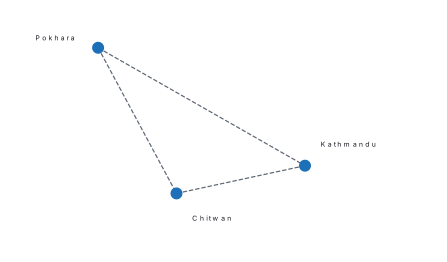
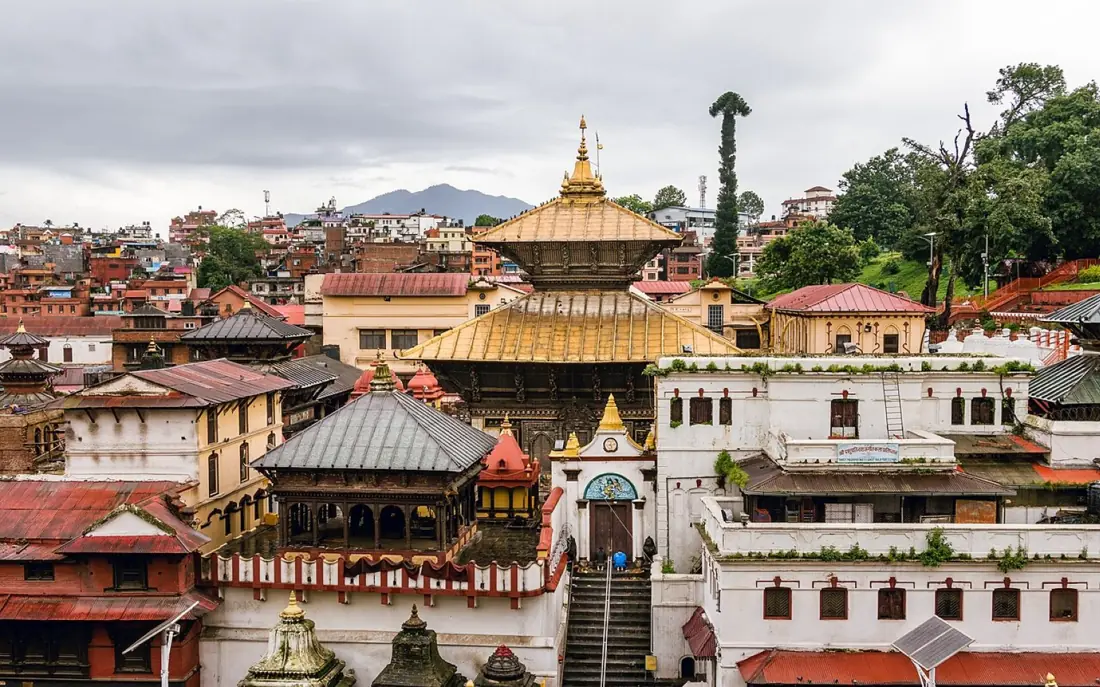
Kathmandu: murals, smiles and the cycle of life. The writer first notices the colourful murals painted on the walls of Kathmandu's streets, a sign that street art is on the rise. He is amazed by the smiling faces of the people, whatever their circumstances. He visits the Durbar squares and the Pashupatinath temple, both World Heritage Sites. At Pashupatinath he meets sadhus (holy men) who pose for photographs, and sees an outdoor cremation on the bank of the Bagmati river. This astonishes him, but he learns that Nepalis see death as an everyday part of life and not as something to hide. He enjoys cycling around the villages and walking about the town even at night, chatting with local people.
Chitwan: wildlife and adventure. Chitwan National Park, in the southern plains, offers wildlife, jeep safaris, canoeing and cycling. The writer recommends it to physically active travellers who like adventure and fresh air. He also hangs out with local people in the evening.
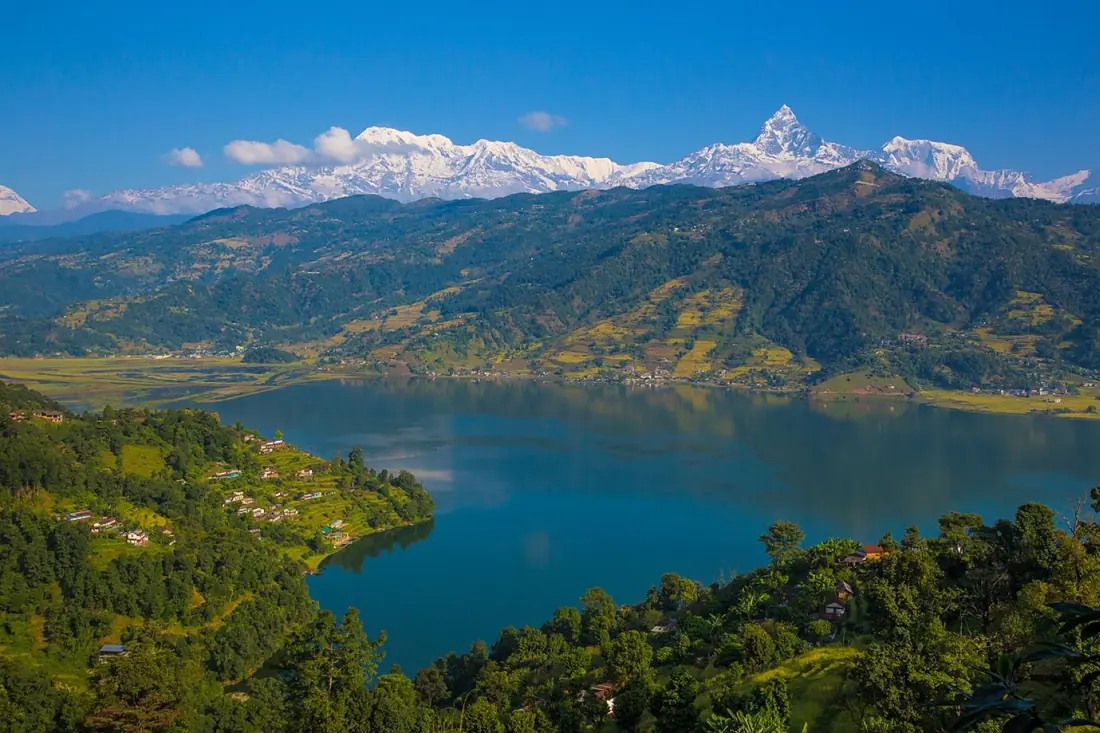
Pokhara: lakes and mountains. Pokhara gives the most beautiful scenery of his trip. Visitors can go paragliding and trekking, and can walk up to a hill such as Sarangkot to watch the sunrise over the Himalayan ranges. He enjoys boating, local food and the peaceful atmosphere.
Leaving. When the time comes to leave, the writer is so sad that he nearly cries. The message of the title is that one should expect the unexpected: a journey will give you more than you planned for.
Glossary
| Word | Meaning | Example |
|---|---|---|
| nestled | lying in a sheltered, comfortable position | The village nestled among the hills. |
| a riot of colour | a bright mixture of many colours | The garden was a riot of colour. |
| mural | a painting made directly on a wall | Artists painted a mural on the school wall. |
| grisly | frightening and horrible | Prita screamed when he saw the grisly spider. |
| privilege | a special advantage or honour | It is our privilege to study in this school. |
| vestige | a small trace left of something | He showed no vestige of regret. |
| cremation | burning of a dead body in a funeral | Hindu cremation takes place on the river bank. |
| sadhu | a Hindu holy man | The sadhu blessed the visitors. |
| paragliding | flying with a light wing-like parachute | Paragliding is popular in Pokhara. |
Where to do what
| Activity | Kathmandu | Chitwan | Pokhara |
|---|---|---|---|
| Cycle around villages | ✔ | ✔ | ✔ |
| Visit Durbar squares | ✔ | ||
| Paragliding | ✔ | ||
| Hang out with locals at night | ✔ | ✔ | |
| Meet sadhus and photograph them | ✔ | ||
| Walk up a hill to see the Himalayas | ✔ | ||
| Watch the sunrise | ✔ (Sarangkot) | ||
| Jeep safari, canoeing | ✔ |
Language and style notes
| Feature | Example in the travelogue | Why it works |
|---|---|---|
| First-person voice | "I was amazed by …" | The reader shares the traveller's surprise |
| Sensory detail | colourful walls, smiling faces, sunrise over the Himalayas | We can picture the places |
| Contrast | a cremation by the river beside a lively temple | Surprise is the point of the title |
| Recommendations | Chitwan "for physically active travellers" | A travelogue also advises the reader |
| Emotional ending | nearly crying on leaving | Leaves a lasting impression |
Copy the structure, not the sentences: a place per paragraph, one surprise in each, one clear feeling at the end.
Comprehension questions with model answers
A. Objective questions (1 mark each)
- Which place is known for the sunrise view? [1]aPashupatinathbSarangkotcSaurahadPatan
- The writer recommends Chitwan to [1]aelderly peoplebphysically active travellerscbusinessmendpilgrims only
- Nepalis perceive death as [1]aa punishmentba secretcan everyday experienceda festival
- Write True or False: Nepal was colonised by a foreign country. [1]
Answers — objective
1. (b) Sarangkot.
2. (b) physically active travellers.
3. (c) an everyday experience.
4. False. Nepal was never colonised.
B. Short questions (2 marks each)
- Mention the three things that amazed the writer in Kathmandu. [2]
- What shows that street art is rising in Kathmandu? [2]
- Name the two World Heritage Sites in Kathmandu mentioned in the text. [2]
- What does Chitwan National Park offer to its visitors? [2]
- Write any two things visitors can do in Pokhara. [2]
- How did the writer feel on leaving Nepal? [2]
Answers — short
1. The murals painted on the street walls, the smiles on people's faces and the outdoor cremation at Pashupatinath.
2. The colourful murals on the walls of the city show that street art is rising.
3. The Pashupatinath temple and the Durbar squares.
4. It offers wildlife, jeep safaris, canoeing and cycling.
5. Visitors can go paragliding and trekking (also boating and watching the sunrise from Sarangkot).
6. He felt very sad and nearly cried when he left Nepal.
C. Long questions (4 marks each)
- Why did the writer find Pashupatinath amazing? [4]
- If you were given the opportunity to visit one of the places in the text, which one would it be? Give reasons. [4]
Answers — long
1. The writer found Pashupatinath amazing for several reasons. It is a World Heritage Site with old temples on the bank of the Bagmati river. There he met sadhus who were happy to be photographed. Above all, he saw an outdoor cremation, something he had never seen before. He learned that Nepalis accept death as an ordinary part of life, and this made his think differently about life and death.
2. (Open answer.) I would choose Pokhara. I would like to watch the sunrise from Sarangkot and see the Himalayas turn golden. I would go boating on Phewa lake, try paragliding and eat local food. Pokhara combines mountains, a lake and peace, and no othis place in the text offers all these together.
14.2 Weathers
The poet
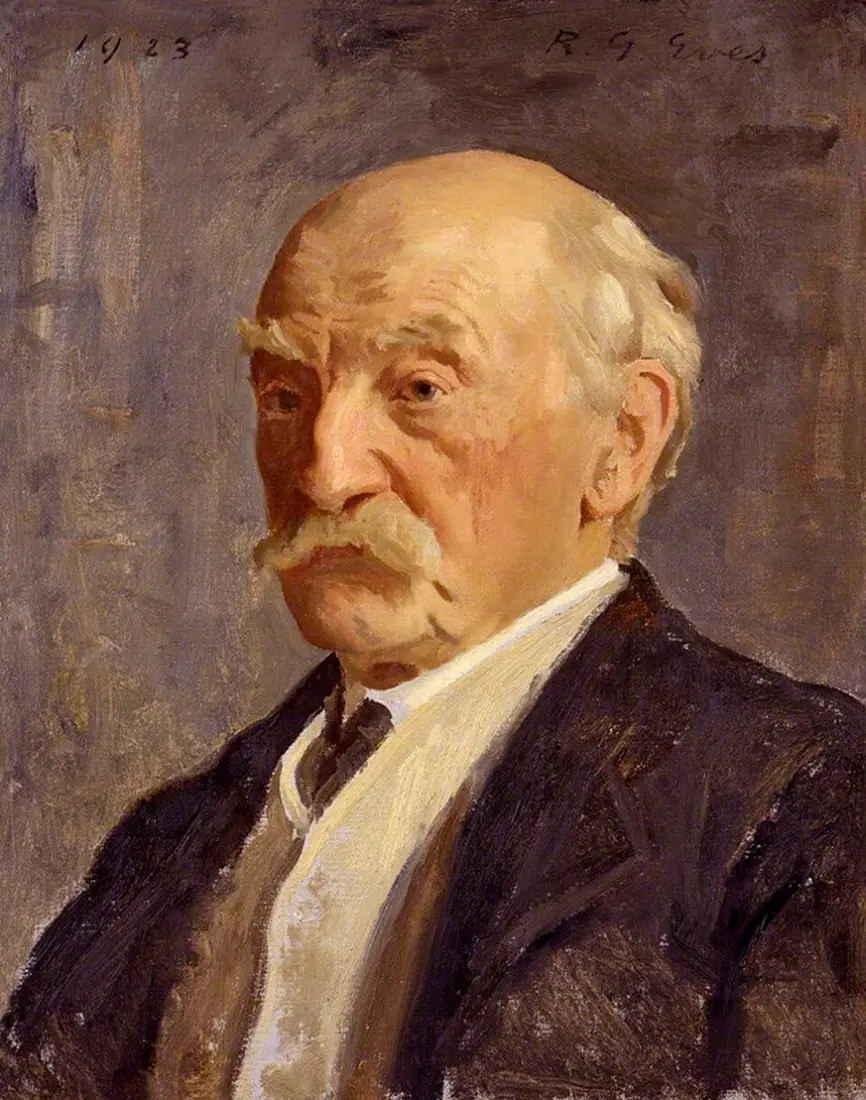
Thomas Hardy (1840–1928) was an English novelist and poet born in Dorset, in the south-west of England. He wrote famous novels such as Far from the Madding Crowd (1874), The Mayor of Casterbridge (1886), Tess of the d'Urbervilles (1891) and Jude the Obscure (1895), set in an imaginary region he called Wessex. After the hostile reception of Jude, he gave up novels and turned entirely to poetry, publishing his first volume, Wessex Poems, in 1898. "Weathers" appeared in his collection Late Lyrics and Earlier (1922). Hardy's poems often look at ordinary country life, the seasons and the passing of time.
The poem
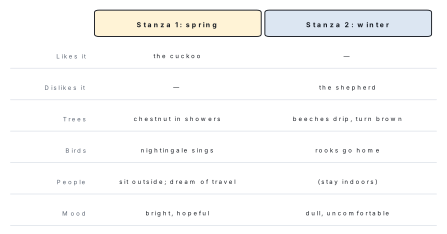
The poem has two stanzas of nine lines each. Each stanza describes one kind of weather and ends with the same short refrain, "And so do I". The refrain tells us how the speaker feels: in the first stanza he enjoys the weather as the cuckoo does, and in the second he dislikes the weather as the shepherd does.
This is the weather the cuckoo likes, / And so do I; … This is the weather the shepherd shuns, / And so do I; …
Summary and explanation
Stanza 1 — spring weather. This is the weather that the cuckoo likes, and so does the poet: light showers falling on the pointed buds of the chestnut tree and young birds learning to fly. The little brown nightingale sings its best. People sit outdoors at the inn called The Travellers' Rest. Young girls come out in light summer dresses ("sprig-muslin"). Town-dwellers dream of travelling to the south and west of England. Everything is bright, active and hopeful.
Stanza 2 — winter weather. This is the weather the shepherd avoids, and so does the poet. The beech trees drip with rain and their leaves turn brown and dull (duns); the wind threshes (beats) them. Tides hidden in the hills throb with each wave. Meadow streams overflow. Drops of water hang in a row from the bars of the gate. The rooks, black birds, go home in families. Everything is dark, wet and uncomfortable.
Theme and symbol
On the surface, the poem is a charming description of two kinds of weather. Underneath, "weathers" stands for the bright and dark phases of human life. Spring is happiness, youth and hope; winter is hardship and sorrow. Hardy accepts both: the refrain "And so do I" shows that he shares the likes and dislikes of ordinary creatures, the cuckoo and the shepherd. The poem celebrates the simple pleasures of an English spring and reminds us that each season, like each part of life, has its character.
Glossary
| Word | Meaning |
|---|---|
| showers | short, light falls of rain |
| bills | sings (the poet's old use) |
| maids | young women |
| betumble | to throw into disorder; to tumble about |
| nestlings | baby birds still in the nest |
| shuns | avoids; dislikes |
| duns | dull greyish-brown colours |
| throb | to beat with a strong, regular rhythm |
| rivulets | small streams |
Comprehension questions with model answers
A. Objective questions (1 mark each)
- The poet of "Weathers" is [1]aWordsworthbHardycWhitmandKipling
- The bird that likes the spring weather is the [1]acrowbcuckoochawkdowl
- The shepherd dislikes [1]athe winter weatherbthe spring weathercthe summer moondhis sheep
- Write True or False: The poet enjoys both the spring and the winter weather. [1]
Answers — objective
1. (b) Hardy.
2. (b) cuckoo.
3. (a) the winter weather.
4. False. He enjoys the spring and shuns the winter weather.
B. Short questions (2 marks each)
- What do the nestlings do in the spring? [2]
- What does the nightingale do? [2]
- How do the girls come out in spring? [2]
- What plan do people make in spring? [2]
- What happens to the beeches in winter? [2]
- Where do the rooks go? [2]
Answers — short
1. The nestlings fly in the spring.
2. The nightingale sings its very best.
3. The girls come out wearing light sprig-muslin dresses.
4. People dream of travelling to the south and west.
5. The beeches drip with rain and turn dull brown, and the wind beats their leaves.
6. The rooks go home to their nests in families.
C. Long questions (4 marks each)
- Does the poet enjoy the winter or the spring? Why? [4]
- In which season would you like to travel? Why? [4]
Answers — long
1. The poet enjoys the spring. In the first stanza he says that he likes the same weather as the cuckoo: gentle showers, young birds flying, the nightingale singing, people sitting outside and girls in light dresses. In the second stanza, he says that he shuns the same weather as the shepherd, when beeches drip, streams overflow and everything is wet and dull. The refrain "And so do I" in both stanzas shows that he shares those feelings. Spring stands for the bright side of life and winter for the dark side.
2. (Open answer.) I would like to travel in autumn. In Nepal, September to November has clear skies, mild temperatures and the clearest views of the mountains. The paths are dry and the rivers have calmed down after the monsoon. There are also big festivals, such as Dashain and Tihar, which make the journey more joyful. Spring is also good, but autumn is the best.
14.3 Grammar and writing tasks
Grammar I and II — Question tags
A question tag is a short question added to the end of a statement. It asks the listener to agree or confirm: It is a lovely day, isn't it? It is made of an auxiliary verb + pronoun.
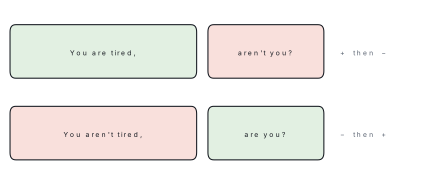
The main rule: opposite polarity. A positive statement takes a negative tag; a negative statement takes a positive tag.
| Statement | Tag | Example |
|---|---|---|
| positive | negative | Ram is working, isn't he? |
| negative | positive | They don't need to come, do they? |
Forming the tag, step by step
- Find the auxiliary verb in the statement (is, are, was, have, can, will …). Repeat it in the tag.
- If there is no auxiliary, use do / does / did (present simple, past simple).
- Reverse the polarity (add or remove not; use contractions: isn't, don't, haven't).
- Use the pronoun that stands for the subject (Ram → he, the girls → they, this → it, there → there).
Special cases
| Sentence type | Tag | Example |
|---|---|---|
| I am | aren't I? | I am right, aren't I? |
| Imperative (command) | will you? / won't you? | Shut the door, will you? Don't forget, will you? |
| Let's | shall we? | Let's have some fun, shall we? |
| Let us (request) | will you? | Let us chat, will you? |
| Negative words (never, hardly, rarely, scarcely, seldom, nobody, nothing, none) make the statement negative | positive tag | He never came again, did he? Nobody knows, do they? |
| Everyone, someone, nobody, everybody, none | they | Everyone will be satisfied, won't they? |
| Nothing, everything, something, this, that | it | Nothing happened, did it? Everything is fine, isn't it? |
| There is / there are | there | There is a shop nearby, isn't there? |
| Have to / has to / had to | do / does / did | You have to go, don't you? |
| Used to | didn't | He used to smoke, didn't he? |
| I think / I believe / I suppose + clause | tag follows the clause | I think he's busy, isn't he? I don't think he'll come, will he? |
| I'd rather | wouldn't I? | I'd rather go, wouldn't I? |
| I shan't | shall I? | I shan't be there, shall I? |
| Have as a main verb (possession) | haven't / don't | He's got a voice, hasn't he? He has a bath daily, doesn't he? |
Words like hardly, scarcely, barely, rarely, seldom, never, nobody, nothing already make the sentence negative, so use a positive tag: She can rarely come, can she?
Problem. Add a question tag: "Your phone didn't break down."
Solution. The statement is negative, so the tag is positive. The verb break has no auxiliary, so we use do in the past: did. The pronoun for phone is it. Answer: Your phone didn't break down, did it?
Problem. Add a tag: "I think he's busy."
Solution. The tag goes with the clause he's busy (he is busy), so it is isn't he? Answer: I think he's busy, isn't he?
I am right, am not I? and I am right, amn't I? are wrong. The correct tag is aren't I?
Exercise 1. Add suitable question tags.
- This will work, ______?
- I couldn't help it, ______?
- You don't really love her, ______?
- The weather is bad, ______?
- You won't be late, ______?
- Nobody knows, ______?
- You have a bath daily, ______?
- You couldn't help me, ______?
- Shut up, ______?
- She has been working hard all day, ______?
- He was admitted to hospital last night, ______?
- Don't forget, ______?
- Let's have some fun, ______?
- Your phone didn't break down, ______?
- The car sped along the road, ______?
- Everything is okay, ______?
1. won't it
2. could I
3. do you
4. isn't it
5. will you
6. do they
7. don't you
8. could you
9. will you
10. hasn't she
11. wasn't he
12. will you
13. shall we
14. did it
15. didn't it
16. isn't it
Exercise 2. Add question tags to these tricky sentences.
- She can rarely come these days, ______?
- You hardly ever came late, ______?
- I barely know you, ______?
- Nothing came in the post, ______?
- I am right, ______?
- I don't think he'll come soon, ______?
- Let's not have cold drinks, ______?
- There is a coffee shop near the gate, ______?
- Ram seldom plays cards, ______?
- None met me last week, ______?
- Everyone will be satisfied with my job, ______?
- I'd rather go travelling, ______?
1. can she
2. did you
3. do I
4. did it
5. aren't I
6. will he
7. shall we
8. isn't there
9. does he
10. did they
11. won't they
12. wouldn't I
Writing I — A travelogue
A travelogue is a personal account of a journey. Write it in the first person and mostly in the past tense. Include sights, activities, people, food and your feelings. Keep a lively, descriptive style and give the piece a title.
| Part | What to write |
|---|---|
| Title | catchy, e.g. A Weekend in the Hills of Ilam |
| Opening | where, when, with whom, why you went |
| Journey | how you travelled; what you saw on the road |
| Main part | the main attractions and activities; people, food, culture |
| Feelings | what surprised or pleased you |
| Closing | return; what you learned; a wish to go again |
Model travelogue — A Day at Phewa Lake.
Last Dashain holiday, my parents, my sister and I travelled by bus from Kathmandu to Pokhara. The road ran beside the Trishuli and Marsyangdi rivers, and green hills rose on every side. We reached Lakeside in the late afternoon, and the first sight of Phewa Lake took my breath away. The still water mirrored the Machhapuchhre peak, and colourful boats lay along the shore.
Early next morning, we drove up to Sarangkot to watch the sunrise. It was cold, but when the sun rose behind the Annapurna range, the snow turned from pink to gold. I had never seen anything so beautiful. In the afternoon we rowed a boat to the island temple of Tal Barahi and later visited Devi's Fall and a cave. In the evening we ate momos and dal bhat in a small restaurant and talked with a friendly shopkeeper, who told us stories of the town.
I was surprised that so much beauty could be seen in a single day. We returned to Kathmandu tired, happy and full of memories. I hope to go there again, perhaps to try paragliding.
Writing II — A brochure
A brochure is a short, folded leaflet that promotes a place, product or service. It uses headings, short phrases and bullet points instead of long paragraphs, and attractive, persuasive words (breathtaking, peaceful, unforgettable).
Task. Prepare a brochure of a tourist place in your locality, including: name, location, accessibility, major attractions, entry requirements and contact information.
Model brochure.
Welcome to Rara Lake — The Queen of Lakes
Location: Mugu district, Karnali Province, north-west Nepal, at about 2,990 m, inside Rara National Park.
How to get there: Fly Kathmandu → Nepalgunj → Talcha airport (Jumla/Mugu side), then a short drive or walk. Trekking routes also run from Jumla.
Major attractions: - Nepal's largest lake, with clear blue water - Forests of pine, spruce and juniper - Red panda, musk deer and many birds - Snow-capped peaks and the sunrise from the viewpoint
Entry requirements: National park entry permit; Karnali trekking permit for some routes. Carry warm clothes.
Best season: April–June and September–November.
Contact: Rara National Park Office, Mugu. Phone: 0XX-XXXXXX. Email: info@example.com.
Come, breathe the clean air and see the lake that has no equal in Nepal!
Catchy title, every heading asked for, short bullet points, persuasive adjectives, and a closing invitation to visit.
Chapter summary
- "Expect the Unexpected": a travelogue on Kathmandu (murals, smiles, Pashupatinath and Durbar squares as World Heritage Sites; Nepalis see death as everyday), Chitwan (wildlife, jeep safari, canoeing; for active travellers) and Pokhara (paragliding, trekking, Sarangkot sunrise).
- "Weathers" (Thomas Hardy, 1922): two nine-line stanzas with the refrain "And so do I". Spring weather (cuckoo, nightingale, chestnut showers, girls in sprig-muslin) is liked; winter weather (shepherd, brown beeches, overflowing streams, rooks going home) is shunned. Weather symbolises the bright and dark sides of life.
- Question tags: reverse the polarity; repeat the auxiliary (or use do/does/did); use the pronoun for the subject.
- Special tags: aren't I; will you (imperative); shall we (let's); they (everyone, nobody); it (nothing, everything); negatives like hardly, never take positive tags.
- A travelogue is personal, in the past tense; a brochure uses headings and bullets to persuade.
Practice questions
Reading comprehension
Lumbini, in the western Terai, is the birthplace of Lord Buddha and one of Nepal's World Heritage Sites. Pilgrims and tourists from many countries visit the Maya Devi Temple and the sacred garden every year. A pillar erected by Emperor Ashoka in 249 BCE still marks the spot. Monasteries built by different countries line the Monastery Zone, and a peaceful canal runs through the park. Visitors are asked to remove their shoes in the temple and to keep silence.
- Where is Lumbini? [1]
- Who erected the pillar? [1]
- Write True or False: Visitors may wear shoes inside the temple. [1]
- Why do people visit Lumbini? [2]
- What is found in the Monastery Zone? [2]
- In about 50 words, say why Lumbini is important. [4]
Answers
1. In the western Terai of Nepal.
2. Emperor Ashoka.
3. False.
4. It is the birthplace of Lord Buddha, so pilgrims come to pray and tourists to see the Maya Devi Temple and the sacred garden.
5. Monasteries built by different countries.
6. Lumbini is important because Lord Buddha was born there. It is a World Heritage Site, a place of pilgrimage for Buddhists of the world and a symbol of peace. It also brings tourists and income to Nepal.
Grammar
- Add a tag: "She plays the piano." [1]
- Add a tag: "They haven't arrived." [1]
- Add a tag: "Open the window." [1]
- Add a tag: "Nobody called me." [1]
- Add a tag: "Let's go for a walk." [1]
- Add a tag: "I am late." [1]
- Add a tag: "He hardly ever speaks." [1]
- Add a tag: "There are two exits." [1]
- Add a tag: "Everyone enjoyed the trip." [1]
- Add a tag: "You had met her before." [1]
Answers
1. doesn't she
2. have they
3. will you
4. did they
5. shall we
6. aren't I
7. does he
8. aren't there
9. didn't they
10. hadn't you
Writing
- Write a travelogue of about 200 words on a trip you made with your school. [5]
- Prepare a brochure for Chitwan National Park. [5]
Outline for answers
1. Title; opening with place, date and companions; journey; main sights and activities; food and people; feelings; return.
2. Name; location (Chitwan, Bagmara, Terai); accessibility (road from Kathmandu 5–6 hours, flights to Bharatpur); attractions (one-horned rhino, Bengal tiger, gharial, birds, jeep safari, canoe, Tharu culture); entry (park permit, guide); contact; best season (October–March).
Practise more: English question bank