Unit 10 · Units · 26 min read
Unit 10: Games and Sports
What the syllabus asks for 3
- The First Olympic Games
- Popularity of Different Sports in the World
- Grammar and writing tasks of the unit
Every country plays games, and almost every game has a story. This unit begins with a Greek legend about how the Olympic Games began and ends with a survey of the sports that people love most — football, cricket, volleyball, basketball and others. Along the way you will revise two big grammar areas, the present perfect tenses and the passive voice, and practise two kinds of writing: a well-built paragraph and a dialogue. In the SEE paper these skills appear in the reading passage, the grammar section and the free-writing questions, so the unit is worth studying carefully.
From each reading text: the main idea in your own words, the meaning of the glossary words, and short factual answers in full sentences. From grammar: correct verb forms and correct active–passive changes. From writing: a paragraph with a clear topic sentence, supporting sentences and a concluding sentence, and a dialogue that sounds like real speech.
10.1 The First Olympic Games
About the text
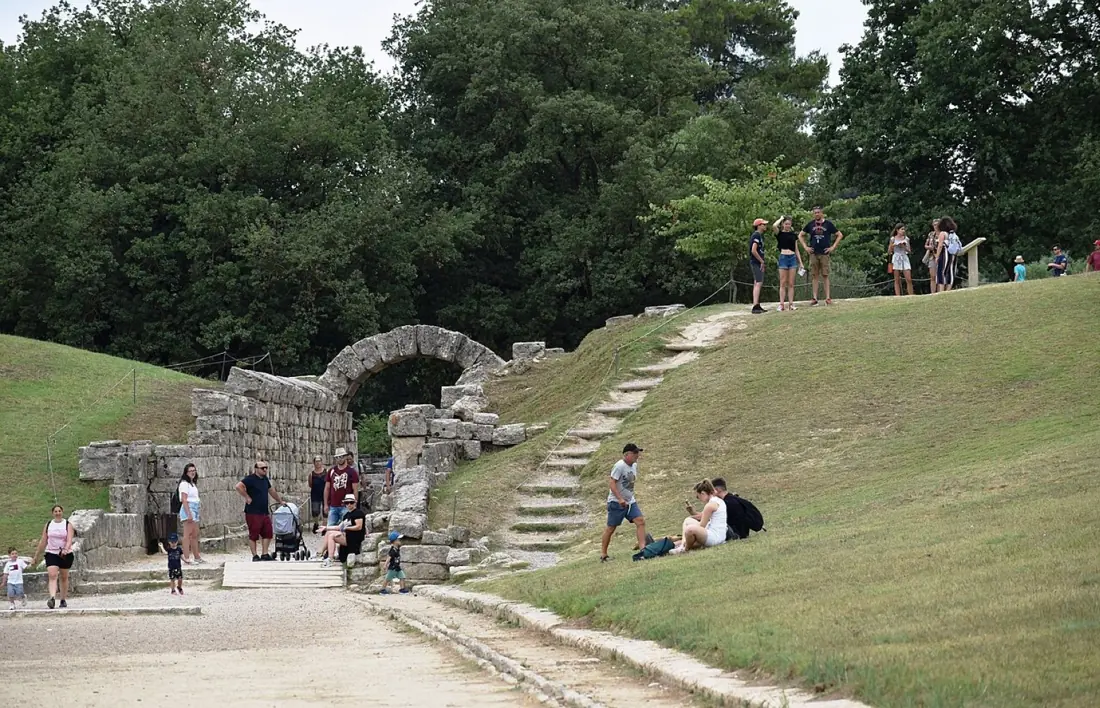
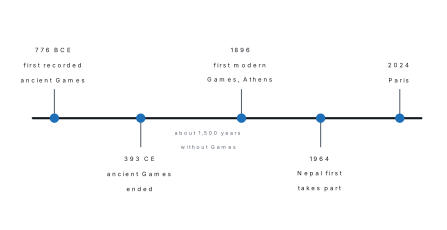
"The First Olympic Games" retells a Greek myth — a traditional story about gods, heroes and the origin of customs. It is not a history lesson. The real Games began at Olympia in southern Greece, traditionally dated to 776 BCE, and were held in honour of Zeus, king of the gods. The myth in your book is one of the old stories that Greeks told to explain why the Games existed. It follows one family through three generations: Tantalus, his son Pelops, and Pelops's bride Hippodamia.
Summary of the story
Tantalus and his terrible crime. Tantalus was half man and half god, a son of Zeus, and the gods let him sit at their table. But he wanted to test them. He cut up his own son Pelops, cooked him in a stew and served it at a feast, to see whether the gods could be tricked. The gods were not fooled. They were furious and punished Tantalus by sending him to the underworld, where he must stand in water up to his neck for ever.
Pelops is brought back to life. The gods felt sorry for the boy. They put the pieces of his body together and brought him back to life. He came back more handsome than before. He grew up and went to the land of Elis, hoping to marry Princess Hippodamia, the daughter of the king of Pisa.
The dangerous race. The king had made a cruel rule. Every man who wanted to marry his daughter had to race him in a chariot. If the suitor won, he would get the princess and the kingdom. If he lost, the king would cut off his head. The king's horses were a gift from the god of war and ran faster than lightning, so many young men had already died. When Pelops saw Hippodamia, he fell in love with her, and she was pleased with him at first sight. Pelops had a gift too: his horses, a present from the sea-god Poseidon, ran faster than the wind.
The stable boy's trick. Hippodamia did not want Pelops to die, so she asked the king's stable boy for help. The stable boy replaced the metal pins that held the wheels of the king's chariot with pins made of candle wax. During the race the wax melted, the wheels came off and the king fell from his chariot and died. Pelops had won.
The feast and the Games. Pelops became king and married Hippodamia. To honour the dead king, they held a great feast with races and contests. At this feast the new king ordered that such games be held every four years. This, says the myth, was the beginning of the Olympic Games. The text ends by saying that the Olympic torch is still lit from the rays of the sun, linking today's Games with the ancient ones.
Glossary
| Word | Meaning | Example |
|---|---|---|
| exquisite | extremely beautiful and delicate | She wore an exquisite silk shawl. |
| inherited | received from a person who has died or from one's family | He inherited the family farm. |
| underworld | the place where the dead go in myths | The hero travelled to the underworld. |
| embroidered | decorated with stitched designs | The cloth was embroidered with gold thread. |
| stew | food cooked slowly in liquid | We had vegetable stew for lunch. |
| decreed | officially ordered | The king decreed a holiday. |
| mounted | climbed onto (a horse or vehicle) | The rider mounted his horse. |
| rejoicing | great happiness, celebration | There was rejoicing in the village. |
| furious | extremely angry | The teacher was furious about the cheating. |
| lush | green, thick and healthy (plants) | The lush hills of Ilam. |
Characters
| Character | What the text shows |
|---|---|
| Tantalus | Proud and cruel, half man, half god; his crime shows disrespect for the gods |
| Pelops | Brave, handsome, loved by the gods; wins by speed and by help from others |
| Hippodamia | The princess; clever and loving enough to plan the king's defeat |
| The king of Pisa | Cruel and ruthless; killed many suitors; his own trick (cheating) ends in his death |
| The stable boy | Practical helper whose small act changes the race |
Themes and ideas
Punishment for pride. Tantalus tries to deceive the gods and is punished for ever. Myths often teach that no one, not even a child of Zeus, is above the law of heaven.
Love and cleverness against cruelty. The king's rule is unfair; Pelops and Hippodamia defeat it with love and a clever plan. Notice, however, that the win depends on a trick, so modern readers may ask whether it is right.
Origin of customs. Myths explain why things are as they are. This one explains why the Games take place every four years, and why a torch and a sacred flame are part of the ceremony.
Comprehension questions with model answers
A. Objective questions (1 mark each)
- Tantalus was [1]aa king of Pisabhalf man and half godca stable boyda famous runner
- The gods punished Tantalus by sending him to the [1]aunderworldbseacmountain topdprison
- The wheel pins of the king's chariot were replaced with [1]awoodbwaxcropedstone
- Write True or False: The Olympic torch is lit from the rays of the sun. [1]
- Write True or False: Hippodamia wanted to kill her father so that she could inherit the kingdom. [1]
Answers — objective
1. (b) half man and half god.
2. (a) underworld, where he stands in water up to his neck.
3. (b) wax; the candle-wax pins melted in the race.
4. True.
5. False. The text does not say this; she wanted to save Pelops.
B. Short questions (2 marks each)
- Why were the gods angry with Tantalus? [2]
- What was the risk of proposing to Princess Hippodamia? [2]
- What was special about the horses of the king and of Pelops? [2]
- How did the stable boy help Pelops to win the race? [2]
- Why did Pelops and Hippodamia hold a feast? [2]
Answers — short
1. The gods were angry because Tantalus cut up his son Pelops, cooked him in a stew and served it to them. He wanted to test whether the gods could be fooled.
2. Any man who wanted to marry the princess had to beat the king in a chariot race. If he lost, the king would cut off his head, so the proposal could cost him his life.
3. The king's horses ran faster than lightning. The horses of Pelops, a gift from Poseidon, ran faster than the wind.
4. The stable boy replaced the metal pins in the king's chariot wheels with wax pins. The wax melted, the wheels came off and the king fell and died.
5. They held the feast to honour the dead king. At it, games were arranged and it was declared that they should be held every four years.
C. Long questions (4 marks each)
- How did the events of the feast become the origin of the modern Olympic Games? [4]
- What is the significance of the Olympic Games in the world today? Discuss. [4]
Answers — long
1. After Pelops won the race and the old king died, Pelops and Hippodamia held a great feast in his honour. At the feast there were races and other contests of strength, and the new king ordered that such games should be held every four years. People kept the custom and the contests were held at Olympia. About 2,700 years later, in 1896, the idea was revived in Athens as the modern Olympic Games, which are still held every four years. The torch lit from the sun at Olympia links the modern Games with the ancient ones.
2. The Olympic Games matter today for several reasons. First, they bring athletes of almost every country together in friendly competition, which promotes peace and understanding. Second, the achievements of Olympic champions inspire young people to take up sport and lead a healthy life. Third, they encourage fair play, discipline and respect for rules. Fourth, they allow countries to share their cultures, and host cities gain jobs, tourists and better facilities. However, the Games also face problems such as high cost and commercialism. In spite of these, the Olympics remain the most important sporting event in the world.
10.2 Popularity of Different Sports in the World
About the text
This is an informative (expository) text: it gives facts rather than telling a story. It compares several well-known sports — football, cricket, volleyball, basketball, rugby, golf, hockey, lawn tennis and table tennis — and explains why they are popular. Its tone is neutral and simple, and each paragraph is about one game. Read it as a collection of mini-profiles: where it began, how it is played, who loves it, what is special about it.
Summary
People play sports for health, recreation and pride. Some games have been played for so long that nobody knows exactly where they began; others have a known inventor. The text points out that football and basketball are among the most widespread games because the equipment is cheap: a ball and a patch of ground are enough. Football is believed to have taken its modern form in England in the nineteenth century.
Cricket is a bat-and-ball game most popular in India, Pakistan and Australia, as well as in Nepal, Sri Lanka, Bangladesh and England. It is different from baseball, which uses a different shaped bat and ball and different rules for scoring runs. Volleyball is played by two teams of six on a court divided by a high net; each team tries to volley the ball over the net so that the other cannot return it. Beach volleyball differs mostly in the number of players. Basketball was invented by James Naismith, a Canadian teacher in the USA, in the late nineteenth century. Rugby is a rough contact sport, so injury is a risk. Golf is said to have got its name from the Dutch word for the club; the text names the Netherlands. Hockey and volleyball both have varieties according to where they are played (field hockey and ice hockey; indoor and beach volleyball).
Glossary
| Word | Meaning |
|---|---|
| immemorial | so old that no one remembers its beginning |
| accessible | easy to reach, enter or use |
| recreational | done for pleasure in free time |
| elongate | long and thin |
| volley | to hit the ball before it touches the ground |
| mound | a small hill or pile of earth |
| awed | feeling great respect and slight fear |
Cricket and baseball both use a bat and a ball, but they are different games. In an answer, write that the shape of the bat, the type of ball and the rules for scoring runs differ. Do not say "baseball is just American cricket".
Comprehension questions with model answers
A. Objective questions (1 mark each)
- Which two games are popular for their cheap equipment? [1]agolf and hockeybfootball and basketballccricket and rugbydtennis and golf
- Basketball was invented by [1]aa Canadian teacherban English soldierca Dutch farmerdan Indian prince
- Beach volleyball differs from regular volleyball mainly in [1]athe number of playersbthe shape of the ballcthe size of the netdthe time of play
- Write True or False: Rugby is a gentle, non-contact game. [1]
Answers — objective
1. (b) football and basketball.
2. (a) a Canadian teacher, James Naismith.
3. (a) the number of players.
4. False. It is a rough contact sport with a risk of injury.
B. Short questions (2 marks each)
- Mention any two reasons behind the popularity of sports in the world. [2]
- What does historical evidence say about the origin of football? [2]
- What is the main difference between cricket and baseball? [2]
- How is regular volleyball played? [2]
- Who invented basketball, and when? [2]
- What risk is involved in rugby? [2]
Answers — short
1. People play and watch sports to keep healthy and to enjoy themselves in their free time.
2. Football is believed to have originated in England in the nineteenth century, when rules were written down and the modern game took shape.
3. The main difference lies in the shape of the bat, the type of ball and the rules for scoring runs.
4. Two teams of six players stand on opposite sides of a high net. Each team tries to volley the ball over the net so that the other cannot return it, and so earn points.
5. James Naismith, a Canadian who was teaching in the United States, invented basketball in the late nineteenth century.
6. Rugby is a rough contact game, so players can be physically injured.
C. Long questions (4 marks each)
- Explain why football is called the most popular sport in the world. [4]
- Rank the games mentioned in the text in the order of your preference and give reasons. [4]
Answers — long
1. Football is the most popular sport because anyone can play it. All that is needed is a ball and an open space, so poor and rich children alike can play. The rules are simple and easy to learn. A match lasts only ninety minutes and creates great excitement, and great tournaments such as the World Cup bring whole nations together. It is also good exercise and builds teamwork.
2. (Open answer; a sample.) My first choice is football, because I enjoy running and team play and it needs little equipment. My second is cricket, because it is exciting to watch and is loved in Nepal. Third is volleyball, which we play in school, followed by basketball, table tennis and lawn tennis. I rank golf and rugby last because they need special grounds or involve a risk of injury.
10.3 Grammar and writing tasks
Grammar I — Present perfect and present perfect continuous
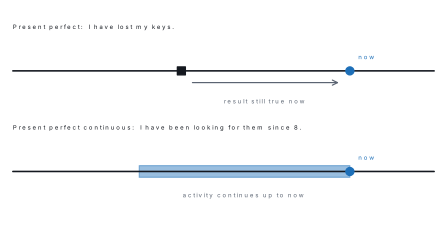
Both tenses connect the past with the present. They answer the question "What is the situation now, and how did it come about?"
| Present perfect | Present perfect continuous | |
|---|---|---|
| Form | has/have + past participle (V3) | has/have + been + verb-ing |
| Focus | the result; the action is complete or its result matters now | the activity; how long it has been going on |
| Example | I have finished my homework. | I have been doing my homework for two hours. |
| Typical time words | already, yet, just, ever, never, so far, recently | for, since, all day, lately, how long |
Rules to remember
- Use for with a length of time (for two years) and since with a starting point (since 2020, since Monday).
- Do not use a finished-time word (yesterday, in 2019, last week) with the present perfect. Say I saw him yesterday, not I have seen him yesterday.
- Stative verbs (know, like, own, belong) are not used in the continuous form: I have known him for years, not have been knowing.
- For a repeated or completed count, use the simple perfect: She has written five letters. For duration, use the continuous: She has been writing letters all morning.
- The continuous often explains a present sign: Your eyes are red. Have you been crying?
Problem. Complete: "It __ (rain) all night, and the roads ____ (flood)."
Solution. "All night" shows duration, so has been raining. The flooded roads are a present result, so have flooded (or are flooded). Answer: It has been raining all night, and the roads have flooded.
I have lived here since five years is wrong. Five years is a length of time, so write for five years. Since needs a point: since 2075 BS.
Exercise 1. Fill in the blank with the present perfect or the present perfect continuous of the verb.
- We ______ (wait) for the bus for forty minutes.
- She ______ (just / finish) her exam.
- They ______ (play) football since three o'clock.
- I ______ (never / see) the Himalayas from such a height.
- He ______ (study) English for six years.
- The children ______ (already / eat) their lunch.
- Why are your hands so dirty? __ you ____ (dig) in the garden?
- My uncle ______ (live) in Pokhara since 2060.
- __ you ____ (finish) the book yet?
- It ______ (snow) heavily all week; the pass is closed.
- She ______ (write) six poems this month.
- I ______ (try) to call you all evening.
1. have been waiting
2. has just finished
3. have been playing
4. have never seen
5. has been studying (or has studied)
6. have already eaten
7. Have you been digging
8. has lived (or has been living)
9. Have you finished
10. has been snowing
11. has written
12. have been trying
Grammar II — The passive voice
In the active voice the subject does the action: The farmers are ploughing the field. In the passive voice the subject receives the action: The field is being ploughed by the farmers. We use the passive when the doer is unknown, unimportant or obvious, or when we want to stress what happened.
Formula: object of the active sentence → subject of the passive + be (in the same tense) + past participle (+ by + doer).
| Tense | Active | Passive |
|---|---|---|
| Simple present | People speak English here. | English is spoken here. |
| Present continuous | They are building a bridge. | A bridge is being built. |
| Present perfect | The boys have eaten the biscuits. | The biscuits have been eaten by the boys. |
| Simple past | Someone stole my bicycle. | My bicycle was stolen. |
| Past continuous | They were repairing the road. | The road was being repaired. |
| Past perfect | She had drawn the picture. | The picture had been drawn. |
| Simple future | The teacher will help us. | We will be helped by the teacher. |
| Modals | You must answer all questions. | All questions must be answered. |
Special cases
- Questions: Has he translated the book? → Has the book been translated by him? Wh-questions: Who wrote this? → By whom was this written?
- Imperatives: Close the door. → Let the door be closed. (or The door should be closed.)
- Two objects: She gave me a book. → I was given a book. or A book was given to me.
- Verb + -ing: I like people driving me home. → I like being driven home.
- Reporting verbs: People believe that he is honest. → It is believed that he is honest.
- Pronouns change: I→me, we→us, he→him, she→her, they→them, and the reverse.
- Find the object; make it the new subject. 2. Note the tense of the active verb. 3. Write be in that tense + past participle. 4. Put the old subject after by (drop it if it is someone, people, they).
Problem. Change into the passive: "Who might have stolen your bicycle?"
Solution. The tense frame is might have + V3. Passive: might have been + V3. The question word who becomes by whom. Answer: By whom might your bicycle have been stolen?
Exercise 2. Change into the passive voice.
- People could hear the noise from a distance.
- We ought to break down the building before it collapses.
- Has he translated the book into any other language?
- Can anybody solve this problem?
- We had to book the ticket in advance.
- Does he always sing songs at the party?
- She will draw the painting beautifully.
- Let the mechanic repair my bike.
- What are you instructing them now?
- They have built a new stadium in Pokhara.
- The police arrested the thief.
- Someone is following us.
1. The noise could be heard from a distance.
2. The building ought to be broken down before it collapses.
3. Has the book been translated into any other language by him?
4. Can this problem be solved?
5. The ticket had to be booked in advance.
6. Are songs always sung by him at the party?
7. The painting will be drawn beautifully by her.
8. Let my bike be repaired by the mechanic.
9. What is being instructed to them by you now?
10. A new stadium has been built in Pokhara.
11. The thief was arrested by the police.
12. We are being followed.
Exercise 3. Change into the active voice.
- His leg was hurt in the accident.
- The bridge was built last year.
- The field is being ploughed by the farmers.
- How is a tiger trapped?
- The packet of biscuits has been eaten by the boys.
- Your homework should be finished by evening.
1. He hurt his leg in the accident.
2. People built the bridge last year.
3. The farmers are ploughing the field.
4. How do people trap a tiger?
5. The boys have eaten the packet of biscuits.
6. You should finish your homework by evening.
Writing I — The paragraph
A paragraph is a group of sentences about one idea. A good paragraph has three parts.
| Part | Job | Where |
|---|---|---|
| Topic sentence | states the main idea | usually first |
| Supporting sentences | give facts, reasons, examples, details | middle (4–6) |
| Concluding sentence | closes the paragraph or restates the idea in new words | last |
Tips. Keep to one idea. Use linking words (first, also, moreover, as a result, finally). Do not start a new topic halfway. Write 100–150 words unless told otherwise. The topic and concluding sentences should be related, but not identical.
Model paragraph — My favourite sport.
(Topic) My favourite sport is football, because it is simple, fast and full of teamwork. (Supporting) All we need is a ball and a field, so my friends and I play almost every evening after school. The game keeps us fit and teaches us to pass, to trust one another and to accept defeat. Moreover, matches on television, such as the World Cup, make us feel part of a huge world family. Some of my best friendships began on the playground, and the discipline I learn there helps me in my studies too. (Concluding) For these reasons, football is more than a game for me; it is a way of growing up happily.
Writing II — The dialogue
A dialogue is a conversation between two or more people. Write the speakers' names (or Me and Friend) followed by a colon, and begin a new line for each turn. Use short sentences, contractions (I'm, we'll), question tags and reactions (Really? That's great!). Cover every point you are given, and give the conversation a natural beginning and ending.
Task. Write a dialogue between you and your friend about the upcoming Sports Week in your school.
Model.
Sunita: Hi, Anita! Have you heard? Our school Sports Week starts next Sunday.
Anita: Yes, I have! I've been waiting for it since last term. Which events are you taking part in?
Sunita: The 100 metre race and volleyball. And you?
Anita: I've put my name down for the relay and table tennis. I've been practising every morning.
Sunita: That's great. Who is the chief guest this year?
Anita: A national volleyball player, I think. She is going to give the prizes on the final day.
Sunita: Wonderful! Let's cheer each other on, whoever wins.
Anita: Of course. It isn't about winning only; it's about taking part and having fun.
Sunita: You're right. See you at the ground at seven, then!
Anita: See you!
Chapter summary
- "The First Olympic Games" is a Greek myth: Tantalus offended the gods, was punished, Pelops was revived, won Hippodamia by a chariot race (the king's wheel pins were replaced by wax) and the games began at the feast.
- The ancient Games began at Olympia in 776 BCE; the modern Games began in Athens in 1896; the torch is lit from the sun's rays.
- "Popularity of Different Sports" is an informative text. Football and basketball need cheap equipment; cricket is popular in India, Pakistan and Australia; Naismith invented basketball; rugby is rough.
- Present perfect = have/has + V3 (result); present perfect continuous = have/has been + V-ing (duration). For + period, since + starting point.
- Passive = be (same tense) + V3; object becomes subject; by + doer; questions and modals keep their frame (might have been done).
- A paragraph has a topic sentence, supporting sentences and a concluding sentence.
- A dialogue uses speaker names, short natural turns and covers all the given points.
Practice questions
Reading comprehension (read the passage and answer)
Nepal's national game is volleyball, and in villages from Jhapa to Dadeldhura young people play it every evening. All they need is a net, a ball and a flat patch of ground. Volleyball became popular because it is cheap, safe and sociable. Whole villages gather to watch a match, and some tournaments last many days. Recently, schools have begun to train girls' teams, and several players have gone on to represent the country in the South Asian Games.
- Which game is Nepal's national game according to the passage? [1]
- What three things are needed to play volleyball? [1]
- Write True or False: Volleyball is an expensive sport. [1]
- Give any two reasons why volleyball is popular. [2]
- What change have schools made recently? [2]
- Why do people in villages enjoy volleyball tournaments? Write in about 50 words. [4]
Answers
1. Volleyball.
2. A net, a ball and flat ground.
3. False.
4. It is cheap and safe (also sociable).
5. Schools have begun to train girls' volleyball teams.
6. Tournaments bring the community together. Villagers gather to watch, cheer for their local team and meet friends. Matches can last for days, so they feel like festivals, and watching skilled players, including girls, inspires young people to practise and join the game.
Grammar
- Rewrite in the passive: "The committee has announced the result." [1]
- Fill in: "She ______ (teach) here since 2070." [1]
- Fill in: "I am tired because I ______ (run)." [1]
- Rewrite in the active: "The match was won by Nepal." [1]
- Correct the error: "He has been knowing her for years." [1]
- Change into the passive: "Who broke the window?" [1]
- Fill in with for or since: "They have been waiting ______ noon." [1]
- Change into the passive: "They are repairing the stadium." [1]
- Correct the error: "I have seen him yesterday." [1]
- Rewrite in the passive: "You must not touch the exhibits." [1]
Answers
1. The result has been announced by the committee.
2. has been teaching (or has taught)
3. have been running
4. Nepal won the match.
5. He has known her for years.
6. By whom was the window broken? (or: Who was the window broken by?)
7. since
8. The stadium is being repaired.
9. I saw him yesterday.
10. The exhibits must not be touched.
Writing
- Write a paragraph of about 120 words on "The importance of sports in student life". Underline the topic and concluding sentences. [5]
- Write a dialogue (about 10 turns) between you and a friend about whether to watch the Olympic Games on television or play outside. [5]
Outline for answers
1. Topic: Sports are an important part of student life. Support: keep the body fit, reduce stress, teach teamwork and discipline, improve concentration in class, friendships. Conclusion: therefore every student should make time for sport.
2. Open the dialogue with a greeting and the opening ceremony; give reasons for each choice (e.g. world's best athletes vs. fresh air and exercise); end with a compromise such as watching the evening events and playing in the morning.
Practise more: English question bank