Unit 17 · Units · 23 min read
Unit 17: Countries and Towns
What the syllabus asks for 3
- London vs Paris
- The Country Mouse and the City Mouse
- Grammar and writing tasks of the unit
Do you prefer the quiet of a village or the bustle of a big city? Is Paris better than London, or London better than Paris? These are questions of comparison, and comparison is the thread running through this unit. The first text, "London vs Paris", compares two of the world's greatest cities on size, transport, food, people and cost. The second, "The Country Mouse and the City Mouse", is a classic fable that compares town life and country life through two mice. In grammar you will learn adjectives and adverbs with their comparative and superlative forms, and connectives of reason and contrast. In writing you will compare two places and describe a village.
From "London vs Paris": exact comparisons, each supported by a fact, and your own choice with reasons. From the fable: the sequence of events and the moral. In grammar: correct adjective/adverb forms (quiet / quietly, better / best) and the right connective (because / because of / although / despite / however). In writing: a comparison that is organised point by point, and a vivid description of a place.
17.1 London vs Paris
About the text
This is a comparison article of the type found in travel magazines. The writer sets two cities side by side and compares them under headings such as size, population, transport, tourist attractions, food, people and cost. It is written in plain, modern English with a few French and British slang words (chugger, baguette, gastronome). The aim is to help a tourist choose which city to visit.
Summary of the comparison
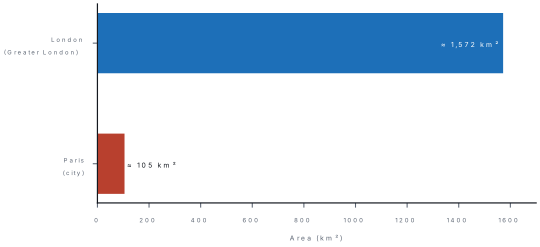
Size and population. London is far bigger than Paris. The text says that London is almost fifteen times larger in area, and it has the larger population, while Paris is compact, dense and easy to cover on foot. If you want a less crowded city, the writer implies, you should choose Paris.
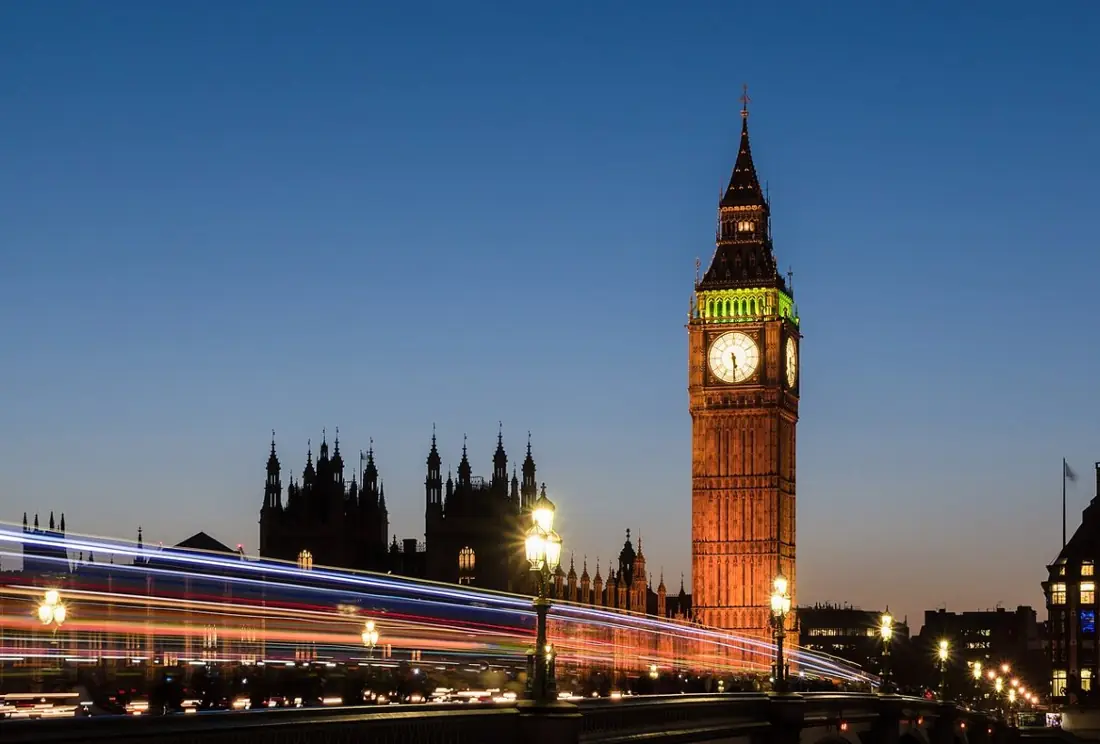
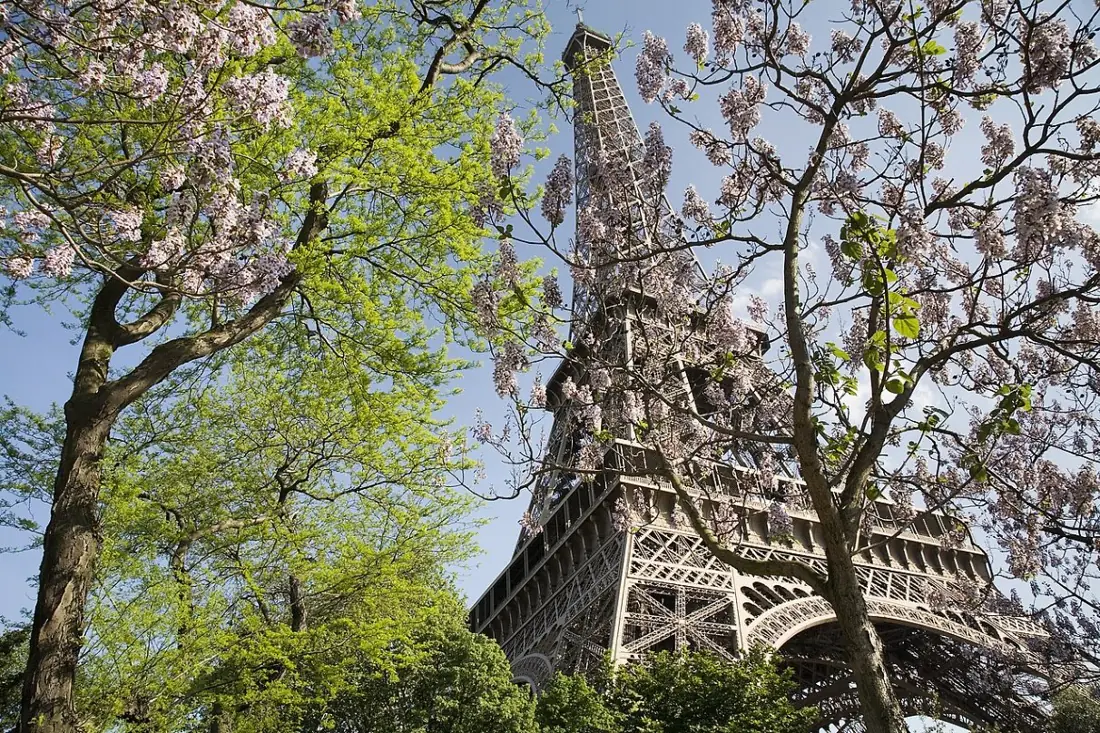
Rivers and landmarks. London stands on the River Thames and Paris on the River Seine. London is known for Big Ben, the Tower of London, Buckingham Palace and the London Eye; Paris is known for the Eiffel Tower, the Louvre, Notre-Dame and the Champs-Élysées.
Transport. London has a widespread transport network: the Underground (the Tube), buses and its famous black cabs. Paris has its Métro, trams and buses, and it is smaller, so many places are within walking distance. The writer says London taxis are easier to catch because of the regulated black cabs.
Museums and culture. London has about 240 museums, many of them free, and is famous for theatre and its music. Paris is a showcase for art, fashion and architecture.
Food. Paris is a city of gastronomes, with more variety and better cuisine: cafés, bakeries selling baguettes and espresso bars where the French enjoy talking informally. London's food has improved and is now very varied, but Paris is better in the writer's view.
People. The French are very formal in greetings and kiss on the cheek, though the text says they enjoy talking informally in cafés. Londoners are described as polite but less easy to get along with than they seem; street fund-raisers (chuggers) are common.
Weather and cost. The weather in both cities is changeable and neither is a place for perfect weather all year round. The best time to visit London is spring (March to May) or early autumn (September). Paris is generally slightly cheaper than London for rooms and food, so the cost of living is not the same. In the year 2018 London was visited by more tourists than Paris.
Side-by-side table
| Point | London | Paris |
|---|---|---|
| River | Thames | Seine |
| Size | about 15 times larger | compact |
| Population | larger | smaller |
| Transport | widespread: Tube, buses, black cabs | Métro, trams, buses; walkable |
| Museums | about 240 | world-famous (the Louvre) |
| Food | varied and improving | variety and quality: better |
| Cost | slightly higher | slightly cheaper |
| Football | more famous clubs and stadiums | fewer |
| Best time to visit | spring, early autumn | spring and autumn |
Glossary
| Word | Meaning | Example |
|---|---|---|
| urbanite | a person who lives in a city | Urbanites often travel by metro. |
| showcase | a display of the best of something | The festival is a showcase of Nepali art. |
| impeccable | perfect; faultless | Her manners are impeccable. |
| rusty | not good because of lack of practice | My French is rusty. |
| chugger | a charity fundraiser who stops people in the street | A chugger asked me for a donation. |
| tramway | rails along which trams run | The tramway crosses the square. |
| vibrant | full of energy and life | A vibrant city. |
| baguette | a long, thin French loaf | We ate a baguette with cheese. |
| gastronome | a person who loves and knows good food | The city is a paradise for gastronomes. |
Comprehension questions with model answers
A. Objective questions (1 mark each)
- The famous river in Paris is the [1]aThamesbSeinecDanubedRhine
- Which is NOT a major attraction of Paris? [1]athe Louvrebthe Eiffel Towercthe Champs-Élyséesda public library
- London is about ______ times larger than Paris. [1]a5b10c15d50
- Write True or False: The cost of living in Paris is almost the same as in London. [1]
Answers — objective
1. (b) Seine.
2. (d) a public library (not mentioned among its famous attractions).
3. (c) 15.
4. False. Paris is slightly cheaper.
B. Short questions (2 marks each)
- What are the famous rivers in London and Paris? [2]
- Why do football fans prefer London to Paris? [2]
- Which of the two cities was visited by more tourists in 2018? [2]
- What is a suitable time of the year to visit London? [2]
- Which of the two cities is cheaper to travel in? [2]
- Where is it easier to catch a cab: in London or Paris? Why? [2]
Answers — short
1. The Thames in London and the Seine in Paris.
2. Because London has more famous football clubs and big stadiums.
3. London was visited by more tourists in 2018.
4. Spring (March to May) and early autumn (September) are best, because the weather is milder.
5. Paris is slightly cheaper than London for accommodation and food.
6. It is easier in London, where black cabs are plentiful and regulated.
C. Long questions (4 marks each)
- Compare London and Paris in terms of size, transport and food. [4]
- Which of the two cities would you like to visit? Give reasons. [4]
Answers — long
1. London is much larger than Paris; it covers about fifteen times more area and has more people. Paris is compact and many places can be reached on foot. London has a very widespread transport network with the Tube, buses and black cabs, whereas Paris relies on the Métro, trams and buses and is more walkable. As for food, Paris offers greater variety and higher quality, from baguettes to fine restaurants, while London's cuisine, though improving and international, is considered less distinguished.
2. (Open answer.) I would like to visit Paris because it is the centre of art, fashion and food. I want to see the Eiffel Tower, the paintings of the Louvre and walk along the Seine in the evening. It is smaller and cheaper than London, so I could see more with less money. However, I would also like to visit London in the future to see its history and theatre.
17.2 The Country Mouse and the City Mouse
About the text
This is a fable: a short story, usually about animals that behave like people, that ends with a moral (a lesson). The story is very old and is attributed to Aesop, the Greek storyteller said to have lived in the sixth century BCE. The Roman poet Horace also told it, and later writers, including children's authors, have retold it in many versions. The textbook version has simple language and humorous details such as the mice eating custard and trifle. The fable compares simple country life with luxurious but dangerous town life.
Summary
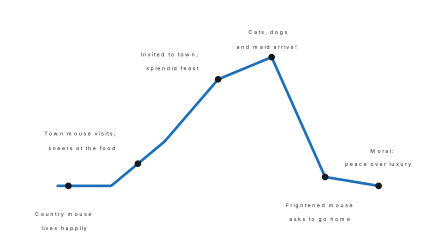
The country mouse. A mouse lived happily in a snug hole in the country. She ate plain food (peas, grain and simple fare), but she was content and lived in peace.
The visit. One day her friend, the town mouse, came to pay a short visit. The country mouse offered him the best she had, but the town mouse looked at the plain food with a frown. He was not happy with what he was served. "How can you live like this?" he asked. "Come to town and see how I live. There you will have a grand meal every day."
The invitation. The country mouse was glad to go. She hoped for better food, so she went with her friend to the town.
The feast. The town mouse took her to a grand house and a dining-room where the remains of a splendid dinner still lay on the table: custard, trifle and many other delicious things. The country mouse had never seen such a feast, and she began to eat with delight.
The danger. Suddenly, cats, dogs and a maid burst in. The mice had to run and hide for their lives. When the danger had passed, they came out again, but the frightened country mouse could not enjoy her food. There was no peace for mice in the town.
The return. The country mouse said goodbye. She asked her friend to take her safely back to the country. "I prefer my plain food and quiet life to your grand dinners and your fear," she said.
Moral. Better a crust of bread in peace than a feast in fear. (A common version of Aesop's moral is "Better beans and bacon in peace than cakes and ale in fear.")
Glossary
| Word | Meaning |
|---|---|
| snug | warm, cosy and protected |
| unmolested | not disturbed or attacked |
| stray | lost; wandering away from the normal place |
| frown | a look showing disapproval, with lowered eyebrows |
| horrid | frightening and unpleasant |
| reluctant | unwilling; hesitating |
| custard | a sweet yellow sauce of milk, eggs and sugar |
| trifle | a cold dessert with sponge cake, fruit and cream |
| regale | to entertain with stories or food |
| endure | to suffer something painful patiently |
Characters and themes
| Character | Qualities |
|---|---|
| Country mouse | simple, content, trusting, wise in the end |
| Town mouse | proud, boastful, luxury-loving, but not unkind |
| Cats, dogs, maid | the hidden dangers of luxury |
Themes. (1) Contentment: happiness depends on peace of mind, not on money. (2) Appearances: luxury is attractive but may hide danger. (3) Different lives suit different people: neither life is wrong, but each person must choose what suits him or her. (4) Home is best.
Comprehension questions with model answers
A. True / False (1 mark each)
- The country mouse was happy with her life before the visit. [1]
- The town mouse was pleased with the food in the country. [1]
- The town mouse invited the country mouse to the town. [1]
- The mice were able to eat their dinner in peace. [1]
Answers
1. True.
2. False.
3. True.
4. False; cats, dogs and a maid interrupted them.
B. Short questions (2 marks each)
- How did the country mouse live? [2]
- Why did the town mouse go to the country? [2]
- Was the country mouse happy to get the invitation? Why? [2]
- What happened while the mice were having dinner? [2]
- What did the country mouse request her friend to do? [2]
Answers — short
1. The country mouse lived a simple, happy and peaceful life in a snug hole.
2. The town mouse went to the country to pay a short visit to his friend.
3. Yes, she was happy because she hoped to have better food in the town.
4. Cats, dogs and a maid interrupted them, and the mice had to run for their lives.
5. She requested him to take her safely back to the country.
C. Long questions (4 marks each)
- What lesson does the story teach? [4]
- Do you live in a town or in a village? Write the advantages and disadvantages of living there. [4]
Answers — long
1. The story teaches us that peace and contentment are worth more than luxury. The country mouse had plain food but no fear; in the town she had a splendid meal but had to run for her life. We should be satisfied with what we have and not envy the rich, because wealth often brings danger and worry. It also teaches that each person should choose the life that suits him or her.
2. (Open answer.) I live in a village. The advantages are fresh air, clean water, fresh food, low costs and a peaceful life where everyone knows each other. The disadvantages are fewer schools, hospitals, shops and job opportunities, and poor roads and internet. In a town, one gets better facilities and jobs but must face crowds, pollution, noise and high costs. Each has its own merits.
17.3 Grammar and writing tasks
Grammar I — Adjectives and adverbs
An adjective describes a noun (a quiet child). An adverb describes a verb, an adjective or another adverb (She spoke quietly; very quiet).
| Adjective | Adverb | Example |
|---|---|---|
| quiet | quietly | The children were quiet. They sang quietly. |
| poor | poorly | A poor family. He performed poorly. |
| patient | patiently | A patient cook. She waited patiently. |
| loud | loudly (or loud) | The teacher spoke loudly. |
| soft | softly | She sang softly. |
| timid | timidly | The kitten looked timidly out. |
Forming adverbs. Add -ly to the adjective (slow → slowly). If the adjective ends in -y, change y to i (happy → happily). If it ends in -le, drop e (gentle → gently). Some adverbs are irregular: good → well; and some have the same form: fast, hard, late, early (hard ≠ hardly; late ≠ lately).
Adjectives after linking verbs. After be, seem, look, feel, sound, taste, become, use an adjective: Ram is calm under pressure. The soup tastes good.
Comparison of adjectives and adverbs
| Degree | Use | Form | Example |
|---|---|---|---|
| Positive | equal comparison | as … as | A family car is not as fast as a sports car. |
| Comparative | two things | -er than / more … than | Metal is heavier than wood. |
| Superlative | three or more | the -est / the most … | Everest is the highest mountain. |
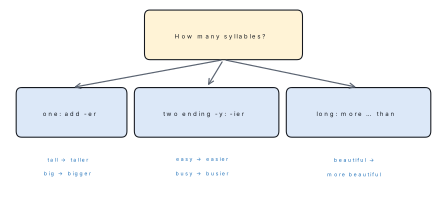
| Rule | Positive | Comparative | Superlative |
|---|---|---|---|
| One syllable: add -er / -est | tall | taller | tallest |
| One syllable ending in single vowel + consonant: double the consonant | big | bigger | biggest |
| Ending in -e: add -r / -st | wise | wiser | wisest |
| Two syllables ending in -y: -ier / -iest | happy | happier | happiest |
| Most other adjectives of two or more syllables | beautiful | more beautiful | most beautiful |
| Adverbs ending in -ly | quickly | more quickly | most quickly |
| Irregular | good / well | better | best |
| bad / badly | worse | worst | |
| far | farther / further | farthest / furthest | |
| much / many | more | most | |
| little | less | least |
Rules to remember
- Use than with the comparative and the with the superlative.
- Do not use a double comparative: more better and most easiest are wrong.
- as … as shows equality; not as … as shows inequality. Wood is not as heavy as iron = Iron is heavier than wood.
- Use much / far / a lot to strengthen a comparative: much more complicated. Use very with the positive: very quick.
- The same-person comparison uses the right case: He ran more quickly than I (did).
Problem. "The cook ______ (patient) removed the boiling pot."
Solution. Removed is a verb, so it needs an adverb: patiently.
Problem. "Sanskrit is ______ (complicated) to deal with than Nepali."
Solution. Complicated has three syllables, so use more, and than follows: much more complicated.
He worked hard (with effort). He hardly worked (almost not at all). She arrived late (not on time). I have not seen her lately (recently).
Exercise 1. Choose the correct adjective or adverb.
- My (poor / poorly) family can't afford a car.
- Ram performed (poor / poorly) at the concert.
- Ram is (calm / calmly) under pressure.
- The cook (patient / patiently) removed the pot.
- The teacher spoke (loud / loudly) to the students.
- Ram walked (quiet / quietly) to the kitchen.
- The (quiet / quietly) children listened to the teacher.
- The woman sang (soft / softly) to the baby.
- The kitten peered (timid / timidly) from under the couch.
- She runs (quick / quickly).
1. poor
2. poorly
3. calm
4. patiently
5. loudly
6. quietly
7. quiet
8. softly
9. timidly
10. quickly
Exercise 2. Write the correct form of the word in brackets.
- Sanskrit is much ______ (complicated) to deal with than Nepali.
- Metal is ______ (heavy) than wood.
- Wood is not as ______ (heavy) as iron.
- He ran much ______ (quickly) than me.
- My sister speaks English ______ (well) than Ram.
- A family car is not as ______ (fast) as a sports car.
- She wrote ______ (beautifully) than he did.
- The journey home by bus takes much ______ (long) than by plane.
- Everest is the ______ (high) mountain in the world.
- This is the ______ (bad) film I have seen.
1. more complicated
2. heavier
3. heavy
4. more quickly
5. better
6. fast
7. more beautifully
8. longer
9. highest
10. worst
Grammar II — Connectives of reason and contrast
Unit 13 covered the connectives of contrast. This unit adds reason and compares the two groups.
| Connective | Pattern | Example |
|---|---|---|
| because | + full clause | I took a taxi because it was raining. |
| because of | + noun / noun phrase | All flights were cancelled because of the fog. |
| since / as | + clause (reason, formal) | Since it was late, we left. |
| although / though | + clause (contrast) | Although it was summer, the days were cold. |
| despite / in spite of | + noun / -ing | Despite feeling unwell, she went to school. |
| however | separate sentence + comma | A stone struck the man's head. However, he was not hurt. |
| but | joins two clauses | I like popcorn but I don't like pizza. |
Ask: does the second part explain the first (reason: because) or surprise us (contrast: although)? She stayed at home because she was ill (reason). She went out although she was ill (surprise).
Problem. "All flights were cancelled ______ the fog."
Solution. Fog is a noun, so because of. If a clause followed (because it was foggy), we would use because.
Exercise 3. Complete with because, because of, although, however, despite or but.
- ______ it was summer, the days were rather cold.
- A piece of stone struck the workman's head. ______, he was not hurt.
- I like popcorn ______ I don't like pizza.
- ______ her age, she is still working very hard.
- ______ Ram is a skilful worker, he can't read and write well.
- ______ petrol had become so expensive, Ram sold his car.
- I took a taxi ______ it was raining.
- All flights were cancelled ______ the fog.
- ______ feeling unwell, she went to school.
- Ram felt cold ______ he was wearing a winter coat.
1. Although
2. However
3. but
4. Despite / In spite of
5. Although
6. Because
7. because
8. because of
9. Despite
10. although
Writing I — Comparing two places
A comparison essay shows the similarities and differences between two things. There are two ways to organise it.
| Method | How it works |
|---|---|
| Block | Describe place A fully, then place B fully, then conclude |
| Point-by-point | Compare size, then climate, then facilities, and so on |
Useful words: similarly, likewise, both, whereas, while, on the other hand, in contrast, unlike, more … than, as … as.
Task. Write a couple of paragraphs comparing Kathmandu with another city of Nepal (Pokhara).
Model.
Kathmandu and Pokhara are two of the most popular cities of Nepal, but they offer very different experiences. Kathmandu, the capital, is bigger, busier and older. It is the centre of government and business, and its Durbar Squares and temples attract visitors from all over the world. Pokhara, in contrast, is smaller, calmer and greener. It lies beside Phewa Lake with the Annapurna range behind it, and most people come there to relax, boat or trek.
In terms of facilities, Kathmandu has more hospitals, colleges and shopping centres, whereas Pokhara's strength is its natural beauty and adventure sports such as paragliding. Kathmandu is more crowded and polluted; Pokhara has cleaner air and wider streets. On the other hand, living costs are higher in Kathmandu. Both cities are rich in culture and food, and both are worth visiting. A traveller who likes history and bustle should choose Kathmandu, while one who prefers peace and views will love Pokhara.
Writing II — Describing a village
A description paints a picture in words. Cover location, scenery, people, buildings, occupation, culture and your feelings. Use the present tense for a place as it is now, or past tense if it is a memory. Use vivid adjectives and comparisons.
Task. Describe a village using: located in a district — gateway to a sacred temple — gorgeous landscape — farmland — traditional houses — mountain views — humble villagers.
Model description.
Khokana: A Village of Mustard and Memory
Khokana is a small village in Lalitpur district, a few kilometres south of Kathmandu. It is a gateway to the sacred temple of Rudrayani, and every year people from all over the valley come here for its festivals. The village is surrounded by a gorgeous landscape of golden mustard fields and green terraces, and on clear days snow peaks shine in the north.
The houses are built of red brick with carved wooden windows and have stood for hundreds of years. Narrow lanes run between them and people sit in the sun to peel garlic or spin wool. The villagers are humble and hospitable, and they still press mustard oil in the traditional way. The village has a quiet beauty that no big city can match, and visitors always leave with warm memories.
Chapter summary
- "London vs Paris": London is almost fifteen times larger, with a widespread transport network and about 240 museums; Paris is compact, better in food, slightly cheaper; rivers: Thames and Seine; best time for London is spring and early autumn.
- "The Country Mouse and the City Mouse" is a fable of contentment: plain food in peace is better than a feast in fear. Moral: peace is worth more than luxury.
- Adverbs: add -ly (poor → poorly); adjectives follow linking verbs; irregular: good → well.
- Comparison: -er/-est, more/most, irregular better/best, worse/worst; as … as; than.
- Connectives: because + clause, because of + noun, although + clause, despite + noun/-ing, however + comma, but.
- A comparison essay: block or point-by-point with linking words. A description of a village covers location, scenery, people, buildings and feelings.
Practice questions
Reading comprehension
Pokhara and Kathmandu are two of the best-known places in Nepal. Kathmandu is the capital, crowded and noisy, but full of history. Pokhara is calmer; it lies by a lake and looks up to snow mountains. A visitor who wants to see temples and palaces should go to Kathmandu, while one who wants to relax should choose Pokhara. Rooms are cheaper in Pokhara, but food in Kathmandu offers more variety.
- Which is the capital of Nepal? [1]
- Where does Pokhara lie? [1]
- Write True or False: Rooms are cheaper in Kathmandu. [1]
- Why should a visitor who loves history go to Kathmandu? [2]
- What is the difference between the two cities? [2]
- Which would you choose and why? Write in about 50 words. [4]
Answers
1. Kathmandu.
2. By a lake, with snow mountains behind.
3. False.
4. Because Kathmandu has many old temples and palaces.
5. Kathmandu is bigger, noisier and more historical; Pokhara is calmer and more scenic.
6. I would choose Pokhara because I enjoy quiet places and natural beauty. I would like to boat on the lake and look at the snow mountains. Rooms are also cheaper there, so I could stay longer.
Grammar
- Fill in: "She sings very ______ (beautiful)." [1]
- Write the comparative: "This book is ______ (interesting) than that one." [1]
- Write the superlative: "He is the ______ (tall) boy in the class." [1]
- Correct: "She is more taller than me." [1]
- Fill in: "He ran ______ (fast) than his brother." [1]
- Fill in: "We stayed indoors ______ the rain." (because/because of) [1]
- Fill in: "______ he was tired, he kept working." (Although/Despite) [1]
- Fill in: "______ being tired, he kept working." [1]
- Fill in: "This is the ______ (good) film I have seen." [1]
- Fill in: "The exam was ______ (hard / hardly) difficult." [1]
Answers
1. beautifully
2. more interesting
3. tallest
4. She is taller than me.
5. faster
6. because of
7. Although
8. Despite
9. best
10. hardly
Writing
- Write two paragraphs comparing life in a village and life in a city. [5]
- Describe a village you have visited, using the headings: location, people, scenery, occupation, culture. [5]
Outline for answers
1. Introduction; comparison of facilities, cost, environment, community; conclusion showing your preference.
2. Name and location; scenery; houses; people's occupations (farming, weaving); festivals; your feelings.
Practise more: English question bank