Chapter 15 · Inorganic Chemistry · 2 questions in the paper · 30 min read
Bio-inorganic Chemistry
What the syllabus asks for 3
- Micro- and macronutrients; biological roles of sodium, potassium, magnesium, zinc, copper, cobalt, nickel, iron, chromium and calcium
- The sodium–potassium pump and the sodium–glucose pump
- Toxicity of iron, arsenic, mercury, lead and cadmium
This short chapter carries about 2 questions, but it joins the periodic table directly to physiology and medicine. The same principles used throughout inorganic chemistry — oxidation state, ligand binding, ionic size, solubility and redox reactivity — decide why a metal ion can be an enzyme cofactor at one dose and a poison at another. Learn each element through four hooks: where it is concentrated, what molecule or enzyme uses it, what breaks in deficiency, and what breaks in excess. That pattern will also serve you in Zoology, physiology and pharmacology.
- Macrominerals are needed in relatively large daily amounts. Among the elements in this chapter: Na, K, Mg and Ca. Microminerals/trace elements here are Zn, Cu, Co, Ni, Fe and Cr.
- Na⁺ is the dominant extracellular cation; K⁺ is the dominant intracellular cation. Their gradients control fluid volume, membrane potential and excitability.
- Mg²⁺ is the central ion of chlorophyll and the usual partner of ATP in cells (MgATP). Ca²⁺ builds bone mineral and also acts in clotting, muscle contraction, secretion and signalling.
- Zn²⁺ is a redox-inert Lewis acid in carbonic anhydrase, carboxypeptidase and zinc-finger proteins. Cu and Fe are useful because they change oxidation state readily; the same redox activity makes free Fe/Cu dangerous.
- Cobalt is biologically useful to humans as the centre of vitamin B₁₂ (cobalamin); inorganic cobalt in food cannot be converted by human cells into B₁₂.
- Nickel is a true cofactor in plant and microbial enzymes such as urease, but a specific essential biochemical function in humans is not yet established. Cr(III) was traditionally linked with insulin action, but modern reviews also find human essentiality unproved; Cr(VI), by contrast, is highly toxic and carcinogenic.
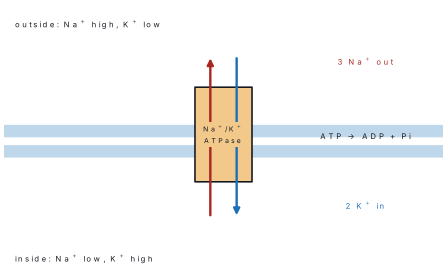
- The Na⁺/K⁺-ATPase uses one ATP to move 3 Na⁺ out and 2 K⁺ in. It is primary active transport and is inhibited by ouabain and cardiac glycosides such as digoxin.
- A sodium–glucose transporter (SGLT) is not an ATP-burning pump. It is a secondary-active Na⁺ symporter: intestinal/renal SGLT1 generally couples 2 Na⁺ to 1 glucose, whereas early proximal-tubule SGLT2 couples 1 Na⁺ to 1 glucose. Oral rehydration solution exploits intestinal SGLT1.
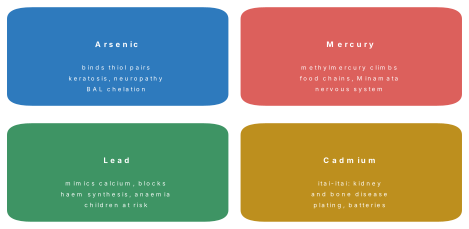
- Toxic metals often work by ionic mimicry and thiol binding: arsenate imitates phosphate; As(III), Hg and Pb bind –SH groups; Pb²⁺ imitates Ca²⁺/Zn²⁺; Cd²⁺ imitates Zn²⁺/Ca²⁺.
- Disease hooks: iron overload → liver, heart and endocrine damage by hydroxyl-radical chemistry; arsenic → skin changes, neuropathy and cancers; methylmercury → Minamata-type brain injury; lead → impaired neurodevelopment and haem synthesis; cadmium → renal tubular injury and painful bone disease (Itai-itai).
15.1 Micro- and macronutrients and the biological roles of metal ions
An essential element is not merely an element found in tissue. Strictly, removing it should reproducibly impair a biological function, restoring it should repair that function, and ideally a direct biochemical role should be known. This strict definition is why the status of chromium and nickel in human nutrition remains more cautious than in many older textbooks.
Mineral nutrients are often divided by the amount required. Macrominerals are needed at roughly hundreds of milligrams or more per day; microminerals are needed in milligram or microgram amounts. The division says nothing about importance: a trace of cobalt inside vitamin B₁₂ is indispensable for blood formation, while a tiny excess of potassium in plasma can stop the heart. Biology also cares about speciation — the exact chemical form. Fe²⁺ and Fe³⁺ differ in transport, Cr(III) and Cr(VI) differ dramatically in hazard, and methylmercury crosses membranes far more effectively than inorganic mercury salts.
Metal ions perform four recurring chemical jobs. First, they provide charge and osmotic balance (Na⁺, K⁺, Ca²⁺, Mg²⁺). Second, they act as Lewis acids that polarize bonds in enzyme active sites, especially Zn²⁺ and Mg²⁺. Third, Fe and Cu perform electron transfer and oxygen chemistry because neighbouring oxidation states are accessible. Fourth, ions can be structural or signalling agents: Ca²⁺ in bone and cytosolic signals, Zn²⁺ in zinc-finger domains that hold transcription factors in the correct shape for DNA binding.
| Element | Chemical/biological role | Deficiency or imbalance hook |
|---|---|---|
| Sodium (Na⁺) | Main extracellular cation; sets effective plasma osmolality and extracellular-fluid volume; Na⁺ influx produces the upstroke of many action potentials; its gradient drives nutrient and ion cotransport | Losses with vomiting, diarrhoea or diuretics cause volume depletion; abnormal plasma Na⁺ mainly signals water imbalance and can produce confusion, seizures or coma |
| Potassium (K⁺) | Main intracellular cation; K⁺ leak through membrane channels is the main immediate reason the resting membrane is negative inside; needed for nerve conduction, muscle contraction and several enzymes, including pyruvate kinase | Hypokalaemia causes weakness and cardiac arrhythmias; hyperkalaemia is an emergency because cardiac excitability and conduction fail |
| Magnesium (Mg²⁺) | Cofactor in hundreds of reactions; most intracellular ATP is present as MgATP; stabilizes DNA, RNA and ribosomes; required by kinases and by Na⁺/K⁺-ATPase; central atom of chlorophyll in plants | Deficiency gives tremor, cramps, arrhythmias and resistant K⁺/Ca²⁺ abnormalities; most body Mg is in bone and cells, so a normal plasma value can hide depletion |
| Calcium (Ca²⁺) | About 99% is in bone and teeth as hydroxyapatite, Ca₁₀(PO₄)₆(OH)₂; ionized Ca²⁺ is clotting factor IV, triggers neurotransmitter and hormone release, enables troponin-mediated muscle contraction and binds calmodulin in signalling | Childhood deficiency contributes to rickets; adult bone loss gives osteomalacia/osteoporosis; acute hypocalcaemia increases excitability and can cause tetany |
| Zinc (Zn²⁺) | Catalytic and structural ion in carbonic anhydrase, carboxypeptidase, alcohol dehydrogenase, Cu/Zn superoxide dismutase, polymerases and zinc-finger transcription factors; important in growth, immunity, taste and wound repair | Poor growth, delayed sexual maturation, hair loss, skin lesions, impaired taste and poor wound healing; chronic excess induces copper deficiency |
| Copper (Cu⁺/Cu²⁺) | Redox centre in cytochrome-c oxidase, Cu/Zn superoxide dismutase, lysyl oxidase for collagen/elastin cross-linking, dopamine β-hydroxylase and tyrosinase; ceruloplasmin carries Cu and oxidizes Fe²⁺ for iron transport | Deficiency can cause anaemia, neutropenia, poor pigmentation and connective-tissue weakness; Menkes disease impairs Cu transport, while Wilson disease causes Cu accumulation in liver and brain |
| Cobalt (Co) | Central ion of cobalamin (vitamin B₁₂). B₁₂ is required by methionine synthase and methylmalonyl-CoA mutase, linking folate metabolism, DNA synthesis and myelin maintenance | B₁₂ deficiency causes megaloblastic anaemia and potentially irreversible neurological injury. Humans need preformed B₁₂ made by microorganisms; eating cobalt salts does not solve B₁₂ deficiency |
| Nickel (Ni) | Established cofactor in microbial/plant urease and several hydrogenases; occurs in human tissues and may influence iron handling, but no definite human Ni-dependent enzyme is known | No recognized human nickel-deficiency syndrome. Contact allergy is common; inhaled nickel compounds in industry are respiratory carcinogens |
| Iron (Fe²⁺/Fe³⁺) | In haemoglobin, myoglobin, cytochromes and catalase; in iron–sulfur clusters of respiratory-chain proteins; and in ribonucleotide reductase for DNA synthesis. Transferrin transports Fe³⁺ and ferritin stores it safely | Iron-deficiency anaemia is microcytic and hypochromic; overload injures liver, heart, pancreas and other endocrine organs (§15.3) |
| Chromium (Cr) | Traditional texts describe Cr(III) as part of a “glucose tolerance factor” and as an aid to insulin action. No human Cr-dependent enzyme has been firmly established, and major modern reviews regard essentiality as unproved | No clearly defined Cr(III)-deficiency disease in people eating ordinary diets. Cr(VI) compounds are strong oxidants, enter cells through anion pathways and are established lung carcinogens |
The iron and copper rows reveal the chapter's central chemical bargain. A redox-active metal is an excellent catalyst, but the cell must never leave much of it “free”. Iron is therefore handed between proteins and locked in ferritin; copper is escorted by chaperones. Zinc can occupy delicate structural sites more safely because Zn²⁺ has a filled 3d¹⁰ subshell and does not cycle between oxidation states under biological conditions.
Absorption is controlled most tightly for iron because humans have no regulated pathway for excreting a large iron excess. In the duodenum, Fe³⁺ is reduced to Fe²⁺ for uptake; iron then leaves intestinal and storage cells through ferroportin. The liver hormone hepcidin blocks ferroportin when iron is plentiful or infection is present. This is elegant bio-inorganic control: the body regulates the gate, not the drain.
Nickel and chromium illustrate why examination answers should follow established biochemical roles rather than supplement advertisements. Nickel unquestionably serves in plant and microbial urease, and chromium(III) has been linked experimentally with carbohydrate metabolism, but neither has a firmly demonstrated, specific essential function in humans. That caution does not make their toxic forms safe: nickel allergy and carcinogenic chromium(VI) are real occupational hazards.
Problem. A resting nerve cell hydrolyses 1.0 × 10⁹ ATP molecules per minute on its Na⁺/K⁺-ATPase alone. How many sodium ions leave and potassium ions enter per minute, and what net charge crosses outward? Solution. Per ATP: 3 Na⁺ out, 2 K⁺ in. Sodium out = 3 × 10⁹ per minute; potassium in = 2 × 10⁹ per minute; net outward charge = (3 − 2) × 10⁹ = 1.0 × 10⁹ positive charges per minute — the electrogenic leak the resting potential leans on. One protein, three-to-two bookkeeping, a billion times a minute: bio-inorganic arithmetic in miniature.
15.2 The sodium–potassium pump and sodium–glucose cotransport
Almost every animal cell keeps Na⁺ high outside and K⁺ high inside. Typical plasma Na⁺ is near 145 mmol L⁻¹ while cytosolic Na⁺ is only about 10–15 mmol L⁻¹; cytosolic K⁺ is about 140 mmol L⁻¹ while plasma K⁺ is near 4–5 mmol L⁻¹. These gradients are batteries. They store energy that powers electrical signalling, cell-volume control, pH regulation, Ca²⁺ handling and the uptake of glucose and amino acids.
The Na⁺/K⁺-ATPase: primary active transport
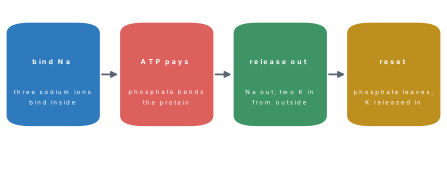
The sodium–potassium pump is a P-type ATPase embedded in the plasma membrane. In each cycle it exports three Na⁺ ions, imports two K⁺ ions and hydrolyses one ATP. The cycle can be remembered as a two-door airlock:
- With the transporter open to the cytosol, 3 Na⁺ bind.
- ATP phosphorylates the pump; its shape changes and Na⁺ is released outside.
- In the outward-facing form, 2 K⁺ bind.
- Loss of phosphate returns the pump to the inward-facing shape, releasing K⁺ into the cytosol.
Because three positive charges leave for every two that enter, the pump is slightly electrogenic: it contributes a few millivolts to the negative interior. Its larger role is indirect — it maintains the K⁺ gradient, and K⁺ leaking out through resting K⁺ channels makes the inside much more negative. The pump also keeps cells from swelling: impermeant proteins inside the cell attract ions and water, but continuous Na⁺ export balances that osmotic pull.
Ouabain and the cardiac glycosides digoxin/digitoxin inhibit Na⁺/K⁺-ATPase from the extracellular side. In heart muscle, partial inhibition raises cytosolic Na⁺ slightly. The Na⁺/Ca²⁺ exchanger then expels less Ca²⁺, so more Ca²⁺ is available for contraction. Too much inhibition disturbs rhythm — a narrow boundary between drug and poison. Hypokalaemia increases digoxin toxicity because K⁺ normally competes at the pump's extracellular side.
Sodium–glucose cotransport: secondary active transport
A sodium–glucose cotransporter (SGLT) uses the downhill entry of Na⁺ to drag glucose uphill into a cell. It does not hydrolyse ATP itself. The energy bill is paid afterwards by Na⁺/K⁺-ATPase, which pumps the entering Na⁺ back out. Thus SGLT is secondary active transport, whereas the Na⁺/K⁺ pump is primary active transport.
| Feature | SGLT1 | SGLT2 |
|---|---|---|
| Main sites | Small-intestinal brush border; later proximal renal tubule (S3) | Early proximal renal tubule (S1/S2) |
| Coupling | 2 Na⁺ : 1 glucose | 1 Na⁺ : 1 glucose |
| Character | High affinity, lower capacity; also transports galactose | Lower affinity, high capacity; responsible for most renal glucose reabsorption |
| Clinical hook | Basis of glucose-containing oral rehydration solution; genetic loss causes glucose–galactose malabsorption | Blocked by gliflozin drugs, increasing urinary glucose excretion in type 2 diabetes |
After glucose enters an intestinal or renal epithelial cell through apical SGLT, it leaves across the basolateral membrane mainly through a facilitative GLUT transporter. Water follows the absorbed solute osmotically. This explains a life-saving treatment developed from pure transport chemistry: in cholera and other secretory diarrhoeas, the intestine secretes profusely, but SGLT1 remains functional. A correctly balanced solution containing glucose and sodium therefore pulls Na⁺ and water back into the body. Plain glucose without salts, or a very sugary drink, does not reproduce that effect and may worsen osmotic loss.
Problem. An intestinal cell takes up 300 glucose molecules through SGLT1. Assuming every co-transported Na⁺ is subsequently exported by Na⁺/K⁺-ATPase, how many ATP molecules are used by the pump, and how many K⁺ ions enter during those pump cycles?
Solution. SGLT1 couples 2 Na⁺ to each glucose, so Na⁺ entry is 300 × 2 = 600 Na⁺. One pump cycle exports 3 Na⁺, requiring 600 ÷ 3 = 200 cycles and therefore 200 ATP. Each cycle imports 2 K⁺, so K⁺ entry is 200 × 2 = 400 K⁺. SGLT itself uses no ATP; Na⁺/K⁺-ATPase pays to restore the gradient.
“3–2–1 pump; 2–1 gut.” The pump moves 3 Na⁺ and 2 K⁺ per 1 ATP; intestinal SGLT1 moves 2 Na⁺ with 1 glucose. Renal SGLT2 is the exception to complete: 1 Na⁺ with 1 glucose.
15.3 Toxicity of iron, arsenic, mercury, lead and cadmium
Toxicity is governed by dose, chemical form, route, age and nutritional state. A useful mechanistic map has four roads to injury. Ionic mimicry lets a toxic ion use another ion's transporter or binding site. Thiol binding disables enzymes whose cysteine –SH groups are chemically vital. Redox cycling generates reactive oxygen species. Finally, storage and biomagnification make exposure last: lead and cadmium are warehoused in the body, while methylmercury becomes more concentrated at higher levels of an aquatic food chain.
Chelation therapy follows the same coordination chemistry. A multidentate ligand wraps a metal ion and forms a more excretable complex. It is never a general “detox”: the ligand may also remove essential metals or redistribute a toxic metal to a more sensitive organ. The first treatment is always to identify and stop exposure, with urgent supportive and specialist toxicology care.
Iron: essential redox power without a safety valve
Iron overload occurs through inherited increases in absorption (notably HFE-related haemochromatosis), repeated blood transfusion, or acute ingestion — classically a child eating adult iron tablets. Once transferrin becomes highly saturated, poorly controlled non-transferrin-bound iron enters liver, heart and endocrine cells. Inside cells, ferrous iron can drive the Fenton reaction:
Fe²⁺ + H₂O₂ → Fe³⁺ + OH⁻ + •OH
The hydroxyl radical (•OH) attacks lipids, proteins and DNA almost where it is formed. Chronic injury produces hepatic fibrosis/cirrhosis, diabetes, skin pigmentation, cardiomyopathy, arthropathy and hypogonadism. Hereditary overload is commonly treated by removing blood (venesection), which forces stored iron into new red cells; transfusion overload requires iron chelators such as deferoxamine or oral agents. Acute poisoning begins with corrosive gastrointestinal injury and may progress to shock, acidosis and liver failure.
Arsenic: phosphate mimic and thiol poison
Arsenic is a metalloid whose inorganic forms occur naturally in some groundwater, including parts of Nepal's Terai aquifers. The WHO provisional drinking-water guideline is 10 µg L⁻¹; concentrations above a national operational limit call for an alternative source or effective removal, not reassurance that “a little poison is a nutrient”.
- Arsenate, As(V), resembles phosphate. It can substitute in phosphorylation reactions, but the arsenate esters hydrolyse readily, wasting metabolic energy (arsenolysis).
- Arsenite, As(III), binds paired thiol groups, notably lipoamide in pyruvate dehydrogenase and α-ketoglutarate dehydrogenase. Blocking these gateways restricts aerobic ATP production.
Acute poisoning causes severe vomiting, abdominal pain, watery diarrhoea and shock. Chronic exposure is associated with mottled pigmentation and thickened palms/soles (hyperkeratosis), peripheral neuropathy, vascular disease and cancers of skin, bladder and lung. Dimercaprol (BAL) was historically designed around arsenic's thiol chemistry; water-soluble chelators such as succimer (DMSA) or DMPS may be used in selected cases. Public-health control — testing wells and switching to safe water — prevents far more injury than late chelation.
Mercury: the form picks the target organ
Metallic mercury liquid is poorly absorbed from a healthy gut, but its invisible vapour is readily inhaled, crosses the blood–brain barrier and is oxidized and trapped in the nervous system. Chronic vapour poisoning classically gives tremor, gum and kidney problems and erethism — irritability, shyness and emotional instability. Inorganic mercury salts such as HgCl₂ are corrosive and especially injure gut and kidney.
Microorganisms in aquatic sediments convert inorganic mercury to methylmercury, which binds protein thiols, enters food chains and biomagnifies in predatory fish. A methylmercury– cysteine complex resembles methionine closely enough to be carried across the blood–brain and placental barriers. The Minamata disaster in Japan showed the result: numbness, unsteady gait, constricted visual fields, speech and hearing disturbance, and devastating fetal brain injury. “Mercury poisoning” is therefore incomplete as an examination phrase unless the chemical form is specified.
Lead: a calcium/zinc impostor with no safe childhood threshold
Pb²⁺ exploits pathways meant for Ca²⁺, Fe²⁺ and Zn²⁺ and binds thiol and other ligand groups in proteins. It inhibits δ-aminolaevulinic acid dehydratase and ferrochelatase in haem synthesis, contributing to anaemia and basophilic stippling of red cells. More importantly, lead disturbs neuronal development, synaptic signalling and behaviour. No safe blood-lead concentration has been identified for children; a reference value is a screening statistic, not a biological safety line.
Sources include deteriorating lead paint, battery recycling, contaminated dust and soil, some traditional remedies/cosmetics, industrial emissions and plumbing components. Gastrointestinal absorption is greater in children and increases when iron or calcium nutrition is poor. Lead is stored for years in bone and can be released during pregnancy, lactation or bone loss. Clinical hooks include developmental delay, abdominal colic, constipation, kidney injury, hypertension, peripheral neuropathy such as wrist drop and, at very high exposure, encephalopathy. Severe cases may receive CaNa₂EDTA, succimer or dimercaprol combinations under specialist direction; removing the source is indispensable because chelation cannot undo established neurodevelopmental injury.
Cadmium: the kidney's long memory
Cadmium enters through tobacco smoke, contaminated rice and other foods, phosphate-fertilizer impurities, nickel–cadmium batteries, pigments and metal work. In blood and liver it induces and binds metallothionein. The small Cd–metallothionein complex is filtered by the kidney and taken up by proximal tubules, where cadmium accumulates with a biological half-life measured in decades. Tubular injury leaks low-molecular-mass proteins and wastes phosphate and calcium. Bone then demineralizes, producing osteomalacia/osteoporosis; severe environmental poisoning in Japan was named Itai-itai (“ouch-ouch”) disease because of intense bone pain and fractures. Inhaled cadmium compounds are also lung carcinogens. Unlike acute lead or arsenic poisoning, routine chelation is generally not the answer for chronic cadmium burden because mobilized cadmium may increase renal exposure; prevention and exposure removal dominate management.
| Toxicant | Decisive chemistry | Highest-yield clinical/environmental hook |
|---|---|---|
| Fe overload | Fe²⁺/Fe³⁺ redox cycling; Fenton production of •OH | Liver, heart and endocrine injury; childhood tablet overdose can be corrosive and rapidly severe |
| As(III) | Binds vicinal –SH groups in lipoamide enzymes | Hyperkeratosis/pigmentation, neuropathy, cancers after chronic water exposure |
| As(V) | Phosphate mimic; unstable arsenate esters | Energy metabolism is uncoupled by arsenolysis |
| Hg⁰ vapour | Lipid-soluble vapour crosses the blood–brain barrier, then is oxidized and trapped | Tremor, erethism, gum and kidney effects |
| Methylmercury | Cysteine complex mimics methionine; biomagnifies in fish | Minamata-type cerebral and fetal injury |
| Pb²⁺ | Mimics Ca²⁺/Zn²⁺; inhibits haem-pathway enzymes; stored in bone | Child neurodevelopment, anaemia, colic, kidney injury |
| Cd²⁺ | Mimics Zn²⁺/Ca²⁺; Cd–metallothionein accumulates in renal cortex | Tubular proteinuria, phosphate/calcium wasting, Itai-itai bone disease |
Iron rusts from within; arsenic blocks thiol gates; mercury's form chooses the organ; lead imitates calcium and steals development; cadmium settles in the kidney and empties bone.
Five swaps the paper sets: Na⁺ is the extracellular cation and K⁺ the intracellular one — the pump maintains, never reverses, that order; the Na⁺/K⁺ pump is primary active (spends ATP) while SGLT is secondary active (spends the gradient); haem iron is Fe(II) for oxygen binding, transport iron Fe(III) on transferrin; Cr(III) is the essential glucose factor while Cr(VI) is toxic — oxidation state is destiny; and chelation matches the metal: EDTA for lead, BAL or penicillamine for arsenic and mercury, never interchangeably.
Problem. A resting neuron hydrolyses 2.0 \times 10^6 ATP molecules via its plasma-membrane \text{Na}^+/\text{K}^+ pump. How many \text{Na}^+ ions are extruded, how many \text{K}^+ ions are imported, and what is the net charge moved out of the cell?
Solution. Each ATP exports 3\text{ Na}^+ and imports 2\text{ K}^+, moving +1 net elementary charge outward. Thus 6.0 \times 10^6\text{ Na}^+ leave, 4.0 \times 10^6\text{ K}^+ enter, and +2.0 \times 10^6\,e of net positive charge is pumped out (making the interior negative).
Formula and fact sheet
| Topic | Must-know fact |
|---|---|
| Macro vs micro | Macro in this chapter: Na, K, Mg, Ca. Micro: Zn, Cu, Co, Ni, Fe, Cr |
| Gradient pair | Na⁺ outside high; K⁺ inside high |
| Enzyme hooks | Zn: carbonic anhydrase. Cu: cytochrome-c oxidase/ceruloplasmin. Co: vitamin B₁₂. Ni: plant/microbial urease. Fe: haem and cytochromes. Mg: MgATP/chlorophyll |
| Na⁺/K⁺ pump | 3 Na⁺ out + 2 K⁺ in + 1 ATP hydrolysed; primary active; inhibited by ouabain/digoxin |
| SGLT | Secondary active. SGLT1 = 2 Na⁺:1 glucose (gut/S3); SGLT2 = 1 Na⁺:1 glucose (S1/S2 kidney) |
| Iron control | Hepcidin blocks ferroportin; ferritin stores iron; no major regulated iron-excretion pathway |
| Toxic mechanisms | As(V) imitates phosphate; As(III) binds thiols; Pb²⁺ imitates Ca²⁺/Zn²⁺; Cd²⁺ imitates Zn²⁺/Ca²⁺; Fe drives Fenton chemistry |
| Disease names | Wilson = copper overload; Minamata = methylmercury; Itai-itai = cadmium; haemochromatosis = iron overload |
Rapid-revision tables and high-yield facts
| Item | Value |
|---|---|
| Na⁺/K⁺-ATPase | 3 Na⁺ out : 2 K⁺ in : 1 ATP |
| SGLT | secondary active, Na⁺ gradient drives glucose |
| Chlorophyll / haem | Mg / Fe porphyrins |
| B₁₂ / urease | Co / Ni |
| Carbonic anhydrase | Zn |
| Cytochrome c oxidase | Cu (+ Fe) |
| Bone mineral | hydroxyapatite, Ca₁₀(PO₄)₆(OH)₂ |
| Chelation | EDTA (Pb), BAL/penicillamine (As, Hg) |
| Diseases | Minamata Hg; itai-itai Cd; Bengal As |
Chapter summary
- Macro- and microminerals differ in required amount, not in importance; chemical form and dose decide benefit or harm.
- Na⁺ dominates extracellular fluid, K⁺ dominates cytosol, Mg²⁺ partners ATP and chlorophyll, and Ca²⁺ combines a structural role in bone with rapid signalling roles.
- Zn²⁺ is a redox-inert catalytic/structural ion; Fe and Cu handle oxygen and electrons but must be protein-bound; cobalt reaches human metabolism through microbially made vitamin B₁₂.
- Nickel has established roles in plants and microbes, while chromium(III)'s supposed essential role in humans remains unproved; chromium(VI) is an important carcinogen.
- Na⁺/K⁺-ATPase is the primary-active 3-out/2-in pump. SGLTs spend the Na⁺ gradient, not ATP directly, to import glucose.
- Oral rehydration works because intestinal SGLT1 links glucose uptake to Na⁺ and water absorption.
- Iron overload produces hydroxyl radicals; arsenic blocks thiol enzymes and imitates phosphate; organic mercury biomagnifies and crosses into brain and fetus.
- Lead injures the developing nervous system without an identified safe childhood threshold, while cadmium accumulates in kidney and secondarily destroys bone.
Practice questions
Set A — Recall (22 questions)
- A macromineral is best defined as a mineral requiredaonly in microgram amountsbonly during childhoodconly by plantsdin relatively large daily amounts
- The dominant cation of extracellular fluid isaNa⁺bK⁺cMg²⁺dZn²⁺
- The dominant cation of intracellular fluid isaNa⁺bCa²⁺cK⁺dCu²⁺
- Intracellular ATP is used by most kinases mainly asaCaATPbMgATPcZnATPdFeATP
- Carbonic anhydrase contains the metal ionaZn²⁺bCu²⁺cCo²⁺dNi²⁺
- The copper-containing plasma protein that also has ferroxidase activity isaferritinbhaemoglobinctransferrindceruloplasmin
- Cobalt is the central metal ofachlorophyllbvitamin B₁₂chaemdthyroxine
- Urease of plants and many microorganisms requiresachromiumbsodiumcnickeldmercury
- The metal at the centre of each haem group in haemoglobin isacopperbironcmagnesiumdcobalt
- The principal mineral crystal of bone and teeth isahydroxyapatitebcalcium carbonateccalcium oxalatedfluorite
- The central metal atom of chlorophyll isaironbcoppercmanganesedmagnesium
- In one Na⁺/K⁺-ATPase cycle, movement isa2 Na⁺ out, 3 K⁺ inb3 Na⁺ in, 2 K⁺ outc3 Na⁺ out, 2 K⁺ ind1 Na⁺ out, 1 K⁺ in
- A classic inhibitor of Na⁺/K⁺-ATPase isaouabainbinsulincpenicillindphlorizin
- Intestinal SGLT1 normally couples glucose uptake toa1 Na⁺ per glucoseb2 K⁺ per glucosec2 Na⁺ per glucosed1 Ca²⁺ per glucose
- Most filtered glucose in the kidney is first reabsorbed byaGLUT4bSGLT2cNa⁺/K⁺-ATPasedaquaporin
- Glucose in oral rehydration solution promotes absorption mainly throughahepatic metabolismbgastric acid productioncinsulin secretiondintestinal SGLT1
- Arsenite, As(III), is especially reactive toward enzymeaphosphate groupsbmethyl groupscthiol (–SH) groupsdpeptide nitrogens only
- Arsenate, As(V), is toxic partly because it chemically mimicsachloridebphosphatecbicarbonatedsulphate
- Minamata disease was caused by eating seafood contaminated withamethylmercuryblead acetateccadmium oxidedarsenate
- Lead inhibits haem synthesis chiefly by acting onacarbonic anhydrase onlybNa⁺/K⁺-ATPase onlycacetylcholinesterase onlydALA dehydratase and ferrochelatase
- Itai-itai disease is associated with chronic poisoning byazincbcadmiumcpotassiumdnickel
- The strongly carcinogenic common oxidation state of chromium in chromate isaCr(0)bCr(III)cCr(II)dCr(VI)
Answers and explanations — Set A
1. (d) — macrominerals are required in hundreds of milligrams or more per day; the term describes amount, not importance.
2. (a) — Na⁺ is the main extracellular cation and determinant of extracellular osmolality.
3. (c) — K⁺ is concentrated inside cells by Na⁺/K⁺-ATPase and membrane selectivity.
4. (b) — Mg²⁺ shields ATP's negative phosphates and is part of the true substrate for many ATP-using enzymes.
5. (a) — Zn²⁺ polarizes bound water in carbonic anhydrase, accelerating CO₂ hydration.
6. (d) — ceruloplasmin carries most plasma copper and oxidizes Fe²⁺ to Fe³⁺ for transferrin loading.
7. (b) — cobalt sits at the centre of cobalamin's corrin ring.
8. (c) — urease is the classic nickel enzyme of plants and microbes.
9. (b) — each haem binds one Fe²⁺, which reversibly binds O₂ in haemoglobin.
10. (a) — hydroxyapatite is a calcium phosphate crystal, Ca₁₀(PO₄)₆(OH)₂.
11. (d) — Mg²⁺ is held by the chlorin ring of chlorophyll.
12. (c) — memorize 3 Na⁺ out, 2 K⁺ in, 1 ATP.
13. (a) — ouabain and cardiac glycosides bind and inhibit the pump from outside the cell.
14. (c) — SGLT1 is a 2 Na⁺:1 glucose symporter, suited to extracting the last glucose from the gut.
15. (b) — high-capacity SGLT2 in S1/S2 reabsorbs most filtered glucose; SGLT1 then captures the remainder.
16. (d) — glucose-driven Na⁺ uptake through SGLT1 is followed by water absorption.
17. (c) — As(III) has high affinity for sulfur ligands, particularly paired thiols in lipoamide enzymes.
18. (b) — arsenate resembles phosphate but forms easily hydrolysed esters, wasting energy.
19. (a) — methylmercury biomagnified through fish and shellfish in Minamata Bay.
20. (d) — inhibition at two haem-pathway steps helps produce anaemia and raised precursor levels.
21. (b) — cadmium first accumulates in kidney; tubular mineral wasting and bone demineralization follow.
22. (d) — Cr(VI) as chromate/dichromate is the carcinogenic, strongly oxidizing form; Cr(III) is far less mobile.
Set B — Understanding (14 questions)
- Free iron is kept extremely low in cells mainly because Fe²⁺ canaprecipitate DNA directlybblock all ATP usecgenerate hydroxyl radicals from H₂O₂dimitate phosphate
- Zn²⁺ is well suited to structural zinc-finger sites because it isastrongly radioactivebalways free in cytosolca large monovalent iondredox-inert under cellular conditions
- Long-term excessive zinc supplementation can produce copper deficiency because zincainduces intestinal metallothionein that traps copperbdestroys vitamin B₁₂cconverts copper to mercurydblocks renal SGLT2
- Wilson disease and Menkes disease are both disorders of copperaintake onlybtransport proteinscoxidation to Cu³⁺dchlorophyll formation
- The most accurate current statement about chromium(III) in humans is that itais a proven enzyme centrebmust be injected dailycis as carcinogenic as Cr(VI)dhas no firmly established essential function
- The most accurate current statement about nickel in humans is that itais the centre of haembhas no established specific essential functioncis required by human ureasedis stored mainly in bone
- One cycle of Na⁺/K⁺-ATPase is electrogenic because it produces net movement ofano chargebone negative charge outcone positive charge out of the celldfive positive charges in
- The resting membrane potential is close to the K⁺ equilibrium potential mainly because resting membraneaconductance to K⁺ is relatively highbcontains no Na⁺cATP is absentdCa²⁺ is the main intracellular cation
- Digoxin increases cardiac contractility indirectly because pump inhibition raises intracellularaK⁺ and lowers Ca²⁺bNa⁺, reducing Ca²⁺ extrusion by Na⁺/Ca²⁺ exchangecglucose uptake through SGLT2dMg²⁺ release from bone
- SGLT-mediated glucose uptake is called secondary active transport becauseait spends a Na⁺ gradient made using ATP elsewherebglucose hydrolyses ATPcit occurs only after digestiondtwo glucose molecules move
- Oral rehydration solution can work during secretory diarrhoea becauseaall intestinal transporters stopbsodium is unnecessarycglucose kills cholera bacteriadSGLT1-mediated absorption remains available
- Methylmercury reaches the brain effectively partly because its cysteine complex resemblesaphosphatebglucosecmethioninedcholesterol
- Lead stored in bone remains medically important because it canabe remobilized during pregnancy or bone lossbbecome calcium permanentlycbe excreted in breathdonly affect the bone surface
- Chelation is generally not the main treatment for chronic cadmium accumulation because mobilized cadmium mayaturn into zincbprecipitate in the stomach onlycbind oxygen in haemoglobindincrease exposure of the kidney
Answers and explanations — Set B
1. (c) — Fenton chemistry converts peroxide to the exceptionally reactive hydroxyl radical.
2. (d) — Zn²⁺ (3d¹⁰) binds ligands and stabilizes folds without engaging in damaging electron-transfer cycling.
3. (a) — zinc-induced metallothionein in enterocytes binds copper strongly; the copper is lost when the cells are shed.
4. (b) — Wilson disease involves ATP7B and copper overload; Menkes disease involves ATP7A and failure to distribute copper.
5. (d) — older claims about insulin action have not established a definite Cr-dependent human biomolecule or deficiency disease.
6. (b) — nickel-dependent enzymes are well known in plants/microbes, not yet as a proven human requirement.
7. (c) — three positive charges leave and two enter, a net outward positive current.
8. (a) — at rest, K⁺ channels dominate membrane conductance; the pump maintains the underlying gradient.
9. (b) — a smaller transmembrane Na⁺ gradient slows forward Na⁺/Ca²⁺ exchange, leaving more Ca²⁺ for contraction.
10. (a) — SGLT has no ATPase activity; it borrows potential energy stored in the Na⁺ gradient.
11. (d) — secretion and glucose-linked absorption are different pathways; the latter can still rescue salt and water.
12. (c) — structural mimicry lets amino-acid transport systems carry the complex across protective barriers.
13. (a) — bone is a long-lived internal reservoir, so blood lead can rise when bone turnover increases.
14. (d) — cadmium already targets the renal cortex; indiscriminate mobilization can worsen that exposure, so prevention is paramount.
Set C — Application (10 questions)
- A patient with vomiting has muscle weakness and flattened T waves with prominent U waves. The ion disturbance most consistent with this pattern is low plasmaasodiumbpotassiumczincdcobalt
- A small child swallows many iron tablets and becomes severely ill. The classic iron-chelating antidote for severe acute poisoning isapenicillaminebcalcium gluconatecdeferoxaminedsodium thiosulphate
- A Terai tube well contains inorganic arsenic at 80 µg L⁻¹. The best interpretation is that the waterais eight times the WHO guideline and needs a safer source/treatmentbis safe because arsenic is naturalcneeds only boiling to remove arsenicdis safe for children but not adults
- In one lake food web, methylmercury concentration will generally be highest inaphytoplanktonbsmall herbivorous fishclake waterdold predatory fish
- A gliflozin drug blocks renal SGLT2. Its immediate urinary effect is increased excretion ofapotassium onlyburea onlycglucosedcalcium phosphate crystals
- An infant develops life-threatening diarrhoea whenever fed glucose or galactose, but not fructose. The defective transporter is most likelyaSGLT1bSGLT2cNa⁺/K⁺-ATPase in every celldGLUT4 in muscle
- A child's blood lead result is slightly above a population reference value. The correct public-health interpretation isavalues below an old threshold are proven safebwait for wrist drop before actingcgive iron only and ignore the sourcedidentify and remove exposure; no safe level is known
- A person receiving lifelong transfusions develops liver and heart injury from iron loading. The central chemical treatment strategy is ironaoxidation to Fe(VI)bchelation and excretioncconversion to haem by forcedreplacement with zinc
- Older rice-farming residents near a cadmium-contaminated river develop tubular proteinuria and very painful soft bones. The toxicant pattern isacadmiumbmethylmercurycpotassium excessdcobalt deficiency
- A young adult has liver disease, tremor and brown-green Kayser–Fleischer rings in the cornea. The accumulating element isazincbcoppercnickeldmagnesium
Answers and explanations — Set C
1. (b) — hypokalaemia classically causes weakness and ECG flattening of T with a prominent U wave; cardiac monitoring matters.
2. (c) — deferoxamine binds iron avidly and is used for severe acute iron poisoning under emergency specialist care.
3. (a) — 80 ÷ 10 = 8. Boiling does not remove dissolved arsenic and can concentrate it as water evaporates.
4. (d) — methylmercury biomagnifies, so long-lived top predators carry the greatest burden.
5. (c) — reducing proximal-tubule glucose reabsorption produces therapeutic glycosuria.
6. (a) — intestinal SGLT1 transports glucose and galactose with Na⁺; fructose uses a different route (GLUT5).
7. (d) — a reference value identifies unusually exposed children; prevention and source removal should not await symptoms.
8. (b) — patients who must continue transfusions cannot simply be bled, so chelators bind iron for urinary/faecal elimination.
9. (a) — renal tubular wasting plus demineralized painful bone is the Itai-itai pattern of chronic cadmium poisoning.
10. (b) — Kayser–Fleischer rings are corneal copper deposits of Wilson disease.