Chapter 21 · Applied Chemistry · 3 questions in the paper · 29 min read
Applied Chemistry and Chemistry in Service to Mankind
What the syllabus asks for 4
- The chemical industry: stages of production, economics and plant management, batch and continuous processing, environmental effects and their control
- Cement, paper and pulp; nitric acid (Ostwald), ammonia (Haber), sulphuric acid (contact), caustic soda (diaphragm cell), sodium carbonate (Solvay) and urea
- Uses of the common non-metals, metals, inorganic compounds and organic compounds
- Polymers, dyes, drugs, pesticides and fertilizers; colloids, osmotic pressure and buffers in daily life; medical and industrial uses of radioisotopes
Applied chemistry asks what happens when a balanced equation has to survive a factory, a market and the environment. This 3-question chapter is a rapid tour with a common logic: raw materials are prepared, converted, separated, finished and checked; the best process is not merely the one with the prettiest equation but the one giving safe, pure product at a defensible cost in energy, materials and pollution. The same thinking explains familiar materials — cement, paper, plastics, dyes, medicines and fertilizers — and the quiet chemistry of colloids, osmosis and buffers in daily life.
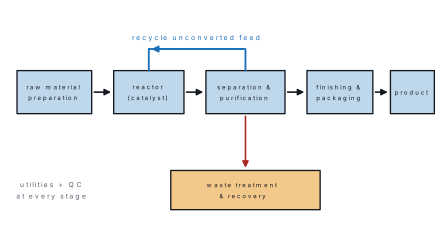
- A chemical plant runs: raw-material preparation → reaction/conversion → separation and purification → finishing/formulation → packaging, with quality control, utilities, recycle and waste treatment wrapped around every stage.
- Batch processing (charge–react–discharge–clean) is flexible and traceable, suited to small-volume/many-product work such as pharmaceuticals. Continuous processing is steady, automated and economical at huge volume (ammonia, sulfuric acid, cement), but capital-heavy and inflexible.
- Profit and sustainability turn on feedstock/energy price, yield and selectivity, catalyst life, recycle of unconverted reactants, co-product value, location, maintenance and pollution control. Green chemistry prefers prevention, atom economy, catalysis, safer solvents and energy efficiency over end-of-pipe cleanup.
- Cement: limestone + clay are calcined and clinkered near 1450 °C; alite (C₃S) gives early strength, belite (C₂S) later strength. A little gypsum in grinding retards setting. Calcination itself releases CO₂: 1000 kg CaCO₃ → 440 kg CO₂.
- Paper: fibres are liberated by mechanical pulping (high yield, lignin remains, paper yellows) or kraft chemical pulping (NaOH + Na₂S; strong fibres; black liquor is burned to recover energy/chemicals), then washed, bleached, formed on a wire, pressed and dried.
- Heavy chemicals in one line each: Haber NH₃ (Fe catalyst, recycle); Ostwald HNO₃ (Pt–Rh gauze oxidizes NH₃); Contact H₂SO₄ (V₂O₅; SO₃ absorbed into oleum); chlor-alkali NaOH/Cl₂/H₂ (diaphragm historically, membrane cells now preferred); Solvay Na₂CO₃ (precipitate NaHCO₃, calcine); urea from NH₃ + CO₂ through ammonium carbamate (46% N).
- Addition polymers grow by chain addition with no small by-product (polythene, PVC, polystyrene, Teflon). Condensation polymers eliminate a small molecule (nylon-6,6, PET, Bakelite). Thermoplastics soften reversibly; cross-linked thermosets do not. Vulcanization cross-links rubber with sulfur.
- A dye needs a chromophore (for example –N=N– in azo dyes) and usually an auxochrome (–OH, –NH₂, –SO₃H) for solubility/fibre binding. Drugs are classified by action (analgesic, antibiotic, antacid…); antibiotics act on bacteria, not viruses, and misuse selects resistance.
- Fertilizer labels give N–P₂O₅–K₂O percentages: urea 46-0-0, DAP about 18-46-0, muriate of potash about 0-0-60. Persistent fat-soluble pesticides such as DDT biomagnify; integrated pest management reduces chemical load.
- Colloids (roughly 1–1000 nm dispersed particles) show Tyndall scattering and Brownian motion: milk (emulsion), fog (aerosol), jelly (gel), blood (sol). Alum coagulates colloidal clay in water treatment.
- Osmotic pressure follows \pi = iCRT. About 0.9% NaCl is isotonic with blood; reverse osmosis applies pressure greater than π to desalinate water. The blood buffer is chiefly H₂CO₃/HCO₃⁻, holding pH near 7.4.
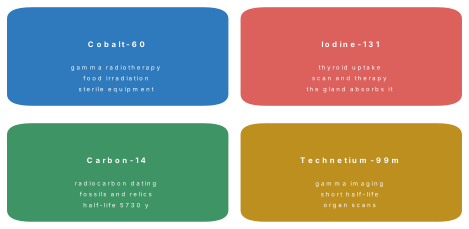
- Radioisotopes: Tc-99m and F-18 for diagnostic imaging; I-131 for thyroid therapy; Co-60 for radiotherapy/sterilization and industrial radiography; Am-241 in smoke detectors. Protection is time, distance and shielding (ALARA).
21.1 The chemical industry: stages of production, economics and plant management, batch and continuous processing, environmental effects and their control
From flask to flowsheet
A commercial process is usually drawn as a chain of unit operations and unit processes:
- Feed preparation — crushing, dissolving, filtering, drying, preheating and purifying raw materials so the reactor receives a predictable diet.
- Conversion — the chemical reaction(s), controlled for temperature, pressure, residence time and catalyst contact. Conversion per pass may deliberately be modest (Haber) if unreacted feed can be recycled cheaply.
- Separation and purification — distillation, absorption, extraction, crystallization, filtration and drying. In many plants this block costs more energy than the reactor.
- Finishing — blending, granulation/prilling, polymerization shaping, tableting or dilution to specification.
- Packaging, storage and dispatch, with batch/lot traceability.
Around the chain sit utilities (steam, cooling water, compressed air, refrigeration), analytical quality control, recycle loops, flare/relief systems and effluent treatment. Scale-up is not just a bigger flask: surface area per volume falls, hot spots grow, mixing and heat removal become limiting, so pilot-plant data and hazard studies (for example HAZOP) precede a full plant.
Batch versus continuous, and what the manager optimizes
| Feature | Batch | Continuous |
|---|---|---|
| Operation | Load, react, unload, clean; one lot at a time | Feed and product flow steadily |
| Best for | Low volume, many grades, strict lot identity (medicines, dyes, speciality chemicals) | Very large tonnage of one specification (NH₃, H₂SO₄, cement, refining) |
| Strengths | Flexible scheduling/equipment, easier containment of a bad lot | Labour/energy efficiency, steady quality, heat integration, automation |
| Weaknesses | Downtime, cleaning waste, batch-to-batch variation | High capital cost, difficult start-up/shutdown, poor flexibility |
Plant economics is applied stoichiometry with prices attached. Yield and selectivity decide how much feed becomes saleable product rather than by-product; catalyst life and energy integration decide operating cost; capital is repaid over years, so utilization matters. A valuable co-product can rescue a process (acetone in the cumene route to phenol, Ch. 18), while a waste with no outlet can kill it (CaCl₂ brine from Solvay plants). Site choice balances raw material, water/energy, labour, market transport and environmental capacity. Good plant management is therefore chemistry plus preventive maintenance, instrumentation, inventory control, safety culture and documented quality systems.
Environmental effects and control
Typical burdens are acid gases (SO₂/NOₓ), particulates, volatile organic compounds and greenhouse gases to air; oxygen-demanding, acidic, saline or metal-bearing effluent to water; and sludges/ash/spent catalyst as solids. Control follows a hierarchy:
- Prevent/substitute: choose catalytic, atom-economical routes; replace mercury cells by membrane cells; design out persistent products.
- Recover/recycle: recycle unconverted reactants and solvents, burn pulping black liquor for energy and chemical recovery, use waste heat.
- Treat at the boundary: electrostatic precipitators/bag filters for dust, lime scrubbers for SO₂, selective catalytic reduction for NOₓ, neutralization and biological oxidation for effluent, secure disposal of hazardous residues.
- Monitor and account: continuous emission monitoring, environmental impact assessment before construction, and increasingly carbon capture or low-carbon hydrogen for the hardest sectors (cement, ammonia, steel).
Problem. A cement kiln calcines 1000 kg of pure CaCO₃. What mass of process CO₂ is released before any fuel is counted? (CaCO₃ = 100 g mol⁻¹, CO₂ = 44 g mol⁻¹.)
Solution. CaCO₃ → CaO + CO₂ is 1:1 in moles. Mass of CO₂ = 1000 × 44/100 = 440 kg. That is why cement decarbonization cannot be solved by clean fuel alone: nearly half a tonne of CO₂ per tonne of limestone is chemistry, so clinker substitution and carbon capture matter as much as kiln fuel.
Problem. Fertiliser sacks proclaim urea CO(NH₂)₂ as 46 % nitrogen. Verify the claim from the formula (C 12, O 16, N 14, H 1), and state why urea outranks ammonium sulphate as a nitrogen source. Solution. Molar mass = 12 + 16 + 2 × (14 + 2) = 60 g/mol; the two nitrogens weigh 28 g, so the mass fraction is 28/60 = 0.4667, i.e. 46.7 %, labelled 46 % — the richest solid nitrogen fertiliser in common use, against ammonium sulphate's 21 %, and it leaves no acid residue in the soil the way the sulphate does.
21.2 Cement, paper and pulp; the six heavy-chemical processes
Portland cement
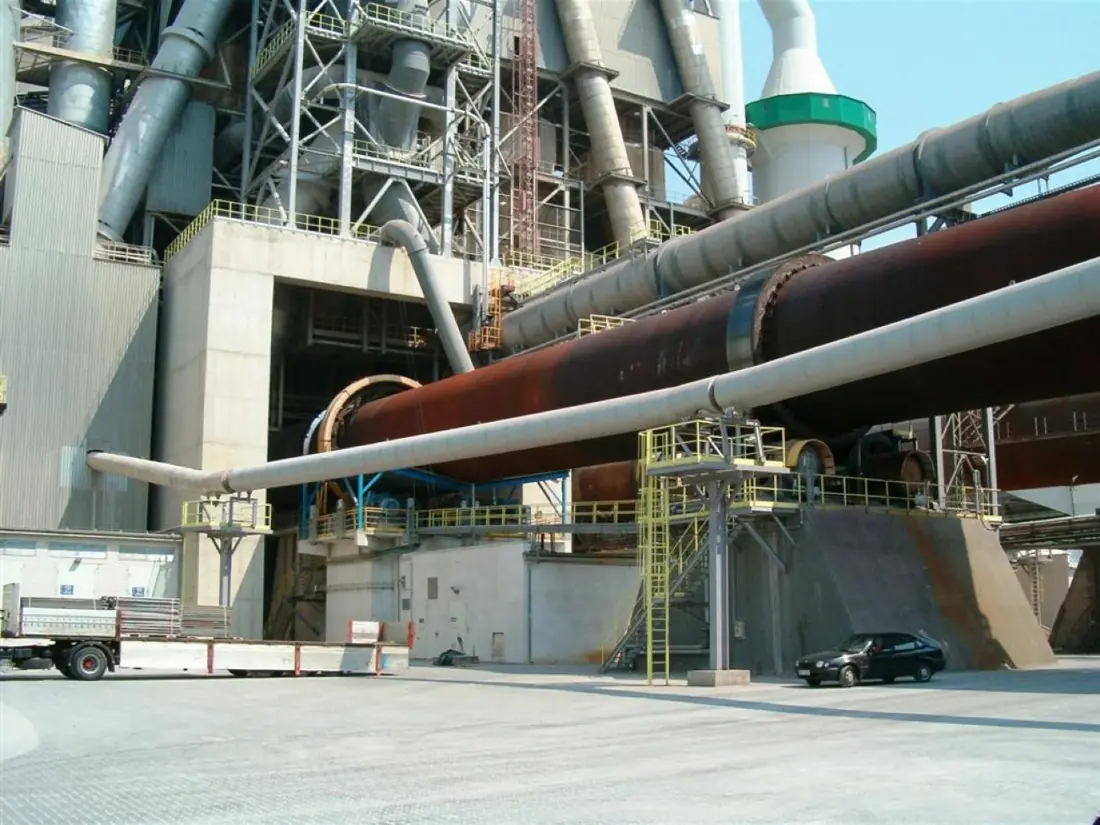
The raw mix is mainly limestone (CaCO₃) with clay/shale supplying SiO₂, Al₂O₃ and Fe₂O₃, corrected with sand or iron ore where needed. In the modern dry process the ground, homogenized meal passes through preheaters, calcines near 900 °C and enters a rotary kiln at about 1450 °C, emerging as marble-sized clinker. Its strength minerals are alite (3CaO·SiO₂, “C₃S”, early strength), belite (2CaO·SiO₂, “C₂S”, later strength), tricalcium aluminate (C₃A, rapid early reaction/heat) and ferrite (C₄AF). The clinker is ground with about 3–5% gypsum, which retards the otherwise flash-setting hydration of C₃A.
Ordinary Portland cement (OPC) is essentially clinker + gypsum. Portland pozzolana cement (PPC) intergrinds reactive material such as fly ash; the pozzolan later consumes Ca(OH)₂ from hydration to make more binding calcium-silicate-hydrate, often improving durability and lowering clinker-related CO₂. Setting and hardening are hydration, not “drying”: silicates form C–S–H gel plus Ca(OH)₂ exothermically, which is why fresh concrete is cured wet and why the alkaline pore solution passivates reinforcing steel.
Pulp and paper
Paper is a felted web of cellulose fibres. The industrial problem is freeing those fibres from lignin, the aromatic glue of wood. Mechanical pulping grinds or refines wood with high yield, but lignin remains, so newsprint is weaker and yellows in light. Kraft (chemical) pulping cooks chips in NaOH + Na₂S (“white liquor”), dissolving lignin to give strong fibres; the spent black liquor is concentrated and burned, recovering both energy and inorganic cooking chemicals. Pulp is washed, screened and bleached — modern sequences use oxygen, chlorine dioxide (elemental-chlorine-free) or peroxide rather than elemental chlorine, reducing chlorinated pollutants.
Stock is then diluted, mixed with fillers (CaCO₃/kaolin for opacity and smoothness) and sizing agents (to resist ink spreading), spread on a moving wire (Fourdrinier machine), pressed, dried on heated cylinders and calendered. Paper quality is specified by grammage (g m⁻²), tensile/burst/tear strength, brightness, opacity and moisture. Recovered paper is repulped and de-inked, though fibres shorten a little each cycle. Bamboo, bagasse, straw and sabai grass are regionally important non-wood fibres, including in South Asian mills.
Six processes the syllabus names
| Product | Heart of the process | Non-negotiable examination point |
|---|---|---|
| Ammonia — Haber | N₂ + 3H₂ over promoted Fe, about 450 °C and 200 atm, NH₃ liquefied out and unreacted gas recycled | Exothermic equilibrium compromise; catalyst changes rate, not equilibrium |
| Nitric acid — Ostwald | 4NH₃ + 5O₂ →(Pt–Rh gauze, about 900 °C) 4NO + 6H₂O; 2NO + O₂ → 2NO₂; 3NO₂ + H₂O → 2HNO₃ + NO (recycled) | The NO by-product is not waste; it re-enters oxidation/absorption |
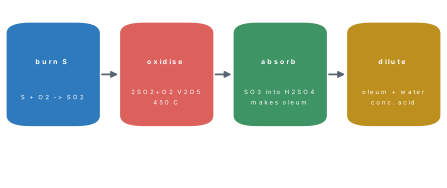
| Sulfuric acid — Contact | S or sulfide ore → SO₂; 2SO₂ + O₂ ⇌ 2SO₃ over V₂O₅ near 450 °C; SO₃ absorbed in conc. H₂SO₄ to oleum, then diluted | Directly dissolving SO₃ in water makes a corrosive acid mist |
| Caustic soda — chlor-alkali | Electrolysis of brine: anode Cl₂, cathode H₂ + NaOH. A porous diaphragm limits Cl₂/OH⁻ mixing but gives salt-contaminated liquor | Modern membrane cells give purer NaOH and avoid asbestos diaphragms/mercury cells |
| Sodium carbonate — Solvay | NH₃/CO₂ into brine precipitates NaHCO₃; calcining gives Na₂CO₃; lime recovers NH₃ | Overall waste stream is mainly CaCl₂; KHCO₃ is too soluble for a potassium version (Ch. 14) |
| Urea | 2NH₃ + CO₂ under pressure → ammonium carbamate → CO(NH₂)₂ + H₂O; solution is concentrated and prilled/granulated | 46% N — the most concentrated common solid nitrogen fertilizer; excess heat forms undesirable biuret |
Ammonia synthesis, N₂ + 3H₂ ⇌ 2NH₃, is exothermic. Reason through the plant conditions as an examiner does:
- Yield at equilibrium (Le Chatelier): low temperature and high pressure favour NH₃ (4 gas moles → 2).
- Rate: low temperature is uselessly slow; a catalyst (finely divided iron) speeds the approach to equilibrium but cannot change its position.
- Economics: very high pressures need expensive plant.
So the operating point is a compromise: about 450 °C, about 200 atm, iron catalyst, with the ammonia liquefied out and unreacted gases recycled. The same three-line argument (yield ↔ rate ↔ cost) answers the equivalent Contact-process question (about 450 °C, 1–2 atm, V₂O₅ catalyst).
Continuous processes suit bulk chemicals made on a huge scale (ammonia, sulphuric acid, cement); batch processing suits small-scale, high-value products (many drugs and dyes). And the perennial trap: a catalyst lowers activation energy and shortens the time to equilibrium — it never increases the percentage yield at equilibrium.
21.3 Uses of common non-metals, metals, inorganic and organic compounds
Use follows property. A compact, high-yield map is:
| Material | Major uses | Property being cashed in |
|---|---|---|
| O₂ | Steel converters, welding, medical oxygen | Supports rapid oxidation/respiration |
| N₂ | Haber feedstock; inert blanketing and food packaging | Very unreactive triple bond |
| H₂ | Ammonia, refining, hydrogenation of oils, emerging low-carbon fuel/reductant | Light, combustible, reducing |
| Cl₂ and hypochlorites | Water disinfection, PVC and chlorinated intermediates | Oxidizing, microbicidal |
| Sulfur | Sulfuric acid, vulcanizing rubber, fungicides | Accessible S–S/redox chemistry |
| Phosphorus compounds | Fertilizers, detergents (restricted), flame retardants | Phosphate is an essential nutrient |
| Graphite/diamond | Electrodes, lubricant, pencils / cutting tools and abrasives | Layered slipperiness / extreme hardness |
| Fe/steel | Construction, machines, vehicles | Strength, abundance, alloy tuning |
| Al | Aircraft, cables, packaging, utensils | Low density + protective oxide film |
| Cu | Electrical wiring, motors, heat exchangers | Conductivity second only to Ag, ductility |
| Zn | Galvanizing, brass, dry cells | Sacrificial corrosion (Ch. 10) |
| Ti and alloys | Aircraft, implants, chemical plant | Strength-to-density and corrosion resistance |
| Li compounds | Rechargeable batteries, lubricating greases, mood-stabilizing drug salts | Lightest metal, high electrode potential |
| Na₂CO₃ / NaHCO₃ | Glass, detergents, water softening / baking and antacid use | Alkalinity at two strengths |
| CaO / Ca(OH)₂ / CaOCl₂ | Cement and steel flux / mortar and liming / bleaching powder disinfectant | Basicity and available chlorine |
| Alum, KAl(SO₄)₂·12H₂O | Water clarification, mordant | Al³⁺ hydrolyses and coagulates colloids |
| Methane / LPG | Domestic and industrial fuel, H₂ manufacture | High H:C ratio, clean-er combustion than coal |
| Ethene | Polythene, PVC via chloroethene, ethanol/ethylene oxide chains | Reactive π bond — a platform molecule |
| Ethanol | Solvent, antiseptic, fuel blending, tinctures | Miscibility, volatility, microbicidal action |
| Ethanoic acid | Vinegar, acetate esters/fibres | Weak-acid food safety + acylation chemistry |
| Glycerol | Cosmetics, pharmaceuticals, nitroglycerin | Hygroscopic triol, non-volatile |
| Benzene/toluene | Feedstocks for styrene, phenol, dyes and drugs | Reformable aromatic platform (with strict exposure control) |
21.4 Polymers, dyes, drugs, pesticides and fertilizers; colloids, osmotic pressure and buffers; radioisotopes
Polymers
A polymer is a macromolecule built from repeating monomer units. Addition polymers form when π bonds open in a chain reaction and no small molecule is lost: ethene → polythene, chloroethene → PVC, styrene → polystyrene, tetrafluoroethene → PTFE (Teflon). Condensation polymers grow stepwise with loss of H₂O or another small molecule: hexamethylenediamine + adipic acid → nylon-6,6; ethylene glycol + terephthalic acid → PET polyester; phenol + formaldehyde → Bakelite. Natural rubber is cis-polyisoprene; heating it with sulfur (vulcanization) introduces cross-links that convert a sticky gum into a resilient elastomer. Linear/branched thermoplastics soften on heating and can be remoulded; cross-linked thermosets char rather than melt. Fibres (nylon, polyester) are drawn into oriented chains for tensile strength. The current materials challenge is circular: design for sorting/recycling, reduce microplastic shedding and reserve biodegradable polymers such as PLA for settings where their required composting conditions actually exist.
Dyes
Colour requires conjugated unsaturation. The group chiefly responsible is the chromophore — azo –N=N–, carbonyl/anthraquinone systems, phthalocyanine rings — while an auxochrome such as –NH₂, –OH or –SO₃H deepens colour and helps the dye dissolve or bind. Azo dyes are made by diazotizing a primary aromatic amine and coupling it with phenol/ β-naphthol (Ch. 20). By application, dyes may be direct (hydrogen-bond to cotton), acid (anionic, for wool/nylon), basic (cationic), reactive (covalent bond to fibre — excellent wash fastness), vat (indigo; applied in reduced soluble form, then oxidized in the fibre) or disperse (tiny particles for polyester). Some azo dyes can be metabolically cleaved to regulated aromatic amines, so dye chemistry is also toxicology.
Drugs
A drug is a substance used to diagnose, prevent or treat disease. Examples by action: analgesics/antipyretics (paracetamol; aspirin is also anti-inflammatory and antiplatelet), antibiotics (penicillins and others act on bacterial targets and are useless against viral colds; incomplete or unnecessary courses select resistant bacteria), antacids (Mg(OH)₂/Al(OH)₃ mixtures neutralize excess gastric HCl), antihistamines (allergy), antimalarials (chloroquine historically, artemisinin combinations now central), and anaesthetics. An antiseptic is applied to living tissue (chloroxylenol/Dettol-type preparations, iodine tincture); a disinfectant is for surfaces (phenolics, hypochlorite) and is generally more cytotoxic. Dose, formulation and pharmacokinetics turn a molecule into a medicine — the bridge to pharmacology in the health-science degrees CEE opens.
Pesticides and fertilizers
Pesticides are named by target: insecticides, herbicides, fungicides, rodenticides. Organochlorines such as DDT are persistent and fat-soluble, so they biomagnify through food chains and are heavily restricted. Organophosphates/carbamates inhibit acetylcholinesterase and can be acutely poisonous to handlers. Pyrethroids mimic natural pyrethrins; biopesticides include Bacillus thuringiensis preparations and neem (azadirachtin). Copper-based Bordeaux mixture remains a classic fungicide. Integrated pest management — resistant varieties, crop rotation, biological control, monitoring and targeted spraying — keeps chemical use as the last, measured resort.
Plants need N for protein/chlorophyll, P for ATP/nucleic acids/roots and K for enzyme and water regulation. Fertilizer grades quote N–P₂O₅–K₂O: urea 46-0-0, ammonium sulfate 21-0-0 (plus sulfur), single/triple superphosphate about 16/46% P₂O₅, DAP about 18-46-0 and muriate of potash (KCl) about 0-0-60. In soil, urease hydrolyses urea to ammonium, nitrifying bacteria form nitrate, and excess nitrate/phosphate leaches or runs off to cause eutrophication. Manures and composts are dilute and slow but add carbon and improve soil structure; the modern answer is soil testing and the right dose at the right time, not “chemical versus organic” slogans.
Colloids, osmosis and buffers around us
A colloid disperses particles of roughly 1–1000 nm through a continuous medium. Named by the pair of phases, examples include sols (paint, blood plasma proteins), gels (jelly, silica gel), emulsions (milk, mayonnaise: liquid in liquid), foams (whipped cream, shaving foam) and aerosols (fog, smoke). Colloids scatter a light beam (Tyndall effect), jitter under molecular bombardment (Brownian motion) and often carry surface charge, so electrolytes coagulate them — multivalent ions being most effective (Hardy–Schulze pattern). Alum clarifies turbid water by coagulating negatively charged clay and humic colloids; gelatin and casein act as protective colloids in foods and inks.
Osmosis is net solvent movement through a semipermeable membrane toward the side of higher solute concentration; osmotic pressure is \pi=iCRT. A 0.9% (9 g L⁻¹) NaCl solution is about 0.154 mol L⁻¹ in NaCl and, with i≈2, close to blood osmolality — hence “normal saline” neither swells nor shrivels red cells. Salt and sugar preserve food by drawing water from microbes; wilted vegetables crisp again in water; and reverse osmosis applies pressure exceeding π to force fresh water out of seawater/brackish supplies. Oral rehydration (also Ch. 15) is osmosis harnessed by coupled Na⁺–glucose absorption.
A buffer is a conjugate acid–base pair that absorbs added H⁺ or OH⁻ with little pH change. Blood is held near pH 7.4 chiefly by H₂CO₃/HCO₃⁻, assisted by phosphate and proteins including haemoglobin; acetate and phosphate buffers stabilize laboratory reagents, eye drops, injections and fermentation media. The chemistry is Ch. 7's equilibrium doing daily work.
Medical and industrial uses of radioisotopes
Unstable nuclei are useful because their radiation can be detected at tracer mass or focused for damage. Tc-99m (metastable, 6 h half-life, clean γ) is the workhorse of diagnostic scans of bone, heart and thyroid; F-18 in fluorodeoxyglucose lights up glucose-hungry tissue in PET imaging. I-131 is concentrated by the thyroid, where its β emission treats hyperthyroidism and thyroid cancer; P-32 has been used for excess red-cell production; Co-60 γ beams treat tumours and sterilize medical supplies; Ir-192 seeds deliver brachytherapy; and targeted agents such as Lu-177 combine a tumour-seeking molecule with a β emitter (“theranostics” when paired with an imaging isotope).
Industry uses Co-60/Ir-192 γ radiography to inspect welds and castings, β/γ gauges to measure sheet thickness and tank levels without contact, tracer isotopes to find pipeline leaks and follow groundwater, Am-241 ionization in smoke detectors, food irradiation to delay sprouting and kill insects/microbes, and sterile-insect releases against pests. In research, ³H, ¹⁴C, ³²P and ³⁵S labels trace metabolic pathways, while ¹⁴C dating reads archaeological time (Ch. 12). Every benefit is paired with ALARA discipline — minimize time, maximize distance, use appropriate shielding, and manage decaying waste by half-life.
Five distinctions the paper probes: the catalyst speeds the Haber reaction while the promoters keep the iron porous and active — not the same job; oleum is SO₃ dissolved in sulphuric acid, not in water, because water makes an acid mist; the diaphragm separates products, not electrodes from solution — without it Cl₂ and NaOH marry into hypochlorite; gypsum retards cement's setting rather than strengthening it; and isotonic saline matches blood's osmotic pressure at 0.9 %, while distilled water in a vein would burst the cells.
Formula and fact sheet
| Topic | Must-know |
|---|---|
| Plant logic | Prepare → react → separate → finish → pack; recycle + QC + waste treatment throughout |
| Batch vs continuous | Batch = flexible/small lots; continuous = steady/large tonnage |
| Cement | Limestone + clay; 1450 °C clinker; gypsum retards set; 1 t CaCO₃ → 0.44 t process CO₂ |
| Paper | Kraft liquor NaOH + Na₂S; black liquor recovery; mechanical pulp keeps lignin and yellows |
| Six processes | Haber Fe; Ostwald Pt–Rh; Contact V₂O₅/oleum; chlor-alkali H₂+Cl₂+NaOH; Solvay NaHCO₃ ppt; urea via carbamate, 46% N |
| Polymers | Addition: PE/PVC/PS/PTFE. Condensation: nylon-6,6/PET/Bakelite. Thermoset = cross-linked |
| Dyes/drugs | Chromophore colours, auxochrome binds/dissolves; antibiotics ≠ antivirals; antiseptic = tissue, disinfectant = surface |
| Agrochemicals | DDT biomagnifies; N–P₂O₅–K₂O labels; urea 46-0-0, DAP 18-46-0, MOP 0-0-60 |
| Daily physical chemistry | Tyndall for colloids; π=iCRT; 0.9% saline isotonic; blood buffer H₂CO₃/HCO₃⁻ |
| Isotopes | Tc-99m/F-18 imaging; I-131 thyroid; Co-60 therapy/sterilization/radiography; Am-241 smoke alarm |
Rapid-revision tables and high-yield facts
| Item | Value |
|---|---|
| Haber ΔH | −92 kJ/mol, exothermic |
| Oleum | H₂S₂O₇ |
| Solvay by-product | CaCl₂ |
| Urea nitrogen | 46 % |
| Saline isotonic | 0.9 % NaCl |
| Blood pH | 7.4, bicarbonate buffer |
| Aspirin | acetylsalicylic acid |
| Vulcanising agent | sulphur |
| Co-60 | therapy, irradiation |
| C-14 | radiocarbon dating |
Chapter summary
- A viable process joins reaction chemistry to separation, recycle, energy, quality and waste systems; batch suits variety, continuous suits volume.
- Cement clinker minerals and gypsum explain strength and setting, while limestone calcination makes process CO₂ unavoidable without substitution/capture.
- Kraft pulping's chemical-recovery loop is why a paper mill can be both a fibre factory and a power station.
- Haber, Ostwald, Contact, chlor-alkali, Solvay and urea each compress to one catalyst/reagent, one equilibrium trick and one product-separation trick.
- Uses of common substances are predictable from properties such as conductivity, oxide passivation, alkalinity, π reactivity and hydrogen bonding.
- Addition versus condensation polymerization, chromophore/auxochrome design and drug action classes organize the consumer-chemical world.
- Fertilizer value is printed as N–P₂O₅–K₂O; pesticide persistence and nutrient runoff are the environmental price of careless dosage.
- Tyndall scattering identifies colloids, iCRT prices osmosis from saline drips to desalination, and bicarbonate keeps blood near pH 7.4.
- Radioisotopes image, treat, sterilize, inspect and trace — always under time–distance–shielding discipline.
Practice questions
Set A — Recall (25 questions)
- In a typical chemical plant, separation and purification normally come immediately after theapackaging stagebmining of ore onlycmarketing stagedreaction/conversion stage
- Continuous processing is most suitable foravery large tonnage at steady specificationbone-off laboratory samplescchanging recipes hourlydhandmade products only
- The fraction of feed converted to the desired product (rather than by-products) is closely described byaviscositybhumiditycselectivitydcolour
- A lime scrubber in a power/chemical plant is used mainly to removeaCO₂ onlybSO₂ from flue gascsand from waterdnitrogen from air
- The principal raw materials of Portland cement are limestone andaclay/shalebcommon saltcbauxite onlydphosphate rock
- Gypsum is ground with cement clinker mainly toacolour it whitebremove ironcsupply nitrogendretard setting
- Cement clinker is formed in a rotary kiln at abouta450 °Cb1450 °Cc250 °Cd100 °C
- Kraft pulping uses a cooking liquor containing NaOH andaNaClbNaNO₃cNa₂SdNaHCO₃ only
- The catalyst in the Haber process is promotedaplatinumbironcV₂O₅dnickel oxide only
- The catalyst gauze in the Ostwald process isaPt–RhbFe/MocCuCldMnO₂
- The catalyst for oxidizing SO₂ to SO₃ in the Contact process isaFe₂O₃bZnOcPt only in all plantsdV₂O₅
- Electrolysis of brine in a chlor-alkali cell gives NaOH together with H₂ andaO₂bCO₂cCl₂dNH₃
- The solid filtered off in the Solvay process before calcination isaNaHCO₃bNa₂CO₃cNH₄CldCaCO₃
- Urea contains approximately what percentage of nitrogen?a21%b60%c46%d82%
- Aluminium is preferred for overhead cables and aircraft largely because it is light and protected by a surface film ofaAlCl₃bAl₂O₃cAlH₃dAl₂S₃
- PVC is the addition polymer ofaethenebtetrafluoroethenecstyrenedchloroethene (vinyl chloride)
- Nylon-6,6 is an example of aaaddition polymerbnatural proteinccondensation polymerdthermoset resin only
- Bakelite is aathermoplasticbthermosetting polymercnatural fibredsilicone oil
- The –N=N– group in an azo dye acts as theachromophorebauxochromecmordantdsolvent
- Antibiotics are effective primarily againstavirusesbgenetic diseasescall cancersdbacteria
- DDT belongs to the persistent pesticide class calledapyrethroidsborganochlorinesccarbamatesdbiopesticides
- A fertilizer labelled 18-46-0 is commonlyaureablimecmuriate of potashdDAP (diammonium phosphate)
- A colloidal dispersion can be recognized by scattering of light, theaRaman effect onlybphotoelectric effectcTyndall effectdDoppler effect
- The principal buffer keeping blood near pH 7.4 isacarbonic acid/bicarbonatebacetic acid/acetatecHCl/NaCldammonia/ammonium chloride
- The radioisotope most widely used for diagnostic gamma imaging isaC-14bU-235cTc-99mdRa-226
Answers and explanations — Set A
1. (d) — reactors rarely give a pure, saleable stream; separation is the next core block.
2. (a) — steady operation amortizes automation and heat-integration over huge throughput.
3. (c) — yield = conversion × selectivity in process language.
4. (b) — wet limestone/lime scrubbing converts SO₂ to sulfite/sulfate (gypsum) salts.
5. (a) — clay supplies silica, alumina and iron oxide.
6. (d) — sulfate controls C₃A hydration and prevents flash set.
7. (b) — partial melting at clinkering temperature forms alite.
8. (c) — sulfide improves lignin cleavage and pulp strength in kraft cooking.
9. (b) — iron with structural/electronic promoters.
10. (a) — platinum–rhodium gauze oxidizes NH₃ selectively to NO at short contact time.
11. (d) — vanadium(V) oxide (supported, alkali-promoted) in modern converters.
12. (c) — three co-products in fixed electrochemical proportion.
13. (a) — sodium bicarbonate is the sparingly soluble pivot of Solvay chemistry (Ch. 14).
14. (c) — CO(NH₂)₂ has molar mass 60, of which 28 is N (46.7%).
15. (b) — a thin adherent oxide passivates the reactive metal.
16. (d) — poly(vinyl chloride) is the systematic name behind the initials.
17. (c) — each amide link forms with loss of water.
18. (b) — the phenol–formaldehyde network is permanently cross-linked.
19. (a) — the conjugated azo unit absorbs visible light.
20. (d) — most hit bacterial walls, ribosomes or enzymes; they do not treat viral infections.
21. (b) — C–Cl persistence plus lipid solubility drives environmental accumulation.
22. (d) — read fertilizer labels as N–P₂O₅–K₂O.
23. (c) — particles are large enough to scatter but too small to settle quickly.
24. (a) — breathing removes CO₂ and makes this an open, exceptionally effective buffer.
25. (c) — its 6-hour half-life and 140 keV γ suit imaging and rapid clearance.
Set B — Understanding (15 questions)
- A pharmaceutical maker producing many small, strictly traceable lots usually prefers batch processing mainly because it offersathe highest tonnagebno cleaning evercflexibility and lot identitydcontinuous flow
- Recycling unreacted N₂/H₂ in the Haber loop is essential because conversion per pass at the compromise temperature isaexactly 100%bendothermicczero without recycledlimited (equilibrium), so one pass wastes feed
- Even a cement kiln fired by carbon-free fuel would emit large CO₂ because limestone itself undergoesacalcination to CaO + CO₂bhydrationcpolymerizationdelectrolysis
- Replacing part of clinker by fly ash in PPC generally lowers process emissions and improves later durability because the pozzolan reacts with hydration-producedaNaClbCa(OH)₂cCO₂ gas onlydgypsum only
- Mechanically pulped newsprint yellows with age/light mainly because most of the wood's coloured, oxidizable polymer remains in the sheet:acellulosebkeratincstarchdlignin
- SO₃ is absorbed into concentrated H₂SO₄ (oleum) rather than water mainly to avoid forming a persistentasolidbacid mistcexplosive gasdblue solution
- Membrane chlor-alkali cells are preferred to old diaphragm/mercury cells because they give purer NaOH with lower energy and avoid asbestos andachlorinebelectricitycmercury pollutiondbrine
- Urea becomes plant-available nitrogen in soil after urease hydrolyses it first towardaammonium/ammoniabnitrate directlycN₂ gas onlydprotein
- A thermoplastic can be remelted and reshaped because its chains are held to one another only byacovalent cross-linksbintermolecular forcescionic bondsdmetallic bonds
- Vulcanization improves rubber mainly by introducing sulfuracross-links between chainsbplasticizersccrystalsdfillers only
- A reactive dye is exceptionally wash-fast on cotton because it forms a covalent bond with theawaterbaircdetergentdfibre
- Antibiotic resistance spreads fastest when antibiotics are overused because susceptible bacteria are killed while resistant variants areaconverted to virusesbdissolvedcselected to survive and multiplydmade sterile
- DDT concentration rises toward top predators because DDT is persistent and stored in bodyafatbwatercbone mineral onlydblood plasma only
- Intravenous fluid is made about 0.9% in NaCl so that it is isotonic and red cells neither swell nor shrink by netadiffusion of Na⁺bsedimentationcboilingdosmosis of water
- Bicarbonate buffer resists a fall in blood pH because HCO₃⁻ reacts with added H⁺ to form carbonic acid/CO₂, which can be removed byathe skinbbreathingcbone growthddigestion only
Answers and explanations — Set B
1. (c) — campaign manufacture and unambiguous lot genealogy outweigh throughput in regulated medicines.
2. (d) — the plant accepts modest per-pass conversion and separates/recycles rather than chasing a slow low-temperature equilibrium.
3. (a) — Worked example 21.1 quantified the unavoidable 440 kg per tonne of CaCO₃.
4. (b) — pozzolanic reaction turns portlandite into additional C–S–H binding gel.
5. (d) — lignin chromophores oxidize; chemical pulps remove most lignin before bleaching.
6. (b) — fine H₂SO₄ aerosol escapes ordinary absorption and corrodes plant and lungs.
7. (c) — technology substitution removed two legacy hazards at once.
8. (a) — nitrification to nitrate follows; surface-applied urea can lose NH₃ if not incorporated/watered.
9. (b) — heating overcomes dispersion/H-bond forces without breaking the backbone.
10. (a) — a sparse sulfur network lets chains stretch without flowing past one another permanently.
11. (d) — covalent attachment beats adsorption when the garment is washed.
12. (c) — resistance is evolution observed at clinical speed; the drug selects, it does not create the need.
13. (a) — each trophic level retains much of the dose while respiring away most food energy.
14. (d) — cell membranes pass water far more readily than NaCl, so osmolality must match.
15. (b) — coupling the buffer to ventilation is why blood pH control is respiratory as well as chemical.
Set C — Application (10 questions)
- The process CO₂ released by calcining 2500 kg of pure CaCO₃ isa440 kgb1100 kgc2500 kgd560 kg
- A plant must make about 2000 tonnes of ammonia per day, every day, to one specification. The natural operating mode isabatchbmanualccontinuousdseasonal only
- Hexamethylenediamine + adipic acid polymerize to giveanylon-6,6bPETcBakelitedpolythene
- A benzenediazonium salt coupled with phenol in alkali is the standard preparation of anaesterbantibioticcorganochlorinedazo dye
- A farmer needs a fertilizer supplying both nitrogen and phosphorus but no potassium. The bag to choose is labelleda46-0-0b0-0-60c18-46-0d0-46-0
- Milk is best classified as a colloid of the typeaemulsionbaerosolcgel onlydfoam
- In reverse osmosis desalination, the applied pressure on seawater must exceed theavapour pressurebsurface tensioncatmospheric pressure only oncedosmotic pressure
- The positron-emitting isotope in FDG used for PET scans isaI-131bF-18cCo-60dAm-241
- Hidden cracks in a steel weld are inspected non-destructively using gamma radiography, commonly withaIr-192 (or Co-60)bH-3cC-14 paperdP-32 paint
- Long-term heavy use of ammonium-based fertilizer tends to make many soils moreaalkalinebacidic (nitrification releases H⁺)csaline in one daydsterile of all microbes
Answers and explanations — Set C
1. (b) — 2500 × 44/100 = 1100 kg, scaling Worked example 21.1.
2. (c) — commodity scale and a single product are exactly the continuous-process niche.
3. (a) — both monomers contribute six carbons to the repeat-unit name.
4. (d) — coupling installs the –N=N– chromophore between two aromatic systems.
5. (c) — DAP's grade is 18% N and 46% P₂O₅ with no K₂O.
6. (a) — fat droplets dispersed in an aqueous continuous phase (with protein colloids as stabilizers).
7. (d) — only then does solvent flow run from the concentrated side to the dilute product side.
8. (b) — F-18 labelled fluorodeoxyglucose reports glucose metabolism.
9. (a) — penetrating γ rays shadow internal voids/cracks onto a detector, under strict radiological control.
10. (b) — NH₄⁺ + 2O₂ → NO₃⁻ + 2H⁺ + H₂O in nitrification, so liming plans accompany ammonium fertilizers.