Question bank · 137 min read
Chemistry: Unit-wise Subjective Question Bank
Group B (eight questions of five marks) and Group C (three questions of eight marks) together carry 64 of the 75 marks, and they are where a Chemistry result is decided. This chapter takes the twenty-one units of the CDC syllabus in order and, for each, sets short-answer questions in the real five-mark splits (1+4, 2+3, 1+1+3, 1+1+1+2) and long-answer questions in the eight-mark splits (2+2+2+2, 3+3+2, 5+3). Every question is followed by a complete model answer, worded and laid out the way a full-mark answer is written in the answer book. Numericals show the data, the formula, the substitution and the answer with its unit.
A tag such as (NEB 2081) means the question was actually set in that board paper; (NEB 2079 model) means it was in that official model paper; (NEB model set A) and (NEB model set B) are the two further official model sets. Where the printed paper gave numbers we could not read, the stem and the skill tested are kept and the data are re-set; those items say data re-set. Untagged questions are new and follow the same pattern. Every numerical was recomputed before it was printed.
Attempt the short questions with a five-minute limit each and the long questions with ten, before you read the model answer. Then mark yourself by the steps, not by the final line: an examiner awards a mark for each correct equation, condition and unit. The Most repeated line under each unit tells you what to drill first.
6.1 Volumetric Analysis
CDC allots 8 teaching hours. The examinable core is equivalent weight, the concentration units, primary and secondary standards, the normality equation, and the redox and acid–base titrations with their calculations. The unit has supplied one full Group B or Group C question in almost every sitting.
Short answer questions [5 marks each]
- (a) Write any two differences between a primary standard and a secondary standard substance. [2](b) Give two examples of each. [2](c) Why is oxalic acid crystal preferred to NaOH for making a standard solution? [1] [5] (NEB 2083)
- 3.15 g of oxalic acid crystals, H₂C₂O₄·2H₂O, are dissolved in water to make 500 mL of solution.(a) Find the normality of the acid. [1](b) The whole 500 mL is titrated with a KMnO₄ solution (equivalent weight 31.5) and becomes permanently pink after 400 mL is added. What mass of KMnO₄ is present in one litre of that solution? [2](c) Why is the solution warmed and acidified with dilute H₂SO₄ before titration? [2] [5] (NEB 2083; the volume of acid titrated is taken as the whole 500 mL)
- 2.16 g of Na₂CO₃ is added to 400 mL of decinormal H₂SO₄.(a) How is completion of the neutralisation detected in the titration of Na₂CO₃ against H₂SO₄? [1](b) Is Na₂CO₃ a primary standard? Why? [1](c) Calculate the further volume of decinormal H₂SO₄ needed to neutralise the carbonate fully. [3] [5] (NEB 2078 model)
- An aqueous solution of a dibasic acid contains 17.7 g of the acid per litre (molar mass 118 g mol⁻¹) and its density is 1.0077 g mL⁻¹. Calculate(a) the molarity [2](b) the molality [2](c) the normality [1]. [5] (NEB 2079)
- (a) A bottle of HCl is labelled 2 M. What does this mean? [1](b) How does molarity differ from molality? [1](c) State the significance of the normality factor in preparing a standard solution. [1](d) Liquor ammonia is 25 % (w/w) NH₃ and has specific gravity 0.91. Find its molarity. [2] [5] (NEB 2079 model)
- (a) Define a primary standard substance. [1](b) Why is a titration between a weak acid and a weak base not commonly done? [1](c) 10 mL of N/10 oxalic acid (factor f = 1.01) neutralises 10 mL of x % (w/v) NaOH solution. Find x. [3] [5] (NEB model set B)
Model answers — short (1–3)
1. (a)
| Primary standard | Secondary standard | |
|---|---|---|
| Preparation | prepared by weighing the pure substance directly | its strength is found by titrating against a primary standard |
| Purity and stability | very pure, stable in air, not hygroscopic, exact formula | not pure or not stable; absorbs CO₂, moisture or is volatile |
| Molar mass | high, so the weighing error is small | may be low or variable |
(b) Primary: oxalic acid crystals, anhydrous Na₂CO₃ (also K₂Cr₂O₇). Secondary: NaOH, HCl (also KMnO₄, Na₂S₂O₃). (c) NaOH is hygroscopic and absorbs CO₂, so the weighed mass is not the true mass of NaOH; oxalic acid crystals have a fixed composition, are stable and need no correction.
2. (a) Equivalent weight of oxalic acid crystals = 126/2 = 63.
(b) Apply the normality equation at the end point, N₁V₁ = N₂V₂, with N₁ = 0.10 N, V₁ = 500 mL, V₂ = 400 mL:
Mass per litre = normality × equivalent weight = 0.125 × 31.5 = 3.94 g L⁻¹. (c) Dilute H₂SO₄ supplies the H⁺ that the half-reaction MnO₄⁻ + 8H⁺ + 5e⁻ → Mn²⁺ + 4H₂O needs; without it the brown MnO₂ forms. HCl would be oxidised and HNO₃ would itself oxidise, so neither can be used. The mixture is warmed to 60–70 °C because the reaction between MnO₄⁻ and oxalate is slow at room temperature; once Mn²⁺ forms it catalyses the reaction.
3. (a) In the titration of Na₂CO₃ against H₂SO₄ methyl orange is used: it turns from yellow to orange-pink at the end point, when all the carbonate has become H₂CO₃. (b) Yes. Anhydrous Na₂CO₃ is pure, stable, non-hygroscopic when dry and has a known formula, so a standard solution can be made by direct weighing. (c) Equivalent weight of Na₂CO₃ = 106/2 = 53.
4. (a) Molarity = (17.7/118) mol per litre = 0.15 M. (b) Mass of 1 L of solution = 1000 × 1.0077 = 1007.7 g. Mass of solvent = 1007.7 − 17.7 = 990.0 g = 0.990 kg.
(c) A dibasic acid has two replaceable H, so its n-factor is 2: N = 0.15 × 2 = 0.30 N.
Model answers — short (5–6)
5. (a) One litre of the solution contains 2 mol (73 g) of HCl. (b) Molarity is moles of solute per litre of solution, and it changes with temperature because the volume changes. Molality is moles of solute per kilogram of solvent, and it does not change with temperature because mass does not. (c) The normality factor is the ratio of the actual strength of the solution to the strength it was meant to have. It lets the student use a solution that is not exactly as planned: the volume is simply multiplied by the factor, so there is no need to remake the solution. (d) Take 1 L of liquor ammonia. Mass = 1000 × 0.91 = 910 g. Mass of NH₃ = 0.25 × 910 = 227.5 g. Moles = 227.5/17 = 13.4.
6. (a) A primary standard is a substance pure enough, and stable enough, that its standard solution can be made by dissolving an accurately weighed mass in a known volume, with no need to standardise it afterwards. (b) In a weak acid–weak base titration the pH changes gradually near the equivalence point instead of jumping, so no indicator gives a sharp colour change and the end point cannot be seen. (c) True normality of oxalic acid = 0.1 × 1.01 = 0.101 N. At the end point N₁V₁ = N₂V₂:
Strength of NaOH = 0.101 × 40 = 4.04 g L⁻¹ = 0.404 g per 100 mL, so x = 0.404 %.
Long answer questions [8 marks each]
- (a) Deduce the normality equation N₁V₁ = N₂V₂. [3](b) A decinormal oxalic acid solution was titrated with KMnO₄ solution. Burette readings for 10 mL of the acid: (1) 0.0 → 11.5 mL, (2) 0.0 → 11.0 mL, (3) 0.0 → 11.0 mL. (i) Name the titration. [1] (ii) Find the equivalent weight of KMnO₄ in acidic medium. [1] (iii) Find the normality of the KMnO₄. [1] (iv) Why is dilute H₂SO₄ added to the flask? [1] (v) Identify the titrant and the titrand. [1] [8] (NEB 2082)
- Sodium hydroxide solution can be standardised by titration against a standard solution of oxalic acid.(a) Is the NaOH solution a primary standard? Why? [2](b) Differentiate between the equivalence point and the end point. [2](c) 1.26 g of oxalic acid crystals is dissolved to make 250 mL of solution, and 25.0 mL of it neutralises 20.0 mL of the NaOH solution. Find the normality and the strength in g L⁻¹ of the NaOH. [4] [8] (NEB 2081; data re-set)
Model answers — long
1. (a) Law of equivalence: at the end point, equal numbers of gram equivalents of the two reactants have reacted. For a solution of normality N and volume V (in mL), the number of milli-equivalents is N × V.
(b) (i) Redox (permanganate) titration of oxalic acid against KMnO₄. (ii) MnO₄⁻ + 8H⁺ + 5e⁻ → Mn²⁺ + 4H₂O, so the n-factor is 5 and E = 158/5 = 31.6. (iii) The first reading (11.5 mL) is a rough value; the concordant readings are 11.0 mL and 11.0 mL, so the mean is 11.0 mL.
(iv) Dilute H₂SO₄ gives the H⁺ the permanganate half-reaction needs and keeps the medium acidic, so that Mn²⁺ and not brown MnO₂ is the product. Neither HCl nor HNO₃ can be used, because the first is oxidised by MnO₄⁻ and the second is itself an oxidant. (v) Titrant (in the burette): KMnO₄ solution. Titrand (in the conical flask): oxalic acid solution. KMnO₄ acts as its own indicator, so no other indicator is added.
2. (a) No. NaOH is hygroscopic and absorbs CO₂ from air, so its mass cannot be relied on when weighed out; its solution must be standardised against a primary standard, which makes NaOH a secondary standard. (b) The equivalence point is the theoretical stage at which the reactants have combined in exactly equivalent amounts. The end point is the stage at which the indicator changes colour and the titration is stopped. A well-chosen indicator makes the two almost coincide, but they are not identical and the small difference is the titration error. (c) Equivalent weight of oxalic acid crystals = 63.
Most repeated in Volumetric Analysis: primary and secondary standards (2083, model set B, 2081, 2079); the KMnO₄–oxalic acid titration and the equivalent weight of KMnO₄ (2082, 2079, 2083); the normality equation (2082); molarity, molality and normality conversions (2079, 2079 model).
Write the n-factor from the reaction, not from the formula: KMnO₄ is 158/5 in acid, and H₃PO₃ is 82/2 whatever the number of hydrogens. In every titration answer name the titrant and the titrand, state the indicator and its colour change, and state the equation N₁V₁ = N₂V₂ before substituting. Use the concordant burette readings only, and say that you have done so.
6.2 Ionic Equilibrium
CDC allots 10 teaching hours, the second largest of the general and physical units. The examiner draws on it every year: a pH calculation, Ostwald's dilution law, and a solubility product or precipitation question.
Short answer questions [5 marks each]
- The ionic product of water at 25 °C is 1 × 10⁻¹⁴.(a) Define the ionic product of water. [1](b) Deduce the relation pH + pOH = 14. [1](c) Calculate [OH⁻] of 0.01 M HCl at 25 °C. [2](d) What is the effect of temperature on the ionic product of water? [1] [5] (NEB 2079)
- (a) Define the pH of a solution. [1](b) Calculate the hydroxyl-ion concentration of a solution whose pH is 4.7. [2](c) Find the mass of NaOH that would give this concentration of OH⁻ in one litre. [2] [5] (NEB 2081)
- (a) Differentiate between the Brønsted–Lowry and Lewis concepts of bases. [2](b) Give one example of a Lewis acid and one of a Lewis base. [1](c) Identify the conjugate acid–base pairs in NH₃ + H₂O ⇌ NH₄⁺ + OH⁻. [2] [5] (NEB 2082 for (a))
- Predict whether a precipitate will form on mixing 20 mL of 1.0 × 10⁻³ M NaCl solution with 80 mL of 1.0 × 10⁻⁴ M AgNO₃ solution. Ksp of AgCl = 1.8 × 10⁻¹⁰. [5] (NEB 2083; data re-set)
- What is a buffer solution? Derive the Henderson–Hasselbalch equation for an acidic buffer, and calculate the pH of a buffer containing 0.2 M ethanoic acid and 0.1 M sodium ethanoate (pKa = 4.74). [5]
Model answers — short (1–3)
1. (a) The ionic product of water is the product of the molar concentrations of H⁺ and OH⁻ ions in pure water (or in any dilute aqueous solution) at a given temperature: Kw = [H⁺][OH⁻] = 1 × 10⁻¹⁴ at 25 °C. (b) Take logarithms of Kw = [H⁺][OH⁻] and change sign:
(c) HCl is a strong acid, so [H⁺] = 0.01 M.
(d) The ionisation of water is endothermic, so raising the temperature shifts the equilibrium to the right and Kw increases (about 5.5 × 10⁻¹⁴ at 50 °C); the pH of pure water falls below 7 although it stays neutral.
2. (a) The pH of a solution is the negative logarithm to the base 10 of its hydrogen-ion concentration, pH = −log[H⁺]. (b) pOH = 14 − 4.7 = 9.3.
(c) NaOH is a strong base, so 1 mol NaOH gives 1 mol OH⁻ (the water's own OH⁻ is ignored, as the question intends).
3. (a)
| Brønsted–Lowry base | Lewis base | |
|---|---|---|
| Definition | a proton (H⁺) acceptor | an electron-pair donor |
| Needs a proton? | yes | no — it may react with any electron-pair acceptor |
| Example | NH₃ + H⁺ → NH₄⁺ | NH₃ donating to BF₃ or Ag⁺ |
Every B–L base is a Lewis base, but the Lewis concept is wider: it includes reactions that involve no proton. (b) Lewis acid: BF₃ (or AlCl₃, H⁺). Lewis base: NH₃ (or OH⁻, H₂O). (c) NH₃ (base) / NH₄⁺ (its conjugate acid); H₂O (acid) / OH⁻ (its conjugate base).
4. After mixing, the total volume is 100 mL and each concentration is diluted.
Since Qsp (1.6 × 10⁻⁸) is greater than Ksp (1.8 × 10⁻¹⁰), the solution is supersaturated and AgCl precipitates.
5. A buffer solution resists a change in pH when small amounts of acid or alkali are added. An acidic buffer is a weak acid with its salt, for example CH₃COOH + CH₃COONa. For HA ⇌ H⁺ + A⁻, Ka = [H⁺][A⁻]/[HA], so
Take −log of both sides. The salt is fully ionised, so [A⁻] ≈ [salt]; the acid is weakly ionised and suppressed by the common ion, so [HA] ≈ [acid]:
Long answer questions [8 marks each]
- (a) What is a weak electrolyte? [1](b) Derive Ostwald's dilution law and hence α = √(Ka/C). [3](c) State two limitations of the law, and say whether strong electrolytes obey it. [2](d) A 0.1 M solution of ethanoic acid is 1.34 % ionised. Calculate its dissociation constant. [2] [8] (NEB 2083, 2079 model, model set A)
- (a) Write the applications of the solubility product principle and the common ion effect in qualitative salt analysis. [3](b) Differentiate between the Brønsted–Lowry and Lewis concepts of bases. [2](c) Calculate the degree of ionisation, the [H⁺] and the pH of 0.01 M HCN (Ka = 4.8 × 10⁻¹⁰). [3] [8] (NEB 2082)
- (a) Differentiate between the ionic product and the solubility product. [2](b) State one limitation of Ostwald's dilution law. [1](c) Why is an aqueous solution of sodium chloride neutral? [1](d) Ksp of BaSO₄ is 1 × 10⁻¹⁰. Will a precipitate form when equal volumes of (i) 2 × 10⁻³ M BaCl₂ and 2 × 10⁻⁴ M Na₂SO₄ are mixed? (ii) 2 × 10⁻⁸ M BaCl₂ and 2 × 10⁻³ M Na₂SO₄ are mixed? [2+2] [8] (NEB model set B)
- (a) Is Zn(OH)₂ precipitated when 100 mL of a solution containing 0.22 g NaOH is added to 1 L of saturated Zn(OH)₂ solution (Ksp = 1.8 × 10⁻¹⁴)? Give reasons. [5](b) A solution of KOH has pH 8. It is diluted 1000 times. What is the pH of the diluted solution? [3] [8] (NEB 2078 model)
Model answers — long (1–2)
1. (a) A weak electrolyte is a substance that ionises only partly in solution, so that ions and unionised molecules are in equilibrium (ethanoic acid, NH₄OH). (b) Let 1 mol of weak acid HA be dissolved in V litres, and let α be the degree of ionisation.
| HA | ⇌ H⁺ | + A⁻ | |
|---|---|---|---|
| At start | 1 | 0 | 0 |
| At equilibrium | 1 − α | α | α |
Concentrations are these amounts divided by V, where C = 1/V:
This is Ostwald's dilution law. For a weak electrolyte α is very small, so 1 − α ≈ 1:
Since α ∝ 1/√C, the degree of ionisation increases on dilution. For a weak base replace Ka by Kb. (c) Limitations: (i) it fails for strong electrolytes, which are completely ionised, so the "constant" changes with concentration; (ii) it fails for weak electrolytes at high concentration (inter-ionic attractions); (iii) it does not apply without modification when a common ion is present. Strong electrolytes do not obey it. (d) α = 1.34 % = 0.0134 and C = 0.1 M.
2. (a) Solubility product. In group II the sulphides of Pb²⁺, Cu²⁺, Cd²⁺ and others have very small Ksp, so even the tiny [S²⁻] from H₂S in acid is enough to precipitate them, while the more soluble ZnS and NiS (larger Ksp) stay in solution. In group IV, NH₄OH/NH₄Cl is added so that [S²⁻] is large enough to exceed Ksp of ZnS, NiS, CoS and MnS. A precipitate forms only when the ionic product exceeds Ksp. Common ion effect. (i) Dilute HCl is added in group II: H⁺ is the common ion for H₂S ⇌ 2H⁺ + S²⁻, so [S²⁻] is kept low and ZnS and NiS do not precipitate. (ii) In group III, NH₄Cl is added with NH₄OH: the common ion NH₄⁺ suppresses the ionisation of NH₄OH, so [OH⁻] is small and only Fe(OH)₃, Al(OH)₃ and Cr(OH)₃ (very small Ksp) precipitate, not Mg(OH)₂. (iii) In group V, (NH₄)₂CO₃ supplies CO₃²⁻ for Ca²⁺, Sr²⁺, Ba²⁺. (b) See the table in short answer 3 above: a Brønsted–Lowry base accepts a proton; a Lewis base donates an electron pair, and is not limited to reactions involving H⁺. (c) α = √(Ka/C) = √(4.8 × 10⁻¹⁰/0.01) = √(4.8 × 10⁻⁸) = 2.2 × 10⁻⁴. [H⁺] = Cα = 0.01 × 2.19 × 10⁻⁴ = 2.2 × 10⁻⁶ M, and pH = −log(2.19 × 10⁻⁶) = 5.66.
Model answers — long (3–4)
3. (a)
| Ionic product | Solubility product | |
|---|---|---|
| Applies to | any solution, saturated or not | a saturated solution only, at equilibrium |
| Value | can have any value | constant at a fixed temperature |
| Use | compared with Ksp to decide precipitation | defines the solubility of a sparingly soluble salt |
(b) It fails for strong electrolytes (they are completely ionised). (c) NaCl is the salt of a strong acid (HCl) and a strong base (NaOH). Neither Na⁺ nor Cl⁻ reacts with water, so [H⁺] = [OH⁻] and the solution is neutral. (d) (i) After mixing equal volumes each concentration is halved: [Ba²⁺] = 1 × 10⁻³ M and [SO₄²⁻] = 1 × 10⁻⁴ M.
1 × 10⁻⁷ > 1 × 10⁻¹⁰, so BaSO₄ precipitates. (ii) [Ba²⁺] = 1 × 10⁻⁸ M and [SO₄²⁻] = 1 × 10⁻³ M.
1 × 10⁻¹¹ < 1 × 10⁻¹⁰, so no precipitate forms.
4. (a) Saturated Zn(OH)₂. Zn(OH)₂ ⇌ Zn²⁺ + 2OH⁻, so Ksp = (s)(2s)² = 4s³.
So in the saturated solution [Zn²⁺] = 1.65 × 10⁻⁵ M and [OH⁻] = 3.30 × 10⁻⁵ M. Added alkali. 0.22 g NaOH = 0.22/40 = 5.5 × 10⁻³ mol of OH⁻. After mixing, the volume is 1.1 L.
Since 3.8 × 10⁻¹⁰ exceeds Ksp = 1.8 × 10⁻¹⁴, Zn(OH)₂ is precipitated. The added OH⁻ is a common ion, which has raised the ionic product far beyond the solubility product. (b) pH 8 means pOH = 6, so [OH⁻] = 10⁻⁶ M. A 1000-fold dilution would give 10⁻⁹ M, but that is far less than the 10⁻⁷ M OH⁻ that pure water already supplies, so water dominates.
pOH = 6.998, so pH = 7.002, just above 7: a base, however much diluted, cannot give an acidic solution.
Most repeated in Ionic Equilibrium: Ostwald's dilution law and its derivation (2083, 2079 model, model set A); Kw and pH calculations (2079, 2081); precipitation and Ksp calculations (2078 model, 2083, model set B); Brønsted–Lowry against Lewis (2082); weak-acid α, [H⁺] and pH (2082, model set A).
Always halve the concentration when equal volumes are mixed before computing an ionic product, and write the Ksp expression with the stoichiometric powers (Ksp = 4s³ for Zn(OH)₂). In a precipitation answer, state the rule in words — "ionic product greater than Ksp, so precipitation occurs" — because the last mark is for that statement and not for the arithmetic. Never let a dilution push a base below pH 7 or an acid above pH 7.
6.3 Chemical Kinetics
CDC allots 7 teaching hours. A kinetics numerical has appeared in Group B or Group C in every paper from 2078 to 2083: determining the order from a table of initial rates, finding k with its unit, and using the first-order integrated equation.
Short answer questions [5 marks each]
- Define the instantaneous rate of reaction. Write the rate expressions for 2N₂O₅(g) → 4NO₂(g) + O₂(g). If 2.24 L of O₂ at NTP is produced in 30 minutes, find the rate of disappearance of N₂O₅. [5] (NEB 2082)
- For a reaction mP + nQ → Z the rate law is rate = k[P]ᵐ[Q]ⁿ.(a) Define rate law. [1](b) Why is the rate law an experimental quantity? [1](c) What is meant by the rate constant? [1](d) Differentiate between order and molecularity. [2] [5] (NEB 2079)
- (a) Derive the integrated equation for a first-order reaction, k = (2.303/t) log[a/(a − x)], and show that t½ is independent of the initial concentration. [3](b) A first-order reaction is 50 % complete in 10 s. Calculate the time for 90 % completion. [2] [5] (NEB 2078 model)
- (a) Define half-life. [1](b) Deduce that for a zero-order reaction the half-life is directly proportional to the initial concentration. [2](c) The rate constant of a zero-order reaction is 0.010 mol L⁻¹ s⁻¹. Find t½ when the initial concentration is 0.50 mol L⁻¹. [2] [5] (NEB 2081 for (a) and (b))
- The gaseous reaction 2A + B → C is first order in A and zero order in B.(a) Define the order of a reaction. [1](b) Write the rate law. [1](c) By how many times does the rate increase if the concentrations of both A and B are doubled? [2](d) What is the effect on the rate of raising the temperature by 20 °C? [1] [5] (NEB model set A)
Model answers — short (1–3)
1. The instantaneous rate is the rate of the reaction at one particular moment: the slope of the tangent to the concentration–time curve at that time, rate = ±d[C]/dt as Δt → 0. For 2N₂O₅ → 4NO₂ + O₂ each rate is divided by the stoichiometric coefficient:
Moles of O₂ formed = 2.24/22.4 = 0.10 mol in 30 min. From the equation 1 mol O₂ is formed when 2 mol N₂O₅ react, so N₂O₅ used = 0.20 mol.
Dividing by the volume of the vessel gives the rate in mol L⁻¹ min⁻¹.
2. (a) The rate law is the expression that relates the rate of a reaction to the molar concentrations of the reactants, each raised to the power that is found by experiment: rate = k[P]ᵐ[Q]ⁿ. (b) The powers m and n are not the stoichiometric coefficients; they depend on the mechanism, in particular on the slowest step, and so can only be found by measuring how the rate changes when the concentrations are changed. (c) The rate constant k is the rate of the reaction when every reactant concentration is 1 mol L⁻¹. It depends on temperature and catalyst, not on concentration. (d)
| Order | Molecularity | |
|---|---|---|
| Meaning | sum of the powers in the experimental rate law | number of molecules colliding in one elementary step |
| Value | zero, fractional, whole or negative | always a whole number: 1, 2 or 3 |
| Applies to | the overall reaction | a single elementary step |
3. (a) For A → products, let the initial concentration be a and let x have reacted in time t. The rate is proportional to the concentration left:
At t = 0, x = 0, so I = −ln a.
At t = t½, x = a/2, so a − x = a/2:
The initial concentration a has cancelled, so t½ is independent of a. (b) k = 0.693/10 = 0.0693 s⁻¹. For 90 % completion, a − x = 0.1a:
Model answers — short (4–5)
4. (a) The half-life is the time taken for the concentration of a reactant to fall to half of its initial value. (b) For zero order, rate = k[A]⁰ = k, so −d[A]/dt = k. Integrating: a − [A] = kt. At t = t½, [A] = a/2:
so t½ ∝ a, the initial concentration. (c)
5. (a) The order is the sum of the powers to which the concentrations are raised in the experimental rate law. (b) rate = k[A]¹[B]⁰ = k[A]. (c) Only A appears in the rate law. Doubling [A] doubles the rate; doubling [B] has no effect. The rate increases 2 times. (d) The rate roughly doubles for every 10 °C rise, so a 20 °C rise multiplies it by 2² = 4 times.
Long answer questions [8 marks each]
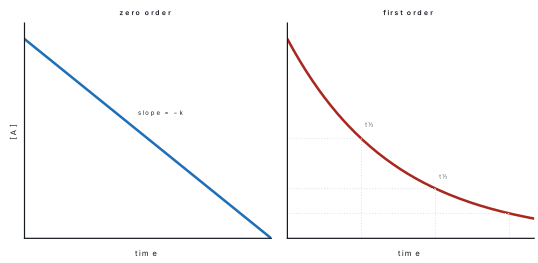
- (a) Write any two differences between order and molecularity of a reaction. [2](b) Draw a graph showing the relationship between concentration of a reactant and time for a zero-order reaction. [1](c) The data for a hypothetical reaction X + Y → product are: experiment I, [X] = 0.5, [Y] = 0.5 mol L⁻¹, rate 1.6 × 10⁻⁴ mol L⁻¹ s⁻¹; II, [X] = 0.5, [Y] = 1.0, rate 3.2 × 10⁻⁴; III, [X] = 1.0, [Y] = 1.0, rate 3.2 × 10⁻⁴. Determine the rate constant and write the rate law. [3+1](d) What is the order with respect to X? [1] [8] (NEB 2083)
- For a reaction mP + nQ → Z, P is first order and Q is zero order. The experimental data are: I, [P] = 0.1 M, [Q] = 0.1 M, rate 2 × 10⁻² M s⁻¹; II, [P] = A, [Q] = 0.2 M, rate 4 × 10⁻² M s⁻¹; III, [P] = 0.4, [Q] = 0.4, rate C; IV, [P] = B, [Q] = 0.2, rate 2 × 10⁻² M s⁻¹.(a) Find A, B and C. [3](b) Calculate the rate constant. [1](c) Define the rate law and explain why it is an experimental quantity. [2](d) Why can the order of a reaction be fractional while the molecularity cannot? [2] [8] (NEB 2079)
- For a hypothetical reaction 3X + 2Y → Z the initial rates are: 1, [X] = 0.1, [Y] = 0.1 mol L⁻¹, rate 1 × 10⁻³ mol L⁻¹ min⁻¹; 2, [X] = 0.1, [Y] = 0.4, rate 4 × 10⁻³; 3, [X] = 0.2, [Y] = 0.4, rate 8 × 10⁻³; 4, [X] = 0.5, [Y] = A, rate 1.8 × 10⁻².(a) Find the rate constant, the value of A and the rate law. [2+1+2](b) What is a pseudo-first-order reaction? Give one example. [2](c) Draw a diagram to show an effective collision. [1] [8] (NEB model set B)
Model answers — long (1–3)
1. (a) Order is found by experiment and may be zero, fractional or whole; molecularity is a theoretical count of colliding molecules in one elementary step and is always a whole number (1, 2 or 3). Order refers to the overall reaction; molecularity refers to a single elementary step. (b) See the figure: a straight line sloping downwards from [A]₀, with slope −k. (c) Compare I and II: [X] is constant and [Y] is doubled; the rate doubles (1.6 × 10⁻⁴ → 3.2 × 10⁻⁴), so the order in Y is 1. Compare II and III: [Y] is constant and [X] is doubled, and the rate does not change, so the order in X is 0. Rate law: rate = k[Y].
The unit s⁻¹ confirms a first-order reaction overall. (d) Zero order with respect to X.
2. (a) The rate law is rate = k[P] (Q is zero order). From experiment I: k = 2 × 10⁻²/0.1 = 0.2 s⁻¹. Experiment II: 4 × 10⁻² = 0.2 × A, so A = 0.2 M. Experiment IV: 2 × 10⁻² = 0.2 × B, so B = 0.1 M. Experiment III: C = 0.2 × 0.4 = 8 × 10⁻² M s⁻¹. (b) k = 0.2 s⁻¹ (see (a)); the unit s⁻¹ shows overall first order. (c) The rate law expresses the rate as the product of the concentrations of the reactants raised to the powers m and n. m and n are found only by measuring the rate at different concentrations because the rate depends on the slow step of the mechanism, which cannot be seen in the balanced equation. (d) Order is the sum of experimental powers, and a reaction with a complex mechanism can have fractional powers, for example rate = k[A]³ᐟ² for the pyrolysis of ethanal. Molecularity counts molecules in one elementary collision, and one cannot have half a molecule colliding, so it is always a whole number.
3. (a) Compare 1 and 2: [X] constant, [Y] × 4, rate × 4, so order in Y = 1. Compare 2 and 3: [Y] constant, [X] × 2, rate × 2, so order in X = 1. Rate law: rate = k[X][Y].
Experiment 4: 1.8 × 10⁻² = 0.10 × 0.5 × A, so A = 0.36 mol L⁻¹. (b) A pseudo-first-order reaction is a reaction of higher molecularity that follows a first-order rate law because one reactant is present in such large excess that its concentration stays constant. Example: acid hydrolysis of ethyl ethanoate, CH₃COOC₂H₅ + H₂O → CH₃COOH + C₂H₅OH, where water is in large excess and rate = k′[ester]. (c) An effective collision is one in which the molecules carry at least the threshold (activation) energy and meet with the proper orientation: the reactive atom of one molecule strikes the reactive site of the other and bond-breaking and bond-making take place. A collision with the wrong orientation, or with energy below Ea, is ineffective and the molecules separate unchanged.
Most repeated in Chemical Kinetics: a table of initial rates giving order, k with its unit and a missing value (2079 model, 2079, 2081, 2083, model set B); order against molecularity (2079, 2083); half-life of first and zero order (2078 model, 2081, 2082 MCQ); instantaneous rate expressions (2082).
Write the unit of k every time: mol L⁻¹ s⁻¹ for zero order, s⁻¹ for first and L mol⁻¹ s⁻¹ for second. In a table question, say which two experiments you compare and why: "[Y] is constant in II and III". A graph question needs both axis labels and the slope expression. A half-life comparison ("t½ independent of concentration") is the quickest way to recognise first order in a Group A stem.
6.4 Thermodynamics
CDC allots 8 teaching hours. Enthalpy calculations from Hess's law (formation and combustion data) are an annual Group B or Group C item, and the Gibbs–Helmholtz equation appears in the objective section and in numerical form.
Short answer questions [5 marks each]
- (a) Define Hess's law of constant heat summation. [1](b) What is meant by the enthalpy of a reaction? [1](c) The standard enthalpies of formation of H₂O₂(l) and H₂O(l) are −188 and −286 kJ mol⁻¹. Find ΔH for 2H₂O₂(l) → 2H₂O(l) + O₂(g). [3] [5] (NEB 2079)
- Define the standard heat of formation. Calculate the heat of formation of acetic acid from: C(s) + O₂ → CO₂, ΔH = −99 kcal mol⁻¹; H₂(g) + ½O₂ → H₂O(l), ΔH = −68 kcal mol⁻¹; CH₃COOH(l) + 2O₂ → 2CO₂ + 2H₂O(l), ΔH = −208 kcal mol⁻¹. [1+4] [5] (NEB 2082)
- The Gibbs equation is ΔG = ΔH − TΔS.(a) Define the Gibbs free energy change. [1](b) Predict the spontaneity when ΔH and ΔS are both positive. [2](c) For a reaction ΔH = 50 kJ mol⁻¹ and ΔS = 300 J mol⁻¹ K⁻¹. Is it spontaneous at 15 °C? [2] [5] (NEB model set B)
- Define the heat of formation. Calculate the heat of formation of ethyl alcohol, given the heats of combustion: carbon −94 kcal, hydrogen −68.5 kcal, ethyl alcohol −330 kcal (all per mole). [5] (NEB 2078 model, model set A)
Model answers — short
1. (a) Hess's law: the total enthalpy change of a reaction is the same whether it takes place in one step or in several steps, provided the initial and final conditions are the same; it depends only on the initial and final states. (b) The enthalpy of a reaction is the heat change at constant pressure when the number of moles of reactants shown in the balanced equation react completely. (c) ΔH = Σ ΔH_f (products) − Σ ΔH_f (reactants); ΔH_f of an element (O₂) is zero.
The reaction is exothermic: −196 kJ for 2 mol H₂O₂.
2. The standard heat of formation is the enthalpy change when one mole of a compound is formed from its elements in their standard states at 298 K and 1 atm. Formation reaction: 2C(s) + 2H₂(g) + O₂(g) → CH₃COOH(l). The three given equations are used as follows: (i) 2C + 2O₂ → 2CO₂, ΔH = 2(−99) = −198; (ii) 2H₂ + O₂ → 2H₂O, ΔH = 2(−68) = −136; (iii) 2CO₂ + 2H₂O → CH₃COOH + 2O₂, ΔH = +208 (the combustion equation reversed). Adding (i), (ii) and (iii) gives 2C + 2H₂ + O₂ → CH₃COOH.
3. (a) The Gibbs free energy change ΔG is the part of the enthalpy change that is available to do useful work at constant T and P: ΔG = ΔH − TΔS; a process is spontaneous when ΔG is negative. (b) ΔH positive makes ΔG more positive, and ΔS positive makes −TΔS negative. At low temperature the ΔH term dominates, so ΔG > 0 and the process is non-spontaneous; at high temperature the TΔS term dominates, so ΔG < 0 and the process becomes spontaneous. (Melting of ice and evaporation of water follow this pattern.) (c) T = 15 + 273 = 288 K and ΔS = 0.300 kJ mol⁻¹ K⁻¹.
ΔG is negative, so the reaction is spontaneous at 15 °C.
4. The heat of formation is the enthalpy change when one mole of a compound is formed from its elements in their standard states. Formation: 2C + 3H₂ + ½O₂ → C₂H₅OH. The heats of combustion of carbon and hydrogen are the heats of formation of CO₂ and H₂O. Combustion: C₂H₅OH + 3O₂ → 2CO₂ + 3H₂O, ΔH_c = −330.
Long answer questions [8 marks each]
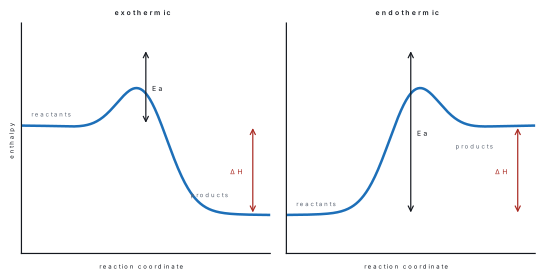
- (a) State Hess's law and illustrate it with an example. [2](b) From the heats of combustion of C, H₂ and C₂H₂ (−394, −286 and −1300 kJ mol⁻¹), calculate the heat of formation of acetylene. [4](c) Draw the energy-profile diagrams of an exothermic and an endothermic reaction. [1+1] [8] (NEB 2079 model)
- (a) State the first law of thermodynamics and show that ΔH = ΔU + PΔV. [3](b) Write the relation between ΔG° and the equilibrium constant. [2](c) For N₂(g) + 3H₂(g) → 2NH₃(g), ΔH = −92 kJ and ΔS = −199 J K⁻¹ at 298 K. Calculate ΔG and the equilibrium constant. [3] [8]
Model answers — long
1. (a) Hess's law states that the total enthalpy change of a reaction is the same whether it takes place in one step or in several steps. Illustration: the formation of CO₂ from carbon. Path 1 (direct): C + O₂ → CO₂, ΔH = −394 kJ. Path 2 (two steps): C + ½O₂ → CO, ΔH₁ = −111 kJ; CO + ½O₂ → CO₂, ΔH₂ = −283 kJ. Sum: −111 + (−283) = −394 kJ, the same as the direct path. (b) The formation equation is 2C(s) + H₂(g) → C₂H₂(g). Data: (i) C + O₂ → CO₂, −394; (ii) H₂ + ½O₂ → H₂O, −286; (iii) C₂H₂ + 2½O₂ → 2CO₂ + H₂O, −1300. 2 × (i): 2C + 2O₂ → 2CO₂, ΔH = −788. (ii): H₂ + ½O₂ → H₂O, ΔH = −286. Reverse of (iii): 2CO₂ + H₂O → C₂H₂ + 2½O₂, ΔH = +1300. Adding gives 2C + H₂ → C₂H₂ with
Acetylene is formed endothermically, which is why it is so reactive. (c) See the figure. Exothermic: products at lower enthalpy than reactants, ΔH negative; endothermic: products at higher enthalpy, ΔH positive; Ea is the height from the reactants to the top of the hump in both cases.
2. (a) First law: energy can be neither created nor destroyed, but only converted from one form to another; for a system ΔU = q + w. If the only work is expansion against a constant pressure P, w = −PΔV, so at constant pressure q_p = ΔU + PΔV. The heat absorbed at constant pressure is defined as the enthalpy change ΔH:
(b) ΔG° = −2.303RT log K. The more negative ΔG°, the larger K and the more completely the reaction goes to products. (c) T = 298 K; ΔS = −0.199 kJ K⁻¹.
The reaction is spontaneous at 298 K even though ΔS is negative, because the exothermic ΔH outweighs the −TΔS term.
Most repeated in Thermodynamics: heat of formation from heats of combustion or formation using Hess's law (2078 model, 2079, 2079 model, 2081, 2082, model set A); the definition of Hess's law and of the heats of formation and combustion (2079, 2079 model, 2081, 2083); Gibbs–Helmholtz and spontaneity (2082, model set B).
In every Hess's-law answer write the target equation first, then show how each given equation is multiplied or reversed, then add. Give ΔH its sign and unit. Remember that ΔH_f of an element in its standard state is zero, and use the data in a question as given even where a textbook value differs — for example −99 kcal for C → CO₂ in the 2082 paper.
6.5 Electrochemistry
CDC allots 7 teaching hours. Almost every sitting has a cell-notation question: a pair of standard electrode potentials is given, and the student must name the anode and cathode, write the notation and the cell reaction, and find the emf.
Short answer questions [5 marks each]
- The standard reduction potentials are E°(Zn²⁺/Zn) = −0.76 V and E°(Mg²⁺/Mg) = −2.38 V.(a) What is a standard electrode potential? [1](b) Construct the galvanic cell notation, showing the anode and the cathode. [2](c) Write the complete cell reaction. [1](d) Calculate the cell potential at 25 °C. [1] [5] (NEB 2082)
- (a) Why is the standard hydrogen electrode called a reference electrode? [1](b) A cell is made by joining a Zn²⁺/Zn electrode to a standard hydrogen electrode, and its emf is +0.76 V. Write the cell notation showing anode and cathode. [2](c) Write the net cell reaction. [1](d) What is the value of E°(Zn²⁺/Zn)? [1] [5] (NEB 2083)
- E°(Cu²⁺/Cu) = +0.34 V and E°(Ag⁺/Ag) = +0.80 V.(a) Write the cell notation, marking the anode and the cathode. [2](b) Calculate the cell potential under standard conditions. [1](c) Can AgNO₃ solution be stored in a copper vessel? Explain. [2] [5] (NEB 2078 model)
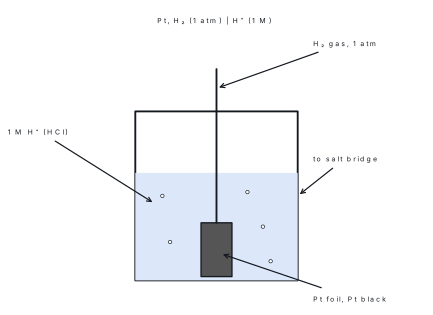
- (a) Draw the standard hydrogen electrode and label it. [2](b) Why is it called a reference electrode? [1](c) E°(Zn²⁺/Zn) = −0.76 V and E°(Pb²⁺/Pb) = −0.13 V. Write the cell notation and calculate the emf. [2] [5] (NEB model set B)
- Four metals A, B, C and D react as follows: B displaces only A from solution; only D and C displace hydrogen from 1 M HCl; none of the metals displaces C from solution.(a) Arrange the four metals and hydrogen in an activity series. [2](b) For E°(Zn²⁺/Zn) = −0.76 V and E°(Fe³⁺/Fe²⁺) = +0.77 V, write the cell notation, the cell reaction and the emf. [3] [5] (NEB 2079 model; data re-set for (b))
Model answers — short
1. (a) The standard electrode potential of an electrode is its potential when it is in contact with a 1 M solution of its ions at 25 °C (and 1 atm for gases), measured against the standard hydrogen electrode whose potential is taken as zero. (b) Mg has the more negative potential, so it is the stronger reducing agent: Mg is the anode (oxidation) and Zn the cathode (reduction).
(c) Anode: Mg → Mg²⁺ + 2e⁻. Cathode: Zn²⁺ + 2e⁻ → Zn. Cell reaction: Mg + Zn²⁺ → Mg²⁺ + Zn. (d) E°cell = E°cathode − E°anode = (−0.76) − (−2.38) = +1.62 V.
2. (a) The SHE has a potential arbitrarily assigned as 0.00 V at all temperatures. The potential of any other electrode is found by combining it with the SHE, so the SHE is the standard against which every electrode potential is measured. (b) The emf is positive, so the combination works as written. Zn is oxidised, so Zn is the anode and the SHE is the cathode:
(c) Zn + 2H⁺ → Zn²⁺ + H₂. (d) E°cell = E°(SHE) − E°(Zn²⁺/Zn) = 0 − E° = +0.76 V, so E°(Zn²⁺/Zn) = −0.76 V.
3. (a) Cu is the stronger reducing agent (lower E°), so Cu is the anode and Ag the cathode:
(b) E°cell = 0.80 − 0.34 = +0.46 V. (c) No. The cell reaction Cu + 2Ag⁺ → Cu²⁺ + 2Ag has a positive emf, so it is spontaneous: copper would displace silver from the solution, the vessel would be eaten away and silver would deposit.
4. (a) See the figure: platinum foil coated with platinum black, dipping in 1 M HCl; pure H₂ gas at 1 atm bubbled over it; a side tube to a salt bridge. (b) Its potential is fixed at zero by convention, so every other electrode potential is measured relative to it. (c) Zn (more negative) is the anode and Pb the cathode.
E°cell = −0.13 − (−0.76) = +0.63 V.
5. (a) C is displaced by none, so it is the most reactive. D and C displace hydrogen, so both are above H. B and A are below hydrogen (they do not displace it), and B displaces A but not the reverse. Series in decreasing activity: C > D > H > B > A. (b) Zn is oxidised, and Fe³⁺ is reduced to Fe²⁺ at an inert platinum electrode:
Cell reaction: Zn + 2Fe³⁺ → Zn²⁺ + 2Fe²⁺. E°cell = 0.77 − (−0.76) = +1.53 V.
Long answer questions [8 marks each]
- The standard reduction potentials of three metals A, B and C are −0.76 V, +0.34 V and +0.80 V.(a) Define the standard reduction potential. [1](b) Give the order of reducing power of A, B and C. [2](c) Write the cell notation when B is connected to the standard hydrogen electrode. [1](d) Write the complete cell reaction. [2](e) Calculate the standard emf. [2] [8] (NEB model set A)
- (a) Describe the lead storage battery: the anode, the cathode, the electrolyte and the reactions on discharge and on charging. [4](b) Describe the hydrogen–oxygen fuel cell, with the electrode reactions. [3](c) Why is the fuel cell used in spacecraft? [1] [8]
Model answers — long
1. (a) The standard reduction potential is the potential of a half-cell, when the reduction half-reaction takes place at it in contact with a 1 M solution of its ions at 25 °C, measured against the SHE. (b) The smaller (more negative) the E°, the stronger the reducing power: A > B > C (−0.76, +0.34, +0.80). (c) B (E° = +0.34 V) is higher than hydrogen (0.00 V), so B is reduced and the SHE is the anode:
(d) Anode: H₂ → 2H⁺ + 2e⁻. Cathode: B²⁺ + 2e⁻ → B. Cell reaction: H₂ + B²⁺ → 2H⁺ + B. (e) E°cell = 0.34 − 0.00 = +0.34 V.
2. (a) Lead storage battery. Anode: spongy lead (Pb); cathode: lead dioxide (PbO₂) on a lead grid; electrolyte: about 38 % H₂SO₄. On discharge: Pb + SO₄²⁻ → PbSO₄ + 2e⁻ (anode); PbO₂ + 4H⁺ + SO₄²⁻ + 2e⁻ → PbSO₄ + 2H₂O (cathode). Overall: Pb + PbO₂ + 2H₂SO₄ → 2PbSO₄ + 2H₂O. Sulphuric acid is consumed, so its density falls. On charging (the current is reversed) the reactions are reversed: 2PbSO₄ + 2H₂O → Pb + PbO₂ + 2H₂SO₄. One cell gives about 2 V, so a 12 V battery has six cells in series. (b) H₂–O₂ fuel cell. Porous carbon electrodes carrying a Pt or Ni catalyst dip in hot KOH. H₂ is fed to the anode and O₂ to the cathode. Anode: 2H₂ + 4OH⁻ → 4H₂O + 4e⁻. Cathode: O₂ + 2H₂O + 4e⁻ → 4OH⁻. Overall: 2H₂ + O₂ → 2H₂O. (c) It supplies electricity with water as the only product, and the water is drinkable by the crew; it is efficient and light for the power it gives, so it provides power for heat and light in spacecraft.
Most repeated in Electrochemistry: cell notation, anode/cathode, cell reaction and emf from two E° values (2078 model, 2079, 2079 model, 2081, 2082, 2083, both model sets); the standard hydrogen electrode as reference (2083, model set B); feasibility from E° (2078 model, 2079 model).
Write E°cell = E°cathode − E°anode with the numbers in it, and check that the answer is positive: a negative value means you have swapped the electrodes. In the notation put the anode on the left and the cathode on the right, with a double vertical line for the salt bridge; mention the concentration (1 M) and the gas pressure (1 atm) each time. The lead storage battery and the fuel cell come as a Group A item or as a three-mark part; learn the electrode equations.
6.6 Transition Metals
CDC allots 5 teaching hours. Expect one Group B question built on crystal field theory or on the properties of transition metals, and a Group A item on colour, oxidation states or catalysis.
Short answer questions [5 marks each]
- What is a d–d electron transition? List the characteristics of transition metals. [1+4] [5] (NEB 2079 model)
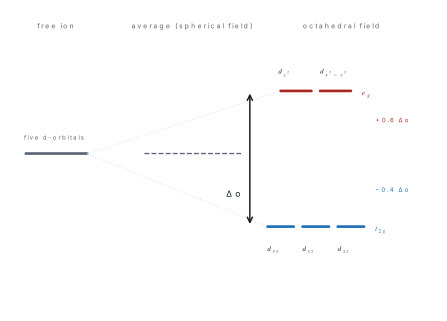
- (a) State the assumptions of crystal field theory. [3](b) Draw the diagram showing the splitting of the d-orbitals in an octahedral complex. [2] [5] (NEB model set A)
- (a) Why does an octahedral complex of Cu²⁺ become distorted according to crystal field theory? [2](b) Why is [Cu(H₂O)₆]²⁺ blue? [1](c) Which is more stable, Fe³⁺ or Fe²⁺, and why? [1](d) Why are transition metals good catalysts? [1] [5] (NEB 2078 model)
- (a) Write the electronic configurations of Cr and Cu and explain why they are exceptions. [2](b) Why is zinc not regarded as a transition element? [1](c) Why are Sc³⁺ and Zn²⁺ colourless? [1](d) How many d electrons has Cr in [Cr(H₂O)₆]³⁺? [1] [5]
Model answers — short
1. A d–d transition is the excitation of an electron from a lower-energy d-orbital to a higher-energy d-orbital of the same metal ion (for an octahedral complex, from t₂g to e_g) when the ion absorbs a photon of visible light of energy equal to the crystal-field splitting Δo. The complementary colour is transmitted, so the compound is coloured. Characteristics of transition metals: 1. Variable oxidation states, because the (n−1)d and ns electrons have similar energy (Mn shows +2 to +7). 2. Coloured compounds, from d–d transitions in ions with a partly filled d subshell. 3. Complex formation, because the ions are small, highly charged and have vacant d-orbitals ([Cu(NH₃)₄]²⁺, [Fe(CN)₆]⁴⁻). 4. Catalytic activity, from variable oxidation state and the ability to adsorb reactants on the surface (Fe in the Haber process, V₂O₅ in the contact process). 5. Paramagnetism, from unpaired d electrons; also high melting points, hardness, high density and the formation of alloys and interstitial compounds.
2. (a) Assumptions of crystal field theory: 1. The ligands are treated as point negative charges (or dipoles), and the bond between metal and ligand is purely electrostatic. 2. In the free ion the five d-orbitals have the same energy; the approaching ligands repel the d electrons, and the orbitals split into sets of different energy according to their orientation relative to the ligands. 3. The difference in energy, the crystal field splitting Δ, depends on the ligand and on the geometry, and electrons fill the split orbitals according to Δ and the pairing energy. (b) See the figure: in an octahedral complex the three t₂g orbitals are lowered by 0.4Δo and the two e_g orbitals are raised by 0.6Δo.
3. (a) Cu²⁺ is d⁹: the t₂g set is full and the e_g set holds three electrons, with unequal occupancy of d_z² and d_x²−y². Unequal repulsion on the ligands along z and in the xy plane makes the complex elongate along the z-axis (Jahn–Teller distortion), which lowers the total energy. (b) In [Cu(H₂O)₆]²⁺ the d–d transition absorbs light in the red-orange region, so the transmitted (complementary) colour is blue. (c) Fe³⁺ (d⁵) is more stable than Fe²⁺ (d⁶) because a half-filled d subshell gives extra exchange energy and symmetry. (d) They have variable oxidation states and vacant d-orbitals, so they form intermediate compounds with reactants and offer a surface for adsorption.
4. (a) Cr: [Ar] 3d⁵4s¹ (not 3d⁴4s²) and Cu: [Ar] 3d¹⁰4s¹ (not 3d⁹4s²). A half-filled (d⁵) or fully filled (d¹⁰) subshell has extra stability from symmetry and exchange energy, so one 4s electron moves into the 3d subshell. (b) Zn is [Ar] 3d¹⁰4s² and forms only Zn²⁺ (3d¹⁰): its d subshell is full in both the atom and its common ion, so it does not meet the definition of a transition element (an ion with a partly filled d subshell). (c) Sc³⁺ is 3d⁰ and Zn²⁺ is 3d¹⁰, so there is no partly filled d subshell and no d–d transition is possible. (d) Cr³⁺ is [Ar] 3d³: three d electrons.
Long answer questions [8 marks each]
- (a) Define a transition element and write the general electronic configuration. [2](b) Explain the variable oxidation states of manganese with one compound for each state. [2](c) Explain why [Ti(H₂O)₆]³⁺ is coloured while Sc³⁺ compounds are not. [2](d) Give two examples of catalysis by transition metals with the catalyst and reaction. [2] [8]
Model answers — long
1. (a) A transition element is one that has a partly filled d subshell in its atom or in any of its common ions. General configuration: (n−1)d¹⁻¹⁰ ns¹⁻² (in the 3d series, [Ar] 3d¹⁻¹⁰ 4s¹⁻²). (b) Manganese ([Ar] 3d⁵4s²) uses its 4s and 3d electrons and shows every state from +2 to +7: +2 in MnSO₄, +3 in Mn₂O₃, +4 in MnO₂, +6 in K₂MnO₄ and +7 in KMnO₄. The 4s and 3d energies are close, so successive electrons can be removed with small increases in ionisation energy; the highest state +7 equals the number of 3d + 4s electrons. (c) Ti³⁺ is 3d¹: in [Ti(H₂O)₆]³⁺ the single electron is in t₂g, and absorbing light of energy Δo (green–yellow, about 500 nm) promotes it to e_g, so the complex transmits violet-purple and is coloured. Sc³⁺ is 3d⁰ with no d electron to excite, so it is colourless. (d) (i) Iron in the Haber process: N₂ + 3H₂ ⇌ 2NH₃ (heterogeneous; reactants adsorbed on the Fe surface). (ii) V₂O₅ in the contact process: 2SO₂ + O₂ ⇌ 2SO₃ (V⁵⁺ ⇌ V⁴⁺ cycling). (Also Ni in hydrogenation of oils; MnO₂ in the decomposition of KClO₃.)
Most repeated in Transition Metals: d–d transition and characteristics (2079 model); crystal field splitting and its assumptions (2078 model, model set A); variable oxidation states and catalytic behaviour (2081 MCQ, 2078 model); colour of ions (2081, 2082 MCQs).
Always link colour to a partly filled d subshell and say "d–d transition" by name. For catalysis give both reasons — variable oxidation state and surface adsorption — and one named example with its reaction. Never call zinc a transition element without the qualifier "non-typical": it has a full d subshell in its atom and its ion.
6.7 Studies of Heavy Metals
CDC allots 15 teaching hours, the largest inorganic unit. The five-mark extraction and compound questions on copper, zinc, mercury and iron are as regular as the organic reaction chains: the 2079, 2081, 2082 and 2083 papers each carry two or three of them.
Short answer questions [5 marks each]
- An ammonia solution is added to the sulphate of a coinage metal A. The blue precipitate B that forms dissolves in excess of the reagent to give a deep blue solution C.(a) Identify A, B and C with the reactions. [3](b) Write the electronic configuration of A. [1](c) Name a method for the purification of A. [1] [5] (NEB 2079 model, model set B)
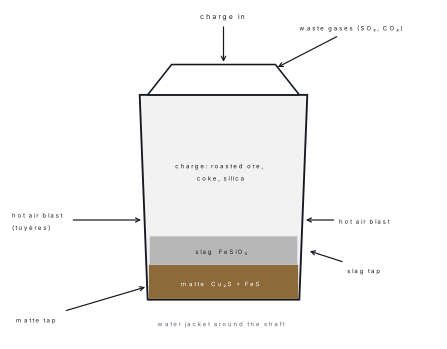
- A coinage metal M of group IB has the configuration [Ar] 3d¹⁰4s¹.(a) Draw the blast furnace used for smelting its chief ore. [2](b) Explain the reactions that form the matte in the furnace. [3] [5] (NEB 2081, 2083)
- Write the preparation, properties and uses of corrosive sublimate. [1+3+1] [5] (NEB 2081, 2083, model set B)
- White vitriol is an important compound of zinc, a non-typical transition metal.(a) Write a method of preparation of white vitriol. [1](b) What happens when it is heated to 800 °C? [1](c) Define a double salt with an example. [1](d) How is lithopone obtained from white vitriol? [1](e) Why is zinc a non-typical transition metal? [1] [5] (NEB 2079)
- Steel is made by the open hearth process.(a) What is the open hearth process? [1](b) Write the chemical reactions that occur in the furnace. [2](c) Why is spiegeleisen added? [1](d) Give the composition of stainless steel. [1] [5] (NEB 2079)
- The metal M, [Ar] 3d¹⁰4s², is called "Jasta".(a) Identify M and its main ore. [1](b) Why is M not regarded as a transition element? [1](c) Draw the vertical retort and write the reduction reaction. [2](d) What happens to M when it is exposed to air for a long time? [1] [5] (NEB 2082)
- What is rusting? Describe the electrochemical theory of the rusting of iron and give two methods of preventing it. [1+3+1] [5] (NEB 2082)
Model answers — short (1–4)
1. (a) A = copper (Cu), in the sulphate CuSO₄. With a little NH₄OH a blue precipitate B = Cu(OH)₂ forms; excess ammonia dissolves it to the deep blue C = tetraamminecopper(II) sulphate, [Cu(NH₃)₄]SO₄. CuSO₄ + 2NH₄OH → Cu(OH)₂↓ + (NH₄)₂SO₄ Cu(OH)₂ + (NH₄)₂SO₄ + 2NH₄OH → [Cu(NH₃)₄]SO₄ + 4H₂O (b) Cu: [Ar] 3d¹⁰4s¹. (c) Electrolytic refining (after poling): impure copper is the anode, pure copper the cathode, and acidified CuSO₄ is the electrolyte; 99.95 % pure copper deposits.
2. (a) See the figure: the chief ore is copper pyrite, CuFeS₂, and the roasted ore is smelted with coke and silica in a small water-jacketed blast furnace. (b) The reactions that occur in the furnace: FeO + SiO₂ → FeSiO₃ (slag; silica is the flux that removes iron as a fusible silicate) Cu₂O + FeS → Cu₂S + FeO The FeO formed in the second reaction is slagged by silica. The molten matte (Cu₂S + FeS, about 45 % Cu) sinks below the lighter slag and is tapped off for the Bessemer converter. Matte forms because copper has a greater affinity for sulphur than iron has, so the sulphur stays with copper and the iron passes into the slag as FeSiO₃.
3. Preparation: (i) directly, by heating mercury in excess chlorine, Hg + Cl₂ → HgCl₂; (ii) industrially, by heating mercury(II) sulphate with sodium chloride and subliming the product, HgSO₄ + 2NaCl → HgCl₂↑ + Na₂SO₄ (a little MnO₂ is added to oxidise any mercurous salt). Properties: white crystalline, poisonous, sublimes on heating, sparingly soluble in water and largely un-ionised (covalent). Reactions: (i) with KI, a scarlet precipitate that dissolves in excess KI: HgCl₂ + 2KI → HgI₂↓ + 2KCl; HgI₂ + 2KI → K₂[HgI₄]; (ii) with SnCl₂, a white precipitate that turns grey: 2HgCl₂ + SnCl₂ → Hg₂Cl₂↓ + SnCl₄, then Hg₂Cl₂ + SnCl₂ → 2Hg + SnCl₄; (iii) with NH₃, a white precipitate: HgCl₂ + 2NH₃ → Hg(NH₂)Cl↓ + NH₄Cl. Uses: as an antiseptic and disinfectant (1 : 1000), to preserve wood and anatomical specimens, to make Nessler's reagent and calomel, and as a catalyst (with HgSO₄) for the hydration of ethyne.
4. (a) Dissolve zinc (or ZnO or ZnCO₃) in dilute H₂SO₄ and crystallise below 30 °C: Zn + H₂SO₄ → ZnSO₄ + H₂; the solution gives ZnSO₄·7H₂O. (b) At red heat (about 800 °C) it loses its water and then decomposes: 2ZnSO₄ → 2ZnO + 2SO₂ + O₂. (c) A double salt is a compound formed by the crystallisation of a solution containing two simple salts in equimolar amounts; it exists in the solid state but dissociates into its ions in water. Example: potash alum, K₂SO₄·Al₂(SO₄)₃·24H₂O (or Mohr's salt). (d) By mixing solutions of zinc sulphate and barium sulphide: ZnSO₄ + BaS → ZnS↓ + BaSO₄↓. The mixed white precipitate of ZnS and BaSO₄ is lithopone, a white pigment. (e) The zinc atom ([Ar] 3d¹⁰4s²) and its only ion Zn²⁺ (3d¹⁰) both have a completely filled d subshell, so zinc does not show the properties of a typical transition element (variable oxidation states, coloured ions, paramagnetism).
Model answers — short (5–7)
5. (a) The open hearth process is a method of making steel from pig iron in a shallow, saucer-shaped furnace heated by producer gas and pre-heated air (the Siemens regenerative principle); the impurities are oxidised by haematite in the charge. (b) Fe₂O₃ + 3C → 2Fe + 3CO↑; 2Fe₂O₃ + 3Si → 4Fe + 3SiO₂; Fe₂O₃ + 3Mn → 2Fe + 3MnO; 5Fe₂O₃ + 6P → 10Fe + 3P₂O₅. Lime is added as a flux and the SiO₂ and P₂O₅ pass into the slag (CaSiO₃, Ca₃(PO₄)₂). (c) Spiegeleisen is an alloy of iron, manganese and carbon. It is added at the end to restore the required amount of carbon and, through manganese, to remove dissolved oxygen (as MnO), since excess oxygen makes steel brittle. (d) Stainless steel: about 74 % Fe, 18 % Cr, 8 % Ni (and about 0.1 % C).
6. (a) M is zinc, and its main ore is zinc blende, ZnS. (b) Zn²⁺ is 3d¹⁰ and the atom has a full d subshell, so there is no partly filled d subshell in either; it is a non-typical transition (d-block) element. (c) Vertical retort: a tall, narrow column of fireclay or silicon carbide heated from outside. Briquettes of roasted ore (ZnO) and coke are fed in at the top, and zinc vapour and CO leave from the top to a condenser. Roasting: 2ZnS + 3O₂ → 2ZnO + 2SO₂. Reduction: ZnO + C → Zn + CO at about 1673 K; the zinc distils as vapour (b.p. 907 °C). (d) In moist air a thin protective layer of basic zinc carbonate forms, 2Zn + O₂ + CO₂ + H₂O → ZnCO₃·Zn(OH)₂, which stops further corrosion (the basis of galvanising).
7. Rusting is the slow corrosion of iron in moist air to form hydrated iron(III) oxide, Fe₂O₃·xH₂O, a brown flaky solid. Electrochemical theory. The impure iron surface with water containing dissolved CO₂ and O₂ acts as a tiny galvanic cell. - Anode (oxygen-poor region): Fe → Fe²⁺ + 2e⁻. - Cathode (oxygen-rich region): O₂ + 4H⁺ + 4e⁻ → 2H₂O. The electrons flow through the metal and the ions through the moisture. - Fe²⁺ is further oxidised by air and water: 4Fe²⁺ + O₂ + 4H₂O → 2Fe₂O₃ + 8H⁺, and the oxide hydrates to rust, Fe₂O₃·xH₂O.
Prevention: (i) painting, oiling or plastic coating to keep out air and water; (ii) galvanising (coating with zinc, which also acts as a sacrificial anode); (iii) alloying to stainless steel; (iv) cathodic protection with magnesium blocks.
Long answer questions [8 marks each]
- Describe the extraction of copper from copper pyrite, giving the reactions of each stage: concentration, roasting, smelting, Bessemerisation and refining. [8] (NEB 2078 model, 2079 model, 2081, 2083)
- Describe the manufacture of steel by(a) the Basic Oxygen Process [4] and(b) the Open Hearth Process [3], and state one advantage of the open hearth process. [1] [8] (NEB 2079 for (b))
- Describe the extraction of silver from argentite by the cyanide process. Write the reactions, explain why air is blown through the solution and how silver is refined. [8]
Model answers — long
1. Ore: copper pyrite, CuFeS₂ (2–3 % Cu). 1. Concentration by froth flotation. The powdered ore is agitated with water, pine oil and sodium ethyl xanthate while air is blown through; the sulphide particles are wetted by oil and rise in the froth, the earthy gangue sinks. 2. Roasting in a reverberatory furnace in a limited supply of air at about 1070 K, which drives off moisture, As and Sb as oxides, and burns part of the sulphur: 2CuFeS₂ + O₂ → Cu₂S + 2FeS + SO₂; 2FeS + 3O₂ → 2FeO + 2SO₂; 2Cu₂S + 3O₂ → 2Cu₂O + 2SO₂. 3. Smelting of the roasted ore with coke and silica in a water-jacketed blast furnace: FeO + SiO₂ → FeSiO₃ (slag), Cu₂O + FeS → Cu₂S + FeO. The molten product is copper matte, Cu₂S + FeS (about 45 % Cu). 4. Bessemerisation. Molten matte is poured into a Bessemer converter lined with silica; hot air is blown through. 2FeS + 3O₂ → 2FeO + 2SO₂, FeO + SiO₂ → FeSiO₃; 2Cu₂S + 3O₂ → 2Cu₂O + 2SO₂; and then auto-reduction: 2Cu₂O + Cu₂S → 6Cu + SO₂↑. The product is blister copper (98 % pure; the escaping SO₂ makes blisters). 5. Refining. First poling (green wood poles reduce residual Cu₂O), then electrolytic refining: anode of impure copper, cathode of pure copper, electrolyte CuSO₄ + dilute H₂SO₄. Anode: Cu → Cu²⁺ + 2e⁻; cathode: Cu²⁺ + 2e⁻ → Cu. The pure copper (99.95 %) deposits and the impurities fall as anode mud (Ag, Au).
2. (a) Basic Oxygen Process (LD process). Vessel: a pear-shaped converter lined with basic dolomite (CaO·MgO). Charge: molten pig iron, up to 30 % scrap, and quicklime as flux. A water-cooled lance blows 99.5 % pure oxygen at about 10 atm for 20 minutes; no fuel is needed because the oxidation of the impurities supplies the heat. C: 2C + O₂ → 2CO↑ (burns at the mouth); Si: Si + O₂ → SiO₂, then SiO₂ + CaO → CaSiO₃ (slag); Mn: 2Mn + O₂ → 2MnO, then MnO + SiO₂ → MnSiO₃; P: 4P + 5O₂ → 2P₂O₅, then P₂O₅ + 3CaO → Ca₃(PO₄)₂ (slag); S: S + O₂ → SO₂↑. When the carbon is down to the required level, ferro-manganese or other alloying metals are added. (b) Open Hearth Process. Vessel: shallow, saucer-shaped hearth with a basic (dolomite) lining for phosphoric iron; heated by producer gas and pre-heated air through regenerators. The oxidising agent is haematite in the charge: Fe₂O₃ + 3C → 2Fe + 3CO; 2Fe₂O₃ + 3Si → 4Fe + 3SiO₂; 5Fe₂O₃ + 6P → 10Fe + 3P₂O₅; Fe₂O₃ + 3Mn → 2Fe + 3MnO. Lime takes SiO₂ and P₂O₅ into the slag. A charge takes 8–10 hours. (c) Advantage: because it is slow, samples can be analysed and the composition adjusted, so alloy and special steels of accurately controlled composition can be made.
3. Ore: argentite (silver glance), Ag₂S. 1. Concentration by froth flotation. 2. Leaching. The concentrate is agitated with a dilute (0.1–0.5 %) NaCN solution while air is blown through: Ag₂S + 4NaCN ⇌ 2Na[Ag(CN)₂] + Na₂S The reaction is reversible. The air oxidises the sodium sulphide as it forms, 2Na₂S + 2O₂ + H₂O → Na₂S₂O₃ + 2NaOH, which removes a product and drives the equilibrium to the right (Le Chatelier's principle). The silver dissolves as sodium dicyanoargentate(I). 3. Precipitation. Zinc dust displaces silver because zinc is more electropositive: 2Na[Ag(CN)₂] + Zn → Na₂[Zn(CN)₄] + 2Ag↓ 4. Refining by the Moebius electrolytic process: anode of impure silver, cathode of pure silver, electrolyte of AgNO₃ with about 1 % HNO₃. Pure silver (99.9 %) collects as crystals at the cathode and falls into a bag below the anode; gold and platinum remain in the anode mud.
Most repeated in Heavy Metals: copper — ore, blast-furnace matte reactions, blue vitriol and the blue ammonia complex (2078 model, 2079 model, 2081, 2083, model set B); zinc — white vitriol, vertical retort, Jasta (2079, 2082); mercury — corrosive sublimate (2081, 2083, model set B) and the quick-silver furnace (model set A); steel by open hearth (2079); rusting (2082).
Every extraction answer follows the same headings: concentration, roasting (or calcination), smelting or reduction, refining and the uses — write the headings and a balanced equation under each. A "draw the furnace" mark is earned by the labels: charge, blast, tuyères, slag and matte taps. For corrosive sublimate, learn the two-stage reactions with KI and SnCl₂ (a colour change with excess reagent is what the examiner looks for).
6.8 Haloalkanes
CDC allots 8 teaching hours. Chloroform (trichloromethane) is the examiner's favourite compound in this unit — it appeared in the 2079 model, 2081, 2082 and 2083 papers — followed by nucleophilic substitution (SN1 and SN2) and elimination.
Short answer questions [5 marks each]
- A chemical reaction occurs as CH₃CH₂CH₂Br + KOH(aq) → B + KBr.(a) Identify B. [1](b) Which substitution mechanism occurs, and why? [1](c) What is formed if alcoholic KOH is used instead of aqueous KOH? [2](d) How can nitropropane be obtained from the haloalkane? [1] [5] (NEB 2082)
- Compound A gives a hypnotic (sleep-inducing) drug when heated with acetone in the presence of a base, and forms carbonyl chloride when it is exposed to air.(a) Identify A. [1](b) How is A formed from ethanol? [2](c) What happens when A is treated with conc. HNO₃? [1](d) Convert A into acetylene. [1] [5] (NEB 2079 model)
- Compounds are given as P = C₃H₇Br, Q = C₆H₁₄, R = CH₂O, S = C₂H₄O and T = C₃H₈O (straight-chain compounds). Write reactions to(a) convert P into Q [1],(b) obtain P from T [1],(c) convert P into R and S [3]. [5] (NEB 2078 model)
- Compound A, on heating with silver powder, gives B. B on hydration with dilute H₂SO₄ and HgSO₄ gives C. C reacts with dilute alkali to give D, and C is also obtained by the reduction of ethanoyl chloride with H₂/Pd–BaSO₄. Identify A, B, C and D with the reactions. [5] (NEB 2083)
- (a) Differentiate between SN1 and SN2 reactions. [3](b) State Saytzeff's rule with an example. [2] [5]
Model answers — short
1. (a) B = propan-1-ol, CH₃CH₂CH₂OH. (b) SN2. 1-Bromopropane is a primary halide with little steric hindrance, and OH⁻ is a strong nucleophile, so it attacks the carbon from the back in a single step with inversion and no carbocation forms (a primary carbocation is unstable). (c) Alcoholic KOH gives elimination (dehydrohalogenation): CH₃CH₂CH₂Br + KOH(alc.) → CH₃CH=CH₂ + KBr + H₂O, that is propene. (d) By heating with silver nitrite: CH₃CH₂CH₂Br + AgNO₂ → CH₃CH₂CH₂NO₂ + AgBr, giving 1-nitropropane.
2. (a) A = chloroform (trichloromethane), CHCl₃. (b) Ethanol is oxidised by bleaching powder and the ethanal formed is chlorinated to chloral, which is hydrolysed: CaOCl₂ + H₂O → Ca(OH)₂ + Cl₂ CH₃CH₂OH + Cl₂ → CH₃CHO + 2HCl; CH₃CHO + 3Cl₂ → CCl₃CHO + 3HCl 2CCl₃CHO + Ca(OH)₂ → 2CHCl₃ + (HCOO)₂Ca (c) Conc. HNO₃ gives chloropicrin (nitrochloroform), a component of tear gas: CHCl₃ + HNO₃ → CCl₃NO₂ + H₂O. (d) Heated with silver powder, chloroform gives acetylene: 2CHCl₃ + 6Ag → HC≡CH + 6AgCl.
3. P is 1-bromopropane, Q is hexane, R is methanal, S is ethanal and T is propan-1-ol. (a) Wurtz reaction: 2CH₃CH₂CH₂Br + 2Na → CH₃(CH₂)₄CH₃ + 2NaBr (dry ether). (b) T → P: CH₃CH₂CH₂OH + PBr₃ → CH₃CH₂CH₂Br (or HBr/H₂SO₄). (c) P → propene with alcoholic KOH: CH₃CH₂CH₂Br + KOH → CH₃CH=CH₂ + KBr + H₂O. Ozonolysis of propene: CH₃CH=CH₂ + O₃ → ozonide, which on hydrolysis with Zn/H₂O gives CH₃CHO (S) + HCHO (R).
4. A = chloroform, CHCl₃; with silver powder, 2CHCl₃ + 6Ag → B = ethyne (acetylene), HC≡CH + 6AgCl. Hydration: HC≡CH + H₂O → (dil. H₂SO₄, HgSO₄, 333 K) CH₃CHO, so C = ethanal. (C is also the product of the Rosenmund reduction: CH₃COCl + H₂ → CH₃CHO + HCl over Pd/BaSO₄.) Ethanal with dilute alkali undergoes aldol condensation: 2CH₃CHO → CH₃CH(OH)CH₂CHO, so D = 3-hydroxybutanal (aldol).
5. (a)
| SN1 | SN2 | |
|---|---|---|
| Steps | two steps, through a carbocation | one step, through a transition state |
| Rate | rate = k[RX] (first order) | rate = k[RX][Nu⁻] (second order) |
| Favoured by | tertiary halides, polar protic solvent | primary halides, strong nucleophile |
| Stereochemistry | racemisation | inversion of configuration |
(b) Saytzeff's rule: in dehydrohalogenation, the alkene with the more highly substituted double bond is the major product. CH₃CH₂CHBrCH₃ + KOH(alc.) → CH₃CH=CHCH₃ (but-2-ene, major) + CH₃CH₂CH=CH₂ (but-1-ene, minor).
Long answer questions [8 marks each]
- The vapour of an organic compound A causes loss of consciousness and forms a component of tear gas when heated with conc. HNO₃.(a) Prepare A from an isomer of C₂H₆O. [2](b) What happens when A is (i) exposed to air, (ii) heated with silver powder, (iii) condensed with acetone, (iv) heated with aniline in the presence of alcoholic KOH? [4](c) Give reasons: ether is stored in a bottle containing iron wire; ethanol, though organic, is soluble in water. [2] [8] (NEB 2081)
- An unsaturated hydrocarbon C₃H₆ adds HBr according to Markovnikov's rule to give A. A on hydrolysis with aqueous alkali gives B. B with PBr₃ gives C. C reacts with AgCN (alcoholic) to give D, which on reduction with LiAlH₄ gives E.(a) Define Markovnikov's rule. [1](b) Identify A, B, C, D and E with the reactions. [5](c) How does E react with nitrous acid? [1](d) Convert B into propane. [1] [8] (NEB 2079)
Model answers — long
1. A is chloroform, CHCl₃ (anaesthetic vapour; conc. HNO₃ gives chloropicrin, the tear-gas component). (a) The isomer is ethanol (the other isomer, methoxymethane, cannot be used). CaOCl₂ + H₂O → Ca(OH)₂ + Cl₂; CH₃CH₂OH + Cl₂ → CH₃CHO + 2HCl; CH₃CHO + 3Cl₂ → CCl₃CHO + 3HCl; 2CCl₃CHO + Ca(OH)₂ → 2CHCl₃ + (HCOO)₂Ca. (b) (i) In air and light chloroform is oxidised to the poisonous phosgene: 2CHCl₃ + O₂ → 2COCl₂ + 2HCl. (ii) With silver powder it gives ethyne: 2CHCl₃ + 6Ag → HC≡CH + 6AgCl. (iii) With acetone in the presence of a base it gives chloretone, a hypnotic: (CH₃)₂CO + CHCl₃ → (CH₃)₂C(OH)CCl₃. (iv) With aniline and alcoholic KOH it gives phenyl isocyanide (carbylamine reaction), a foul-smelling liquid: C₆H₅NH₂ + CHCl₃ + 3KOH → C₆H₅NC + 3KCl + 3H₂O. (c) Ether is stored over iron wire because, on standing in air and light, ether forms explosive peroxides; iron reduces these peroxides. Ethanol dissolves in water because its –OH group forms hydrogen bonds with water molecules, so the small non-polar ethyl group cannot prevent miscibility.
2. (a) Markovnikov's rule: when an unsymmetrical reagent HX adds to an unsymmetrical alkene, the hydrogen adds to the carbon that already carries more hydrogens and the halogen to the carbon with fewer hydrogens. (b) CH₃CH=CH₂ + HBr → A = 2-bromopropane, CH₃CHBrCH₃. A + aq. KOH → B = propan-2-ol, CH₃CH(OH)CH₃. B + PBr₃ → C = 2-bromopropane, CH₃CHBrCH₃ (3CH₃CH(OH)CH₃ + PBr₃ → 3CH₃CHBrCH₃ + H₃PO₃). C + AgCN(alc.) → D = isopropyl isocyanide (2-isocyanopropane), (CH₃)₂CH–NC + AgBr: silver cyanide is covalent, so the attack is through nitrogen. D + LiAlH₄ (or H₂/Ni) → E = N-methylpropan-2-amine, (CH₃)₂CH–NH–CH₃. (c) E is a secondary amine; with HNO₂ (NaNO₂ + HCl) it gives a yellow oily N-nitrosoamine: (CH₃)₂CH–NH–CH₃ + HNO₂ → (CH₃)₂CH–N(NO)–CH₃ + H₂O. (d) B → C (with PBr₃) → propane by reduction: CH₃CHBrCH₃ + Zn + HCl → CH₃CH₂CH₃ + ZnBrCl (or heat B with HI and red phosphorus).
Most repeated in Haloalkanes: chloroform — preparation from ethanol, phosgene, chloretone, chloropicrin, acetylene (2079 model, 2081, 2082, 2083); SN1/SN2 and elimination with alcoholic KOH (2082, model set A); the "identify A–E" chain through Markovnikov addition (2079, 2078 model).
Name the medium in every substitution–elimination answer: aqueous KOH gives the alcohol, alcoholic KOH the alkene, KCN the nitrile, AgCN the isocyanide and AgNO₂ the nitroalkane. For chloroform list the five reactions in order — air (phosgene), Ag (acetylene), acetone (chloretone), HNO₃ (chloropicrin), aniline/KOH (isocyanide) — and keep each to one balanced equation.
6.9 Haloarenes
CDC allots 3 teaching hours. The unit is short but supplies a regular one- or two-mark part: DDT, the lower reactivity of chlorobenzene, the Sandmeyer route and the Fittig reactions.
Short answer questions [5 marks each]
- An aromatic compound A contains one chlorine on the ring. A reacts with trichloroethanal in the presence of conc. H₂SO₄ to give an insecticide B, and A reacts with ethanoyl chloride in the presence of anhydrous AlCl₃ to give C.(a) Obtain A from benzenediazonium chloride. [1](b) Identify B and C. [2](c) Why does aqueous NaOH react less readily with A than with chloroethane? [2] [5] (NEB 2078 model)
- How will you carry out the following conversions?(a) Phenol into DDT. [3](b) Aniline into chlorobenzene. [2] [5] (NEB 2082)
- Write equations for(a) the Fittig reaction,(b) the Wurtz–Fittig reaction,(c) the nitration of chlorobenzene, and say which positions the chlorine directs to. [1+1+2+1] [5] (NEB 2082 for (b))
Model answers — short
1. A is chlorobenzene, C₆H₅Cl. (a) C₆H₅N₂Cl + CuCl/HCl → C₆H₅Cl + N₂ (Sandmeyer reaction); Cu powder and HCl give the same product (Gattermann reaction). (b) B = DDT, 2C₆H₅Cl + CCl₃CHO → (conc. H₂SO₄) (ClC₆H₄)₂CH–CCl₃ + H₂O (1,1,1-trichloro-2,2-bis(4-chlorophenyl)ethane). C = 4-chloroacetophenone, ClC₆H₄COCH₃ (Friedel–Crafts acylation; the para isomer is the major product). (c) In chlorobenzene the carbon–chlorine bond is shorter and stronger than in chloroethane: the carbon is sp² hybridised, and the lone pair on chlorine is delocalised into the ring by resonance, giving the C–Cl bond partial double-bond character. The electron-rich ring also repels the approaching OH⁻ nucleophile, and the phenyl cation needed for SN1 is unstable. The haloalkane has none of these effects, so substitution is easy.
2. (a) Phenol → benzene → chlorobenzene → DDT. C₆H₅OH + Zn → C₆H₆ + ZnO (distil with zinc dust) C₆H₆ + Cl₂ → (anhyd. FeCl₃) C₆H₅Cl + HCl 2C₆H₅Cl + CCl₃CHO → (conc. H₂SO₄) DDT + H₂O (b) Aniline → diazonium salt → chlorobenzene (Sandmeyer): C₆H₅NH₂ + NaNO₂ + 2HCl → (273–278 K) C₆H₅N₂Cl + NaCl + 2H₂O; C₆H₅N₂Cl + CuCl → C₆H₅Cl + N₂.
3. (a) Fittig reaction: 2C₆H₅Br + 2Na → C₆H₅–C₆H₅ (biphenyl) + 2NaBr (dry ether). (b) Wurtz–Fittig reaction: C₆H₅Br + CH₃Br + 2Na → C₆H₅CH₃ (toluene) + 2NaBr. (c) C₆H₅Cl + HNO₃ → (conc. H₂SO₄) 4-nitrochlorobenzene (major) + 2-nitrochlorobenzene (minor) + H₂O. Chlorine is deactivating by its −I effect but ortho–para directing because its lone pairs donate by resonance.
Long answer questions [8 marks each]
- (a) Explain why chlorobenzene is less reactive than chloroethane towards nucleophilic substitution. [3](b) How is chlorobenzene prepared from benzene and from benzenediazonium chloride? [3](c) Write the reaction by which DDT is made and give one use and one harmful effect of DDT. [2] [8]
Model answers — long
1. (a) The lower reactivity of chlorobenzene has three causes. (i) Resonance: the lone pair of chlorine is delocalised into the benzene ring, so the C–Cl bond has partial double-bond character and is stronger and shorter (about 169 pm against 177 pm in chloroethane). (ii) Hybridisation: the carbon bearing chlorine is sp² (more electronegative, holding the bond electrons closer) and not sp³. (iii) The electron-rich π cloud repels an incoming nucleophile, and the phenyl cation needed for SN1 is unstable, while backside attack for SN2 is blocked by the ring. (b) From benzene: C₆H₆ + Cl₂ → (anhydrous FeCl₃, dark) C₆H₅Cl + HCl. From benzenediazonium chloride (Sandmeyer): C₆H₅N₂Cl + CuCl/HCl → C₆H₅Cl + N₂; (Gattermann): C₆H₅N₂Cl + Cu/HCl → C₆H₅Cl + N₂. (c) 2C₆H₅Cl + CCl₃CHO → (conc. H₂SO₄) (ClC₆H₄)₂CH–CCl₃ + H₂O. Use: an insecticide used against mosquitoes and in malaria control. Harm: it is not biodegradable, accumulates in the food chain, and thins the eggshells of birds; its use has been restricted.
Most repeated in Haloarenes: chlorobenzene with chloral to give DDT (2078 model, 2081 MCQ, 2082, 2083); low reactivity towards nucleophiles (2078 model); Sandmeyer route (2078 model, 2082); Wurtz–Fittig (2082).
Give two reasons (resonance and sp² hybridisation) whenever the question asks why chlorobenzene is unreactive, and mention that the reaction needs harsh conditions (623 K, 300 atm, for phenol). For DDT write the structure with the two para-chlorophenyl groups and the CCl₃ group.
6.10 Alcohols
CDC allots 7 teaching hours. Victor Meyer's test to distinguish 1°, 2° and 3° alcohols is the most repeated organic question in the syllabus: it was set in the 2078 model, 2079 model, 2081 and 2083 papers. Fermentation and the industrial preparations come next.
Short answer questions [5 marks each]
- Give an example of a primary and a secondary alcohol. How is Victor Meyer's test applied to distinguish between them? [1+4] [5] (NEB 2081, 2083, 2078 model, 2079 model)
- Ethyl alcohol is made from sugar-containing materials such as molasses by fermentation.(a) Define fermentation. [1](b) What is molasses? [1](c) State the function of yeast. [1](d) Write the reactions for the conversion of cane sugar into ethyl alcohol. [1](e) Give one difference between absolute alcohol and denatured alcohol. [1] [5] (NEB 2079)
- A primary alcohol has a molecular mass of 46. Write the reaction of this alcohol with(a) NaOH and I₂,(b) ethanoic acid and conc. H₂SO₄,(c) conc. H₂SO₄, and(d) state how it is distinguished from methanol. [1+1+2+1] [5] (NEB 2078 model)
- Write the structural formula and IUPAC name of a tertiary alcohol of formula C₄H₁₀O, and all isomeric alcohols of C₃H₈O with their IUPAC names. [1+2] How are the C₃H₈O isomers distinguished? [2] [5] (NEB 2078 model, 2079 model)
- Explain(a) the oxo process for the manufacture of propan-1-ol,(b) hydroboration–oxidation of ethene, and(c) the terms absolute alcohol, power alcohol and rectified spirit. [2+1+2] [5] (NEB 2079, 2083 for (a), (b))
Model answers — short
1. Primary: ethanol, CH₃CH₂OH. Secondary: propan-2-ol, (CH₃)₂CHOH. Victor Meyer's test. The alcohol is converted into its iodide, then the nitroalkane, then treated with nitrous acid and made alkaline:
| Step | Primary (R–CH₂OH) | Secondary (R₂CHOH) | Tertiary (R₃COH) |
|---|---|---|---|
| 1. Red P + I₂ | R–CH₂I | R₂CHI | R₃CI |
| 2. AgNO₂ | R–CH₂NO₂ (nitroalkane) | R₂CH–NO₂ | alkene or nitrite (no nitro compound) |
| 3. HNO₂ (NaNO₂ + H₂SO₄) | R–C(NO₂)=NOH, nitrolic acid | R₂C(NO₂)–NO, pseudonitrole | no reaction |
| 4. NaOH | blood-red solution | blue solution | colourless |
For a 1° alcohol, CH₃CH₂OH → CH₃CH₂I → CH₃CH₂NO₂ → CH₃C(NO₂)=NOH (ethyl nitrolic acid) → red sodium salt. For a 2° alcohol, (CH₃)₂CHOH → (CH₃)₂CHI → (CH₃)₂CHNO₂ → (CH₃)₂C(NO₂)NO (pseudonitrole) → blue. The red or blue colour therefore tells primary from secondary.
2. (a) Fermentation is the slow decomposition of complex organic compounds such as sugars into simpler ones, with the evolution of a gas, by the action of enzymes from micro-organisms. (b) Molasses is the dark, viscous mother liquor left after the crystallisation of sugar from sugar-cane juice; it still holds about 40–50 % fermentable sugar. (c) Yeast supplies the enzymes invertase and zymase that catalyse the conversion. (d) C₁₂H₂₂O₁₁ + H₂O → (invertase) C₆H₁₂O₆ (glucose) + C₆H₁₂O₆ (fructose); C₆H₁₂O₆ → (zymase) 2C₂H₅OH + 2CO₂. (e) Absolute alcohol is 100 % ethanol; denatured alcohol is ethanol made unfit for drinking by adding methanol, pyridine or a dye, so it is sold without the heavy excise duty.
3. The primary alcohol of M = 46 is ethanol. (a) C₂H₅OH + 4I₂ + 6NaOH → CHI₃↓ (yellow) + HCOONa + 5NaI + 5H₂O (iodoform test). (b) CH₃COOH + C₂H₅OH ⇌ CH₃COOC₂H₅ + H₂O (conc. H₂SO₄, warm): ethyl ethanoate, a fruity-smelling ester. (c) With conc. H₂SO₄ at 443 K, dehydration gives ethene: C₂H₅OH → CH₂=CH₂ + H₂O; at 413 K with excess alcohol, ethoxyethane: 2C₂H₅OH → C₂H₅OC₂H₅ + H₂O. (d) Ethanol gives the yellow iodoform precipitate with I₂/NaOH, methanol does not (it has no CH₃CH(OH)– group).
4. The tertiary alcohol of C₄H₁₀O is (CH₃)₃C–OH, 2-methylpropan-2-ol. The isomers of C₃H₈O that are alcohols are CH₃CH₂CH₂OH, propan-1-ol, and CH₃CH(OH)CH₃, propan-2-ol (the third isomer, methoxyethane, is an ether). They are distinguished by Victor Meyer's test: propan-1-ol gives a blood-red colour (nitrolic acid sodium salt) and propan-2-ol a blue colour (pseudonitrole).
5. (a) The oxo process converts an alkene to an aldehyde with carbon monoxide and hydrogen, and then reduces the aldehyde: CH₃CH=CH₂ + CO + H₂ → (Co₂(CO)₈, 420 K, 100 atm) CH₃CH₂CH₂CHO → (H₂, Ni) CH₃CH₂CH₂CH₂OH (butan-1-ol); with ethene the product is propan-1-ol. (b) Hydroboration–oxidation: 6CH₂=CH₂ + B₂H₆ → 2(CH₃CH₂)₃B; (CH₃CH₂)₃B + 3H₂O₂ + NaOH → 3CH₃CH₂OH + Na₃BO₃ (anti-Markovnikov addition of water). (c) Absolute alcohol: 100 % ethanol. Power alcohol: a mixture of ethanol (about 20 %) and petrol used as a motor fuel. Rectified spirit: ethanol of about 95 % purity (the azeotrope with water) obtained by fractional distillation.
Long answer questions [8 marks each]
- (a) Describe the preparation of ethanol by (i) the hydrolysis of a haloalkane, (ii) the reduction of ethanal and (iii) the fermentation of glucose. [3](b) Describe the action of ethanol with (i) sodium, (ii) PCl₅, (iii) conc. H₂SO₄ at two temperatures, (iv) acidified K₂Cr₂O₇, and (v) heated copper at 573 K. [5] [8]
Model answers — long
1. (a) (i) C₂H₅Br + KOH(aq) → C₂H₅OH + KBr. (ii) CH₃CHO + H₂ → (Ni) C₂H₅OH, or with LiAlH₄. (iii) C₆H₁₂O₆ → (zymase, 303 K) 2C₂H₅OH + 2CO₂. (b) (i) Sodium: 2C₂H₅OH + 2Na → 2C₂H₅ONa + H₂↑ (sodium ethoxide; shows the weak acidic nature). (ii) PCl₅: C₂H₅OH + PCl₅ → C₂H₅Cl + POCl₃ + HCl↑ (white fumes; a test for –OH). (iii) Conc. H₂SO₄: at 443 K, C₂H₅OH → CH₂=CH₂ + H₂O; at 413 K with excess alcohol, 2C₂H₅OH → C₂H₅OC₂H₅ + H₂O. (iv) Acidified K₂Cr₂O₇: a primary alcohol is oxidised to the aldehyde and then the acid: CH₃CH₂OH → (O) CH₃CHO → (O) CH₃COOH (the orange Cr₂O₇²⁻ turns green Cr³⁺). (v) Heated copper at 573 K: catalytic dehydrogenation, CH₃CH₂OH → CH₃CHO + H₂ (a secondary alcohol gives a ketone and a tertiary alcohol gives an alkene).
Most repeated in Alcohols: Victor Meyer's test (2078 model, 2079 model, 2081, 2083); fermentation and the types of alcohol (2079); the reactions of ethanol — iodoform, esterification, dehydration (2078 model); the oxo process and hydroboration–oxidation (2079, 2083).
In Victor Meyer's test write all four steps and the colours: red (primary), blue (secondary), colourless (tertiary). A missing step costs a mark each; the colours alone score only the last mark. For oxidation questions state the oxidant and the product at each stage.
6.11 Phenols
CDC allots 4 teaching hours. Phenol appears in short parts about its acidity, its preparation, the named reactions (Reimer–Tiemann, Kolbe) and its tests.
Short answer questions [5 marks each]
- (a) Give the chemical reaction for the preparation of phenol from chlorobenzene. [2](b) Why is phenol nitrated more easily than benzene? [2](c) How is phenol converted into phenolphthalein? [1] [5] (NEB model set A)
- (a) Phenol is more acidic than ethanol but less acidic than ethanoic acid. Explain. [3](b) How can phenol be distinguished from a carboxylic acid? [2] [5] (NEB 2079 MCQ for (b))
- Write one equation each for(a) the Reimer–Tiemann reaction,(b) Kolbe's reaction,(c) the coupling of phenol with benzenediazonium chloride,(d) the reaction of phenol with zinc dust,(e) the reaction of phenol with aqueous bromine. [5] (NEB 2082 for (a))
- Describe the FeCl₃ test, the bromine water test and the Liebermann test for phenol. [5]
Model answers — short
1. (a) Dow's process: C₆H₅Cl + 2NaOH → (623 K, 300 atm) C₆H₅ONa + NaCl + H₂O; C₆H₅ONa + HCl → C₆H₅OH + NaCl. (b) The –OH group is a strong activating group: its lone pair is delocalised into the ring (+M effect), raising the electron density at the ortho and para positions. The ring therefore attacks the NO₂⁺ electrophile more readily, and phenol is nitrated by dilute HNO₃ at room temperature, whereas benzene needs a conc. HNO₃–H₂SO₄ mixture. (c) Two molecules of phenol condense with phthalic anhydride in conc. H₂SO₄: 2C₆H₅OH + C₆H₄(CO)₂O → (conc. H₂SO₄) phenolphthalein + H₂O.
2. (a) Acidity order: ethanoic acid > phenol > ethanol. In ethanol the ethoxide ion has the charge on oxygen with an electron-releasing ethyl group, so it is unstable and ethanol is very weakly acidic. In phenol the phenoxide ion is stabilised by resonance, the negative charge being spread over the ring, so phenol (pKa ≈ 10) is more acidic than ethanol (pKa ≈ 16) and dissolves in NaOH. In ethanoate the charge is shared equally by two oxygen atoms (resonance), a more effective delocalisation, so ethanoic acid (pKa 4.76) is stronger still. (b) NaHCO₃ test: a carboxylic acid liberates CO₂ with effervescence; phenol is too weak an acid and gives none. (Phenol gives a violet colour with neutral FeCl₃, which carboxylic acids do not.)
3. (a) Reimer–Tiemann: C₆H₅OH + CHCl₃ + 3NaOH → o-HOC₆H₄CHO (salicylaldehyde) + 3NaCl + 2H₂O. (b) Kolbe: C₆H₅ONa + CO₂ → (400 K, 4–7 atm) o-HOC₆H₄COONa → (H⁺) salicylic acid. (c) Coupling: C₆H₅N₂Cl + C₆H₅OH → (alkaline, 273 K) p-HOC₆H₄–N=N–C₆H₅ + HCl (p-hydroxyazobenzene, an orange dye). (d) C₆H₅OH + Zn → C₆H₆ + ZnO. (e) C₆H₅OH + 3Br₂ → 2,4,6-tribromophenol (white precipitate) + 3HBr.
4. FeCl₃ test: a few drops of neutral FeCl₃ with phenol give a violet (purple) colour because of a complex, [Fe(OC₆H₅)₆]³⁻. Bromine water test: aqueous bromine is decolourised and a white precipitate of 2,4,6-tribromophenol forms at once. Liebermann test: phenol is warmed with conc. H₂SO₄ and a crystal of NaNO₂; a deep green or blue colour forms that turns red on dilution with water and green or blue again on adding alkali.
Long answer questions [8 marks each]
- (a) Describe three methods of preparing phenol (from chlorobenzene, from benzenediazonium chloride, from benzene sulphonic acid). [3](b) Explain the acidic nature of phenol by comparison with alcohol and water. [3](c) Write the nitration and bromination of phenol. [2] [8]
Model answers — long
1. (a) (i) From chlorobenzene: C₆H₅Cl + 2NaOH → (623 K, 300 atm) C₆H₅ONa + NaCl + H₂O, then HCl gives phenol. (ii) From diazonium salt: C₆H₅N₂Cl + H₂O → (warm, 283 K) C₆H₅OH + N₂ + HCl. (iii) From benzene sulphonic acid: C₆H₅SO₃H + 2NaOH → (fusion, 573 K) C₆H₅ONa + Na₂SO₃ + H₂O, then C₆H₅ONa + HCl → C₆H₅OH. (b) Phenol reacts with NaOH and with sodium: C₆H₅OH + NaOH → C₆H₅ONa + H₂O, but not with NaHCO₃. Phenol is more acidic than water and alcohol because its conjugate base, the phenoxide ion, is stabilised by resonance; in an alkoxide the negative charge on oxygen is intensified by the electron-releasing alkyl group. Water has pKa 15.7, ethanol 16, phenol about 10. Phenol is a weaker acid than carbonic acid, so it does not liberate CO₂ from carbonates. (c) Nitration: C₆H₅OH + dil. HNO₃ → o-nitrophenol + p-nitrophenol + H₂O (conc. HNO₃/H₂SO₄ gives picric acid, 2,4,6-trinitrophenol). Bromination: C₆H₅OH + 3Br₂ → 2,4,6-tribromophenol↓ + 3HBr (in water); in CS₂ at low temperature, p-bromophenol is the main product.
Most repeated in Phenols: Reimer–Tiemann reaction (2079, 2082, model set A, 2083); phenol against carboxylic acid (2079 MCQ); the nitration and acidity of phenol (model set A); phenol to DDT or to benzene (2082).
For "why is phenol acidic" write the word resonance and draw or describe the delocalisation of the negative charge into the ring — without it the answer scores half. For the named reactions write the conditions (NaOH/CHCl₃ for Reimer–Tiemann; CO₂ at 400 K and 4–7 atm for Kolbe).
6.12 Ethers
CDC allots 2 teaching hours. Expect a three-mark part on Williamson's synthesis, and the behaviour of ethoxyethane with HI and with air.
Short answer questions [5 marks each]
- Convert ethoxyethane from a haloalkane C₂H₅Br using Williamson's reaction.(a) What product is obtained when ethoxyethane is heated with excess HI? [1](b) Why are old samples of ether not distilled to dryness in air? [2](c) Convert phenol into anisole. [2] [5] (NEB 2079)
- (a) Give reasons: ether is stored in a bottle containing iron wire; ethanol, though organic, is soluble in water. [2](b) Write the action of ethoxyethane with cold HI, conc. H₂SO₄ and chlorine in sunlight. [3] [5] (NEB 2081 for (a))
- Starting from ethoxyethane, propanamine, ethyl cyanide, iodoethane and ethanol, prepare a correct sequence of reactions with suitable conditions. [5] (NEB 2083)
Model answers — short
1. Williamson's synthesis: C₂H₅Br + C₂H₅ONa → C₂H₅OC₂H₅ + NaBr, with sodium ethoxide from 2C₂H₅OH + 2Na → 2C₂H₅ONa + H₂. (a) Heated with excess HI, ethoxyethane gives two molecules of iodoethane: C₂H₅OC₂H₅ + 2HI → 2C₂H₅I + H₂O. (b) On exposure to air and light ether forms explosive peroxides, which have higher boiling points and concentrate in the residue; if the ether is distilled to dryness the peroxide residue may explode. (c) Phenol with NaOH gives sodium phenoxide, which with CH₃Br (Williamson) gives anisole: C₆H₅OH + NaOH → C₆H₅ONa + H₂O; C₆H₅ONa + CH₃Br → C₆H₅OCH₃ + NaBr.
2. (a) Ether forms peroxides by auto-oxidation in air; iron wire reduces the peroxides as they form. Ethanol dissolves in water because it forms hydrogen bonds with water through its –OH group. (b) Cold HI: C₂H₅OC₂H₅ + HI → C₂H₅OH + C₂H₅I. Conc. H₂SO₄ (cold): ether dissolves as an oxonium salt, [(C₂H₅)₂OH]⁺HSO₄⁻, because the oxygen lone pair can accept a proton. Cl₂ in sunlight: substitution at the carbon next to oxygen, C₂H₅OC₂H₅ + 10Cl₂ → C₂Cl₅OC₂Cl₅ + 10HCl (perchloroethoxyethane with excess chlorine).
3. One correct sequence: ethoxyethane → iodoethane → ethyl cyanide → propanamine, with ethanol as the second product of the first step. C₂H₅OC₂H₅ + HI(cold) → C₂H₅I + C₂H₅OH C₂H₅I + KCN(alc.) → C₂H₅CN + KI C₂H₅CN + 4[H] → (LiAlH₄ or H₂/Ni) C₂H₅CH₂NH₂ (propanamine) Ethanol is also the starting point for iodoethane: C₂H₅OH + HI → C₂H₅I + H₂O, which closes the list.
Long answer questions [8 marks each]
- (a) Describe Williamson's synthesis and use it to prepare ethoxyethane and anisole. [3](b) Write the action of ethoxyethane with (i) excess hot HI, (ii) cold conc. H₂SO₄, (iii) air and (iv) chlorine. [3](c) State two uses of ethers. [2] [8] (NEB 2079, 2081, 2082, 2083 for parts)
Model answers — long
1. (a) Williamson's synthesis is the reaction of a sodium alkoxide (or phenoxide) with a primary alkyl halide, which gives an ether by SN2 substitution: R–ONa + R′–X → R–O–R′ + NaX. Ethoxyethane: C₂H₅ONa + C₂H₅Br → C₂H₅OC₂H₅ + NaBr. Anisole: C₆H₅ONa + CH₃Br → C₆H₅OCH₃ + NaBr (the phenoxide from phenol and NaOH). A tertiary halide cannot be used, because the strongly basic alkoxide would eliminate HX to give an alkene. (b) (i) C₂H₅OC₂H₅ + 2HI → (hot, excess) 2C₂H₅I + H₂O. (ii) Cold conc. H₂SO₄ dissolves ether as an oxonium salt, (C₂H₅)₂O + H₂SO₄ → [(C₂H₅)₂OH]⁺HSO₄⁻, which is how ether is separated from alkanes. (iii) Air and light: ether slowly forms explosive peroxides, so it is stored over iron wire and away from light. (iv) Chlorine in sunlight substitutes the hydrogen on the carbons next to oxygen, finally giving C₂Cl₅OC₂Cl₅. (c) Ethers are used as solvents for fats, oils and Grignard reagents, and diethyl ether was the first general anaesthetic; it is also used as a fuel starter for engines.
Most repeated in Ethers: Williamson's synthesis (2079, 2081, 2082, 2083 lists); peroxide formation and the iron wire (2079, 2081); action of HI (2079).
Williamson's synthesis needs a primary halide; write "sodium alkoxide + alkyl halide" and give the by-product NaX. With HI always say which alkyl group takes the iodine: the smaller group, unless one is aryl, in which case the product is phenol and an alkyl iodide.
6.13 Aldehydes and Ketones
CDC allots 10 teaching hours, the largest organic unit, and it supplies the most questions of any unit. Two items recur in nearly every paper: the five-part "write an equation for each named reaction" question (2079, 2081, 2082, 2083) and the X–Y–Z identification chain built on the iodoform test (2079 model, 2081 MCQ, 2082, model set A).
Short answer questions [5 marks each]
- A carbonyl compound M contains three carbon atoms and undergoes the iodoform test.(a) Identify M. [1](b) Write a reaction for its preparation. [1](c) How is M converted into propane? [1](d) Predict the final product when M is treated with CH₃MgBr in dry ether followed by hydrolysis. [1](e) Give a laboratory test reaction of a carbonyl compound. [1] [5] (NEB 2079; the reagent in (d) re-set)
- Write a chemical equation for each of (i) carbonylation, (ii) Fehling's test, (iii) aldol condensation, (iv) Williamson's ether synthesis and (v) the 2,4-DNP test. [5] (NEB 2081)
- Give an example of each of(a) Tollens' test,(b) Cannizzaro's reaction,(c) decarbonylation,(d) the Reimer–Tiemann reaction and(e) the oxo process. [5] (NEB 2083)
- Write the products when propanone reacts with(a) Zn–Hg/conc. HCl,(b) NH₂NH₂ followed by KOH in glycol,(c) LiAlH₄,(d) PCl₅,(e) NaHSO₃. [5]
- An organic compound X reacts with methyl magnesium bromide followed by acid hydrolysis to give Y. Y on oxidation with acidified KMnO₄ gives Z. All three give a positive iodoform test.(a) Predict X, Y and Z with the reactions and IUPAC names. [3](b) What is obtained when Z reacts with dilute NaOH? [2] [5] (NEB 2079 model)
- Make a correct sequence of reactions, with suitable reagents and conditions, from the following compounds: benzoin, toluene, benzenediazonium chloride, phenol, benzaldehyde and benzene. [5] (NEB 2081)
Model answers — short
1. (a) M = propanone (acetone), CH₃COCH₃ (it has the CH₃CO– group). (b) Oxidation of propan-2-ol: CH₃CH(OH)CH₃ + [O] → (K₂Cr₂O₇/H₂SO₄) CH₃COCH₃ + H₂O; or dehydrogenation over hot copper at 573 K. (c) Clemmensen reduction: CH₃COCH₃ + 4[H] → (Zn–Hg, conc. HCl) CH₃CH₂CH₃ + H₂O (or Wolff–Kishner). (d) CH₃COCH₃ + CH₃MgBr → (CH₃)₂C(OMgBr)CH₃; H₂O/H⁺ → (CH₃)₃C–OH, 2-methylpropan-2-ol, a tertiary alcohol. (e) 2,4-DNP test: propanone gives an orange-yellow precipitate of 2,4-dinitrophenylhydrazone (all carbonyl compounds give it).
2. (i) Carbonylation: CH₃ONa + CO → (425 K, 3 atm) CH₃COONa. (ii) Fehling's test: CH₃CHO + 2Cu²⁺ + 5OH⁻ → CH₃COO⁻ + Cu₂O↓ (red) + 3H₂O. (iii) Aldol: 2CH₃CHO → (dil. NaOH) CH₃CH(OH)CH₂CHO. (iv) Williamson: C₂H₅ONa + C₂H₅Br → C₂H₅OC₂H₅ + NaBr. (v) 2,4-DNP: CH₃CHO + H₂N–NH–C₆H₃(NO₂)₂ → CH₃CH=N–NH–C₆H₃(NO₂)₂ + H₂O (yellow-orange precipitate).
3. (a) Tollens': CH₃CHO + 2[Ag(NH₃)₂]OH → CH₃COONH₄ + 2Ag↓ (silver mirror) + 3NH₃ + H₂O. (b) Cannizzaro: 2HCHO + NaOH(conc.) → CH₃OH + HCOONa. (c) Decarbonylation (loss of CO): CH₃CH₂CHO → (Pd or Rh catalyst, heat) CH₃CH₃ + CO. (d) Reimer–Tiemann: C₆H₅OH + CHCl₃ + 3NaOH → o-HOC₆H₄CHO + 3NaCl + 2H₂O. (e) Oxo process: CH₂=CH₂ + CO + H₂ → (Co₂(CO)₈, 420 K, 100 atm) CH₃CH₂CHO, which is reduced to propan-1-ol.
4. (a) Clemmensen: propane, CH₃CH₂CH₃. (b) Wolff–Kishner: propane (via the hydrazone, with loss of N₂). (c) LiAlH₄: propan-2-ol, CH₃CH(OH)CH₃. (d) PCl₅: 2,2-dichloropropane, CH₃CCl₂CH₃ + POCl₃. (e) NaHSO₃: the white crystalline bisulphite addition compound, (CH₃)₂C(OH)SO₃Na.
5. (a) X = ethanal, CH₃CHO; Y = propan-2-ol, CH₃CH(OH)CH₃; Z = propanone, CH₃COCH₃. CH₃CHO + CH₃MgBr → CH₃CH(OMgBr)CH₃ (dry ether); CH₃CH(OMgBr)CH₃ + H₂O → CH₃CH(OH)CH₃ + Mg(OH)Br. CH₃CH(OH)CH₃ + [O] → (acidified KMnO₄) CH₃COCH₃ + H₂O. Each compound contains CH₃CO– (ethanal, propanone) or CH₃CH(OH)– (propan-2-ol), so all give yellow iodoform. (b) Propanone with dilute NaOH undergoes aldol condensation: 2CH₃COCH₃ → (CH₃)₂C(OH)CH₂COCH₃, diacetone alcohol (4-hydroxy-4-methylpentan-2-one).
6. Benzene → benzenediazonium chloride → phenol → benzene → toluene → benzaldehyde → benzoin: 1. C₆H₆ → (conc. HNO₃ + conc. H₂SO₄, 330 K) C₆H₅NO₂ → (Sn/HCl) C₆H₅NH₂ → (NaNO₂/HCl, 273 K) C₆H₅N₂Cl. 2. C₆H₅N₂Cl + H₂O → (warm) C₆H₅OH + N₂ + HCl. 3. C₆H₅OH + Zn (dust, heat) → C₆H₆ + ZnO. 4. C₆H₆ + CH₃Cl → (anhydrous AlCl₃) C₆H₅CH₃ + HCl (Friedel–Crafts alkylation). 5. C₆H₅CH₃ + CrO₂Cl₂ → (CS₂) chromium complex → (H₃O⁺) C₆H₅CHO (Etard reaction). 6. 2C₆H₅CHO → (alcoholic KCN, warm) C₆H₅CH(OH)COC₆H₅, benzoin (benzoin condensation).
Long answer questions [8 marks each]
- Give one example, with reagents and conditions, of each of the following reactions.(a) Hydroboration–oxidation,(b) decarbonylation,(c) Sandmeyer's reaction,(d) iodoform reaction,(e) an elimination reaction, (f) Cannizzaro's reaction, (g) Reimer–Tiemann reaction, (h) Friedel–Crafts alkylation. [8 × 1] [8] (NEB 2079)
- An organic compound X reacts with Grignard's reagent to give Y, which on oxidation gives Z. All three give a positive iodoform test.(a) Identify X, Y and Z with the reactions and conditions. [2](b) Why do these compounds give a positive iodoform test? [2](c) How would you convert Y into pseudonitrol? [2](d) Write any two methods for the preparation of Z. [2] [8] (NEB 2082)
Model answers — long
1. (a) Hydroboration–oxidation: 6CH₃CH=CH₂ + B₂H₆ → 2(CH₃CH₂CH₂)₃B; (CH₃CH₂CH₂)₃B + 3H₂O₂ + NaOH → 3CH₃CH₂CH₂OH + Na₃BO₃ (anti-Markovnikov hydration). (b) Decarbonylation: CH₃CH₂CHO → (Pd or Rh, heat) CH₃CH₃ + CO. (c) Sandmeyer: C₆H₅N₂Cl + CuCl/HCl → C₆H₅Cl + N₂. (d) Iodoform: CH₃COCH₃ + 3I₂ + 4NaOH → CHI₃↓ (yellow) + CH₃COONa + 3NaI + 3H₂O. (e) Elimination: CH₃CH₂Br + KOH(alc.) → CH₂=CH₂ + KBr + H₂O (dehydrohalogenation); or ethanol with conc. H₂SO₄ at 443 K. (f) Cannizzaro: 2C₆H₅CHO + NaOH(conc.) → C₆H₅CH₂OH + C₆H₅COONa. (g) Reimer–Tiemann: C₆H₅OH + CHCl₃ + NaOH → salicylaldehyde. (h) Friedel–Crafts alkylation: C₆H₆ + CH₃Cl → (anhydrous AlCl₃) C₆H₅CH₃ + HCl.
2. (a) X = ethanal, Y = propan-2-ol, Z = propanone. CH₃CHO + CH₃MgBr → (dry ether) CH₃CH(OMgBr)CH₃; + H₂O/H⁺ → CH₃CH(OH)CH₃ + Mg(OH)Br. Then CH₃CH(OH)CH₃ + [O] → (acidified K₂Cr₂O₇ or KMnO₄) CH₃COCH₃ + H₂O. (b) The iodoform test is given by compounds with the CH₃CO– group, or the CH₃CH(OH)– group, which the hypoiodite (NaOH + I₂) first oxidises to CH₃CO–. The three α-hydrogens are replaced by iodine to give –COCI₃, which is cleaved by alkali into CHI₃ (yellow) and a carboxylate. Ethanal (CH₃CO–H), propan-2-ol (CH₃CH(OH)–) and propanone (CH₃CO–) all meet this requirement. (c) Propan-2-ol → 2-iodopropane → 2-nitropropane → pseudonitrole: CH₃CH(OH)CH₃ + I₂/red P → CH₃CHICH₃; CH₃CHICH₃ + AgNO₂ → CH₃CH(NO₂)CH₃ + AgI; CH₃CH(NO₂)CH₃ + HNO₂ → (CH₃)₂C(NO₂)(NO) + H₂O. The pseudonitrole dissolves in NaOH with a blue colour. (d) Propanone can be prepared by (i) oxidation of propan-2-ol with acidified K₂Cr₂O₇; (ii) catalytic dehydrogenation of propan-2-ol over copper at 573 K; (iii) dry distillation of calcium ethanoate, (CH₃COO)₂Ca → CH₃COCH₃ + CaCO₃; or (iv) hydration of propyne with HgSO₄/dilute H₂SO₄.
Most repeated in Aldehydes and Ketones: lists of named reactions — Tollens', Fehling's, 2,4-DNP, aldol, Cannizzaro, Reimer–Tiemann, Perkin, Williamson (2079, 2081, 2082, 2083, model sets); the iodoform identification chain X → Y → Z (2079 model, 2082, 2081 MCQ, model set A); Clemmensen and Wolff–Kishner (2079); benzaldehyde reactions (2081, model set B).
In an "example of each reaction" question write one balanced equation with its reagent over the arrow, nothing more: each item is worth one mark and extra explanation earns none. In an iodoform chain, write the structure, the IUPAC name and the reaction for each of X, Y and Z, and state the CH₃CO– or CH₃CH(OH)– rule when asked why the test is positive.
6.14 Carboxylic Acid and its Derivatives
CDC allots 9 teaching hours. Reaction chains through the acid chloride, amide and Hofmann bromamide reaction (2082) and the comparison of acid strengths (2079 model) are the standard forms.
Short answer questions [5 marks each]
- An aliphatic compound A reacts with SOCl₂ to give B. B is heated with ammonia to give C. C is heated with Br₂/KOH to give D. D treated with NaNO₂/HCl at low temperature gives E, a primary alcohol that gives a positive iodoform test. Identify A to E with the reactions. [5] (NEB 2082)
- Starting from CH₃MgBr, how would you prepare ethanoic acid? Write the action of ethanoic acid on (i) NH₃, (ii) SOCl₂, (iii) P₂O₅ and (iv) LiAlH₄. [5] (NEB 2083)
- (a) How is ethanoic acid prepared from (i) CH₃MgBr, (ii) CH₃CN and (iii) CH₃ONa? [3](b) Convert ethanoic acid into methanoic acid. [2] [5] (NEB model set A)
- (a) Arrange CH₃COOH, ClCH₂COOH, FCH₂COOH and C₆H₅COOH in decreasing order of acidic strength, with reasons. [2](b) Name a test that distinguishes ethanoic acid from methanoic acid. [1](c) What is the Hell–Volhard–Zelinsky reaction? Give the reaction for ethanoic acid. [2] [5] (NEB 2079 model for (a) and (b))
- (a) Write the Hofmann bromamide reaction for ethanamide. [2](b) Why is an amide amphoteric? [1](c) Arrange acid chloride, anhydride, ester and amide in decreasing order of reactivity towards nucleophiles. [1](d) What is the Claisen condensation? [1] [5]
Model answers — short
1. Work backwards: E is a primary alcohol giving iodoform, so E = ethanol, CH₃CH₂OH, which comes from ethylamine D by nitrous acid. Ethylamine comes by Hofmann bromamide degradation (one carbon lost) from propanamide C, so B = propanoyl chloride and A = propanoic acid. A: CH₃CH₂COOH + SOCl₂ → B: CH₃CH₂COCl + SO₂↑ + HCl↑ B + 2NH₃ → C: CH₃CH₂CONH₂ (propanamide) + NH₄Cl C + Br₂ + 4KOH → D: CH₃CH₂NH₂ (ethanamine) + K₂CO₃ + 2KBr + 2H₂O D + HNO₂ (NaNO₂ + HCl, 273 K) → E: CH₃CH₂OH + N₂↑ + H₂O
2. The Grignard reagent adds to solid CO₂ (dry ice) and the product is hydrolysed: CH₃MgBr + CO₂ → (dry ether) CH₃COOMgBr; CH₃COOMgBr + H₂O/H⁺ → CH₃COOH + Mg(OH)Br. (i) CH₃COOH + NH₃ → CH₃COONH₄ → (heat) CH₃CONH₂ + H₂O (ethanamide). (ii) CH₃COOH + SOCl₂ → CH₃COCl + SO₂ + HCl (ethanoyl chloride). (iii) 2CH₃COOH → (P₂O₅, heat) (CH₃CO)₂O + H₂O (ethanoic anhydride). (iv) CH₃COOH + 4[H] → (LiAlH₄, dry ether) CH₃CH₂OH + H₂O.
3. (a) (i) CH₃MgBr + CO₂ → CH₃COOMgBr → (H₃O⁺) CH₃COOH. (ii) CH₃CN + 2H₂O → (H⁺ or OH⁻, heat) CH₃COOH + NH₃. (iii) CH₃ONa + CO → (425 K, 3 atm) CH₃COONa; CH₃COONa + HCl → CH₃COOH + NaCl. (b) CH₃COOH → (NH₃, heat) CH₃CONH₂ → (Br₂/KOH) CH₃NH₂ → (HNO₂) CH₃OH → (K₂Cr₂O₇/H⁺) HCOOH. (Each step loses or oxidises one carbon unit: Hofmann removes the carboxyl carbon, and oxidation of methanol gives methanoic acid.)
4. (a) FCH₂COOH > ClCH₂COOH > C₆H₅COOH > CH₃COOH. Electron-withdrawing groups stabilise the carboxylate ion by the −I effect and increase acidity: F (pKa of FCH₂COOH 2.66) is more electronegative than Cl (2.86). The phenyl group is weakly electron-withdrawing (sp² carbon), so benzoic acid (4.20) is stronger than ethanoic acid (4.76), where the methyl group releases electrons (+I effect) and destabilises the ion. (b) Tollens' test (or Fehling's, or HgCl₂): methanoic acid has an aldehyde group and gives a silver mirror; ethanoic acid does not. (c) HVZ reaction: α-halogenation of a carboxylic acid with Cl₂ or Br₂ in the presence of red phosphorus: CH₃COOH + Cl₂ → (red P) ClCH₂COOH + HCl.
5. (a) CH₃CONH₂ + Br₂ + 4NaOH → CH₃NH₂ + Na₂CO₃ + 2NaBr + 2H₂O (a primary amine with one carbon fewer). (b) An amide can accept a proton on its nitrogen lone pair (weakly basic) and can lose an N–H proton to a strong base such as sodium, forming a salt (weakly acidic); it is amphoteric. (c) Acid chloride > anhydride > ester > amide. (d) Claisen condensation: two molecules of an ester with α-hydrogens condense in the presence of sodium ethoxide to give a β-keto ester: 2CH₃COOC₂H₅ → (C₂H₅ONa) CH₃COCH₂COOC₂H₅ + C₂H₅OH (ethyl acetoacetate).
Long answer questions [8 marks each]
- The compound C₂H₄O₂ has two functional isomers A and B. A turns blue litmus red, and B has a fruity smell.(a) How is A formed using a Grignard reagent? [1](b) Convert A into B. [2](c) Give a test to distinguish A from methanoic acid. [1](d) Arrange CH₃COOH, ClCH₂COOH, FCH₂COOH and C₆H₅COOH in decreasing acidic strength. [2](e) Identify A and B. [2] [8] (NEB 2079 model)
- (a) How are an acid chloride, an amide, an ester and an anhydride prepared from ethanoic acid? Give the reaction of each. [4](b) Write the products of hydrolysis, ammonolysis and alcoholysis of ethanoyl chloride. [3](c) Arrange the derivatives in decreasing order of reactivity. [1] [8]
Model answers — long
1. (e) A = ethanoic acid, CH₃COOH (acidic, turns blue litmus red) and B = methyl methanoate, HCOOCH₃ (an ester with a fruity smell). (a) CH₃MgBr + CO₂ → CH₃COOMgBr → (H₂O/H⁺) CH₃COOH + Mg(OH)Br. (b) Ethanoic acid is first converted to methanol, and methanoic acid is made from it: CH₃COOH → (NH₃, heat) CH₃CONH₂ → (Br₂/KOH) CH₃NH₂ → (HNO₂) CH₃OH. Part of the methanol is oxidised, CH₃OH → (K₂Cr₂O₇/H⁺) HCOOH, and the rest is esterified with it: HCOOH + CH₃OH ⇌ (conc. H₂SO₄) HCOOCH₃ + H₂O. (Any valid route scores.) (c) Tollens' test: methanoic acid gives a silver mirror; ethanoic acid does not. (Methanoic acid also decolourises warm KMnO₄ and gives a white precipitate then Hg with HgCl₂.) (d) FCH₂COOH > ClCH₂COOH > C₆H₅COOH > CH₃COOH (the stronger the electron-withdrawing group, the stronger the acid; the +I methyl group weakens ethanoic acid).
2. (a) Acid chloride: CH₃COOH + SOCl₂ → CH₃COCl + SO₂ + HCl (or PCl₅, PCl₃). Amide: CH₃COOH + NH₃ → CH₃COONH₄ → (heat) CH₃CONH₂ + H₂O. Ester: CH₃COOH + C₂H₅OH ⇌ (conc. H₂SO₄) CH₃COOC₂H₅ + H₂O. Anhydride: 2CH₃COOH → (P₂O₅, heat) (CH₃CO)₂O + H₂O; or CH₃COCl + CH₃COONa → (CH₃CO)₂O + NaCl. (b) Hydrolysis: CH₃COCl + H₂O → CH₃COOH + HCl. Ammonolysis: CH₃COCl + 2NH₃ → CH₃CONH₂ + NH₄Cl. Alcoholysis: CH₃COCl + C₂H₅OH → CH₃COOC₂H₅ + HCl. (c) Acid chloride > anhydride > ester > amide — the better the leaving group (Cl⁻, RCOO⁻, RO⁻, NH₂⁻) and the less the lone pair donates into the carbonyl, the more reactive the derivative.
Most repeated in Carboxylic Acids: the acid-chloride–amide–Hofmann–alcohol chain (2082, 2081 Or, 2079 model); preparation of ethanoic acid from CH₃MgBr and reactions with NH₃, SOCl₂, P₂O₅, LiAlH₄ (2083, model set A); acid-strength order (2079 model); ethanoic anhydride from P₂O₅ (2081, 2079 MCQ).
In "arrange in order of acidic strength" questions give the order, then one sentence on the inductive effect of each substituent — F and Cl withdraw (−I) and strengthen; CH₃ releases (+I) and weakens. In Hofmann's bromamide reaction say "one carbon fewer" and write the carbonate by-product; that line decides whether a chain question is solved from the right end.
6.15 Nitro Compounds
CDC allots 3 teaching hours. The examiner asks for the reduction of nitrobenzene in different media almost every year (2078 model, 2079 model, 2081, 2082, 2083) and often as a chain question that starts from benzene.
Short answer questions [5 marks each]
- (a) Why is the nitro group meta-directing? [2](b) Write the products when nitrobenzene is treated with (i) Zn/NH₄Cl and (ii) LiAlH₄. [2](c) Write the isomers of C₂H₇N. [1] [5] (NEB 2079 model)
- Starting from benzene, how would you prepare nitrobenzene? How would you convert nitrobenzene into (i) azoxybenzene, (ii) p-aminophenol, (iii) aniline and (iv) azobenzene? [5] (NEB 2081)
- (a) How are nitroethane and nitrobenzene prepared? [2](b) Write the action of Sn/HCl on nitroethane. [1](c) What happens when nitrobenzene is subjected to electrolytic reduction in conc. H₂SO₄? [1](d) Give one use of nitrobenzene. [1] [5] (NEB 2083 for (c))
Model answers — short
1. (a) The NO₂ group withdraws electrons by both the −I and −M effects. In the resonance structures of nitrobenzene the ortho and para carbons carry a positive charge, so they are less electron-rich than the meta carbons. The electrophile therefore attacks the meta position, and the ring is deactivated towards substitution. (b) (i) Zn/NH₄Cl (neutral): C₆H₅NO₂ + 4[H] → C₆H₅NHOH + H₂O (N-phenylhydroxylamine). (ii) LiAlH₄: 2C₆H₅NO₂ + 8[H] → C₆H₅N=NC₆H₅ + 4H₂O (azobenzene). (c) C₂H₇N has two isomers: CH₃CH₂NH₂ (ethanamine, primary) and CH₃NHCH₃ (N-methylmethanamine, secondary).
2. Nitration: C₆H₆ + HNO₃ → (conc. H₂SO₄, 330 K) C₆H₅NO₂ + H₂O. (i) Azoxybenzene: 2C₆H₅NO₂ + 6[H] → (Na₃AsO₃/NaOH, weakly alkaline) C₆H₅N(O)=NC₆H₅ + 3H₂O. (ii) p-Aminophenol: C₆H₅NO₂ + 4[H] → (electrolytic reduction in conc. H₂SO₄; the intermediate phenylhydroxylamine rearranges) p-H₂NC₆H₄OH + H₂O. (iii) Aniline: C₆H₅NO₂ + 6[H] → (Sn/conc. HCl, acidic medium) C₆H₅NH₂ + 2H₂O. (iv) Azobenzene: 2C₆H₅NO₂ + 8[H] → (Zn/NaOH, limited, or LiAlH₄) C₆H₅N=NC₆H₅ + 4H₂O.
3. (a) Nitroethane: C₂H₅Br + AgNO₂ → C₂H₅NO₂ + AgBr (the nitro compound is the main product with silver nitrite). Nitrobenzene: nitration of benzene with conc. HNO₃ + conc. H₂SO₄ at 330 K. (b) C₂H₅NO₂ + 6[H] → (Sn/HCl) C₂H₅NH₂ + 2H₂O (ethanamine). (c) Electrolytic reduction in conc. H₂SO₄ gives p-aminophenol, the raw material for paracetamol. (d) Nitrobenzene (oil of mirbane) is used as a solvent, in shoe polish and soap perfume, and above all to make aniline for dyes.
Long answer questions [8 marks each]
- Describe the reduction of nitrobenzene in(a) acidic,(b) neutral,(c) weakly alkaline,(d) alkaline and(e) electrolytic media. Write the product and the equation for each. [8] (NEB 2078 model, 2081, 2082 for the products)
Model answers — long
1. The product depends on the medium:
| Medium | Reagent | Product | Equation |
|---|---|---|---|
| Acidic | Sn/HCl (or Fe/HCl) | aniline | C₆H₅NO₂ + 6[H] → C₆H₅NH₂ + 2H₂O |
| Neutral | Zn dust + NH₄Cl(aq) | N-phenylhydroxylamine | C₆H₅NO₂ + 4[H] → C₆H₅NHOH + H₂O |
| Weakly alkaline | Na₃AsO₃ | azoxybenzene | 2C₆H₅NO₂ + 6[H] → C₆H₅N(O)=NC₆H₅ + 3H₂O |
| Alkaline (mild) | Zn + NaOH (limited), or LiAlH₄ | azobenzene | 2C₆H₅NO₂ + 8[H] → C₆H₅N=NC₆H₅ + 4H₂O |
| Strongly alkaline | Zn dust + NaOH (excess) | hydrazobenzene | 2C₆H₅NO₂ + 10[H] → C₆H₅NHNHC₆H₅ + 4H₂O |
| Electrolytic | conc. H₂SO₄ | p-aminophenol | C₆H₅NO₂ + 4[H] → p-H₂NC₆H₄OH + H₂O |
In acid, reduction goes all the way to the amine. In neutral solution it stops half-way at the hydroxylamine. In alkaline media the intermediates couple so that two rings are joined (azoxy, then azo, then hydrazo). In strongly acidic electrolytic reduction the phenylhydroxylamine rearranges to put the –OH para to the nitrogen.
Most repeated in Nitro Compounds: reduction of nitrobenzene in different media (2078 model, 2079 model, 2081, 2083); the meta-directing effect (2079 model); chains from benzene through nitrobenzene to aniline and diazonium salts (2078 model, 2082).
Give the medium together with the product — "Sn/HCl → aniline; Zn/NH₄Cl → phenylhydroxylamine" — and balance each equation with [H]. The explanation of the meta-directing effect needs the word resonance and the statement that ortho and para positions carry the positive charge.
6.16 Amines
CDC allots 7 teaching hours. Hoffmann's method of separating amines has been asked in the 2079 model, 2079, 2082, 2083 and model set B papers, and the conversion chains through aniline and the diazonium salt in 2078 model, 2081, 2082 and model set A.
Short answer questions [5 marks each]
- How would you apply Hoffmann's method for the separation of primary, secondary and tertiary amines from their mixture? [5] (NEB 2079)
- A mixture has A = CH₃CH₂CH₂NH₂ and B = CH₃CH₂NHCH₃.(a) How would you separate them by Hoffmann's method? [3](b) Give the nitrous acid test to distinguish A from B. [2] [5] (NEB 2082)
- Make a correct sequence of reactions, with conditions and reagents, from the compounds p-aminoazobenzene, benzenediazonium chloride, aniline, nitrobenzene, phenol and benzene. [5] (NEB 2082)
- (a) Compare the basic strength of aniline with that of ammonia and ethylamine. [3](b) Give a test to distinguish an alkyl from an aryl primary amine. [2] [5] (NEB 2079 model for (b))
- Write the reaction of a primary amine (ethylamine) with(a) chloroform and alcoholic KOH,(b) conc. HCl,(c) ethanoyl chloride,(d) nitrous acid,(e) excess CH₃Br. [5]
Model answers — short
1. Hoffmann's method uses diethyl oxalate, (COOC₂H₅)₂, which reacts differently with the three classes. - Primary amine: (COOC₂H₅)₂ + 2RNH₂ → (CONHR)₂ + 2C₂H₅OH, a solid dialkyl oxamide. - Secondary amine: (COOC₂H₅)₂ + R₂NH → C₂H₅OOC–CO–NR₂ + C₂H₅OH, a liquid oxamic ester. - Tertiary amine: no reaction (no N–H), so it is recovered as such. Separation: the mixture is heated with diethyl oxalate and the products are distilled. The tertiary amine distils first (it is volatile). The liquid oxamic ester (b.p. higher) distils next, leaving the solid oxamide in the flask, or the solid is filtered off. The oxamide and the ester are then each hydrolysed with aqueous KOH to give back the primary amine, (CONHR)₂ + 2KOH → 2RNH₂ + (COOK)₂, and the secondary amine, C₂H₅OOC–CO–NR₂ + 2KOH → R₂NH + (COOK)₂ + C₂H₅OH.
2. (a) Heat the mixture with diethyl oxalate. Propylamine (A) forms the solid N,N′-dipropyloxamide, (CONHC₃H₇)₂, and N-methylethanamine (B) forms the liquid oxamic ester, C₂H₅OOC–CO–N(CH₃)C₂H₅. The liquid is distilled off (or the solid is filtered), and each is hydrolysed with KOH to regenerate the amine. (b) Nitrous acid test (NaNO₂ + HCl): A, a primary amine, gives colourless gas bubbles of N₂ and the alcohol: CH₃CH₂CH₂NH₂ + HNO₂ → CH₃CH₂CH₂OH + N₂↑ + H₂O. B, a secondary amine, gives a yellow oily liquid, the N-nitrosoamine, with no gas: CH₃CH₂NHCH₃ + HNO₂ → CH₃CH₂N(NO)CH₃ + H₂O.
3. Benzene → nitrobenzene → aniline → diazonium chloride → phenol, and diazonium chloride + aniline → p-aminoazobenzene: C₆H₆ + HNO₃ → (conc. H₂SO₄, 330 K) C₆H₅NO₂ + H₂O C₆H₅NO₂ + 6[H] → (Sn/HCl) C₆H₅NH₂ + 2H₂O C₆H₅NH₂ + NaNO₂ + 2HCl → (273–278 K) C₆H₅N₂Cl + NaCl + 2H₂O C₆H₅N₂Cl + H₂O → (warm) C₆H₅OH + N₂ + HCl C₆H₅N₂Cl + C₆H₅NH₂ → (pH 4–5, 273 K) p-H₂NC₆H₄–N=N–C₆H₅ (p-aminoazobenzene) + HCl (coupling).
4. (a) Basic strength: ethylamine > ammonia > aniline. In ethylamine the ethyl group is electron-releasing (+I), so the lone pair on nitrogen is more available for protonation than in ammonia. In aniline the lone pair on nitrogen is delocalised into the benzene ring by resonance, so it is much less available and aniline (Kb ≈ 4 × 10⁻¹⁰) is a weaker base than ammonia (Kb ≈ 1.8 × 10⁻⁵). (b) Azo-dye test: treat the amine with NaNO₂/HCl at 273 K and then with alkaline β-naphthol. An aryl amine gives a stable diazonium salt that couples to give an orange-red dye; an alkyl primary amine gives an unstable salt that decomposes to an alcohol and nitrogen, and no dye forms.
5. (a) Carbylamine: C₂H₅NH₂ + CHCl₃ + 3KOH → C₂H₅NC (foul-smelling ethyl isocyanide) + 3KCl + 3H₂O. (b) Conc. HCl: C₂H₅NH₂ + HCl → C₂H₅NH₃⁺Cl⁻. (c) Acylation: C₂H₅NH₂ + CH₃COCl → CH₃CONHC₂H₅ + HCl. (d) Nitrous acid: C₂H₅NH₂ + HNO₂ → C₂H₅OH + N₂ + H₂O. (e) Alkylation: C₂H₅NH₂ + 3CH₃Br → C₂H₅N⁺(CH₃)₃Br⁻ + 2HBr (quaternary salt with excess halide).
Long answer questions [8 marks each]
- (a) Give a test to distinguish an alkyl from an aryl primary amine. [2](b) Separate ethylamine and dimethylamine from their mixture by Hoffmann's method. [3](c) Arrange propylamine, ethylmethylamine and trimethylamine in increasing order of basic strength. [1](d) Convert ethanamine into methanamine. [2] [8] (NEB 2079 model)
- (a) Describe two methods of preparing aniline. [2](b) Write the reactions of aniline with (i) acetyl chloride, (ii) bromine water, (iii) NaNO₂/HCl at 273 K, (iv) chloroform and alcoholic KOH. [4](c) What is a coupling reaction? Give an example. [2] [8]
Model answers — long
1. (a) Azo-dye test with NaNO₂/HCl at 273 K followed by alkaline β-naphthol: an aryl amine gives an orange-red azo dye, an alkyl amine does not (the alkyl diazonium salt decomposes at once to an alcohol and N₂). (b) Ethylamine (primary) and dimethylamine (secondary) are heated with diethyl oxalate. Ethylamine gives the solid N,N′-diethyloxamide, (CONHC₂H₅)₂; dimethylamine gives the liquid ester C₂H₅OOC–CO–N(CH₃)₂. The liquid is distilled from the solid. Each is boiled with aqueous KOH to regenerate the amine: (CONHC₂H₅)₂ + 2KOH → 2C₂H₅NH₂ + (COOK)₂. (c) In water the order is trimethylamine < propylamine < ethylmethylamine (3° < 1° < 2°): the +I effect raises the basicity, but in the tertiary amine the three methyl groups hinder solvation of the ion, so it is the weakest of the three. (d) CH₃CH₂NH₂ → (HNO₂) CH₃CH₂OH → (K₂Cr₂O₇/H⁺) CH₃COOH → (NH₃, heat) CH₃CONH₂ → (Br₂/KOH) CH₃NH₂ (Hofmann bromamide, one carbon fewer).
2. (a) (i) Reduction of nitrobenzene: C₆H₅NO₂ + 6[H] → (Sn/HCl, then NaOH) C₆H₅NH₂ + 2H₂O. (ii) From phenol: C₆H₅OH + NH₃ → (anhydrous ZnCl₂, 573 K, pressure) C₆H₅NH₂ + H₂O. (b) (i) C₆H₅NH₂ + CH₃COCl → C₆H₅NHCOCH₃ (acetanilide) + HCl. (ii) C₆H₅NH₂ + 3Br₂ → 2,4,6-tribromoaniline (white precipitate) + 3HBr. (iii) C₆H₅NH₂ + NaNO₂ + 2HCl → C₆H₅N₂Cl + NaCl + 2H₂O. (iv) C₆H₅NH₂ + CHCl₃ + 3KOH → C₆H₅NC (phenyl isocyanide) + 3KCl + 3H₂O. (c) Coupling is the reaction of a diazonium salt with a phenol or an aromatic amine to form an azo compound, the parent of the azo dyes: C₆H₅N₂Cl + C₆H₅OH → (NaOH, 273 K) p-HOC₆H₄–N=N–C₆H₅ + HCl (p-hydroxyazobenzene, orange).
Most repeated in Amines: Hoffmann's separation (2079, 2079 model, 2082, 2083, model set B); nitrous acid test of primary and secondary amines (2082); chains through aniline, diazonium chloride and azo dyes (2078 model, 2082, model set A); basicity order (2083 MCQ, 2081 MCQ, 2079 model).
In Hoffmann's method name the reagent (diethyl oxalate), state what each class gives (solid oxamide, liquid oxamic ester, no reaction) and finish with the KOH hydrolysis that regenerates the amines. In a chain from benzene, write every reagent over its arrow and keep the diazotisation at 273–278 K — at higher temperature the diazonium salt gives phenol.
6.17 Organometallic Compounds
CDC allots 2 teaching hours. The unit is short, but Grignard reagents supply reactions in the chains of other units (alcohols, ketones, acids) in every paper.
Short answer questions [5 marks each]
- Which of the following are organometallic compounds: CH₃MgI, Ni(CO)₄, C₂H₅Li, C₂H₅ONa, (C₄H₉)₂SnCl₂? Define an organometallic compound and justify your answer. [1+4] [5] (NEB 2082 MCQ)
- (a) How is a Grignard reagent prepared from a haloalkane and from a haloarene? [2](b) Why must the preparation be carried out in dry ether? [1](c) Write the reaction of CH₃MgBr with water. [1](d) What product results from CH₃MgBr and HCN? [1] [5]
- How are a primary, a secondary and a tertiary alcohol prepared from Grignard reagents? Write one equation for each. [5] (NEB 2081 MCQ)
- (a) Give the general formula and one example of an organolithium, an organocopper and an organocadmium compound. [3](b) What is the nature of the metal–carbon bond in these compounds? [1](c) Name a π-bonded organometallic compound. [1] [5] (NEB 2078 model for (c))
Model answers — short
1. An organometallic compound contains at least one direct bond between a metal and a carbon atom. CH₃MgI (Mg–C), Ni(CO)₄ (Ni–C of the carbonyl), C₂H₅Li (Li–C) and (C₄H₉)₂SnCl₂ (Sn–C) are organometallic. C₂H₅ONa is not: sodium is bonded to oxygen (a metal alkoxide), so there is no metal–carbon bond.
2. (a) From a haloalkane: CH₃CH₂Br + Mg → (dry ether) CH₃CH₂MgBr. From a haloarene: C₆H₅Br + Mg → (dry ether, or THF) C₆H₅MgBr. (b) Grignard reagents are strongly basic and are destroyed by any water or alcohol; ether also dissolves the reagent by co-ordinating to magnesium. (c) CH₃MgBr + H₂O → CH₄ + Mg(OH)Br. (d) With HCN the Grignard reagent takes up the acidic hydrogen: CH₃MgBr + HCN → CH₄ + Mg(CN)Br (so HCN is a proton source; addition to a nitrile carbon needs RCN, not HCN).
3. Grignard reagent + carbonyl compound, then hydrolysis: - Primary alcohol: with methanal, RMgX + HCHO → RCH₂OMgX → (H₂O) RCH₂OH. Example: CH₃MgBr + HCHO → CH₃CH₂OH (ethanol) after hydrolysis. - Secondary alcohol: with any other aldehyde, RMgX + R′CHO → R(R′)CHOH. Example: CH₃MgBr + CH₃CHO → CH₃CH(OH)CH₃ (propan-2-ol). - Tertiary alcohol: with a ketone, RMgX + R′COR″ → R(R′)(R″)COH. Example: CH₃MgBr + CH₃COCH₃ → (CH₃)₃COH (2-methylpropan-2-ol).
4. (a) Organolithium: RLi, for example CH₃Li or C₄H₉Li. Organocopper: R₂CuLi (a Gilman reagent), for example (CH₃)₂CuLi. Organocadmium: R₂Cd, for example (CH₃)₂Cd, which converts an acid chloride into a ketone: R′COCl + R₂Cd → 2R′COR + CdCl₂. (b) The bond is polar covalent, with carbon the negative end. It is more ionic for Li, Na, K, Mg (electropositive metals) and more covalent for Cu, Cd, Sn, Pb. (c) Zeise's salt, K[PtCl₃(C₂H₄)], in which ethene binds to platinum through its π bond (the first organometallic compound made); ferrocene, Fe(C₅H₅)₂, is another.
Long answer questions [8 marks each]
- What is a Grignard reagent? How is it prepared? Write the reactions of ethylmagnesium bromide with(a) water,(b) carbon dioxide,(c) ethanal,(d) propanone,(e) ethanenitrile, and (f) ethanoyl chloride. [8] (NEB 2079 model, 2081, 2082, model set B)
Model answers — long
1. A Grignard reagent is an alkyl or aryl magnesium halide, RMgX, made by reacting a haloalkane or haloarene with magnesium turnings in dry ether: C₂H₅Br + Mg → C₂H₅MgBr. The C–Mg bond is polar, C^δ−–Mg^δ+, so the carbon acts as a strong nucleophile and a strong base. (a) Water: C₂H₅MgBr + H₂O → C₂H₆ + Mg(OH)Br. (b) Carbon dioxide: C₂H₅MgBr + CO₂ → C₂H₅COOMgBr → (H₃O⁺) C₂H₅COOH (propanoic acid). (c) Ethanal: C₂H₅MgBr + CH₃CHO → CH₃CH(OMgBr)C₂H₅ → (H₂O) CH₃CH(OH)C₂H₅ (butan-2-ol, secondary). (d) Propanone: C₂H₅MgBr + CH₃COCH₃ → (CH₃)₂C(OMgBr)C₂H₅ → (H₂O) (CH₃)₂C(OH)C₂H₅ (2-methylbutan-2-ol, tertiary). (e) Ethanenitrile: C₂H₅MgBr + CH₃CN → CH₃C(=NMgBr)C₂H₅ → (H₃O⁺) CH₃COC₂H₅ (butanone) + NH₃. (f) Ethanoyl chloride: C₂H₅MgBr + CH₃COCl → CH₃COC₂H₅ + MgBrCl (butanone); with excess Grignard reagent this ketone goes on to the tertiary alcohol, 3-methylpentan-3-ol.
Most repeated in Organometallic Compounds: which compounds are organometallic (2082 MCQ); π-bonded Zeise's salt (2078 model MCQ); Grignard reagent with CO₂ and carbonyl compounds (2081 MCQ, 2079 model, 2082, 2083); Grignard with CH₃CN (model set B).
The definition is a metal–carbon bond: use it to reject sodium ethoxide (Na–O) in a "which are organometallic" question. For Grignard reactions, write two steps — addition (RMgX + carbonyl → alkoxide salt) and hydrolysis — because the marking scheme gives a mark for each, and name the class of alcohol or acid formed.
6.18 Chemistry in the service of mankind
CDC allots 4 teaching hours. The unit supplies a regular three-to-four-mark part of the last Group C question (Q22): polymers first — addition against condensation, the monomers of Bakelite, nylon and polystyrene — then drugs, dyes and pesticides.
Short answer questions [5 marks each]
- (a) Define condensation polymerisation and give the monomers of Bakelite. [2](b) How are addition and condensation polymers formed? Give one example of each. [3] [5] (NEB 2078 model, 2082, 2079 model)
- (a) Differentiate between a homopolymer and a copolymer, with one example of each. [2](b) Name the monomers of polystyrene and Bakelite and write their molecular formulae. [2](c) Give one use of polystyrene. [1] [5] (NEB 2079)
- Give the structural formula of the monomer(s) and one use of(a) nylon 6,6 and(b) polystyrene. [2+2](c) What is a fibre? [1] [5] (NEB 2081)
- (a) Give the structural formulae of aspirin and DDT. [2](b) Differentiate between an antipyretic and an analgesic drug with one example of each. [2](c) What is a habit-forming drug? [1] [5] (NEB 2083 for (a), model set B for (b))
Model answers — short
1. (a) Condensation polymerisation is the joining of many molecules of one or more monomers, each with two or more functional groups, with the loss of a small molecule such as water or HCl at every step. Bakelite is formed from phenol (C₆H₅OH) and methanal (HCHO). (b) Addition polymers are formed by the repeated addition of unsaturated monomers (alkenes) with no loss of atoms: n CH₂=CH₂ → (–CH₂–CH₂–)n, polythene. Condensation polymers are formed from bifunctional monomers with elimination of water: n H₂N(CH₂)₆NH₂ + n HOOC(CH₂)₄COOH → nylon 6,6 + 2n H₂O.
2. (a) A homopolymer is made of one kind of monomer: polythene from ethene, (–CH₂–CH₂–)n. A copolymer is made from two or more different monomers: Buna-S from buta-1,3-diene and styrene. (b) Polystyrene: styrene (phenylethene), C₆H₅CH=CH₂, molecular formula C₈H₈. Bakelite: phenol, C₆H₅OH (C₆H₆O), and methanal, HCHO (CH₂O). (c) Polystyrene is used for disposable cups, packaging foam and thermal insulation.
3. (a) Nylon 6,6: hexane-1,6-diamine, H₂N–(CH₂)₆–NH₂, and hexanedioic acid (adipic acid), HOOC–(CH₂)₄–COOH. Use: textile fibres, ropes, fishing nets, parachutes. (b) Polystyrene: styrene, C₆H₅–CH=CH₂. Use: packaging, toys, insulation. (c) A fibre is a polymer with strong intermolecular forces (hydrogen bonds in nylon) that can be drawn into long threads; nylon and terylene are synthetic fibres, and cotton and silk are natural.
4. (a) Aspirin (2-acetoxybenzoic acid): a benzene ring with –COOH and –OCOCH₃ on adjacent carbons, C₆H₄(OCOCH₃)COOH. DDT: two p-chlorophenyl groups on one carbon that also carries a CCl₃ group, (ClC₆H₄)₂CH–CCl₃. (b) An antipyretic lowers raised body temperature (paracetamol); an analgesic relieves pain without loss of consciousness (aspirin, ibuprofen). Paracetamol acts as both. (c) A habit-forming drug causes physical or psychological dependence, so the user needs more and more of it (morphine, heroin, cocaine, alcohol, tobacco).
Long answer questions [8 marks each]
- Give the monomer(s), the type of polymerisation and one use of each of the following polymers: polythene, PVC, Teflon, polystyrene, nylon 6,6 and Bakelite. [6] State what elastomers are, with an example. [2] [8]
- (a) List the characteristics of an ideal drug. [2](b) Classify common drugs with one example each. [3](c) What is drug addiction? [1](d) What are insecticides, herbicides and fungicides? Give an example of each. [2] [8]
Model answers — long
1.
| Polymer | Monomer | Type | Use |
|---|---|---|---|
| Polythene | ethene, CH₂=CH₂ | addition | bags, bottles, pipes |
| PVC | chloroethene (vinyl chloride), CH₂=CHCl | addition | pipes, cable insulation, rainwear |
| Teflon | tetrafluoroethene, CF₂=CF₂ | addition | non-stick coatings, gaskets |
| Polystyrene | styrene, C₆H₅CH=CH₂ | addition | packaging, insulation |
| Nylon 6,6 | hexane-1,6-diamine + hexanedioic acid | condensation | fibres, ropes, fabrics |
| Bakelite | phenol + methanal | condensation | electrical switches, handles |
Elastomers are polymers with weak intermolecular forces and a coiled structure, so they stretch and return to their shape: natural rubber (polyisoprene) and Buna-S.
2. (a) An ideal drug (i) acts on the target site only, (ii) has few or no side effects, (iii) is effective in a small dose, and (iv) is non-addictive and stable. (b) Classification: analgesics (aspirin, paracetamol); antipyretics (paracetamol); antibiotics (penicillin); antiseptics and disinfectants (dettol, boric acid, chlorine); tranquillisers (diazepam); antacids (Mg(OH)₂, NaHCO₃); anaesthetics (chloroform, ether, N₂O). (c) Drug addiction is physical and mental dependence on a drug such that stopping it causes withdrawal symptoms. (d) Insecticides kill insects (DDT, malathion); herbicides kill weeds (2,4-D); fungicides kill fungi (Bordeaux mixture, CuSO₄ + Ca(OH)₂).
Most repeated in Chemistry in the service of mankind: addition against condensation polymers with examples and monomers of Bakelite, nylon and polystyrene (2078 model, 2079, 2079 model, 2081, 2082); the structures of aspirin and DDT (2083); drug classes (model set B).
In every polymer question write monomer → polymer with "n" and name the type of polymerisation; for condensation polymers state the small molecule lost. A structural formula means the skeletal structure with functional groups drawn out, not just the molecular formula.
6.19 Cement
CDC allots 4 teaching hours. Cement has been in Group C question 22 in every paper — the definition and components of Portland cement, the manufacturing flow sheet, OPC against PPC, and quality control.
Short answer questions [5 marks each]
- (a) What is Portland cement? [1](b) Name its major components. [1](c) Why is gypsum added to the clinker? [1](d) Name two instruments used for the quality control of cement. [2] [5] (NEB 2079)
- Draw the flow sheet diagram for the manufacture of Portland cement and describe each step briefly. [5] (NEB 2082, model set A, model set B)
- (a) Differentiate between OPC and PPC. [3](b) Classify cement on the basis of setting and hardening. [2] [5] (NEB 2078 model, 2079 model)
- Explain the quality control system in the manufacture of Portland cement. [5] (NEB 2083)
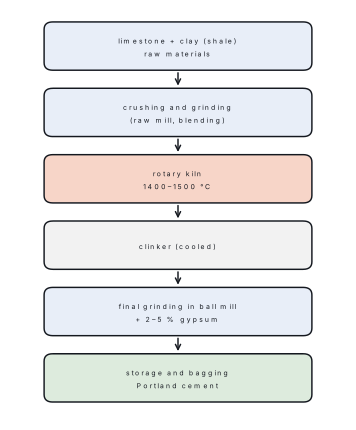
Model answers — short
1. (a) Portland cement is a fine grey powder made by burning a mixture of limestone (CaCO₃) and clay to clinker and grinding it with a little gypsum; it sets and hardens by hydration, even under water (a hydraulic cement). (b) The major components are calcium oxide (lime, 60–67 %), silica (17–25 %), alumina (3–8 %), iron oxide (0.5–6 %), magnesia and SO₃, present in the clinker as tricalcium silicate (C₃S), dicalcium silicate (C₂S), tricalcium aluminate (C₃A) and tetracalcium aluminoferrite (C₄AF). (c) Gypsum (2–5 %) acts as a retarder: without it, tricalcium aluminate reacts with water at once and the cement undergoes flash set; gypsum forms calcium sulphoaluminate that slows the reaction, so the cement has time to be placed. (d) Vicat apparatus (initial and final setting time), Le Chatelier apparatus (soundness), and the Blaine air-permeability apparatus (fineness) or a compression-testing machine (strength).
2. See the flow sheet. Steps: (i) Crushing and grinding: limestone and clay are crushed and ground to a fine raw mix in a ball mill, and the proportions are checked (lime : silica : alumina). (ii) Strong heating: the mix passes through a rotary kiln inclined at 1 in 30 and is heated by a flame at the lower end. It is dried, then calcined (CaCO₃ → CaO + CO₂ at about 900 °C) and finally clinkered at 1400–1500 °C, where lime combines with silica, alumina and iron oxide to give greenish-black nodules of clinker. (iii) Cooling and final grinding: the clinker is cooled in air, 2–5 % gypsum is added, and the mixture is ground to a very fine powder in a ball mill, then stored in silos and bagged.
3. (a)
| OPC | PPC | |
|---|---|---|
| Made by grinding | clinker + 2–5 % gypsum | clinker + gypsum + 15–35 % pozzolana (fly ash, volcanic ash, calcined clay) |
| Early strength | higher | lower, but the final strength is higher |
| Heat of hydration | high | low |
| Durability | free lime leaches from the paste | pozzolana consumes free lime, giving denser, more durable concrete |
| Use | general and quick-setting work | mass concrete, marine and house construction |
(b) On the basis of setting and hardening: hydraulic cements set and harden by reaction with water even under water (Portland cement, pozzolana cement); non-hydraulic cements harden only in air, by drying and absorbing CO₂ (lime mortar, gypsum plaster).
4. Quality control is exercised at every stage. (i) Raw materials: samples of limestone and clay are analysed chemically and the lime saturation and the hydraulic and silica moduli are checked so that the raw mix has the correct composition. (ii) Kiln: temperature, flame and the amount of free lime in the clinker are monitored, since excess free lime causes unsoundness. (iii) Final grinding: the gypsum dose (2–5 %) and the fineness are controlled (Blaine apparatus, sieve test). (iv) Finished cement: the Vicat apparatus tests the setting time (initial not less than 30 minutes, final not more than 600 minutes), the Le Chatelier apparatus tests soundness, and cubes are cast and crushed at 3, 7 and 28 days for compressive strength.
Long answer questions [8 marks each]
- Describe the manufacture of Portland cement: the raw materials, the main steps with the flow sheet, the chemical composition of the clinker and the role of gypsum. [8] (NEB 2079, 2081, 2082, 2083)
Model answers — long
1. Raw materials: limestone (about 75 %, the source of CaO), clay or shale (SiO₂, Al₂O₃, Fe₂O₃), with sand, bauxite or iron ore to correct the composition, gypsum as a retarder, and coal or fuel oil as fuel. Steps (see the flow sheet in short answer 2): 1. Crushing and grinding. Limestone and clay are crushed and ground, dry or with water, to a fine mix (raw meal or slurry), blended so that the lime content is correct. 2. Strong heating in the rotary kiln (60–150 m long, inclined 1 in 30, turning 1–2 rpm): the charge is dried; at about 900 °C the limestone decomposes, CaCO₃ → CaO + CO₂; and at 1400–1500 °C the lime combines with SiO₂, Al₂O₃ and Fe₂O₃ and about a quarter of the charge melts to form clinker nodules of 5–25 mm. 3. Final grinding. Clinker is cooled, mixed with 2–5 % gypsum and ground in a ball mill to a fine powder, which is bagged. Composition of the clinker: CaO 60–67 %, SiO₂ 17–25 %, Al₂O₃ 3–8 %, Fe₂O₃ 0.5–6 %, MgO 0.1–4 %, SO₃ 1–3 %, combined as C₃S (alite, the main compound), C₂S (belite), C₃A and C₄AF. Role of gypsum: it retards the very rapid hydration of C₃A and so prevents flash set; the cement then sets in about 30–600 minutes.
Most repeated in Cement: what Portland cement is and its components (2079, 2081, 2078 model); the flow-sheet diagram (2082, model sets A and B); OPC against PPC (2078 model, 2079 model, 2082); quality control (2079, 2083); the role of gypsum (2079, 2078 model MCQ).
A flow-sheet mark goes for boxes in order with the temperature on the kiln box (1400–1500 °C) and the gypsum addition before the final grinding. When asked for the role of gypsum write "retarder — prevents flash set by controlling the hydration of C₃A".
6.20 Paper and Pulp
CDC allots 3 teaching hours. The examiner asks for the raw materials, fibrous against non-fibrous materials and paper against pulp, usually as a two-mark part of Group C question 22.
Short answer questions [5 marks each]
- (a) What are the raw materials for the production of paper? [2](b) Differentiate between the fibrous and non-fibrous raw materials. [2](c) Name one Nepali raw material. [1] [5] (NEB 2081, 2082, model sets A and B)
- (a) Write any two differences between paper and pulp. [2](b) Why must lignin be removed from the wood fibre? [1](c) Name the two common chemical pulping processes. [2] [5] (NEB 2083, 2078 model MCQ)
- Describe the stages of paper production with a flow sheet. [5]
Model answers — short
1. (a) Raw materials are (i) fibrous: wood (spruce, pine), bamboo, straw, bagasse, cotton rags and waste paper, which supply cellulose fibres; and (ii) non-fibrous additives: fillers (china clay, talc, CaCO₃, TiO₂), sizing agents (rosin with alum, starch), dyes and water. (b)
| Fibrous raw materials | Non-fibrous raw materials | |
|---|---|---|
| Role | supply cellulose fibres that form the sheet | improve the paper: smoothness, opacity, ink resistance, colour |
| Examples | wood, bamboo, rags, bagasse, straw | china clay, talc, rosin, starch, alum, dye |
| Share | most of the paper | a small fraction |
(c) Lokta (the inner bark of Daphne shrubs), a bast fibre, is the traditional Nepali raw material; bamboo, sabai grass and rice straw are also used.
2. (a)
| Pulp | Paper | |
|---|---|---|
| Nature | a soft, wet mass of separated cellulose fibres | a thin, dry sheet made by matting and pressing the pulp |
| Additives | none or few | filler, size and dye added |
(b) Lignin is the brown cementing material between fibres; it makes paper weak and yellow. Removing it frees the cellulose fibres, and since the fibres can then lie closer it increases fibre-to-fibre bonding and the strength of the paper. (c) The sulphate (Kraft) process, with white liquor NaOH + Na₂S at about 170 °C, and the sulphite process, with Ca(HSO₃)₂ or Mg(HSO₃)₂ containing SO₂.
3. Raw material (wood, bamboo) → debarking and chipping → pulping (cooking the chips with chemicals, for example white liquor in the Kraft process at about 170 °C, to dissolve the lignin) → washing → bleaching (Cl₂, ClO₂ or H₂O₂ removes the colour) → beating and refining (the fibres are fibrillated in water) → addition of filler, size and dye → sheet formation on a moving wire screen (Fourdrinier machine) → pressing → drying on heated rollers → calendering (smoothing between rollers) → reeling and cutting.
Long answer questions [8 marks each]
- Describe the manufacture of paper from wood by the Kraft process, giving the raw materials, the chemicals used, the stages and two properties that decide the quality of paper. [8]
Model answers — long
1. Raw materials: wood (spruce, pine, eucalyptus) or bamboo as the fibrous material; white liquor (NaOH + Na₂S), bleach (ClO₂ or H₂O₂), filler (china clay), size (rosin + alum) and water. Stages: (1) Debarking and chipping: logs are debarked and cut into chips of 2–3 cm. (2) Pulping: chips are cooked in a digester with white liquor at about 170 °C and 7–8 atm for 2–4 hours; the alkali and HS⁻ break the lignin into soluble sodium salts and leave the cellulose fibres; the spent dark liquor (black liquor) is burnt to recover the chemicals. (3) Washing and screening remove the liquor and uncooked knots. (4) Bleaching with chlorine dioxide or hydrogen peroxide gives a white pulp. (5) Beating and refining roughen the fibres so they bond; filler, size and dye are added. (6) Sheet formation: the dilute stock is spread on a moving wire belt (Fourdrinier), water drains away and the fibres mat together. (7) Pressing, drying and calendering give the smooth finished paper, which is reeled. Quality of paper is judged by (i) strength (tensile and tear strength, which depend on fibre length and bonding) and (ii) brightness and opacity, together with smoothness, ink absorbency and pH (acid-free paper lasts longer).
Most repeated in Paper and Pulp: raw materials and fibrous against non-fibrous (2081, 2082, both model sets); paper against pulp (2083, 2079 model); Kraft and sulphite processes and the effect of lignin (2078 model MCQ).
Answer "raw materials" in two groups — fibrous and non-fibrous — rather than as a single list; the examiner looks for both. For the flow sheet give the chemicals at the pulping step (white liquor) and at bleaching.
6.21 Nuclear Chemistry and Applications of Radioactivity
CDC allots 2 teaching hours. The unit is usually the last two-mark part of the paper: nuclear against chemical reactions, natural against artificial radioactivity, units, and fusion.
Short answer questions [5 marks each]
- (a) Differentiate between nuclear reactions and chemical reactions. [2](b) What is artificial radioactivity? Give one example. [1+1](c) Name the unit of radioactivity. [1] [5] (NEB 2081, 2083, model set A)
- (a) Why is nuclear fusion also called a thermonuclear reaction? [2](b) Write one fusion reaction and one fission reaction. [2](c) Why does fusion release more energy per kilogram of fuel than fission? [1] [5] (NEB 2082 for (a))
- (a) Differentiate between natural and artificial radioactivity. [2](b) A sample of wood has a ¹⁴C activity that is 25 % of that in a living tree. Find its age (half-life of ¹⁴C = 5730 years). [3] [5] (NEB 2079 model for (a))
Model answers — short
1. (a)
| Nuclear reaction | Chemical reaction | |
|---|---|---|
| Involves | the nucleus (protons, neutrons) | the outer electrons |
| Elements | one element changes into another | elements are conserved |
| Energy change | very large (about 10⁸ kJ mol⁻¹) | small (about 10² kJ mol⁻¹) |
| Affected by | not affected by temperature, pressure or catalyst | depends on T, P and catalyst |
| Isotopes | different isotopes behave differently | isotopes react alike |
(b) Artificial (induced) radioactivity is radioactivity produced in a stable nucleus by bombarding it with particles (discovered by Irène Curie and Frédéric Joliot). Example: ²⁷₁₃Al + ⁴₂He → ³⁰₁₅P + ¹₀n, and ³⁰₁₅P → ³⁰₁₄Si + ⁰₊₁e (positron). (c) The becquerel (Bq) = 1 disintegration per second (SI unit); the curie (Ci) = 3.7 × 10¹⁰ Bq.
2. (a) Fusion needs a temperature of about 10⁷–10⁸ K to give the nuclei enough kinetic energy to overcome the electrostatic repulsion between them, so it is called a thermonuclear reaction (as in the Sun). (b) Fusion: ²₁H + ³₁H → ⁴₂He + ¹₀n + 17.6 MeV. Fission: ²³⁵₉₂U + ¹₀n → ¹⁴¹₅₆Ba + ⁹²₃₆Kr + 3¹₀n + energy (about 200 MeV per nucleus). (c) The fusion fuel is made of very light nuclei, so one kilogram contains many more nuclei than a kilogram of uranium; although fission releases more energy per nucleus, fusion releases about three to four times as much energy per unit mass.
3. (a) Natural radioactivity is the spontaneous emission of α, β or γ rays by heavy unstable nuclei found in nature (U, Th, Ra); artificial radioactivity is produced by bombarding a stable nucleus with particles, giving unstable isotopes (³⁰P, ²⁴Na) that then decay. (b) 25 % = ¼ = (½)², so two half-lives have elapsed.
Check with the decay law: N/N₀ = (½)^(t/t½) = (½)² = 0.25.
Long answer questions [8 marks each]
- (a) Explain nuclear fission with an equation and the chain reaction. [3](b) Describe the use of nuclear energy in power generation and state how it differs from a nuclear weapon. [2](c) Give two medical and two industrial uses of radioactivity. [2](d) State one harmful effect of nuclear radiation. [1] [8]
Model answers — long
1. (a) Nuclear fission is the splitting of a heavy nucleus into two lighter nuclei, with a large release of energy, when it absorbs a neutron: ²³⁵₉₂U + ¹₀n → ¹⁴¹₅₆Ba + ⁹²₃₆Kr + 3¹₀n + 200 MeV. The three neutrons released each split another uranium nucleus, so a chain reaction is set up. If the chain is uncontrolled the energy is released in a flash (an atomic bomb); if the neutrons are absorbed by control rods (cadmium or boron) it is controlled, as in a reactor. (b) In a nuclear power plant a controlled fission chain heats water, the steam drives turbines and the turbines drive generators; a moderator (graphite or heavy water) slows the neutrons. A nuclear weapon uses an uncontrolled chain reaction. (c) Medical: cobalt-60 for cancer radiotherapy; iodine-131 for the diagnosis and treatment of thyroid disease; sterilisation of instruments. Industrial: radioactive tracers for detecting leaks in pipes; thickness gauges; irradiation to preserve food; radiocarbon dating of fossils. (d) Harmful effects: radiation damages cells and DNA, causing burns, cancer, genetic mutations and, at a high dose, death; radioactive waste stays hazardous for many years.
Most repeated in Nuclear Chemistry: nuclear against chemical reactions (2081); artificial radioactivity with an example (2083); fusion as a thermonuclear reaction (2082); natural against artificial radioactivity (2079 model, model set A); units of radioactivity (model set A).
Use proper nuclear notation with the mass number above and the atomic number below, and check that both add up on the two sides of every equation — a balanced nuclear equation is where the marks are. For radiocarbon dating convert the fraction remaining into a number of half-lives first.
Chapter summary
- Sixty-four of the seventy-five marks are subjective. Group B carries 8 × 5 = 40 and Group C 3 × 8 = 24, so this chapter gives every one of the twenty-one CDC units at least three five-mark questions and one eight-mark question, each with a full model answer.
- Organic chemistry is the largest block. Units 8 to 17 carry 55 of the 128 teaching hours, and in the 2079 to 2083 papers they account for roughly half of Groups B and C: the X–Y–Z chains, the "equation for each named reaction" lists, Victor Meyer's test and Hoffmann's separation recur in every sitting.
- Numericals recur in a fixed set of forms: equivalent weight and normality from a titration; pH, Ksp and precipitation; order and rate constant from a table of initial rates; Hess's law for a heat of formation; cell notation and emf from two E° values. Show the data, the formula, the substitution and the unit.
- The inorganic unit is about extraction and compounds: copper with its blast furnace and matte, zinc with its retort, mercury from cinnabar, iron to steel, and the vitriols. Always write concentration, roasting, smelting or reduction, and refining as headings.
- Year tags mean "set in that paper". The board papers of 2079, 2081, 2082 and 2083 and the model papers of 2078 and 2079, together with model sets A and B, were the sources; where printed numbers could not be read the item says data re-set.
- Five figures carry the diagrams that examiners ask for by name — concentration–time graphs, energy profiles, the standard hydrogen electrode, the octahedral d-orbital splitting and the copper blast furnace — and a flow sheet of the cement process.
Sources and verification
Question papers. The Grade 12 Chemistry board papers of 2079, 2081, 2082 and 2083 and the model papers of 2078 and 2079 and two further model sets (A and B) were read as transcribed text on a public question-bank site, and the question stems and marks were compared unit by unit with the earlier Group A record held with the objective chapter. No paper for 2080 could be reached, so no question carries a 2080 tag. The 2083 paper is used as printed on that site. Where the transcription dropped the numerical data of a question (chiefly some tables and the values of electrode potentials) the stem, the skill tested and the marks are kept and the data re-set; those items carry the words data re-set.
Answers and numericals. Every answer was written from the Grade 12 Chemistry chapters in this collection so that nothing here contradicts them, and every numerical was recomputed before printing: for example ΔH = −196 kJ (2079), ΔH_f of acetic acid = −126 kcal mol⁻¹ (2082), E°cell = +1.62 V (2082), k = 3.2 × 10⁻⁴ s⁻¹ (2083). Where a printed paper used a textbook value that differs from the usual one (−99 kcal for the combustion of carbon in 2082), the paper's data are used as given.
Not verified. The scripts of the boards were not seen, only the transcribed questions; model-answer wording is our own and is not the board's marking scheme. Structural formulae are described in words where the printed paper expected a drawing.