Unit 19 · Literature - One Act Plays · 43 min read
Facing Death
What the syllabus asks for 9
- About the author
- Background you need for this play
- The play, beat by beat
- Characters
- Themes
- Dramatic techniques
- Critical appreciation
- Glossary
- Textbook exercises
August Strindberg's "Facing Death" is a tragedy that fits into one morning and one room. A widowed innkeeper, Monsieur Durand, sits in the dining-room of his ruined Swiss boarding house with three ungrateful daughters, unpaid bills and no bread. He has no hope of a better life, but he has a plan. By the end of the play he has arranged that his daughters will be rescued from poverty by an insurance payment after his death, and he has done it so quietly that only the eldest daughter understands what is happening. It is a play about money, family and love that goes unrecognised, and your textbook asks you to call it a modern tragedy. This chapter shows you what that phrase means, how the play works, and how to answer every kind of question about it.
Durand is an ordinary man destroyed not by fate or kings but by debt and a family that does not love him. He is a tragic hero because his last act is one of pure sacrifice: he burns down his house for the insurance money and poisons himself so that his daughters may live. The play is a study of love without thanks, of how a dead mother's lies poison a family, and of death as a deliberate act of care. Everything you write about it should come back to those three ideas.
19.1 About the author
Johan August Strindberg was born in Stockholm on 22 January 1849 and died there on 14 May 1912. His father was a steamship agent and his mother a former servant, a mixture of middle-class and working-class that he described in his autobiographical novel The Son of a Servant. He studied at Uppsala University on and off, and worked as a teacher, a journalist and a librarian at the Royal Library in Stockholm.
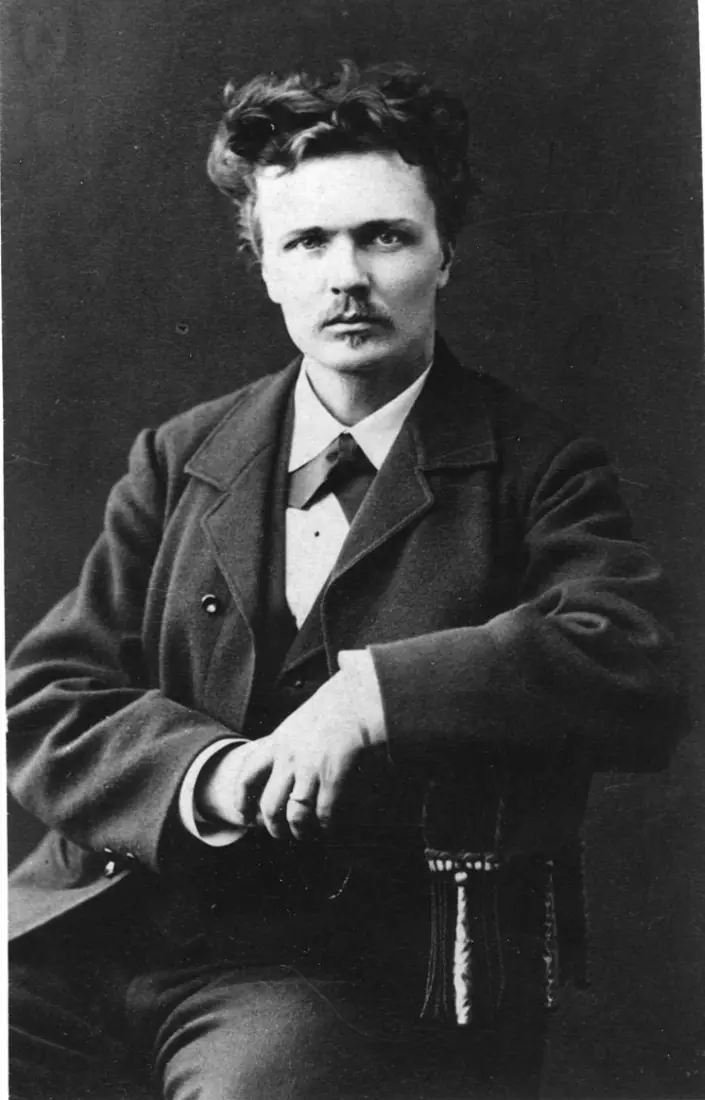
Strindberg wrote more than sixty plays and thirty other works. His novel The Red Room (1879) is often called the first modern Swedish novel. His breakthrough plays were The Father (1887), Miss Julie (1888) and Creditors (1888), which brought the theory of naturalism to the stage: he wanted people on stage to speak and behave as in real life, with motives that come from psychology and environment, not from a melodramatic plot. Later he moved to dream-like, experimental plays such as A Dream Play (1901) and The Ghost Sonata (1907), and he is a forerunner of expressionist drama. He wrote also The Dance of Death (1900) and founded the Intimate Theatre in Stockholm in 1907.
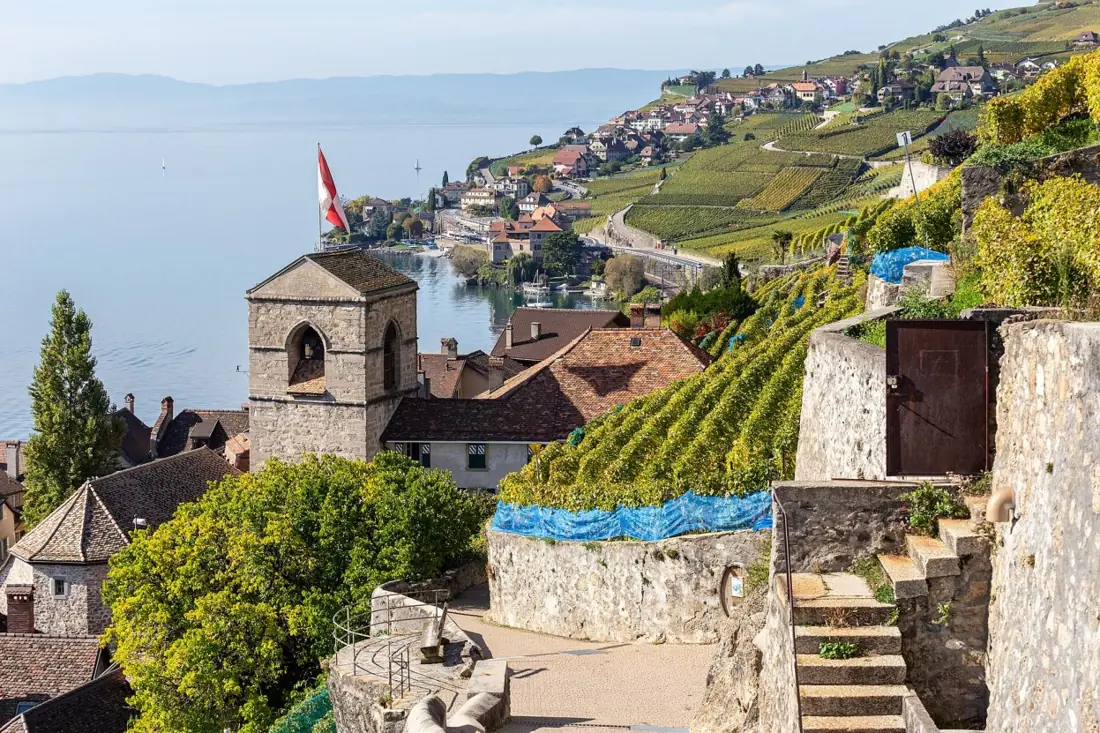
Strindberg lived in Switzerland from 1884 to 1887 near Lake Léman (Lake Geneva). The translators of the 1912 English edition point out that this setting was "made use of years later" in "Facing Death". They give 1898 as the year in which the play was published; his one-act "Pariah" belongs to 1890.
| Fact | Detail |
|---|---|
| Born / died | Stockholm, 22 January 1849 / Stockholm, 14 May 1912 |
| Nationality | Swedish |
| Famous plays | The Father, Miss Julie, Creditors, The Stronger, The Dance of Death, A Dream Play, The Ghost Sonata |
| Novels | The Red Room (1879), The Son of a Servant, Inferno |
| Movement | naturalism, later expressionism |
| Also | a painter and a pioneer of small, intimate theatres |
Strindberg married three times: to Siri von Essen (1877), Frida Uhl (1893) and Harriet Bosse (1901). His plays about marriage, and the unhappy end of these relationships, gave him an undeserved name as a "woman-hater". The 1912 translators of this play insist that his close attention to women and marriage came from thought about the new ideas of the age, not from dislike.
19.2 Background you need for this play
A one-act play
A one-act play has no act breaks: the action runs in one stretch of time, in one place, with few characters. It must open close to the crisis, build quickly and end on a strong final image. "Facing Death" opens with a bill and ends with smoke coming through a ceiling.
Where and when
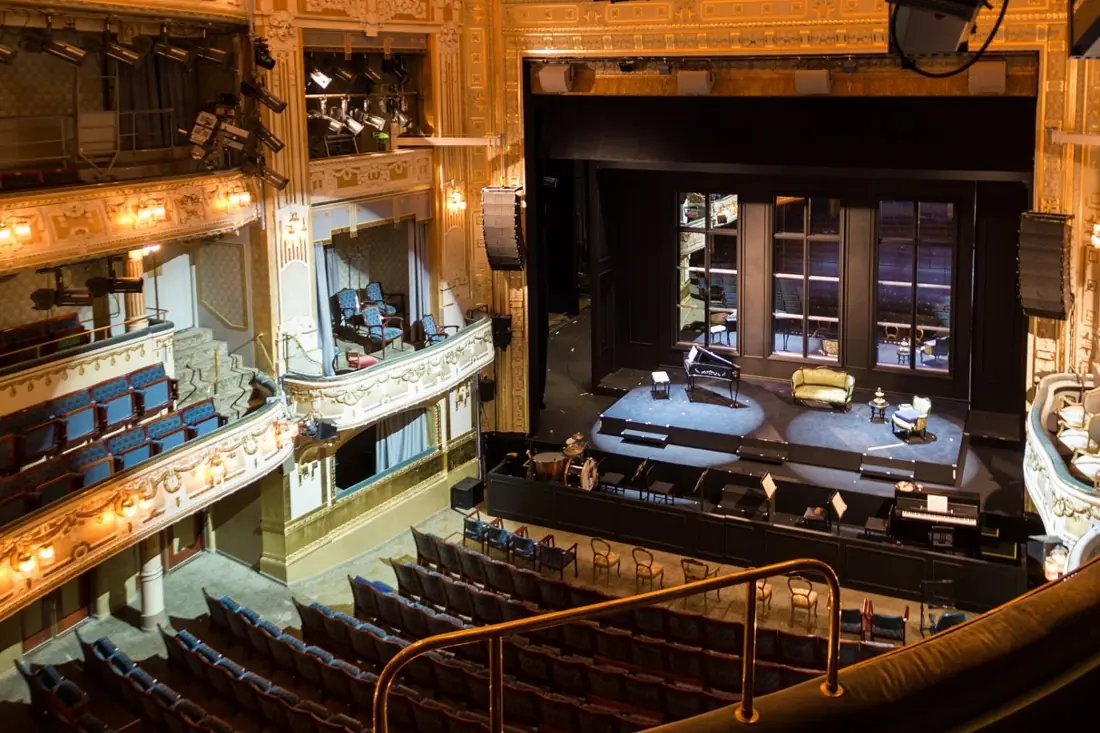
The stage direction places the play in "a dining-room with a long table", with an open door through which one sees, "over the tops of churchyard cypress trees, Lake Leman, with the Savoy Alps and the French bathing-resort Evian". The cast list places it in French Switzerland in the 1880s. Durand keeps a pension, a boarding house for tourists. It is failing: "only one tourist in the house for over two months". The property lost its value when the railway "passed our gates and went to the east instead". The setting matters twice: the lake and churchyard make death part of the view from the start, and the fire insurance and mortgage make money the play's real plot.
Naturalism
Strindberg's naturalism shows in the smallest details: a basket with no bread and three bills; a rat-trap set for a month; a glass of milk; a box of matches; a saucer of milk for a cat while the father goes hungry. Nothing in the play is grand, and every object is also a weapon in the family's daily war.
What is a modern tragedy?
| Classical / traditional tragedy | Modern tragedy | |
|---|---|---|
| Hero | a king, prince or general of high rank | an ordinary person: an innkeeper, a clerk, a salesman |
| Cause of downfall | fate, the gods, a "tragic flaw" of pride | social and economic pressure, family, money, environment |
| Language | poetic, elevated | everyday speech |
| Setting | a palace, a battlefield | a room in a house, a boarding house, a kitchen |
| Ending | the hero's death and a restoration of order | a private death; society goes on much as before |
| Model | Oedipus, Hamlet | "Facing Death", Ibsen, Miller |
The play meets each modern feature: Durand is a widower and a hotel keeper; he is ruined by debt, an unlucky railway line and his wife's speculations; the language is plain; the setting is a dining-room; and the last picture is smoke, bells and a family about to learn the truth.
19.3 The play, beat by beat
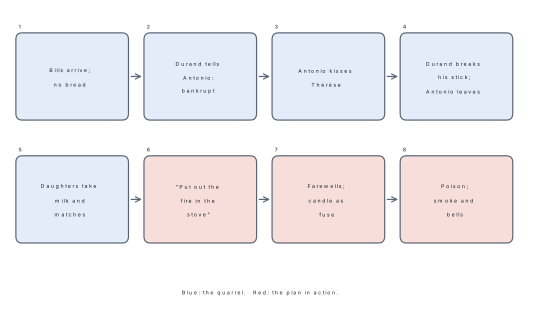
The play runs without a break. Teachers divide it into five movements. The summary below follows them.
Characters on stage: Monsieur Durand, pension proprietor, formerly of the state railway; Adèle (27), Annette (24) and Thérèse (24), his daughters; Antonio, a lieutenant in an Italian cavalry regiment who lodges in the house; and Pierre, an errand boy.
| Movement | What happens |
|---|---|
| 1. The bills (Durand and Adèle) | Adèle asks whether Durand has fetched the coffee-bread. He sent Pierre, who comes back with no bread and three unpaid bills from the baker, butcher and grocer. Durand has bought candles for the anniversary of the death of his small son René. Adèle is scornful; Durand says he longs for "everything" to "crash at once". He has paid the fire insurance on the house, he says, or he "would never have got that last mortgage". He tells Adèle to put out the fire in the stove |
| 2. The lodger (Durand and Antonio) | Durand tells the lieutenant that the house is bankrupt and cannot go on. Antonio offers to help: "Allow me to stay a month longer and I will pay my bill in advance." Durand refuses: "Privation must come and teach my children to lead a different life". He recalls how an American guest once tried to kiss Thérèse on the stairs and asks Antonio not to judge him. Antonio asks him a curious question, whether he was born in Switzerland; Durand says yes, but "uncertainly". Antonio insists on paying his ten francs |
| 3. The kiss and the quarrel (Thérèse, Antonio, Durand) | Thérèse comes in with a rat-trap and looks for her cat Mimi. She quarrels with Antonio and then Adèle; Annette arrives, and Antonio kisses Thérèse. Durand, in the doorway, sees it. Thérèse denies everything and throws at him what her dead mother told her: that he lies about being Swiss, though he is a Frenchman, and that he is a deserter. Durand lifts his walking-stick against Antonio; Antonio leaves with contempt ("Keep my contempt--and my ten francs"). Durand flings a gold piece after him, breaks his stick in two and says, "He who cannot kill must die" |
| 4. The daughters' cruelty | Durand asks Thérèse and Annette to tell the truth; both refuse. Adèle brings a glass of milk; Thérèse snatches it from him and takes his matches ("you sha'n't waste the matches"). They mock him: he has cream for the cat but no milk for his father; he eats the rats' bait. He describes himself as "a lone brakeman on an express train" who sees it go toward an abyss but cannot reach the valves. The wind begins to rise |
| 5. The preparations and the farewell | Durand tells Adèle to put out the stove fire and sends Thérèse and Annette upstairs to shut the windows. To Thérèse he is tender: if she loves Antonio she must marry him. She asks forgiveness; he says, "You gave me so much joy as a child that you owe me nothing." He says farewell to Annette. Then to Adèle alone he reveals his plan in guarded words: hide the fire-insurance papers; count the candles (only five of six in the package); "the sixth is placed very high up and very near--". In "five minutes or so it will be burned out." He tells her the truth about his past, instructs her to look after her sisters, forbids her to tell them or speak ill of their mother, and drinks from a glass. Smoke forces its way through the ceiling; bells sound far off; Adèle cries "You have--taken--poison!" Durand nods, asks whether she has the insurance papers, begins "Tell Thérèse--and Annette--" and his head falls. Curtain |
Reading the last minutes
The end is a double story. On the surface, Durand is sending his daughters away to shut windows; underneath, he is making sure the fire catches. He is telling the truth in code: "Put out the fire in the stove" means make it look as though there was no fire of ours; the candle count is a fuse; "I am going away to get money for you" is literally true. Adèle alone understands (she looks Durand in the eyes, and after a pause obeys), and so she, not the ungrateful younger girls, becomes the keeper of the secret.
19.4 Characters
| Character | Role | Key traits |
|---|---|---|
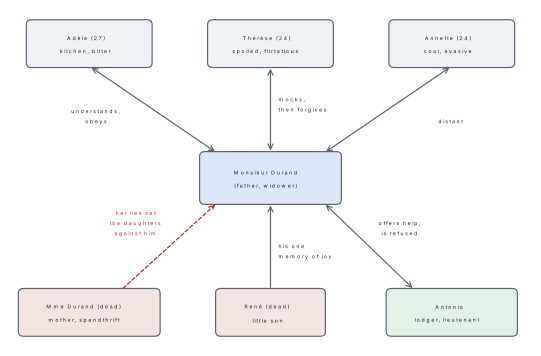
| Monsieur Durand | the pension-keeper, a widower, protagonist | patient, proud, sad, self-sacrificing; silent about his wife's faults; a failed father who sees too late |
| Adèle (27) | the eldest daughter, who works in the kitchen "like Cinderella" | bitter, practical, loyal to her mother's memory; finally the only one who understands |
| Thérèse (24) | the liveliest daughter | spoiled, flirtatious, selfish, cruel with her tongue; capable of sudden tenderness |
| Annette (24) | the quieter sister | cool, evasive, takes her mother's side; her last words to her father are a practical request |
| Antonio | a young Italian lieutenant who lodges in the house | kindly, light-hearted, half-serious in love; offers help; leaves in contempt |
| Pierre | an errand boy | brings the bills; a small comic/realistic figure |
| Mme Durand (dead) | never seen | the ghost of the play: a spendthrift, a storyteller, a mother who taught her children to despise their father |
| René (dead) | the small son | a symbol of lost happiness and love |
Monsieur Durand
Durand is a tragic hero in a modern key. He is gentle and dignified but passive. He tells Antonio that he knows what a father should have done when the American guest assaulted Thérèse, "but--father-like--I didn't do it." He sees his house heading for disaster "twenty years" before it arrives and is unable to stop it: "I have been sitting like a lone brakeman on an express train, seeing it go toward an abyss, but I haven't been able to get to the engine valves to stop it." His tenderness shows in small details: he bought candles for a dead child; he once woke at night to see if Thérèse had thrown off her covers; he gave Annette water when she cried from thirst. His patience is boundless: he lets the girls take his milk and matches, says the tobacco cost him no more than the water, and eats the rat bait without complaint. His honour matters more to him than his comfort: he breaks his stick, refuses Antonio's money and, at the end, insists that his children shall know he "lived as a man of honor". And his sacrifice is complete. He plans his death carefully, to the last detail, so that Adèle can prove the fire an accident.
He is not a saint. He is a failed manager, a wasteful host and a father who did not protect his daughters from their mother's influence. The play makes us pity him because we see how much he has tried to do for his children, even while we see his mistakes.
Adèle
The eldest daughter has borne the worst of the household labour and is the most bitter ("Even I am tired, though I have held out longest!"). She repeats her mother's complaints, "Oh, if mother were only living!". But she is also the most perceptive. When her father keeps asking her to put out the stove, she answers, "I don't understand you" and then understands. Her last cry, "You have--taken--poison!", shows that she, alone of the daughters, will carry the truth. By the end she is the new head of the family, given the money, the papers and the secret.
Thérèse and Annette
Thérèse is the most openly cruel to her father ("You shall not have anything, you who throw away money") and the most openly tender in the last scene: "Here are your matches, papa--and there's your milk." The two lines are two sides of one character: a spoilt girl who is unkind when she feels safe and loving when she sees him go. Annette is cooler, sides with her dead mother, and says farewell with a practical request ("you won't forget to bring something home to us").
Antonio
Antonio represents the outsider who sees the house clearly. He alone asks Durand about his birthplace, and he offers money that is refused. His kiss with Thérèse starts the quarrel that produces Durand's "He who cannot kill must die." His parting shot ("I hope you'll miss the last rat from your sinking ship") is a cruel joke that turns out to be a prophecy.
- Some guides say Durand has a life insurance that pays 5000 francs. Read the text: to Thérèse he says he will get "six hundred francs if I sell it, and five thousand if I die", but to Adèle he says he sold that policy long ago and hands her the fire-insurance papers. The 5000 francs is the figure he gives Thérèse; the plan that actually works is the fire. For the exam write that he dies so that his daughters will receive insurance money.
- Durand is not accused of a crime by the play. The "desertion" is his dead wife's lie.
- The lieutenant is Italian, not Swiss or French, and only a lodger, not a suitor who is accepted.
- The play does not say how the fire began in the end; the candle and the stove hints are the clues. Do not write that he shot himself: he drinks poison from a glass.
- Annette and Thérèse are both 24 in the cast list, though Thérèse speaks of Annette as the older one; never state their ages without checking.
19.5 Themes
| Theme | Where we see it |
|---|---|
| Poverty and debt | The bills, the mortgage, the empty bread basket; the pension is "bankrupt" |
| Sacrificial love | Durand buys candles for a dead child, endures abuse, and kills himself for his daughters |
| Ingratitude and family breakdown | The daughters mock, snatch his milk and matches, and treat him as a burden |
| The legacy of a dead mother | Her lies about his birth and his desertion, and her habit of blaming him, have poisoned the children |
| Honour and reputation | Durand will not quarrel for money but will fight for his honour; he wants his daughters to know he "lived as a man of honor" |
| Truth versus lies | The hidden truth of his birth and war service, and the half-truths of his farewell |
| Death as release | "Let everything crash at once... if it would only be the end!" Death is both escape and gift |
| Appearance and reality | The fine view over the lake; a "pension" that has no guests; "Her Highness" who begs for milk |
Money and love. The play's central irony is that money destroys love in the household, and then money, in the form of insurance, is the only language in which Durand can show his. His wife, he says, hated him more and more "with the limitless hatred of her indebtedness": the more she owed him, the more she despised him. The daughters have learned the same lesson.
19.6 Dramatic techniques
Dramatic irony and foreshadowing
On the first page Durand asks Adèle to put out the fire in the stove, and she asks whether the fire insurance is paid. Near the end he explains: "If it catches fire here, we'll get nothing from the insurance." The early hints make sense only in retrospect. Antonio asks the innkeeper whether he was born in Switzerland: the audience senses a secret that will be explained only at the end. The wind that "is going to blow soon", the clanging "down toward Cully" (a chimney fire that Antonio has seen) and the cypress-lined churchyard in the window all point to a fire and a death. Each of these is a clue that the audience sees and most of the characters do not.
Symbols
| Symbol | Meaning |
|---|---|
| The candles | first a memorial for the dead child René; then the fuse of the fire: one candle, placed "very high up and very near", will burn out in "five minutes or so" |
| Fire | destruction, but also the means of rescue through insurance |
| Milk and matches | small daily kindnesses that the daughters take away, and that Thérèse gives back at the end |
| Bread | the basic needs the family cannot meet |
| The glass of water | the means of his death; a drink of poison in a plain glass |
| The lake and churchyard | calm, beauty and death in a single view |
| Bells | the alarm that signals the fire and, for Durand, the end |
Imagery and speech
Durand's language is full of metaphors of journeys and ships: the "lone brakeman on an express train" with a runaway engine; Antonio's "sinking ship"; "we must stick to this course even if it leads us into the lake." The small domestic details, the rat-trap, the milk, the matches, are realistic; the larger images are almost tragic. He also hums a short rhyme: "In this house a candle burns, / When it burns out the goal he earns, / The goal once won, the storm will come / With a great crash."
Structure and pace
The play moves from quarrel to calm preparation. The first three movements are loud and quick: bills, the kiss, the raised stick. The last two slow down; Durand speaks quietly and gives instructions. The contrast makes the end more moving. The time is almost "real time": the play runs from the coffee-bread at the start to the candle that Durand says will burn out in "five minutes or so".
Stage directions
They are precise about mood and movement: "[Sternly]", "[Tired and submissively]", "[Fast and exalted]", "[Smoke is seen forcing its way through the ceiling.]", "[A distant clanging of bells is heard; the smoke increases.]" The last directions finish the play without a line of speech: the sound of bells and the smoke are the tragedy's last words.
Characters' speech as weapons
The daughters' talk is full of cruelty. Durand's replies are often irony ("Dear children, this tobacco didn't cost me any more than that water") or self-mockery ("No, I have never thought of you, never!", bitter irony from a man who has thought of nothing else). His restraint makes the cruelty worse.
19.7 Critical appreciation
What is moving. Durand's restraint. He never complains to the audience or accuses his daughters: he gives them what they need and shields their image of their mother. The detail of the daughters' ingratitude (the milk, the matches) is so small and so real that the final scene of reconciliation, when Thérèse brings him his matches and his milk, hurts the more. The surprise is that the father is the strongest character in a house of strong-willed women.
What is bold. The play is cool about suicide. It gives the audience a deliberately planned death, arson and insurance fraud as the expression of a father's love. The author does not argue the morality; he leaves us to feel the pity and the horror together.
Weaknesses. Some readers find the daughters too cruel to be real and the reconciliation too quick. Others see Durand as too passive to be tragic: he does nothing for twenty years and acts only when it is too late.
Verdict. "Facing Death" is a compact, naturalistic tragedy in which the hero's death is an act of generosity. It gives the stage a new subject: the tragedy of an ordinary family, in plain speech, about money.
19.8 Glossary
| Word | Meaning as used here |
|---|---|
| pension (n.) | a small hotel or boarding house in Europe |
| proprietor (n.) | the owner of a business |
| dowry (n.) | money or property a bride brings to her marriage |
| mortgage (n.) | a loan secured on a house or land |
| insurance (n.) | a contract to pay money if a loss such as a fire or death occurs |
| bankrupt (adj.) | unable to pay one's debts |
| privation (n.) | lack of the basic needs of life |
| lieutenant (n.) | a junior officer in the army |
| cavalry (n.) | soldiers who fight on horseback |
| sharpshooter (n.) | a skilled marksman; a volunteer rifleman |
| naturalised (adj.) | made a citizen of a country by law after being born elsewhere |
| desert (v.) | to leave the army without permission |
| incendiary (n.) | a person who sets fire to property |
| negligée (n.) | a woman's light, loose dressing-gown |
| prerogative (n.) | a special right or privilege |
| credit (n.) | the ability to buy now and pay later |
| scandal (n.) | public shame caused by a failure or wrong |
| abyss (n.) | a deep hole; a disaster without end |
| brakeman (n.) | a railway worker who operates the brakes |
| exalted (adj.) | lifted up in feeling; very excited or noble |
| tragic hero (n.) | the central figure of a tragedy whose downfall we pity |
| naturalism (n.) | a style that shows life as it is, with causes in heredity and environment |
- Durand, a widowed pension-keeper in French Switzerland, is bankrupt and despised by his daughters.
- He tells the truth about his birth and war record to Adèle only, and tells her to hide the fire-insurance papers.
- He sets a candle as a fuse, drinks poison and dies so that his daughters will receive insurance money.
- The dead mother's lies have turned the children against him.
- It is a modern tragedy: an ordinary man, money and family, plain speech, a private death.
19.9 Textbook exercises
The wording follows the CDC Grade 12 textbook as reproduced in common guides; your printing may differ slightly.
Before you read
a. Have you ever observed your parents in a financial crisis? If yes, what was it like?
An opinion question. Model: Yes. When the harvest failed one year, my parents quietly stopped buying things they wanted, borrowed from a relative and went without meals so that my school fees could be paid. They did not complain in front of us, but I could see worry in their faces at night. It taught me how much a family's happiness can depend on money, and how carefully parents hide their fear.
b. Have you ever appreciated your parents' selfless act for your sake? If yes, how?
Model: Yes. I once thanked my mother for selling her gold ring to pay for my college entrance fee. I thanked her with words and promised to study hard. Appreciation need not be money; it can be a hug, a letter, a good result or simply saying "thank you".
Understanding the text
a. Where does the play take place?
In the dining-room of Monsieur Durand's pension (boarding house) in French Switzerland, near Lake Léman, in the 1880s. A long table stands in the room; one door leads to the kitchen and another to inner rooms, and through an open door we see the lake, the Savoy Alps and Evian beyond the cypress trees of a churchyard.
b. Why do the grocer, the baker and the butcher send their bills to the Durand household?
Because Durand has not paid them for a long time. When the errand boy Pierre goes for the coffee-bread, the baker refuses to "send any more bread until he was paid", and the butcher and grocer "shoved these bills at" him. The family's credit is exhausted.
c. Why does Monsieur Durand spend money on candles when he does not have money to buy even bread?
Two reasons. On the surface the candles are for a mass on the anniversary of the death of his small son René, "the most beautiful thing life ever gave me", and he pays for them with his tips, which he calls "the only contentment I possess". Secretly, one of the candles will act as a fuse to set fire to the house so that his daughters can collect the fire insurance.
d. Why did Monsieur Durand sell his life insurance?
He tells Adèle that he sold it "long ago, because I thought I noticed that some one became irritable when it was due": the payments had become a source of strain and quarrelling in a household already short of money. Guides usually add that he sold it to pay pressing debts. (He tells Thérèse, for comfort, that he would get "five thousand if I die", which he knows is not true for his real plan.)
e. Why has Monsieur Durand paid the fire insurance?
So that the house is covered. He says it was the condition of the "last mortgage". His hidden reason is that the fire will bring compensation for his daughters. That is why he tells Adèle to put out the stove: he wants no one to think the fire came from the stove. He asks her to hide "the fire insurance papers".
f. How did Monsieur Durand and his wife run out of their inheritances from both sides?
According to Durand, his wife "through carelessness and foolish speculations ruined your paternal inheritance so completely" that he had to give up his business and start the pension. Part of her own inheritance was spent on bringing up the children, "which of course cannot be looked upon as thrown away". Daughters believe the opposite, that their father wasted their dowry.
g. Why does Monsieur Durand tell a lie about his birthplace?
Because he is French by birth. He came to Switzerland to marry and became a Swiss citizen. When war broke out, he did not want to carry a weapon against his own country, so he went out as a volunteer sharpshooter against the Germans. His wife later spread the story that he had deserted. He hides his birth to avoid the suspicion and slander of strangers: "I didn't have to admit that to the first scamp that came along."
h. What business is Monsieur Durand running to make a living?
He keeps a pension (a guest house or boarding house for tourists) near Lake Léman. It is failing because few guests come after the railway took a route "to the east".
Reference to the text
a. Sketch the character of Monsieur Durand.
Durand is a widower and former railway official who runs a failing pension. He is patient and dignified: he bears insult and hunger with few words. He is loving and self-sacrificing: he once got up at night to cover his children, gave Annette water in secret and, at the end, gives his life to save the family. He is honourable: he refuses Antonio's money, protects the memory of his wife and wants his daughters to know he "lived as a man of honor". He is practical and intelligent in his plan, using a candle, insurance papers and silence. But he is also weak and passive: he saw disaster coming for twenty years and did not stop it, and he blames himself as "father-like". He is a tragic hero.
b. How do we know that the Durand family has reached a dead end?
By the evidence of the first scene. The baker, butcher and grocer refuse credit, and there is no bread; the house has a last mortgage and a fifth of its fire insurance left unmortgaged; the railway that bypassed it ruined its value; there has been "only one tourist in the house for over two months"; the pension is "bankrupt" and Durand cannot "borrow a sou". The family is also emotionally at a dead end: the daughters despise their father and quarrel, the eldest is worn out, and he hopes that "everything" will "crash at once". Durand is reduced to eating the rats' bait, and Antonio leaves with a joke about a "sinking ship".
c. "The mother, though already dead, seems to have had a great influence on the daughters, especially Thérèse." Do you agree?
Yes. The mother's words haunt every scene: "Mother said so", "Mother used to do this way", "But mother said". She taught the children to despise their father, told them he was a Frenchman and a deserter, and claimed that he wasted their dowry. Thérèse repeats these accusations at the moment of crisis ("you who deserted!"). Adèle calls him "the wretch", says he should have been put in the lunatic asylum "the time mother said he was ripe for it" and cries "Oh, if mother were only living!" Durand himself remarks to Annette, "How like your mother you are today!" Durand says that he has been met at every attempt at reform by "But mother said". Thérèse is the most affected because she is the youngest, the most spoiled and the most eager to imitate her mother's contempt, though she is also the one who finally breaks away from it.
d. Discuss the relationship between Monsieur Durand and his wife.
It was unhappy and one-sided. Durand says his wife was careless with money, "through carelessness and foolish speculations" (he mentions lottery tickets bought with housekeeping money) and lied about him "all through her life". He carried "her cross", took every consequence of her mistakes ("Blame it on me", she would say) and was blamed in return. "The more she became indebted to me, the more she hated me, with the limitless hatred of her indebtedness", and in the end "she despised me", teaching the children to do the same. Yet he never said a hard word against her to the girls, kept her portrait safe in a drawer, and tells Adèle never to speak ill of her. So the relationship shows his patience and her resentment: he is loyal to a dead woman who made his life a misery.
e. "Money determines the relationship between characters in this play." Elaborate with examples.
Money is the main hidden character. (1) Durand and his daughters: their quarrels are about bread, bills, milk and matches; they measure his worth by what he can pay. Adèle says, "You can afford to buy such things!" of candles. (2) Durand and his wife: her debts turned her love to hatred. (3) Antonio and the Durands: Antonio is welcome as a paying guest; Durand refuses his offer to pay a month in advance as charity but accepts the ten francs he says he owes, and later, insulted, throws a gold piece after him: "My curses follow your gold, scamp!" (4) Durand and his creditors: the bills set the plot in motion. (5) Durand and the insurance company: the only way he can give his daughters a fortune is by dying. When Durand says he will get them money, Thérèse's first concern is "How much can you get for it?" From first bill to last policy, every relationship is measured in francs.
f. Monsieur Durand kills himself so that his daughters will get money from the insurance company. What does his plan tell us about him?
It tells us that Durand is selfless, loving and resourceful, and also desperate and isolated. He is willing to lose his own life, reputation (he will die as "an incendiary") and peace so that his daughters will be free from debt and find husbands and work. He thinks carefully about their future: he arranges Thérèse's marriage, Annette's teaching post and Adèle's management of the money. He protects them from the truth and from their mother's memory. But the plan also shows that he sees no other way out, that he has lost faith in asking for help, and that he chooses a hidden death over an open fight. He is a father whose love can be shown only in this way.
g. Discuss "Facing Death" as a modern tragedy.
A traditional tragedy shows a great man falling through fate or pride; a modern tragedy shows an ordinary person crushed by social and economic pressures. "Facing Death" meets this description. The hero is ordinary: an innkeeper, widower and former railway employee. The causes are modern: debt, a mortgage, a railway that bypassed the town, insurance, a family that cannot communicate. The language is plain and the setting an ordinary dining-room. The hero is noble in a private way: he faces death as an act of love. There is a tragic flaw of a modern kind: not pride but passivity and silence ("father-like--I didn't do it"). The ending is private: no public change follows, only smoke and bells. The play also follows the naturalistic style: realistic detail (bills, rat-trap, milk), psychological truth (the mother's influence), and no happy rescue. It arouses pity for Durand and fear at how money and family can destroy a person. So it is a modern tragedy in form, subject and spirit.
Chapter summary
- August Strindberg (1849-1912), Swedish dramatist, novelist and pioneer of naturalism and expressionism, wrote "Facing Death" after living near Lake Léman in 1884-87; the translators date its publication to 1898.
- Monsieur Durand, a widowed pension-keeper in French Switzerland in the 1880s, is bankrupt. His daughters Adèle, Annette and Thérèse despise him, repeating their dead mother's lies that he is a foreign-born deserter who wasted their dowry.
- The plot: bills and no bread; Antonio is told the pension is bankrupt; Antonio kisses Thérèse and is driven out; the daughters take Durand's milk and matches; Durand says farewell, tells Adèle the truth and his plan, and poisons himself as a candle sets the house alight. The insurance will save his daughters.
- Fire insurance, not life insurance, is the plan's real source of money. Durand tells Thérèse "five thousand if I die", but tells Adèle he sold the life policy.
- Themes: poverty and debt, sacrificial love, ingratitude, the dead mother's legacy, honour, truth and lies, death as release.
- Techniques: foreshadowing, dramatic irony, symbols (candle, fire, milk, matches, lake and churchyard), journey metaphors ("lone brakeman", "sinking ship"), naturalistic detail, stage directions.
- It is a modern tragedy: an ordinary hero, social and economic causes, plain speech and a private death.
Practice questions
Short answer questions (2 marks each)
- Where and when is the play set? [2]
- Why does Adèle complain when Pierre comes back from the baker? [2]
- Why does Antonio ask Durand whether he was born in Switzerland? [2]
- What does Durand do after seeing Antonio kiss Thérèse? [2]
- What do the daughters take from Durand, and what does Thérèse give back at the end? [2]
- What is the meaning of the candle that Durand counts with Adèle? [2]
- What does Durand ask Adèle to do for her sisters? [2]
- How does the play end? [2]
Model answers — short questions
1. The play is set in the dining-room of Durand's pension near Lake Léman in French Switzerland in the 1880s, on a morning when the house is bankrupt.
2. Because Pierre brings no bread but three unpaid bills. The baker will send no more until he is paid and the butcher and grocer have also sent bills. She sees that the family's credit is finished.
3. Antonio seems to have guessed that Durand may not be Swiss by birth. Durand answers "uncertainly" that he was, and later Thérèse and Durand himself reveal that he was born in France.
4. He lifts his stick against Antonio and tells him to choose his weapon; when Antonio leaves, Durand throws a gold piece after him, breaks his stick in two and says, "He who cannot kill must die."
5. They take his glass of milk and his matches. At the end Thérèse says, "Here are your matches, papa--and there's your milk" and runs into his arms: the only things she has to give.
6. The packet should hold six candles but has five; the sixth has been placed "very high up and very near" something that will burn, and will be burned out in "five minutes or so". It is the fuse that will start the fire.
7. He asks her to take motherly care of Thérèse and see her married soon, to find a place as a teacher for Annette, to manage the money carefully, to keep the family papers, never to tell her sisters what he has done and never to speak ill of their mother.
8. Smoke comes through the ceiling and bells ring outside. Adèle sees that Durand has taken poison. He asks whether she has the insurance papers and begins to say "Tell Thérèse--and Annette--" when his head falls on the table. The curtain falls.
Long answer questions (5 marks each)
- Describe Monsieur Durand as a tragic hero. [5]
- How does Strindberg use symbols and foreshadowing to prepare for the ending? [5]
- "Facing Death is a play about money and love." Discuss. [5]
- Is Durand's decision to kill himself justified? Discuss with reference to the play. [5]
Model answers — long questions
1. A tragic hero is a central figure whom we pity because he suffers more than he deserves, and whose fall comes from character and circumstance. Durand is such a figure in a modern key. He is a good man: patient, honourable and tender. He buys candles for a dead child, says that he once got up at night to cover his daughters and gave them water in secret, and never speaks ill of his dead wife. Yet he is also flawed: for twenty years he has watched the family "go toward an abyss" without reaching "the engine valves"; even when an American guest assaulted Thérèse he did not act, "father-like". His fall comes from debt, a failing pension and a family that despises him. In the last scene he recovers his dignity: he forgives Thérèse, tells Adèle the truth about his honour, arranges the future of the girls and dies so that the insurance will rescue them. Because he dies for people who have not loved him, we feel both pity and admiration. The tragedy is that he is understood only at the end, and by one daughter.
2. The play prepares the ending through clues that seem ordinary until the last minutes. Foreshadowing: on the first page Durand tells Adèle to put out the fire in the stove and Adèle asks whether the fire insurance is paid; Durand wishes everything would "crash at once"; the wind is "going to blow soon"; a clanging is heard "down toward Cully"; Antonio jokes about a "sinking ship". Symbols: the candles are first a memorial for the dead child, then a fuse, since the sixth is placed "very high up and very near"; fire is destruction but also rescue; milk and matches stand for the small kindnesses the daughters withhold and Thérèse finally returns; the lake and churchyard in the window make death part of the view; the glass of water is the means of the poison. Together these make the audience feel that the end is fated and deliberate, and the sight of the candle and smoke gives a final picture that needs little explanation.
3. Money is the force that damages love in the household and, paradoxically, the only language in which Durand can express it. Money destroys love: the quarrels concern bills, bread, milk and matches; Adèle resents the cost of candles; the dead mother turned against her husband as she owed him more ("the limitless hatred of her indebtedness"); Thérèse's first question about his plan is "How much can you get for it?". Love uses money: Durand's only way to help his daughters is to raise insurance by burning his house and dying. Love without thanks: he gives milk, water, matches and finally his life, and receives contempt until the last moment. Honour and money: he will not take Antonio's charity but pays for candles with his tips. So the play's two themes are linked: money creates the need for sacrifice and sacrifice shows the value of love.
4. The play does not condemn or approve; it asks us to understand. In favour: Durand is bankrupt, unable to borrow "a sou", despised by his children and worn out by years of humiliation; his daughters face homelessness; death will bring them money, and he arranges their future carefully, with marriages and a teaching post. He also dies with dignity, protecting their picture of their mother. Against: he commits arson and fraud; he uses Adèle as an accomplice; he leaves his daughters a secret that may weigh on them; he gives up any chance of reconciliation, though Thérèse's last words show that love was possible; and suicide closes every other door. I think the play presents the act as a tragic necessity in Durand's eyes, but invites the audience to feel that a father who could be loved was lost too soon. So it is understandable but not simple to justify.
Reference to the context
- "I have been sitting like a lone brakeman on an express train, seeing it go toward an abyss, but I haven't been able to get to the engine valves to stop it."
(a) Who says this, and to whom? (b) What is the "express train"? (c) What kind of figure of speech is used? (d) What does the speech show about the speaker? [5]
- "You gave me so much joy as a child that you owe me nothing."
(a) Who is the speaker and who is the listener? (b) What has the listener just said? (c) What does this line show about the speaker's love? (d) How does the listener respond? [5]
- "Can you see dawn any other way in this darkness?"
(a) Who speaks and what has he just said? (b) What is "the dawn" here? (c) What is the dramatic function of this line? (d) What happens next? [5]
Model answers — reference to the context
1. (a) Monsieur Durand says it to his daughters, after they have taken his milk and matches and accused him of wasting money. (b) The express train is the family's finances and life, moving towards ruin. (c) An extended metaphor, with the lone brakeman as himself, the engine valves as the power to change things. (d) It shows that he foresaw the disaster for years, felt powerless, and is patient and self-aware; he also takes some blame.
2. (a) Durand speaks to Thérèse. (b) She has asked his forgiveness for "the many, many times I've been unkind", and says, "Well, what can I do? I haven't anything else to give you" (her matches and milk). (c) It shows that his love is unconditional: the joy of having children is, for him, payment enough for all he gave. (d) She throws herself into his arms.
3. (a) Durand says it to Adèle after telling her that the candle will burn out in "five minutes or so". (b) "The dawn" is the light of the fire that will show the house burning; it means the start of the fire and the end of his life. (c) It is a moment of dramatic irony and foreshadowing, the last clue that explains the candles and the plan. (d) Adèle replies "No"; Durand says "That takes care of the business" and moves to his confession about his honour.
Reference beyond the text
- Write a short essay on "The Sacrifices of Parents". [5]
- Do you think a family's poverty can destroy love? Discuss with examples. [5]
Answer hints — reference beyond the text
1. Open with the idea that parents give time, food and dreams before being asked. Give two examples from life and one from the play (Durand's candle, milk, death). Discuss how children can thank them. End with a short promise.
2. Take a side. Poverty can strain love, as the Durand daughters' cruelty shows, but it can also reveal it: Thérèse's last gift of matches and milk. Mention support, communication and honesty as the things that protect a family.
Practise more: English question bank